Birth Christ: The Birth of Christ in Christian Faith
The birth of Christ, often called the nativity or the Nativity of Jesus, is a foundational event in Christian faith. It marks the moment when the divine Word became flesh and entered human history as a vulnerable child in a world under Roman rule. This article surveys the biblical accounts, theological meanings, historical context, liturgical significance, and cultural impact of the birth of Christ. It uses the language of tradition, scripture, and scholarship to illuminate why Christians view this event as both a miracle and a mission—an act of God with us, a sign of hope for the world, and the starting point of the story that leads to Easter.
The Nativity Narratives: Matthew and Luke
Across the New Testament, the most detailed material about the birth of Christ comes from two different gospel writers. Each presents a distinct perspective that complements the other, rather than contradicting it. Together, they form the core of the Christian understanding of how Jesus’ birth unfolded.
Matthew’s Perspective
In the Gospel according to Matthew, the focus is on fulfillment, lineage, and the convergence of prophecy and history. The Genealogy of Jesus anchors the birth narrative in the story of Israel, showing Jesus as the continuation and culmination of God’s promises to Abraham and David. Key elements include:
The angelic visitation to Joseph, assuring him that the child conceived in Mary is from the Holy Spirit.
Mary’s role as the mother of Jesus, whose name means the Lord saves.
The journey to Bethlehem for a census, where the birth occurs in humble surroundings rather than in power and prestige.
The visit of the Magi from the east, who follow the star to honor the newborn king. Their adoration underscores Jesus’ significance beyond Israel.
The flight into Egypt and subsequent return, which frames Jesus’ early life in the context of danger and divine protection.
Luke’s Perspective
The Gospel of Luke emphasizes poverty and joy, accessibility to the marginalized, and the universal scope of salvation. Its nativity highlights the following:
The Annunciation to Mary, where she learns of God’s plan and responds with faith and surrender.
The visitation to Elizabeth and the familiar pattern of praise and prophetic songs, such as the Magnificat.
That Jesus is born in a humble setting—likely a stable—emphasizing the theme that God’s power is made perfect in weakness.
The shepherds’ reception of the angelic message and their proclamation to others, illustrating how the announcement is for all people, not just the elite.
Although the two Gospels tell different details, they converge on central truths: Christ’s birth is near the fulfillment of prophecy, Jesus is designated as Savior, and the event inaugurates a new era in which God draws near to humanity.
Prophecy and Fulfillment: Old Testament Hints in the Nativity
Christians read the birth of Jesus in light of prophecies from the Hebrew Scriptures. Several key verses are traditionally connected to the nativity:
The prophecy of a virgin conceiving and bearing a son, described in Isaiah 7:14, often cited as evidence for the virgin birth.
Micah’s prophecy that the Messiah would be born in Bethlehem (Micah 5:2), which is echoed in the gospel narratives highlighting the city of Jesus’ birth.
The broader expectation of a Messiah, or anointed one, who would rescue and rule in justice, with the nativity presenting Jesus as the humble entry point of God’s reign.
In Christian reading, these prophecies are not merely historical markers; they invite believers to see the birth of Christ as the moment when God’s promises take on flesh and become audible, visible, and tangible in the person of Jesus.
Virgin Birth and the Doctrine of the Incarnation
One of the most distinctive theological claims associated with the birth of Christ is the virgin birth, which the Gospel accounts frame as a sign of divine action in history. The belief is often tied to the broader doctrine of the Incarnation, the claim that the eternal Word (Logos) became a real human being while remaining divine. The language used in Christian creeds emphasizes that Jesus is both fully God and fully human.
Key ideas connected to the virgin birth and incarnation include:
The child’s divine origin, conceived by the Holy Spirit.
The child’s human nature, sharing in flesh and blood, growth, and vulnerability.
The mystery of the union of divine and human natures, without confusion or separation.
The aim of redemption: through a human life sustained by grace, humanity is reconciled to God and able to participate in God’s life.
These themes shape how Christians understand the birth of Christ as not only a historical event but also a theological turning point—God’s self-revelation and salvation for the world.
Annunciation, Joseph, and the Human Response
A central portion of the birth narrative involves the annunciation to Mary and the role of Joseph. These episodes highlight human response to divine invitation and the shaping of Christ’s early life through family, community, and faith.
The Annunciation to Mary
In Luke’s telling, the angel Gabriel appears to Mary with the news that she will bear a son, whom she is to name Jesus. The announcement begins with grace, moves through awe, and ends in faithful consent: “Behold, I am the servant of the Lord; let it be to me according to your word.” This moment frames the birth of the Messiah as a cooperative act of divine initiative and human trust, a model for how Christians are called to respond to God’s invitations in their own lives.
Joseph’s Righteous Response
Matthew’s account shows Joseph responding with care and courage. He is described as a righteous man who chooses not to publicly expose Mary when he learns of the pregnancy. His decision to take Mary as his wife, in obedience to an angelic message, preserves the sanctity of their home and aligns him with the scriptural expectation that the Messiah would come through the lineage of David. Together, Mary and Joseph model trust, humility, and obedience as a pair whose lives are set apart for a divine purpose.
The Birth Scene: Bethlehem, Manger, and the Social Arc
The actual location and circumstances of the birth of Jesus are presented differently across the Gospels, but the core imagery is consistent: a child born into humble surroundings, announced by song, and welcomed by witnesses who represent a broad spectrum of society.
The setting in Bethlehem, a small town whose significance is amplified by its role in prophecy and its status as the place of Davidic heritage.
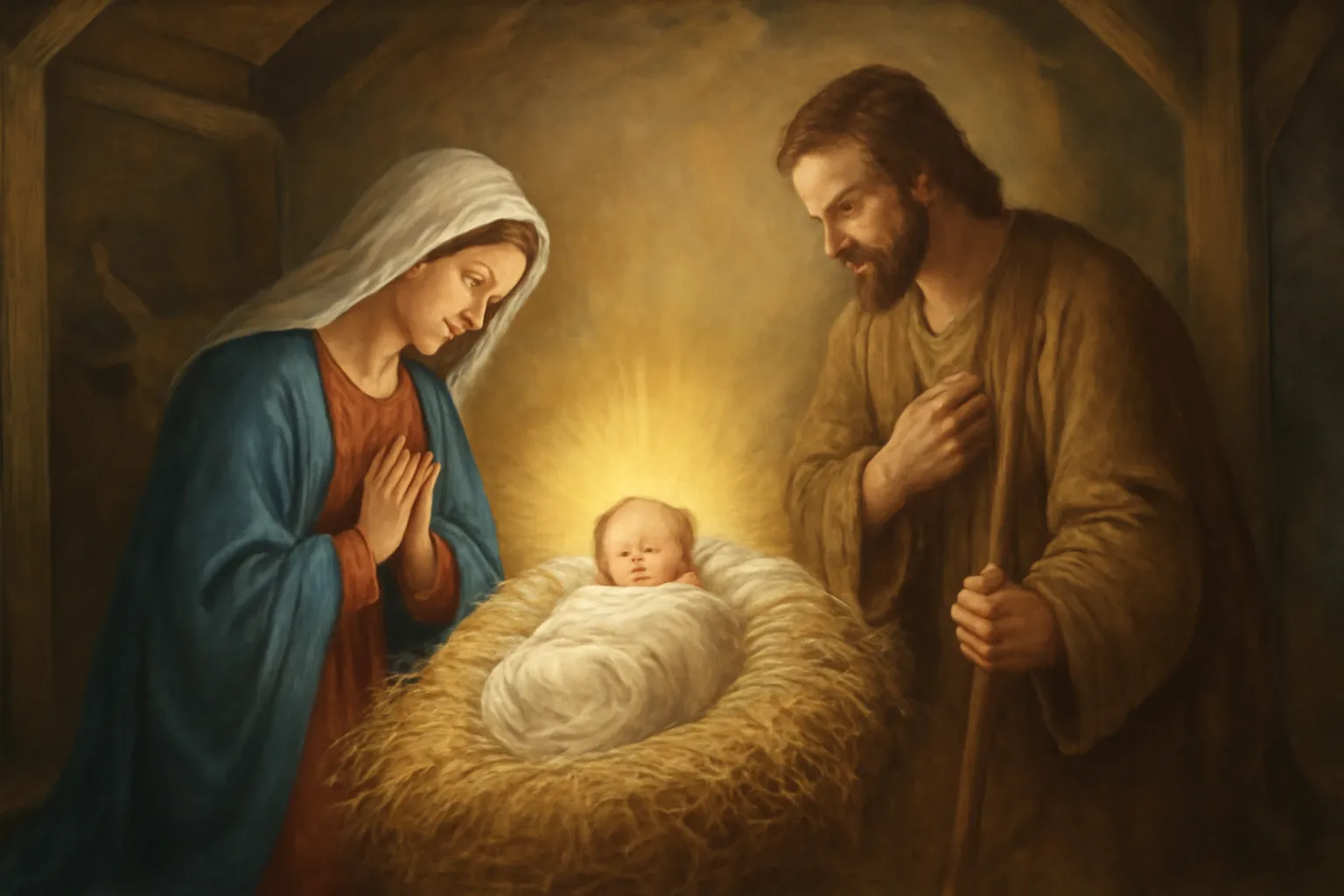
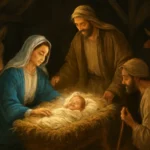
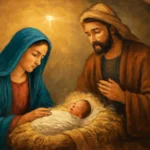
The stable or humble dwelling where the baby is laid in a manger, highlighting themes of simplicity and accessibility to all who seek the newborn King.
The appearance of the angelic host to shepherds, proclaiming the good news and inviting the shepherds to see the newborn Savior.
The juxtaposition of lowly circumstances with heavenly praise, emphasizing that God’s kingdom often begins in surprising places.
Two classical discoveries accompany the scene: the shepherds in Luke’s Gospel and the Magi in Matthew’s. Luke emphasizes the joyful announcement to the poor and ordinary people, underscoring the accessibility of the good news. Matthew highlights the recognition of Jesus by non-Israelite figures—the Magi—signaling that the birth of Christ has a universal reach beyond Jewish boundaries. Together, these strands present a rich tapestry of the birth narrative as both intimate and cosmic in scope.
The Shepherds, Angels, and the Adoration of the Child
In Luke’s account, the angelic announcement to the shepherds becomes one of the most enduring images of the birth of Christ. A chorus of angels sings of peace on earth and goodwill toward humanity. The shepherds, ordinary workers of the field, become the first witnesses to the birth of Jesus, illustrating the theme that God’s salvation comes to those who are often overlooked by society. Their response—hurrying to Bethlehem, witnessing the infant, and then sharing their experience—embodies the dynamic of hearing, encountering, and spreading the good news.
In Matthew, the Magi’s encounter with the star reinforces the royal dimension of the birth of Christ, inviting the world to acknowledge the newborn King. Their gift exchange—gold, frankincense, and myrrh—echoes the recognition of Jesus’ kingship, priesthood, and a future suffering that would be essential to his mission.
Visitations and the Early Years: Egypt, Return, and Formation
After the initial birth, the narrative arcs continue with events that shape Jesus’ early life and underscore divine protection and purpose. The flight to Egypt in Matthew is a response to King Herod’s danger, fulfilling prophecy and safeguarding the child’s life. The eventual return to Nazareth marks the beginning of Jesus’ ordinary life as a family member, apprentice, and growing child who would come to be recognized as the Messiah by faith communities. These early years remind believers that the birth of Christ is not merely a moment in time but a doorway into ongoing formation, discipleship, and mission.
Names, Titles, and Significance of the Child
The newborn is given several names and titles that reveal the meaning of the event and the purpose of Jesus’ life. These designations carry theological weight and guide Christian devotion and interpretation.
Jesus—A name meaning “the Lord saves” or “the Lord is salvation,” signaling the child’s mission as Savior.
Christ—A title meaning “anointed one” or Messiah, identifying Jesus as the one anointed by God to fulfill the divine plan.
Immanuel—A prophetic name meaning “God with us,” highlighting the intimate presence of God in human life.
The Nativity itself—A term used to describe the birth event; it has become a central term in Christian piety, art, and worship.
Theological Significance: Why the Birth of Christ Matters
The birth of Christ is not merely a biographical detail; it carries profound theological significance for Christian faith and life. Here are some of the central themes commonly explored by theologians, pastors, and lay readers alike.
God with humanity—The Incarnation teaches that God enters the world in person and shares human life, thereby making redemption an approachable, relational reality rather than an abstract concept.
Hope for the world—The birth signals the dawning of a new era in which peace, justice, and reconciliation begin to break into human history, even amid suffering and political complexity.
Reversal of expectations—The humble circumstances, the inclusion of shepherds and Gentiles, and the danger surrounding the child underscore a reversal of worldly power and highlight the power of grace and mercy.
Fulfillment of prophecy—Christians affirm that the birth of Jesus fulfills Old Testament expectations about the Messiah, providing continuity between the Hebrew scriptures and the New Testament witness.
Salvation history—The Nativity is a key moment in the broader narrative of salvation history, bridging creation, redemption, and consummation in Christ.
Liturgical and Spiritual Significance
Across Christian communities, the birth of Christ is celebrated with elaborate liturgy, hymns, creeds, and prayers. The season of Advent leads up to the feast of Christmas, inviting believers to prepare their hearts for the mystery of the incarnation and to reflect on what it means for daily life, ethics, and worship. Some key liturgical practices include:
Lighting candles in an Advent wreath as a symbolic progression toward the birth of Christ.
Christmastide prayers that recall the nativity narratives, the shepherds’ worship, and the Magi’s homage.
Creeds and confessional statements that articulate the core Christian belief in the divine and human natures of Jesus.
Carols and hymns that retell the Nativity story and invite communal singing as an act of worship.
Beyond formal services, the birth of Christ shapes personal devotion: meditations on the humility of God, opportunities for charitable action toward the vulnerable, and invitations to imitate Mary’s fidelity and Joseph’s obedience in daily life.
Nativity in Art, Culture, and Education
The story of the birth of Jesus has inspired an immense array of artistic expressions and cultural practices. Across centuries and continents, Christians have used visual art, music, drama, and storytelling to convey the mystery and meaning of the Nativity:
The Nativity scene (crèche) in homes and churches, depicting the stable, Mary, Joseph, the infant Jesus, animals, shepherds, and sometimes the Magi.
Frescoes, icons, and paintings that interpret the incarnation, sometimes emphasizing the divine light or the humble setting of the birth.
Literature and sermons that retell the nativity from different perspectives, offering spiritual lessons about hospitality, faith, and trust.
Festival practices and charitable outreach that embody the birth message through acts of mercy and solidarity with those in need.
In education, the birth of Christ is often a starting point for discussions about history, archaeology, religious studies, and comparative religion. It invites learners to examine how different communities understand sacred time, divine intervention, and the meaning of a King born in a manger.
Variations Across Traditions
Though the essential claims about the birth of Christ are shared by most mainstream Christian traditions, there are varied emphases in Roman Catholic, Orthodox, and Protestant contexts. These differences influence how the nativity is celebrated, interpreted, and taught:
Roman Catholic and Orthodox traditions often emphasize venerating Mary and the role of the Church in mediating the mystery of the incarnation. Christmas feasts are rich in liturgy, icons, and Marian devotion while remaining firmly focused on the event of the birth of Christ.
Protestant churches typically highlight the biblical narratives and doctrinal statements about the incarnation and the identity of Jesus as Lord and Savior, with varied calendar focus—some celebrating the Nativity with simple worship, others with elaborate Christmas programs and carols.
In many traditions, the period after Christmas—often called Christmastide—extends into epiphany and the presentation of Jesus to the nations, highlighting the continuity between the birth and the mission of Jesus.
These differences reflect the diverse ways Christians have read the nativity over time, while still affirming the central claim: God became human in Jesus, and that birth transformed the world’s story.
The Nativity in Personal Faith and Ethical Living
For many believers, the birth of Christ is not only a doctrinal truth but also a daily invitation to imitation of Christ in the present world. The moral and spiritual implications include:
Embracing humility, as seen in the child’s vulnerability and God’s choice of a modest birthplace.
Practicing hospitality, echoing the shepherds and the innkeepers who encountered the Nativity in varied ways.
Extending generosity to the vulnerable and marginalized, following the shepherds and Jesus’ later teachings about mission to the least and the lost.
Seeking peace and reconciliation, inspired by the angelic message of peace on earth and the reconciliation that Jesus would bring.
In personal devotion, many Christians reflect on Christ’s birth as the starting point for a life shaped by grace. The Advent season invites anticipation of God’s coming, while Christmas invites contemplative gratitude and courageous generosity that reflect the Spirit who inspired the nativity narrative.
Frequently Asked Questions About the Birth of Christ
To help readers, here are concise responses to common questions about the birth of Christ and its significance.
Was Jesus really born of a virgin? In traditional Christian doctrine, yes. The Gospels describe Mary as a virgin who conceived by the Holy Spirit, a sign of divine action in the incarnation. This belief is held in most Christian confessions as an article of faith, though it has been discussed and debated in historical theology.
Why Bethlehem? Bethlehem is linked to messianic prophecy and Davidic lineage. Jesus’ birth in Bethlehem fulfills the prophetic expectation that the Messiah would come from the city of David.
What is the significance of the Magi and the shepherds? The shepherds illustrate the accessibility of the good news to ordinary people, while the Magi signify the recognition of Jesus by the Gentiles and the universal scope of his kingship.
How does the nativity relate to Christmas? Christmas proclaims the birth of Christ, celebrates the incarnate God, and invites worship and gladness. The feast extends into a period of Christmastide, which culminates in the early church observances and the deepening of Christmas spirituality.
What is the connection between the nativity and the Incarnation? The nativity is the first concrete expression of the Incarnation—God becoming flesh. It is the historical entry point that makes possible the theological claim that God has entered human life in order to redeem and reconcile the world.
In summary, the birth of Christ, or the nativity, remains a central event in Christian faith because it proclaims the advent of God with us, signals the fulfillment of prophecy, and begins a new era of grace and redemption. The two gospel accounts—Matthew and Luke—together offer a balanced view: one emphasizes fulfillment, kingship, and danger, while the other stresses humility, accessibility, and joy. The doctrine of the Virgin Birth and the broader Incarnation declare that God’s love chose to enter human history not as a distant observer but as a child who would grow, teach, suffer, and redeem. For Christians today, reflecting on the narrative of Jesus’ birth invites renewed faith, compassion, and a hopeful outlook for the world—an invitation that remains as timely as ever as communities prepare to celebrate the mystery of God becoming human.
Whether approached as a historical mystery, a theological claim, or a spiritual invitation, the birth of Christ continues to shape faith, worship, art, and everyday life. It is a story that scholars explore for its historical currents, pastors preach for its transformative power, and believers cherish as a source of meaning, worship, and mission. In this way, the Nativity endures as a living witness to love entering the world, a source of light in darkness, and a call to live out the message of peace, justice, and mercy that the birth of Christ proclaims.

 Por Laura Jara