Jesus is born Bible story—often simply called the Nativity—holds a central place in Christian faith and in the broader cultural imagination. This account, primarily drawn from the Gospels of Luke and Matthew, tells how a child conceived by the Holy Spirit came into the world through Mary in the small town of Bethlehem and how a diverse chorus of visitors and guardians welcomed him. The Nativity is not only a sequence of events; it is a multi-layered narrative that engages themes of divine initiative, human vulnerability, social upheaval, and transformative hope. In this article, we will explore the Jesus birth narrative from its biblical roots, examine how Luke and Matthew present different facets of the story, and consider the wider implications for faith, history, and culture.
Two Gospels, Two Portraits: A Brief Map of the Nativity Accounts
The Bible presents the story of Jesus is born Bible story through more than one lens. The two primary accounts differ in emphasis and detail, yet they converge on core truths: the birth of a child who is spoken of as the Messiah and the center of hopeful expectation among people. Here is a concise look at the two strands:
Luke’s Nativity Narrative: Luke 1–2 centers on Mary, the annunciation by the angel Gabriel, the journey to Bethlehem, the humble birth, and the shepherds’ visitation. The emphasis is on accessibility, mercy, and the universal reach of God’s favor—especially for the lowly and the outcast.
Matthew’s Nativity Narrative: Matthew 1–2 foregrounds Joseph, the genealogy of Jesus, the visit of the Magi, the danger posed by Herod, and the fulfillment of prophecy. The focus is on Jesus’ royal yet humble origin, and the recognition of him by gentile dignitaries as well as by the Jewish people.
Throughout these accounts, readers encounter a child whose birth breaks into history in a way that invites both awe and scrutiny. The phrase “the birth of Jesus” or “the birth of Christ” carries layers of meaning—divine initiative, fulfillment of prophecies, and the dawning of a new era in salvation history.
The Annunciation: Gabriel’s Message and Mary’s Yes
In Luke’s telling, the Nativity story begins long before the manger. An angel named Gabriel visits a young woman named Mary in the town of Nazareth. The message she receives is astonishing: she will conceive a child by the Holy Spirit, and the child will be named Jesus. The term “Emmanuel”—often translated as “God with us”—begins to illuminate the meaning of this event. Mary’s response is a model of trust and obedience as she accepts her role in God’s plan.
Key moments in this initial phase of the Jesus birth narrative include:
The announcement that Mary will bear a son, whom she will name Jesus, a name that means “the Lord saves.”
The assurance that the child’s life and mission are anchored in God’s favor and in the coming transformation of Israel.
Mary’s reflective response, often summarized as faith in the midst of surprise and uncertainty.
Elizabeth and the Magnificat
An important companion thread in Luke’s account is the interaction between Mary and her relative Elizabeth. Elizabeth’s pregnancy with John the Baptist provides a counterpoint to Mary’s own journey and highlights a broader divine pattern: God’s preference for humble people and for those considered unlikely instruments of salvation. Mary’s song, the Magnificat, proclaims a reversal of fortunes and the liberation of the oppressed. This is a powerful prelude to the discovery that the Jesus is born Bible story is not only about individual lives but about the transformation of social orders and the fulfillment of prophetic hopes.
The Journey to Bethlehem and the Nativity in Luke
The Decree, The Census, and The Road to Bethlehem
Luke situates the birth within a concrete historical moment: a decree from Caesar Augustus requiring a census. This political motion brings Mary and her fiancé, Joseph, to their ancestral home in Bethlehem. The couple’s pilgrimage, under ordinary human constraints, becomes the setting for the extraordinary event of a child’s birth. The Nativity tale, in Luke’s hands, emphasizes:
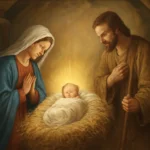
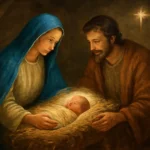
The humility of Jesus’ origins, born not in a palace but in a stable, and laid in a manger because there was no room in the inn.
The unexpected guests who arrive in response to the divine announcement.
That the signs of the times—census, travel, occupation—coexist with a sacred moment that signals the dawning of a new era.
The Shepherds’ Visit: Angels, Glory, and First witnesses
One of the most beloved elements of the Nativity is the appearance of angels to shepherds in the fields nearby. The heavenly hosts declare peace on earth and announce the birth of a Savior. The shepherds, often marginalized in first-century society, are chosen as the first human witnesses to the birth of Jesus. Their reaction—hurrying to Bethlehem, finding Mary, Joseph, and the infant lying in a manger—highlights themes of accessibility, witness, and joy. The shepherds return to their fields, “glorifying and praising God for all the things they had heard and seen,” which underscores the Nativity’s purpose as a story meant to inspire worship and proclamation.
The Visit of the Magi: A Different Emphasis in Matthew
The Magi, the Star, and the Message to Herod
Matthew’s account introduces a distinct angle through the experience of the Magi—wise outsiders who follow a guiding star. Their journey from the East culminates in a worshipful encounter with the newborn King of the Jews. Their gifts—gold, frankincense, and myrrh—serve as symbolic tokens of honor and foreshadow the child’s future life, suffering, and kingship. In contrast to Luke’s shepherds, Matthew’s Magi highlight the recognition of Jesus by non-Jewish figures and the broader, universal scope of the Jesus birth narrative.
Herod’s Plot and the Flight to Egypt
The Magi’s discovery triggers a perilous response in Herod, who seeks to kill the child. Because of a divine warning, Joseph takes Mary and Jesus to Egypt, protecting them from harm. This episode foreshadows the ongoing tension between divine sovereignty and human political power and serves as a bridge to the later return to Nazareth. The decision to depart Egypt underscores a recurring biblical motif: the child’s mission will be contested, but divine providence goes ahead.
After Herod’s death, Joseph, Mary, and Jesus return from Egypt and settle in Nazareth. The Gospel writers do not provide a long, detailed account of Jesus’ early years, but the phrase “the child grew and became strong” (Luke 2:40) points to a development arc culminating in Jesus’ public ministry. The Nativity story thus bookends a larger life that is woven into the fabric of Jewish life, faith formation, and eventual ministry.
Theological Themes Emerging from the Nativity Story
From the Nativity, readers extract several enduring theological themes that have shaped Christian belief and practice. Here are some of the central ideas often drawn from the Nativity narratives:
Divine initiative: God’s active choice to become present in human history, particularly in ways that appear humble or ordinary in worldly terms.
Humility and vulnerability: The scene of birth in a stable, accessible to shepherds, emphasizes that divine purposes often intersect with the lowly and the marginalized.
Fulfillment and expectation: Prophetic hope is fulfilled, and the Nativity narrates the turning of a long arc of salvation history toward a new chapter.
Light to the nations: The visit of the Magi suggests that Jesus’ impact will extend beyond one nation, embracing all peoples, including Gentiles.
Incarnation: The belief that God takes on human flesh, a mystery at the heart of Christian doctrine and a study in how God relates to humanity.
The Nativity in Art, Music, and Liturgy
Over two millennia, the story of Jesus’ birth has inspired a vast array of artistic and liturgical expressions. From Renaissance paintings that portray the adoration of the shepherds to Christmas carols that echo in churches and homes, the Nativity narrative has become a central cultural motif. The scene of a baby in a manger can be found in stained glass windows, manuscripts, sculpture, and contemporary cinema. In liturgical contexts, celebrated feasts such as Christmas and Epiphany draw on the Nativity's themes of revelation, worship, and revelation to the nations.
In art, the Nativity often carries symbolic elements: the manger as the place of nourishment, the star as guidance, and the manger scene as a reminder of the humble beginnings of God’s kingdom.
In music, the Nativity has produced timeless hymns and modern carols that explore joy, praise, and the mystery of God with us.
In liturgy, readings from Luke and Matthew are paired with prayers that focus on peace, justice, and the dawning of salvation.
Variations Across the Gospels: Reading with Care
Readers should carefully distinguish the variations in the Nativity accounts while appreciating their complementary theological aims. The reconciliation of Luke’s humble shepherds and divine encounter with Matthew’s royal visitors and prophetic fulfillment reveals a multi-dimensional portrait of Jesus’ birth that invites different responses—from wonder and worship to discernment and mission.
Practical Reflections: How the Nativity Narratives Invite Faith and Action
The Nativity story, whether one focuses on the humble stable or the star-guided journey of the Magi, invites personal reflection and communal practice. Here are some practical takeaways from the Jesus is born Bible story:
Hospitality and humility: The manger scene challenges believers to consider how they extend welcome to the vulnerable and the marginalized in their communities.
Hope in difficult circumstances: The Nativity signals that hope can emerge even in difficult political and social climates.
Worship and witness: The shepherds and the Magi each respond with reverent worship, and their encounters become a basis for missionary outreach and testimony.
God’s timing: The events unfold according to a divine timetable, inviting readers to trust that history is moving toward a purpose greater than any single moment.
Questions People Commonly Ask about the Nativity
In studying the Jesus birth narrative, readers often ask questions to clarify details or understand its significance. Here are some commonly raised topics with concise responses:
Why were Mary and Joseph in Bethlehem? Because of the decree for census and their ancestral ties to the city—a detail that emphasizes providence and connection to prophecy.
Was Jesus really born in a stable? Luke’s account emphasizes a humble, no-room-in-the-inn context, often interpreted as a stable or a place where animals are sheltered; the exact physical setting is less important than the symbolic meaning of Jesus’ modest birth.
What do the gifts of the Magi signify? Gold, frankincense, and myrrh symbolize kingship, divinity, and mortality—foreshadowing Jesus’ role and the events to come.
Why is the Nativity told in two different Gospels? Each Gospel writer highlights different aspects of Jesus’ identity and mission, offering a fuller, more nuanced picture when read together.
What does the Nativity teach about God’s relationship with humanity? It demonstrates that God engages the world through everyday human life, including family, travel, and the ordinary experiences of birth and care.
For modern readers, approaching the Jesus is born Bible story with care helps cultivate both respect for the text and its interpretive richness. Consider the following approaches:
Read with awareness of the texts’ literary genres and historical contexts—gospel narratives, ancient biography, prophecy fulfillment, and theological proclamation.
Appreciate the different emphases of Luke and Matthew, recognizing that convergence on core claims about Jesus does not require identical narratives.
Reflect on how the Nativity speaks to issues like poverty, power, hospitality, and inclusion in your own time.
Engage with the story through prayer, study, and conversation in community settings to gain deeper insight and practical application.
Glossary of Key Terms
To aid in understanding the Nativity story, here are some essential terms often encountered in discussions about the Jesus birth narrative:
Nativity
The birth of Jesus Christ, typically focused on the events surrounding his birth in Bethlehem.
Incarnation
The Christian doctrine that God became truly human in the person of Jesus Christ.
Annunciation
The announced moment when Gabriel tells Mary that she will bear the Son of God (Luke 1).
Emmanuel
A prophetic name meaning “God with us,” signifying the divine presence with humanity.
Herod the Great
The king who sought to kill the infant Jesus, prompting the Holy Family’s flight to Egypt (Matthew 2).
Epiphany
A Christian feast that celebrates the revelation of Christ to the Gentiles, often associated with the Magi’s visit.
Conclusion: What the Jesus Is Born Bible Story Teaches Today
The Nativity narrative remains compelling because it speaks across centuries to enduring human questions about purpose, power, and belonging. The story of the birth of Jesus invites readers to consider what it means for God to enter human life in vulnerability and to act with mercy toward the humble. Whether one engages the account as a historical memory, a theological proclamation, or a source of inspiration for worship and service, the central claim persists: in the mystery of the Nativity, God’s love enters the world in a way that reshapes how people see themselves, others, and their future. In the Jesus is born Bible story, we encounter not only a moment in time but a call to respond with faith, wonder, and a readiness to follow where the star and the angels lead.
Additional Resources for Deeper Study
If you wish to explore the Nativity more deeply, consider these avenues:
Read the primary texts: Luke 1–2 and Matthew 1–2 to observe the distinct voices and emphases.
Consult study notes or commentaries that address historical context, language, and thematic purposes of each Gospel writer.
Examine how different Christian traditions celebrate Christmas and Epiphany, noting how liturgy reflects the Nativity’s themes.
Explore related biblical passages that speak to the broader context of salvation history and the Messiah’s mission.
In sum, the Nativity story—whether described as the Jesus birth narrative in Luke’s Gospel or Matthew’s account of royal visitors and perilous journeys—offers a rich, multifaceted picture of how God’s justice and mercy enter the world. By considering the events, characters, symbols, and responses within these texts, readers can gain a deeper appreciation for how the Nativity continues to speak in today’s world about hope, peace, and the transformative power of divine love.










Leave a Reply