Overview of the Easter Sunday Resurrection Narrative
The topic Easter Sunday Resurrection Account encompasses a rich set of ancient witnesses, geographic settings, and theological claims that together form a central pillar of the Christian faith. In the canonical Gospels, the morning of Jesus' rising from the dead is narrated with nuance and shared motifs, yet each Gospel writer also preserves distinctive angles that highlight particular audiences and theological emphases. The broad arc is consistent: the stone is found rolled away, the tomb is empty, and the risen Christ breaks into the lives of those who hear and believe. Beyond the historical sequence, the resurrection proclamation is presented as a transformative event that reshapes identity, hope, and mission for the followers of Jesus.
This article surveys the various strands of the Sunday morning resurrection narrative, sometimes called the easter sunday resurrection account in more conversational terms, and it uses a harmonizing lens to illuminate how the four Gospels—Matthew, Mark, Luke, and John—together depict the astonishment, the encounters, and the implications of the Resurrection. While the wording and sequence differ in places, the essential message remains that Jesus is alive, that God has vindicated his son, and that faith in the risen one reorients the living and the dead.
As you read, you will encounter recurring motifs such as contrition and awe, the role of women as the first witnesses, the misunderstanding that often accompanies early sightings, and the immediate shift from mourning to proclamation. The Easter Sunday account across the biblical narrative is not only about an empty tomb; it is about the living person who appears, speaks, invites, and commissions. The narrative invites readers to consider what it means to encounter the risen Jesus, to be sent into the world, and to live with the hope of divine restoration that reaches into history, culture, and daily life.
The Tomb, the Stone, and the Morning Watch
A central image in the Easter Sunday account is the empty tomb and the mystery surrounding who discovers it first. The Gospel writers consistently anchor the moment in the early hours after dawn, when grief gave way to astonishment and questions about life after death began to take on new shape. The discovery of the empty tomb signals a turning point: death has been challenged, and God’s promises concerning the Messiah have reached their climactic fulfillment.
The Stone Rolled Away and the Angelic Message
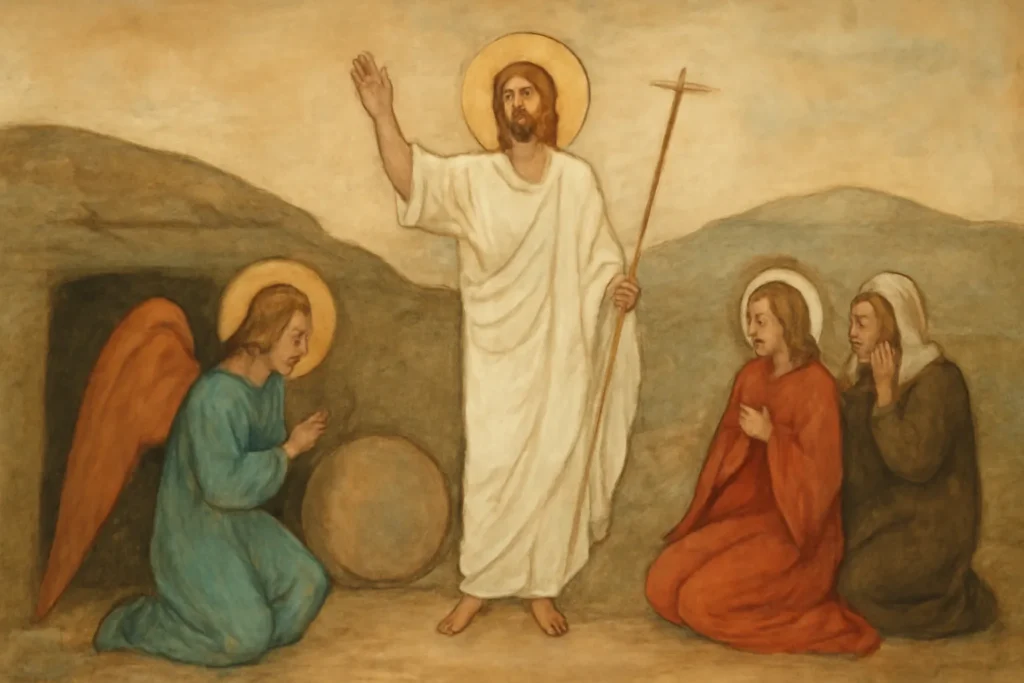
In several strands of the narrative, a stone is rolled away from the entrance of the tomb, and an angel or messenger appears to speak of the resurrection. The emphasis is less on the physical act of rolling the stone and more on the revelation that death has been overcome. The angelic message invites trust and courage: “Do not be afraid,” and then offers a proclamation that shifts fear into faith and inquiry into worship.
Matthew’s account highlights both the guard’s astonishment and the angel’s appearance at the tomb, followed by an assurance that Jesus has risen and will meet the disciples in Galilee.
Mark’s account centers on the women who come to anoint Jesus and encounter the young man in white near the tomb, prompting a call to share news with the disciples.
Luke’s account emphasizes the women’s witness, the angelic message, and the subsequent appearance of Jesus to two travelers on the road to Emmaus, which deepens the interpretive frame of Scripture fulfilled.
John’s account places emphasis on the discovery by Mary Magdalene and then the enigmatic encounter with the risen Jesus, including a personal invitation to recognize him, even before the disciples fully understand the magnitude of the event.
Across all four gospel traditions, the risen life is introduced through a mystery that invites belief and invites the recipients to interpret the event in light of scripture, prophecy, and the continuing work of God in the world.
Witnesses at the Tomb: Women as the First Believers
A striking and historically meaningful feature of the Easter Sunday narrative is the prominent role of women as the first witnesses to the resurrection. In many ancient cultures, women were not considered legal witnesses in court settings; in the biblical text, however, the accounts elevate their testimony as trustworthy and pivotal for the spread of the Good News. This portrayal underscores themes of grace, reversal, and inclusion that run through the resurrection accounts.
The First Witnesses
Mary Magdalene, a devoted follower, is often described as the first to encounter the risen Jesus in several Gospel traditions, and her recognition becomes a catalyst for subsequent appearances.
Mary the mother of James and Salome are part of the group who come early to the tomb, bringing spices and seeking to anoint the body, only to confront the divine revelation of life beyond the grave.
Other women in the Gospel narratives join the scene, reinforcing the idea that the resurrection breaks from conventional expectations of who bears witness to God’s saving acts.
The emphasis on women as primary witnesses challenges common assumptions about credibility and authority in the ancient world while also highlighting a thematic thread: God’s purposes often unfold through unexpected means and by people who are earnest in their devotion, even when the surrounding culture does not always elevate their voices.
From Fear to Faith: The Disciples’ Initial Reactions
The Easter morning narrative is filled with transitions—from fear to faith, from confusion to proclamation, and from private grief to bold mission. The disciples on various occasions react with a mixture of fear, perplexity, and cautious hope as they encounter the risen Jesus, hear his words, and are sent out to bear witness to what they have seen and heard.
Initial fear often gives way to recognition as the risen Christ speaks, offers peace, and commissions his followers.
Some accounts emphasize a lack of immediate understanding, showing that belief is a dynamic process that develops as encounters with the risen Lord unfold.
The transformed response of the disciples—leaving fear behind to preach with courage—frames the Easter Sunday account as a turning point for mission and community life.
Appearances of the Risen Jesus: Moments of Recognition and Challenge
The core of the Easter Sunday narrative is not only the empty tomb but also a series of appearances in which the risen Jesus reveals himself, addresses fears, and redirects the lives of those who encounter him. The various Gospel accounts depict different settings—a garden, a sealed room, a road to Emmaus, and a shoreside breakfast—that together convey the reality of encountering living presence after death.
Mary Magdalene’s Encounter
In several versions of the resurrection story, Mary Magdalene encounters the risen Jesus in the garden near the tomb. She initially mistakes him for the gardener until he speaks her name. This intimate moment underscores the personal nature of the risen Christ and the way in which personal naming signals relationship, trust, and mission.
The Road to Emmaus: Scripture Fulfilled
A remarkable episode unfolds on the road to Emmaus, where two travelers talk with a singular stranger who is, in fact, the risen Jesus—though they do not recognize him at first. As they recount the events surrounding Jesus, the stranger expounds on the Scriptures, showing how the Messiah must suffer and rise again. When Jesus breaks bread, recognition comes, and the travelers return to share the good news with others.
The Upper Room and the Commission
In the upper room, the risen Jesus appears to the gathered disciples, offering peace and demonstrating his wounds to confirm his identity. He speaks blessing, breathes the Spirit, and commissions them to proclaim forgiveness of sins to all nations. This moment anchors the Gospel message in a concrete call to mission and demonstrates that the resurrection is inseparable from invitational forgiveness and the birth of a new community.
Not all encounters are immediate belief. In the narrative tradition, the apostle Thomas expresses doubt, requesting tangible evidence of Jesus’ risen presence. The response—Jesus inviting Thomas to touch his wounds—becomes a corrective moment that highlights faith sculpted through encounter and evidence, rather than through mere wishful thinking. The insistence on eyewitness testimony underscores the claim that the resurrection is a verifiable, transformative event that demands a response.
Theological Meaning and Central Messages
The Easter Sunday resurrection account is not only a historical claim; it carries profound theological implications that shape Christian faith, worship, and ethics. The pulsing heart of the narrative is the conviction that Jesus has triumphed over death, that God has vindicated his life and message, and that new life is offered to all who believe. This event is understood as fulfilling prophecy, inaugurating the eschatological age, and establishing Jesus as Lord over creation, history, and destiny.
Fulfillment of Scripture and Divine Promise
A recurring theme across the Gospel writers is the way the resurrection confirms what scripture had long anticipated about the Messiah’s suffering and reversal of fortunes. The risen Jesus frequently shows that his life and triumph are in continuity with God’s redemptive plan, and that the events of Easter Sunday are a decisive moment in the story of Israel and the church.
Hope, Witness, and Mission
The resurrection narrative reframes fear into courage, isolation into community, and grief into purpose. The followers of Jesus are tasked with bearing witness, proclaiming forgiveness, and teaching others to live in light of the risen life. The embodying of this message forms the basis for the early Christian mission and for ongoing Christian witness in every generation.
Presence and Peace: The Risen Jesus among His People
A striking feature of the resurrection appearances is the way Jesus meets people where they are—with words of peace, with invitations to trust, and with a presence that dispels fear. This sense of presence becomes a recurring assurance for Christians that the living Christ continues to accompany the church through the Holy Spirit, guiding, comforting, and empowering.
Harmonizing the Four Gospel Accounts
Readers often wonder how to relate the Easter Sunday narrative across the distinct Gospel testimonies. While each Gospel offers unique details and emphases, they collectively present a coherent testimony about the empty tomb, the appearances of the risen Christ, and the transformation of the earliest disciples. Some scholars describe the accounts as complementary rather than conflicting, while others note the need to consider literary and theological aims that shaped each author’s portrayal.
Key Points of Convergence
The tomb is found empty by women who are named and present at the scene.
The absence of Jesus’ body becomes the focal point for the proclamation that he is alive.
The risen Jesus appears to individuals or groups, offering peace and commissioning them for mission.
Scripture and testimony are used to interpret the events, sometimes with different degrees of emphasis on prophecy or fulfillment.
Notable Variations to Consider
Order of appearances can vary; Emmaus appears in Luke, while John emphasizes Christmas-like personal encounters and a sequence that includes Thomas.
Roles of women and their declarations are central in some traditions more than others, highlighting the inclusive nature of God’s work in the narrative.
Details about the tomb’s guard, the concrete nature of witnesses, and the phrasing of Jesus’ messages reflect the authors’ communities and theological aims.
When approaching the Easter Sunday resurrection account in its fourfold testimony, it is helpful to ask questions like: What is the core claim in each account? How does the author present evidence for belief? What is the effect on faith communities that hear these narratives? And how do these stories invite contemporary readers to respond with faith, worship, and service?
The Easter Sunday narrative continues to shape Christian worship, art, music, and daily practice. For many believers, the empty tomb becomes a symbol of hope that extends beyond personal life to social and ethical commitments—justice, mercy, and the renewal of creation. The living Christ is not a distant historical figure but a present reality for those who seek him in prayer, study, and communal life. The resurrection account can be read not only as a historical claim but as a transformative invitation to align one’s life with the values embodied by Jesus and demonstrated in the early church’s practice of love and mission.
Liturgy, Prayer, and Reflection
In liturgical settings, Easter Sunday is marked by songs of praise, readings from the resurrection narratives, and prayers that celebrate new life.
Personal devotional practices often focus on encounters with the risen Jesus, whether in Scripture, in contemplation, or in acts of service to others.
Communal gatherings emphasize mission: to share the message of life, forgiveness, and reconciliation with neighbors and the world.
Applications for Contemporary Faith
Strengthening witness: the early church’s call to testify about the risen Lord remains central for today’s believers who seek to articulate faith clearly and compassionately.
Rekindling hope: the Easter message offers a framework for enduring hardship, loss, or confusion by pointing toward a future secured by God’s triumph over death.
Cultivating communal life: the Easter resurrection narrative encourages a transformed community that practices forgiveness, peace, and mutual care.
Exploring Variants of the Easter Narrative in The Biblical Record
Readers who study the easter sunday resurrection account across the canonical Gospels will notice that the language, setting, and sequence differ in ways that invite careful reflection. The four Evangelists present a unified claim about the risen Christ while preserving distinct voices that enrich the overall witness. This diversity, rather than undermining the truth claim, can be understood as a strength: the resurrection is a reality that speaks into multiple contexts, inviting a broader audience to hear, understand, and respond.
How the Narrative Encourages Personal Engagement
The Easter Sunday morning sequence invites readers to put themselves into the story: to wonder with Mary, to walk with the travelers to Emmaus, to gather with the disciples, and to test beliefs with honest questions. The risen Jesus meets readers wherever they are in their own journey, offering words of peace, invitation to faith, and a challenge to live in light of the truth they have come to believe.
Interpretive Pathways for Study and Discussion
Historical-critical: examining how the accounts may reflect different oral traditions and community memories about the resurrection events.
Literary: noting how each Gospel uses imagery, dialogue, and narrative timing to convey the meaning of the risen life.
Theological: focusing on the identity of Jesus as risen Lord, the implications for salvation, and the transformation of discipleship.
For readers seeking a comprehensive understanding, it can be helpful to compare the key elements found in each Gospel and then reflect on the ways in which these elements intersect with faith, ethics, and worship today. The Easter Sunday resurrection account remains a living text that invites ongoing interpretation, devotion, and missionary imagination.
Closing Reflections
The Easter Sunday resurrection account presents an extraordinary claim wrapped in human experience: a movement from fear to faith, from despair to hope, from death to life. Whether approached as a historical event, a theological proclamation, or a spiritual invitation, the narrative continues to shape how communities understand God’s action in history and how individuals orient their lives toward a future shaped by grace.
As you engage with the Easter Sunday Resurrection Account: The Biblical Narrative, may you discover in the stories a pattern for faith that is both compelling and hopeful, a pattern that speaks to the deepest questions of life, meaning, and purpose. The resurrection is not only a dawn on the calendar but a perpetual invitation to live as people who know that Christ is risen, who serve as witnesses to the truth, and who live with the confident expectation of God’s renewal in the present age.










Leave a Reply