The Upper Room in Jerusalem is a term that evokes one of the most enduring stories in Christian tradition: a sacred setting where Jesus is said to have shared the Last Supper with his apostles, and where the earliest followers of Christ gathered in prayer before the events described as Pentecost. In modern usage, “upper room” and “Cenacle” are often used interchangeably to describe the same idea—the place, upstairs or elevated within a building, associated with momentous moments in the life of the early Church. Across centuries, pilgrims and scholars have referred to the site by variants such as the Cenacle on Mount Zion, the Last Supper chamber, the Upper Room of worship, and the upper chamber of reverence. The most widely celebrated traditional location is the Cenacle on Mount Zion, but the landscape of Jerusalem offers layered stories about this room, its building, and its role in religious memory.
In this article, we explore the history of the Upper Room in Jerusalem, its significance for Christians and for the broader story of the Holy Land, and practical guidance for visitors who want to approach the site with knowledge and respect. The discussion will also reflect on how later centuries, Crusader-era monuments, and contemporary worship spaces have shaped the way this room is understood and experienced today.
Historical Sketch: From the Gospel Narrative to the Long Arc of Memory
Jesus, the Last Supper, and the First Gatherings
In the Christian narrative, the Last Supper took place in a dining room where Jesus sat with his twelve apostles to observe the Passover and to inaugurate the ritual that Christians would come to recognize as the Eucharist or Holy Communion. The precise architectural setting of that supper is not described in exhaustive architectural detail in the Gospel texts; rather, the emphasis is on the meal, the teaching, and the institution of the Eucharist itself. The tradition of a distinct upper chamber or upper room where the early Christian community prayed and met soon emerged in Christian memory as the site of intimate fellowship and divine encounter.
After the Resurrection, the Acts of the Apostles describes the early Christian community in Jerusalem gathering “in one place” and sharing prayers, meals, and apostolic teaching. In that sense, the notion of an Upper Room became a symbol of communal life, continuity with Jesus, and the birth of the Church. Over time, Christians identified that memory with a particular physical space, and the idea of a dedicated room of prayer and mission took on a sacred authenticity that persisted through centuries of devotional practice.
From Early Memory to a Sacred Site: The Cenacle’s Journey Through Jerusalenean History
The Cenacle, or the Upper Room on Mount Zion, is the best-known locus associated with these events. The site’s long history is a palimpsest of religious communities, political powers, and architectural transformations. In late antiquity, a church complex was built at or near the traditional site; as centuries passed, later builders, Crusaders, and monastic orders added chapels, cloisters, and additional rooms. The current building and layout reflect a Crusader-era or later architectural configuration that has since become part of the Catholic Church’s custodianship in the Holy Land.
Crucial to understanding this space is recognizing that the exact physical location of the Last Supper and Pentecost is not proven with the same certainty as a modern museum artifact. What endures is the sense of a location that can be felt—through architecture, art, liturgical use, and pilgrim testimony—that connects visitors with a foundational moment in faith. The Upper Room on Mount Zion thus represents more than a single room; it embodies the continuity of memory, the intersection of Jewish and Christian tradition in Jerusalem, and the way a city can house a crucial hinge in world history.
Significance: Why the Upper Room Captures the Imagination
Christian Significance: A Place of Communion, Teaching, and Renewal
For Christians, the idea of a dedicated room where Jesus shared a final meal with his followers gives shape to a theological memory: that God acts in the ordinary and intimate acts of eating, breaking bread, and sharing a cup. The Last Supper has become a central event of devotion, iconography, and liturgy across Christian denominations. The nearby recall of Pentecost, when the Holy Spirit descended upon the apostles as they prayed together in the same space, deepens the sense of the space as a locus of divine empowerment and communal witness. Pilgrims come to the Upper Room to contemplate how a small group of men and women formed the earliest Church, set in a city that would change the course of history.
The significance of the Cenacle extends beyond the Gospel narrative. It invites reflection on leadership, hospitality, and the shared life of faith. The room is often associated with a sense of communal discernment, where the apostles debated, taught, and prepared to carry the message into a wider world. In Catholic, Orthodox, and Protestant contexts alike, the space serves as a quiet anchor for contemplation, prayer, and the study of Scripture in a setting historically linked to the beginnings of Christian mission.
Ethical and Interreligious Resonances
In Jerusalem, the Upper Room also sits at a crossroads of religious memory, where Christian focus intersects with Judaic roots and the broader story of the Holy Land. While the Last Supper is a Christian event, its memory is intertwined with Passover, a major Jewish festival. This interwoven memory helps explain why Jerusalem’s sacred sites often invite careful, respectful engagement from visitors of diverse faith backgrounds. The Upper Room thus becomes a space to consider how shared histories can be remembered with humility, and how sacred sites can be places of dialogue as well as devotion.
Site Locations, Claims, and the Landscape of Jerusalem’s Sacred Rooms
The Cenacle on Mount Zion: The Classic Association
The most widely recognized variant of the Upper Room in Jerusalem is the Cenacle on Mount Zion. This chamber sits within a religious complex that has grown over the centuries and is closely associated with the Abbey of the Dormition and with the Catholic Custody of the Holy Land. The location is traditionally linked with the Last Supper and with the early Christian community’s life of prayer and fellowship. Pilgrims who visit Mount Zion often combine the cenacle visit with stops at nearby landmarks of biblical memory, such as the Church of the Dormition and the Tomb of King David cluster, creating a coherent pilgrimage circuit in this part of the city.
Other Claimed or Remembered Rooms Across Jerusalem
Alongside the Mount Zion Cenacle, other rooms or spaces in Jerusalem have been identified in popular memory as candidates for the Upper Room or as spaces of early Christian gathering. While the Mount Zion site remains the most venerable and widely accepted, it is common for guidebooks, devotional literature, and travel itineraries to reference multiple candidates or to discuss the regional habit of calling various spaces “upper rooms” because of the architectural feature of a higher floor or an upper chamber. In scholarly discussions, the emphasis is often on the enduring symbolism of an upper chamber—an elevated space where community and encounter with the divine occur—rather than on a single, undisputed concrete room. Travelers should be aware that claims about the exact furniture, layout, or dates of particular rooms in other Jerusalem locales are often speculative or rooted in tradition rather than definitive historical documentation.
Architectural Layers: How the Space Has Changed Over Time
Crusader and Medieval Transformations
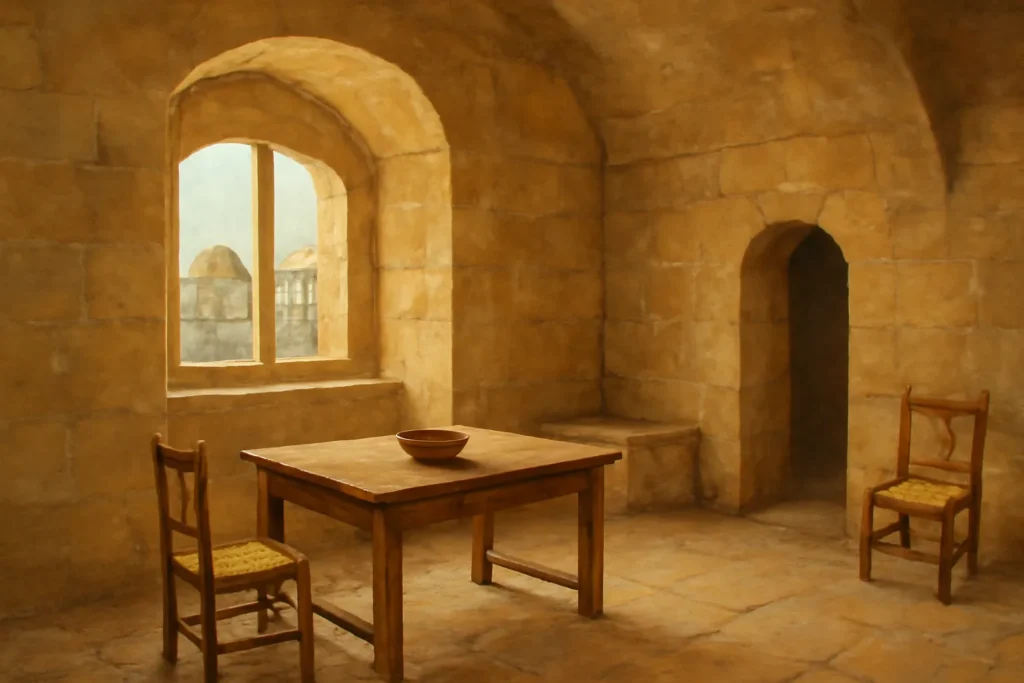
During the Crusades and in the medieval period, many Christian holy sites in Jerusalem were rebuilt, repurposed, or expanded. The Cenacle, as a physical space, reflects these changing hands and evolving architectural tastes. The building program often aimed to accommodate pilgrims, host liturgical celebrations, and provide space for monastic communities or church authorities to carry out their daily life. The aesthetic now visible in the cenacle area—stone arches, vaulted ceilings, and a quiet chapel-like atmosphere—speaks to centuries of layering, devotion, and caretaking by successive religious communities.
Ottoman and Modern Restorations
In modern times, the site has undergone renovations to preserve the space while making it accessible to visitors from around the world. The Franciscan Custody of the Holy Land, which oversees many Christian holy places in the region, has played a central role in maintaining this memory site. Visitors will notice a blend of historic ambiance and contemporary devotional use, including times of prayer, small liturgical services, and opportunities for reflection. The architectural result is a space that invites reverence while accommodating a diverse stream of pilgrims, scholars, and tourists who come to reflect on the origins of Christian community life.
For many travelers, a visit to the Upper Room is part of a broader Jerusalem itinerary that foregrounds biblical geography and spiritual memory. If you plan to see the Cenacle on Mount Zion, consider the following practical notes to make the most of the experience:
Check opening hours and special liturgical schedules in advance, since worship services and private prayer times may influence access.
Combine the visit with nearby Mount Zion landmarks for a comprehensive sense of place—the Church of the Dormition, the Tomb of King David, and other memory sites are within a short walk.
Bring a respectful mindset: many sites are active places of prayer for communities of faith, and photography policies may vary by time of day.
Best Times to Visit and How to Plan a Route
The calendar of Jerusalem offers some practical guidance: early mornings or late afternoons, outside of peak visiting hours, can be quieter, especially during shoulder seasons. If you are staying near the Old City, you can plan a walking route that threads together a handful of sacred spaces tied to the Last Supper and Pentecost memory. A typical plan might include:
A stroll through Mount Zion’s precincts to reach the cenacle area.
Time for quiet prayer or contemplation within the upper chamber, if access is allowed.
Short visits to adjacent chapels or monasteries to understand the layering of memory across centuries.
Wrap-up with a visit to nearby historical or culinary stops that reflect Jerusalem’s living culture.
Accessibility, Facilities, and Security
Access policies vary, especially for religious sites that function as active worship spaces. It is smart to confirm accessibility options if you have mobility concerns, and to verify whether guided tours offer better contextual insight. Facilities such as restrooms or seating may be limited in some parts of the complex, so plan accordingly if you have a long day of sightseeing scheduled around the Upper Room and its surroundings.
Nearby Highlights: A Holistic Jerusalem Experience
Integrating the Upper Room Visit with a Jerusalem Pilgrimage
Because the Capstone moments of Jesus’ ministry are woven into the fabric of Jerusalem’s sacred geography, a visit to the Upper Room gains added resonance when paired with nearby biblical sites. Consider pairing the Cenacle excursion with:
The Church of the Holy Sepulchre, for a broader narrative of crucifixion, burial, and resurrection in the same cityscape.
The Old City’s historical quarters, where you can trace streets and walls that witnessed centuries of faith, trade, and conflict.
Nearby monasteries and chapels that preserve liturgical traditions tied to the early Christian centuries.
Local markets, viewpoints, and cultural centers to complement the spiritual experience with modern Jerusalem life.
Practical Guidance for Respectful Engagement
Dress, Conduct, and Etiquette
When visiting any sacred site connected to the Upper Room, modest dress and respectful behavior are appropriate. This means covering shoulders and knees as a sign of respect in a context that is not only a tourist destination but a living space of worship. Silence in moments of prayer, refraining from loud talking, and keeping photography in line with posted guidelines are standard expectations. Remember that the rooms are used by religious communities for prayer and reflection—courtesy and reverence help maintain a space that is meaningful to many people.
Photography, Recording, and Personal Reflection
Photography policies can vary by site and season. In some cases, photography is allowed in certain corridors or exteriors but restricted inside chapels or during liturgical celebrations. If you are unsure, ask staff or guides before taking photographs, and always prioritize the sanctity of the space over personal capture. Many visitors choose to photograph exterior views or courtyard spaces while reserving interior moments for quiet reflection and prayerful reading of Scripture passages that pertain to the Last Supper and Pentecost.
Because Jerusalem’s sacred spaces often form part of a busy itinerary, it is helpful to build flexibility into your day. Allow extra time for security checks, lines, or last-minute changes in opening hours. If you’re traveling with family or friends, consider setting aside time for group discussion or a short devotional reflection, which can help crystallize the meaning of the Upper Room as a living memory rather than a mere historical footnote.
Frequently Asked Questions: Clarifying Common Points
Is the exact Last Supper site in Jerusalem definitively identified?
Scholars and traditions vary in precision. The most widely accepted belief identifies the Cenacle on Mount Zion as the traditional Last Supper site, reinforced by long-standing devotional practice and historic associations. However, because the Gospels do not provide precise architectural details, and because Jerusalem’s sacred geography has shifted across millennia, other rooms in the broader city have also been treated in popular memory as potential upper-room settings. What remains certain is the central place of this memory in Christian faith and the sense of a space that fosters fellowship and encounter with the divine.
Why is the Cenacle on Mount Zion so central to memory about the Upper Room?
The Mount Zion Cenacle stands at a crossroads of memory, liturgy, and church life. It has served as a symbol of the earliest Christian community and its shared life. Its location near Mount Zion—a site with deep biblical resonance—helps anchor the memory of the Last Supper and Pentecost in the urban geography of Jerusalem. For pilgrims and scholars alike, the Cenacle provides a focal point where biblical memory and living faith converge in a tangible space that has been cared for across centuries.
Concluding Reflections: The Upper Room as a Living Memory
To encounter the Upper Room in Jerusalem is to enter a space where faith, history, and worship meet. Whether one emphasizes the Last Supper narrative, the Pentecostal remembrance, or the broader arc of early Christian community, this room functions as a touchstone for reflection on hospitality, mission, and prayer. The evolving story of the Cenacle—its architecture, custodianship, and ritual use—parallels Jerusalem’s larger narrative: a city where memory is kept alive by communities who continue to pray, teach, and welcome visitors from around the world. As you plan a visit, you may want to think of this space not simply as a historical artifact but as a living invitation to engage with a foundational moment in Christian history, and with the enduring human longing to gather, break bread together, and discern a path forward in faith.
Further Reading and Resources
For readers who wish to deepen their understanding, consider the following avenues:
Primary biblical texts: the Gospels of Matthew, Mark, Luke, and John for the Last Supper; the Acts of the Apostles for Pentecost.
Historical surveys of Jerusalem’s sacred sites that discuss the Cenacle’s tradition, Crusader-era structures, and modern custodianship.
Ecumenical and Catholic perspectives on the Custody of the Holy Land and the role of the Franciscans in preserving holy places.
Variations of the phrase used by travelers and scholars to refer to this experience—such as the Last Supper chamber, the upper chamber in Jerusalem, the Cenacle on Mount Zion, and the traditional Upper Room—all point to a shared memory that transcends one particular moment in time. The power of this memory lies not only in its origins but in the ongoing way it invites successive generations to pause, learn, and be renewed in faith. If you are planning a visit to the Upper Room in Jerusalem, approach it with curiosity and reverence, and consider pairing it with other sites that illuminate the city’s layered religious landscape. In doing so, you participate in a long human tradition of walking in the footsteps of those who witnessed, lived, and transmitted the earliest chapters of a story that continues to unfold today.





Leave a Reply