Jerusalem in Christianity: Its History and Significance
Jerusalem in Christianity: Its History and Significance
Jerusalem holds a unique and enduring place in Christian memory, doctrine, and practice. For Christians, the city is not merely a geographical location but a powerful symbol of revelation, salvation, and hope. From its biblical foundations in the Hebrew Scriptures to its central role in the ministry, passion, and resurrection of Jesus, and through centuries of pilgrimage, conflict, and ecumenical dialogue, Jerusalem has been imagined, interpreted, and experienced in manifold ways. This article traces the history of the city within Christian thought and highlights its continuing significance for Christians around the world.
Jerusalem in Christian memory: from the ancient city to late antiquity
In Christian storytelling, the name Jerusalem enters the narrative not only as a political capital but as the custodian of sacred events. The city’s biblical arc begins long before the birth of Christ, with its long-standing associations in the Hebrew Bible as the political and religious center of the people of God. The founding narratives link Jerusalem to key figures such as David and Solomon, who established the city as the political heart and, for a time, the spiritual center of ancient Israel. The dissolution of that unity, the rise and fall of Jerusalem’s political powers, and the reverberations of exile all contribute to the city’s layered memory in Christian reading.
With the destruction of the First and Second Temples, the city’s sacred geography was reinterpreted within early Christian communities. By the time the early church began to collect its own sacred stories, Jerusalem had already become a symbol of divine presence, pilgrimage, and the fulfillment of prophecy. The Gospel writers situate Jesus within the city’s landscape—his triumphal entry, his teaching in the temple precincts, his last meal and betrayal, his crucifixion on Golgotha, and his resurrection—linking the city with the core events that define Christian faith. The city is not merely a backdrop; it is the setting for the climactic drama of salvation, where history bends toward redemption.
In the Second Temple period, Jerusalem was a place where heavens and earth touched in symbol and ritual. For early Christians, the city’s sacred topography—Mount of Olives, Gethsemane, Golgotha, the Holy Sepulchre—became a map of meaning. The narrative of Jesus’ passion unfolds in a sequence that moves from the Last Supper to the Mount of Olives, through the palace of Pilate, and into the tomb. This narrative geography would shape Christian devotion for centuries, influencing liturgy, art, and pilgrimage routes that traversed the city and its surrounding hills.
As Christianity spread beyond its original environment, Jerusalem’s place in Christian consciousness grew more pronounced. By late antiquity, pilgrimage to the Holy City became a treasured practice for pilgrims from across the Mediterranean. The emperor Constantine and his mother Helena initiated the construction of monumental churches on sites associated with Jesus, inaugurating a sacred urban landscape that would define Christian sacred space for generations. The construction of the Church of the Holy Sepulchre and other holy complexes transformed Jerusalem into a center of ecclesial life, theological reflection, and liturgical rhythm.
The life and ministry of Jesus in Jerusalem: locations, events, and theological meaning
The last days and the path of suffering
The final days of Jesus’ life, as narrated in the Gospels, unfold in and around Jerusalem. The Triumphal Entry into the city signals the moment when Jesus publicly presents himself as Messiah, drawing the crowd’s anticipation and opposition alike. Within the city’s walls, he conducts teaching and debate in the temple precincts, challenging the authorities and inviting his followers to interpret the meaning of the kingdom of God in new terms. The temple cleansing story—often read as an indictment of commercialism and religious timidity—marks a turning point in the narrative arc and is deeply associated with Jerusalem in Christian memory.
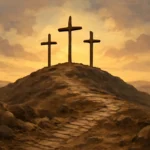
The events of the Passion Week culminate in the crucifixion on a hill outside the city and the subsequent burial in a nearby tomb. For Christians, the city becomes inseparable from the core claims of faith: that Jesus’ death is sacrifice, his resurrection is triumph, and his ascension fulfills his mission to redeem humanity. In many traditions, the resurrection is celebrated as the ultimate vindication of Jesus’ identity and mission, with Jerusalem serving as the site where the emptiness of the tomb becomes a source of transformative hope for all peoples.
Beyond the crucifixion and resurrection, the ascension—traditionally placed on the Mount of Olives—continues to anchor Christian devotion and eschatological expectation. For Christians, these events anchored in Jerusalem provide a theological architecture for how faith understands time, history, and eternity. The city thus moves from a historical stage to an enduring symbol of divine intervention in human history.
From late antiquity to the medieval imagination: pilgrimage and sanctification
As the Christian church took shape within the Roman Empire and beyond, Jerusalem emerged as a focal point for pilgrims seeking physical contact with sacred events. The practice of pilgrimage transformed the city into a living theater of faith, where believers could geographically anchor the stories they had learned in scripture. The early Christian practice of pilgrimage was not merely about tourism; it was formative for communal identity, theological education, and liturgical life.
Church-building and sanctification: The gradual construction of sacred spaces—most famously the Church of the Holy Sepulchre—made the city a multi-sited religious landscape. These sanctuaries conferred legitimacy on Christian worship in a town that had been the center of Jewish life and, for a time, the seat of imperial power.
Theologically charged geography: Christian thinkers and poets of late antiquity and the medieval period cast Jerusalem as a nexus of prophecy, fulfillment, and hope. The city served as a pedagogical tool: it made theological truths tangible and memorable, linking doctrine to place.
Ecumenical and interreligious dynamics: The city’s sanctity and contested control underpinned complex relationships among Christian communities, Jewish neighbors, and Muslim rulers. The result was a vibrant, though often fragile, fabric of religious life in which rites, liturgies, and rituals shaped the social landscape.
During the medieval era, pilgrimage routes expanded, and monastic houses, hospices, and scriptural schools fostered a sustained Christian presence in and around the city. The Christian imagination of Jerusalem was enriched by such works as hagiographies, liturgical calendars, and devotional poetry that celebrated the sacred geography of the place where much of the gospel story unfolded.
The Crusades and the reconfiguration of Christian Jerusalem
From the 11th to the 13th centuries, the Crusades brought a dramatic reconfiguration of Jerusalem’s Christian architecture, governance, and spiritual imagination. The Crusaders claimed the city as the political and spiritual capital of a renewed Christian kingdom and sought to reestablish Christian sovereignty over holy sites that had long been central to multiple faith communities. The period saw the rebuilding and fortification of churches and monasteries, new religious orders establishing themselves in the city, and a renewed emphasis on pilgrim routes that connected Christendom to the Holy Land.
Important features of this era include the creation of distinctive ecclesial precincts, the maintenance of sacred sites under Latin control, and a liturgical life that reflected Crusader piety. The Latin Patriarchate and other Latin Church institutions assumed roles that would influence Christian governance of holy spaces for generations. Yet the crusading centuries also left behind a legacy of religious sensitivity, political complexity, and ongoing negotiation among different Christian communities that would shape the city’s religious landscape in the centuries to come.
After Constantinople: sacred spaces, liturgy, and the enduring Holy Sepulchre
With the decline of Crusader prominence, Jerusalem’s sacred geography continued to inspire devotion through the ages. The Church of the Holy Sepulchre remained a central anchor for Christian worship, revered as the traditional site of Jesus’ crucifixion, burial, and resurrection. The church’s long and contested history—seasoned by divisions among Eastern and Western Christian traditions—became a script for ecumenical dialogue and careful stewardship. The site’s custodianship involved complex arrangements, often described in the “Status Quo” agreements that aim to preserve the religious rights of the various Christian communities sharing the space.
Other enduring sacred spaces, such as the Church of All Nations (the Basilica of the Agony), the Cenacle (the Upper Room), and the Garden of Gethsemane, continued to anchor Christian prayer and pilgrimage. The Mount of Olives, with its vistas over the city, holds a special place in Christian eschatology and liturgy, being associated with both Jesus’ farewell discourse and the expectation of his return. These sites helped frame Christian ritual life in a geography where the past meets the present, and worshippers could trace the steps of Jesus in a tangible way.
Jerusalem as a locus for Christian denominations: orthodoxy, Catholicism, and Protestant streams
The Christian presence in the Holy City has been profoundly shaped by the distinct identities and practices of Orthodox, Catholic, and Protestant communities, each of which has left an indelible mark on the city’s religious landscape.
Orthodox traditions
The Greek Orthodox Church has a storied history in Jerusalem, anchored by the Greek Orthodox Patriarchate of Jerusalem. This community has long maintained its presence on the grounds of the city’s sacred sites, with a focus on liturgical continuity, iconography, and the care of monasteries and shrines. The Orthodox tradition has preserved venerable rites that connect contemporary worship with the city’s ancient Christian roots, offering a distinctive liturgical voice that resonates through seasons like Great Lent and Pascha (Easter).
Catholic institutions
The Catholic Church preserves a parallel and influential presence in the Holy City through the Franciscan Custody of the Holy Land and the various Catholic communities that maintain churches, schools, and charitable works. The Church of the Holy Sepulchre is shared under a historic arrangement that involves several Christian communities. Catholic pilgrims, scholars, and clergy contribute to a robust tradition of scholarship on the city’s history and a dedicated program of interfaith dialogue and healing ministries in the region.
Protestant communities, including Anglican, Lutheran, and various evangelical groups, have long valued Jerusalem as a center for biblical interpretation, pastoral leadership, and mission. Pilgrimages, conferences, and ecumenical gatherings help sustain a global network of Christians who see the city not only as a site of events but as a living witness to faith, justice, and reconciliation. The Anglican Communion, for example, has historical ties through pilgrimage and prayer initiatives, while Protestant scholars continue to engage with the city’s biblical archaeology, archaeology, and heritage management in ways that illuminate the New Testament world.
Pilgrimage, sacred geography, and Christian practice in the Holy City
Pilgrimage to Jerusalem has remained a defining practice across centuries and confessions. Pilgrims walk the Via Dolorosa, tracing the path believed to have led Jesus to crucifixion, and pray at stations that mark the final hours of the crucified one. They visit the Church of the Holy Sepulchre to remember the tomb and resurrection, while others spend time in the Garden of Gethsemane or on the Mount of Olives, reflecting on the human vulnerability and divine providence seen in the gospel narratives.
In addition to specific sacred sites, Jerusalem’s sacred geography informs liturgy and sermon life. The city’s spaces become catechetical tools, offering tangible context for scriptural readings and theological reflection. For many Christians, walking through the city is a way of entering into the biblical story and recognizing how the gospel intersects history, memory, and hope. Pilgrimage also supports local Christian communities through hospitality ministries, educational programs, and interfaith engagement that reaffirm the city’s role as a shared spiritual space.
The modern era: Jerusalem in ecumenism, politics, and memory
In the modern era, Jerusalem has been at the center of political change and interfaith dialogue. The city’s status remains one of the most sensitive and enduring issues in the politics of the region. Yet many Christians emphasize that their historic and ongoing relationship with the city is deeply rooted in a shared desire for peace, justice, and mutual respect for sacred spaces.
Political realities and religious rights: The modern city is governed by a complex system of civil administration, with special arrangements that recognize the needs of diverse religious communities. The Status Quo arrangements strive to maintain traditional rights and responsibilities among custodians of holy sites, but shifts in politics can affect access, maintenance, and governance.
Religious education and archaeology: Universities, seminaries, and archaeological projects in and around Jerusalem contribute to a broader understanding of how the gospel narratives intersect with the city’s layered history. Scholars and clergy collaborate to interpret findings that illuminate the context of early Christian life and the development of sacred spaces.
Ecumenical dialogue: Across denominations, efforts to share programs, worship, and charitable activity reflect a commitment to unity in the city’s diversity. Joint pilgrimages, shared service projects, and dialogues about sacred space demonstrate a sustained effort to honor the city’s Christianity while respecting other religious traditions present in the Holy City.
For many Christians, Jerusalem remains a symbol of hope for reconciliation. The city’s legacy invites believers to reflect on the gospel’s call to peacemaking, justice, and mercy. The memory of the crucifixion and resurrection, interpreted through the city’s sacred topography, continues to inspire Christian ethics, art, and public witness. The Holy City’s ongoing story—as it is lived out in the daily lives of Christians, Muslims, and Jews who call it home—offers a powerful reminder that sacred history can be a living force for good when coupled with hospitality and mutual respect.
Key sacred sites and their significance in Christian devotion
Church of the Holy Sepulchre: Traditionally identified as the site of Jesus’ crucifixion and tomb, this church embodies the core Christian proclamation of death defeated and life renewed. Pilgrims and worshippers honor the tomb and participate in liturgies that connect the resurrection with daily life.
Golgotha (Calvary) and the Crucifixion narrative: The hill where Jesus is said to have been crucified anchors Christian devotion and the contemplation of sacrifice, forgiveness, and grace.
Via Dolorosa: The Stations of the Cross path through the old city provides a physical itinerary for contemplation on suffering, fidelity, and hope in God’s redemptive purposes.
Mount of Olives and the Ascension: A place of pilgrimage associated with Jesus’ final ascent and the expectation of his return, offering vistas over the city and a space for eschatological reflection.
Garden of Gethsemane: A site of prayer and sorrow that invites believers to reflect on obedience, struggle, and surrender to God’s will.
Cenacle (Upper Room): Traditionally associated with the Last Supper, this space has served as a symbol of communal worship, the founding of the church, and the continuity of the Eucharist across Christian centuries.
Churches on Mount Zion and nearby shrines: Numerous sanctuaries, including the Dormition Abbey and sites linked to biblical figures, contribute to a network of devotional spaces that anchor Christian memory in the city.
These places have not only historical value but also ongoing pastoral importance. Each site invites both locals and travelers to engage with the gospel’s narrative in a concrete way, transforming theory into embodied faith and communal worship.
Jerusalem in Christian memory and theology: a living symbol
Throughout history, Jerusalem has functioned as a living symbol in Christian theology. It stands for the fulfillment of prophecy, the inauguration of the church’s mission to the world, and the promise of the restoration of all things. The city’s memory is invoked in prayers, hymns, and sermons that connect the events of the gospel to present-day life. Theological reflection often uses the city as a lens to examine issues such as justice, mercy, humility, and courage in faith communities. For many Christians, the Holy City remains a powerful symbol of God’s presence among humanity and of God’s intent to restore all creation to harmony and peace.
In sermons and catechesis, Jerusalem is frequently described as the Holy City and as a beacon of divine revelation. The city’s sacred geography becomes a narrative framework for discussing topics such as redemption, covenant, and maturity in faith. Christians who read the Bible carefully will recognize how the city’s history mirrors the arc of salvation: from promise and destruction to revival and hope. The moral imagination of Christians is sharpened by contemplating how the city’s ancient past informs present ethical choices and future hopes for peace in the land where the gospel first took shape.
Practical guidance for readers: visiting, studying, and reflecting on Jerusalem in Christianity
Readers who wish to study or visit Jerusalem can approach the city with a framework that respects its religious significance and its political complexity. Some practical avenues include:
Study and reading: Engage with primary biblical texts describing Jesus’ ministry in Jerusalem, as well as patristic writings and modern scholarship on early Christian pilgrimage and sacred space. Compare gospel accounts with Acts and the writings of early church fathers to better understand how the city’s memory shaped Christian theology.
Liturgical immersion: When possible, participate in liturgies and devotional practices at the city’s sacred sites, bearing in mind the situational contexts and the diverse custodianship that characterizes the Holy City today.
Ecumenical engagement: Seek opportunities for dialogue with Orthodox, Catholic, Anglican, and Protestant communities to gain a fuller picture of how different Christian traditions inhabit and interpret the city’s sacred geography.
Historical and archaeological exploration: Explore museums and archaeological sites that illuminate the daily life of ancient Jerusalem, its temples, streets, and neighborhoods, to gain a grounded sense of context for gospel narratives.
Ethical reflection: Use the city’s memory as a starting point for ethical reflection on issues such as interfaith respect, peacebuilding, and the protection of sacred spaces for all communities.
In sum, Jerusalem in Christianity is not merely a page of history; it is a living, dynamic source of faith, worship, and moral imagination. From its biblical origins to its modern-day reality, the city continues to invite Christians to encounter the story of Jesus in a place where history, memory, and hope converge. Whether viewed through the lens of sacred architecture, liturgical life, pilgrimage practice, or ecumenical dialogue, the Holy City remains a powerful witness to the Christian claim that God is present in history and that history itself can be redirected toward new life and reconciliation.









Leave a Reply