The Hebrew calendar, also called the Jewish calendar or the Hebrew lunisolar calendar, is the framework Jewish communities use to determine religious holidays, sacred observances, and the annual rhythm of life. It is a unique system that reconciles the lunar cycle, which governs the start of each month, with the solar year, which keeps the seasons aligned with agricultural and religious festivals. Unlike a purely lunar calendar, where every month is fixed to a lunar phase, the lunisolar calendar adds a leap month in some years to keep holidays in their proper season. This combination creates a predictable, though intricate, cycle that lasts for many decades and is anchored by long-standing rules and astronomical concepts.
In practice, people living in the Jewish world use a written and fixed calendar that specifies when months begin, how many days each month has, and which years include an extra month. The new month begins with the beginning of the lunar cycle, traditionally observed at sunset on the eve of the new moon. The year itself is counted from the month of Tishrei, which is the civil or religious starting point for many counting traditions. When you hear about Rosh Hashanah as the Jewish New Year or about the annual cycle of holidays, you are hearing about a calendar that carefully matches religious chronology with seasonal change.
Historical roots and development
The roots of the Hebrew calendar reach into antiquity, but the modern fixed system has a precise mathematical backbone. In ancient times, calendars were observational and variable, following the actual crescent appearances or lunar sightings. Over centuries, Jewish scholars and communities developed a more formal approach to ensure predictability and consistency, particularly for festival dates that recur year after year.
The essential framework for the fixed calendar was established by the medieval Jewish authorities, culminating in a structured 19-year cycle that intercalates a leap month seven times within the cycle. This arrangement is part of what is often called the Metonic cycle in broader calendar theory, but in the Jewish tradition it is implemented with its own rules and conventions. The cycle ensures that major holidays like Passover and Hanukkah occur in their appropriate seasons and that agricultural and agricultural-adjacent readings align with the agricultural year.
Two practical tools underpin calendar calculations: the molad (the mean moment of the new moon) and a set of postponement rules known in Hebrew as the dehiyyot. The molad provides a theoretical rhythm for when a new month starts, while the dehiyyot adjust dates to avoid certain days of the week and to preserve the integrity of key holidays. For example, the rules prevent Rosh Hashanah from beginning on certain days of the week, and they also shape when a given year will be considered leap or common.
The result is a calendar that is both deterministic and historically grounded, balancing mathematical precision with centuries of liturgical and communal practice. When people plan holidays, fasts, or pilgrimages, they are really engaging with a calendar system that embodies centuries of Jewish thought about time, space, and sacred memory.
Structure of the Hebrew calendar
The calendar is organized around the two key ideas of months and years. Months are lunar in orientation, but the year as a whole is adjusted to stay in step with the solar year. This means that most months alternate between 29 and 30 days, and some years include an extra month to prevent the holidays from drifting through the seasons.
Months of the year
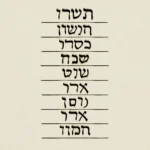
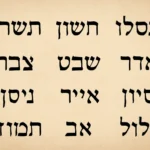
The list below follows the standard order of months in the religious and civil year, with notes about when holidays typically fall. In leap years, one additional month, Adar I, is inserted and the following Adar becomes Adar II.
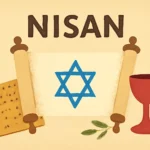
Nisan (30 days) — the month of Passover observances begins in the middle of Nisan, and the counting of the Omer begins here after Passover.
Iyar (29 days) — continues the counting of the Omer and leads into Sivan.
Sivan (30 days) — marks the celebration of Shavuot.
Tammuz (29 days) — a month in which the fast of the 17th of Tammuz occurs.
Av (30 days) — the 9th of Av (Tisha B'Av) is observed in this period, a major fast in the Jewish year.
Elul (29 days) — a month of preparation before the new year, with a focus on repentance and self-reflection.
Tishrei (30 days) — a pillar of the calendar; includes Rosh Hashanah, Yom Kippur, Sukkot, and Shemini Atzeret and Simchat Torah in most communities.
Cheshvan (29 or 30 days) — length varies by year; sometimes called “MarCheshvan” when accompanied by Kislev being longer.
Kislev (29 or 30 days) — its length varies; Kislev can balance with Cheshvan to produce a deficient, regular, or complete year.
Tevet (29 days) — follows Kislev and precedes Shevat, carrying its own liturgical readings.
Shevat (30 days) — features the holiday of Tu B’Av in some years and reading cycles that lead toward the next season.
Adar (29 days) — in a common year this is the last month before Nisan; in a leap year it is split into Adar I (30 days) and Adar II (29 days). The holiday of Purim typically occurs in Adar II during leap years and in Adar in common years.
Year lengths and leap years
The Hebrew calendar uses a 19-year cycle that inserts a leap month seven times. The insertion occurs in specific years of the cycle (commonly years 3, 6, 8, 11, 14, 17, and 19 in the cycle), and during those leap years the calendar adds Adar I and shifts Adar II to the later position. This leap month ensures that the major holidays continue to fall in their intended seasons.
The length of a Hebrew year can vary depending on whether it is a leap year and on how many days the months Cheshvan and Kislev contain. Year lengths are described in Hebrew calendar terms as:
Deficient years (often called “Chaser”) — 353 days in common years or 383 days in leap years.
Regular years (often called “Kesidah”) — 354 days in common years or 384 days in leap years.
Complete years (often called “Shalem”) — 355 days in common years or 385 days in leap years.
These variations arise from the way Cheshvan and Kislev are placed, which is part of the calendar’s intercalation logic. For people planning long-term schedules, it matters because it can affect the length of the year by a day or two, and thereby the rhythm of holidays and seasonal readings.
Key holidays and their calendar placement
The religious calendar is filled with annual observances that are anchored by the order of months. The major holidays set the pace for the year, and many of them have both historical and agricultural significance that the calendar intentionally preserves.
Autumn and early winter: the high holidays
Rosh Hashanah — 1–2 Tishrei. The Jewish New Year marks judgment and renewal. In many communities, the days surrounding Rosh Hashanah are filled with liturgical poetry, shofar blasts, and cosmically themed prayers.
Yom Kippur — 10 Tishrei. The Day of Atonement, observed with fasting and intensive supplication; a central day in the Jewish year.
Sukkot — 15–21 Tishrei. The Festival of Booths, which includes building and dwelling in a sukkah and reciting specific holiday readings.
Shemini Atzeret and Simchat Torah — 22 Tishrei and, in the Diaspora, 23 Tishrei. Shemini Atzeret is a separate but closely linked observance; Simchat Torah celebrates the Torah reading cycle’s completion and restart. In Israel, these two are observed together on 22 Tishrei; in many communities abroad, Shemini Atzeret is on 22 Tishrei and Simchat Torah on 23 Tishrei.
Winter and spring: light, fasting, and festival cycles
Hanukkah — typically mid- to late Kislev into Tevet. Although historically a minor festival in Biblical terms, it is widely celebrated with candle lighting, meals, and games during Kislev and Tevet, when the days start to lengthen and winter deepens.
Tu B’Av — 15 Av. Often called the holiday of love, a minor festival thought of as a romance or social day in many communities.
Purim — 14 Adar (or Adar II in leap years). A joyful festival featuring readings of the Book of Esther, costumes, and charitable giving. In a leap year, Purim often lands in Adar II rather than Adar I.
Spring: the grand agricultural and historical celebrations
Passover (Pesach) — 15–22 Nisan (and sometimes 23 if observed with updated time findings). The holiday begins with the Seder and continues for seven or eight days depending on tradition and location; it is a central annual festival tied to the Exodus narrative.
Counting of the Omer — begins on the day after Passover (16 Nisan) and continues for 49 days until Shavuot.
Shavuot — 6–7 Sivan. The Festival of Weeks, commemorating the giving of the Torah at Mount Sinai and richly associated with harvest themes in the ancient calendar.
Throughout the year: additional observances
Rosh Chodesh — the new month day; often celebrated with special prayers and readings for the beginning of each lunar month.
Fast days — including the Fast of Esther (9 Tevet or 13 Adar in some traditions) and other minor fasts depending on communal practice and historical remembrance.
Shabbat — weekly observance of Sabbath begins on Friday evening and ends on Saturday night, weaving weekly rest into the calendar’s rhythm.
The precise dates of some holidays, especially those based on lunar cycles like Hanukkah and Purim, can shift by a day or two from year to year due to the interplay between the lunar months and the solar seasons. The fixed calendar provides a reliable framework, while the everyday life of Jewish communities is shaped by local customs and historical memory surrounding these holy days.
Rules and concepts that guide the calendar
A set of guiding ideas ensures the calendar stays coherent across centuries. These include the structure of months, the intercalation of leap months, the start of a day at sunset, and a series of postponement rules known as the dehiyyot. Together, they ensure that the religious cycle remains aligned with practice and tradition.
Start of the day and the observance of days
In the Hebrew calendar, the day begins at sunset, not at midnight. This means that many holidays begin in the evening and continue through the following day. The evening-to-evening rhythm shapes how families light candles, recite prayers, and gather for festive meals.
Each month begins with the appearance or computation of the new moon in traditional counting, and the month length alternates in practice between 29 and 30 days. The relatively fixed pattern generally yields 29 days for some months and 30 days for others, though the exact lengths of Cheshvan and Kislev are variable a given year. The calendar’s algebraic rules allow a year to be 353–385 days long, depending on leap years and how those short-term months fall.
Leap years and Adar
The portrait of the leap year is a hallmark of the system. In the 19-year cycle, a leap month is added in seven years, and the month of Adar I is inserted before the regular Adar, shifting ordinary Adar into Adar II. This arrangement ensures that major holidays tied to the spring and early autumn maintain their seasonal integrity. In common years, the year contains twelve months; in leap years, thirteen.
Postponement rules (dehiyyot)
The calendar uses several postponement rules to prevent certain holidays from landing on days of the week that would be impractical. The best-known constraint is the prohibition against starting Rosh Hashanah on Sunday, Wednesday, or Friday; this is summarized in the mnemonic Lo ADU Rosh (L meaning Sunday, A for Monday, D for Tuesday, U for Wednesday; however, the idea is to avoid those three weekdays). Additional considerations propagate into other holidays to uphold the tradition that some days should not begin or end on problematic weekday boundaries, thereby preserving the integrity of sanctity and rest in the observance schedule.
Molad and calendar arithmetic
The concept of the molad—the mean moment of the new moon—and the measurement of chalakim (parts) are used to compute month starts. Although most people don’t perform these calculations by hand today, they underpin the fixed rules in calendars used by authorities and by modern calendar software. Understanding that the cycle is anchored in an astronomical rhythm helps explain why some years feel more compact and others more expansive.
Practical use: reading and using the calendar
Whether you study the Hebrew calendar to plan holidays, travel, or liturgical readings, a few practical points help you navigate the system with confidence.
Common formats and sources
Printed calendars used by synagogues and communities, typically listing Rosh Hashanah, Yom Kippur, Sukkot, and other major dates, along with the parsha readings for each week.
Online calendars and apps that provide both the Hebrew date and the Gregorian date, enabling cross-year planning in schools, workplaces, and families.
Printed or digital liturgy that aligns with the calendar, including the Omer count, the Havdalah prayers on Shabbat, and the various tefillot (prayers) associated with different months.
Planning around holidays
Families often prepare for Passover and Sukkot well in advance, not only for food and hospitality but also for specialized readings and family rituals.
Communities schedule educational programs, fasting opportunities, and charitable drives around fast days, Rosh Chodesh celebrations, and the rhythm of the Omer and Shavuot.
Travel and work leave may be coordinated with major holidays, especially those that involve public breaks or significant religious observances.
Regional differences and customs
Although the calendar is universal in its essential rules, communities around the world observe some customs that reflect their traditions and historical experiences. In Israel, the religious and civil calendars often align more closely, while in the Diaspora, two-day Yom Tov observances for certain holidays can affect scheduling. Local rabbis and community leaders may provide guidance on the precise observances that apply to their congregation.
Glossary of terms you’ll encounter
The following terms are common when discussing the Hebrew calendar and its holidays. Understanding them can help you follow discussions, liturgy, and planning.
Molad — the mean conjunction time of the new moon used in calendar calculations.
Dehiyyot — postponement rules that modify the starting date of certain holidays.
Tishrei — the first month of the civil year and the month containing Rosh Hashanah, Yom Kippur, Sukkot, and related observances.
Adar I — the extra month inserted in leap years, preceding Adar II.
Adar II — the second Adar in leap years, in which Purim is celebrated.
Cheshvan and Kislev — months whose lengths vary to determine whether a year is deficient, regular, or complete.
Chaser (deficient) year — a year with 353 days in common years or 383 days in leap years.
Kesidah (regular) year — a year with 354 days in common years or 384 days in leap years.
Shalem (complete) year — a year with 355 days in common years or 385 days in leap years.
Rosh Hashanah — the Jewish New Year, a pivotal holiday whose date anchors the calendar year.
Yom Kippur — the Day of Atonement, a solemn fast day following Rosh Hashanah.
Sukkot — the Festival of Booths, a week-long celebration beginning on 15 Tishrei.
Simchat Torah — the celebration of the Torah reading cycle’s completion and restart, often observed on 23 Tishrei in the Diaspora.
Hanukkah — theFestival of Lights, usually in Kislev and Tevet, lasting eight days.
Purim — a joyful festival celebrated in Adar (or Adar II in leap years).
Pesach (Passover) — a spring festival beginning on 15 Nisan with the Seder and continuing for seven or eight days.
Shavuot — the Festival of Weeks, concluding the counting of the Omer and commemorating the giving of the Torah.
Rosh Chodesh — the monthly observance marking the beginning of a new lunar month.
Variations in naming and framing the calendar
In English-language discussions, you will encounter several variations in referring to this system. Terms like Hebrew calendar, Jewish calendar, and Hebrew lunisolar calendar all point to the same framework, though they emphasize slightly different aspects. Some writers emphasize the religious calendar dimension, while others highlight the astronomical and arithmetic features that govern its operation. Regardless of wording, the calendar remains a cultural and theological instrument that organizes time around sacred history, agricultural cycles, and communal life.
For learners, it can be helpful to think of the calendar as having two interlocking layers: a lunar monthly rhythm that governs the start of each month, and a solar-year discipline that keeps the cycle aligned with the seasons. The interplay of these layers produces a robust system capable of accommodating long cycles of time—decades, centuries, and even millennia—while preserving the central religious events that structure Jewish life.
Common questions about the Hebrew calendar
Here are some frequently asked questions that often come up for students, travelers, and curious readers.
How is the new month determined? The new month follows the lunar cycle, with the month typically starting on or after the appearance of the new moon. In practice, communities rely on fixed calculations or rabbinic authorities to determine the exact dates for ritual purposes.
Why are some years leap years? Leap years insert an extra month to ensure that agricultural and religious holidays maintain their seasonal timing. Without this adjustment, holidays like Passover could drift into different seasons over long periods.
Why does Kislev sometimes have 29 or 30 days? The lengths of Kislev and Cheshvan vary to accommodate the year type (deficient, regular, complete). This variability is essential to the calendar’s long-term accuracy and its ability to match the solar year.
Is the calendar exact or approximated? The Hebrew calendar is designed to be highly precise and deterministic within the framework of its rules. The molad-based calculations and dehiyyot create a fixed system that has stood for centuries, though some calendars in use today may differ slightly in local practice or interpretation of certain calendar rules.
Putting it all together: a practical overview
The Hebrew calendar is a remarkable blend of ancient tradition and mathematical scheduling. By understanding the core ideas—months of the lunar cycle, the leap-year mechanism with Adar I and Adar II, the varied lengths of Cheshvan and Kislev, and the postponement rules that shape when holidays begin—you gain the tools to read any year with confidence. This calendar not only marks days of rest and celebration but also preserves a narrative about time itself: how communities remember the past, observe the present, and orient themselves toward the future.
Learn the major months and the typical holidays that fall within them.
Recognize the leap year pattern and how Adar I and Adar II affect Purim and other observances.
Note when a year might be deficient, regular, or complete to anticipate the total number of days.
Remember that days begin at sunset and that Rosh Hashanah cannot begin on Sunday, Wednesday, or Friday due to postponement rules.
For educators, travelers, and practitioners, this article provides a roadmap to understand and discuss the calendar with clarity. For families planning weddings, bar/bat mitzvahs, or vacations around Jewish holidays, this knowledge helps coordinate schedules with community calendars and synagogue announcements. In short, the Hebrew calendar is not just a method for tracking days; it is a living articulation of memory, faith, and the rhythm of Jewish life.





Leave a Reply