What Month Is It on the Jewish Calendar? A Guide to Jewish Months
What Month Is It on the Jewish Calendar? A Guide to Jewish Months
Figuring out what month it is on the Jewish calendar can feel like navigating two cycles at once: a lunar month cycle and a solar year. This structure gives the year its distinctive rhythm, with each month carrying its own character and set of religious and cultural observances. In this guide, you will learn the names, order, and content of the Jewish months, how leap years insert an extra month, and practical tips for determining the current month in Jewish time.
The Jewish calendar is a lunisolar calendar, which means that months are based on the cycles of the Moon, while the year is aligned with the solar seasons. To keep holidays in their appropriate seasons, the calendar occasionally adds a leap month. In most years, there are 12 months; in leap years there are 13 months. The days start with Rosh Chodesh, the new month, but the practical day-to-day observation often begins on the evening before, as the Jewish day runs from sunset to sunset.
Rosh Chodesh signals the start of a new month and can be celebrated with special prayers or customs in some communities. In some cases, Rosh Chodesh spans two days—one day or two days—depending on historical and ritual considerations.
The order of the months is fixed, but the presence of an extra month appears only in leap years. When a leap year occurs, Adar II is inserted, and the month of Adar II hosts the holiday of Purim and related customs.
Holidays and special observances are tied to specific months, so the name of the month is often the clearest clue to what is being celebrated or commemorated during that period.
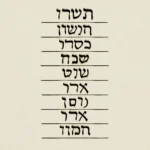
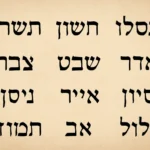
The months of the year in order
In the Jewish civil year, which begins in the autumn, the months are counted starting with Tishrei. In more traditional religious usage, counting can also begin in the month of Nisan, but for everyday civil life, the common frame is a Tishrei-based year. Below is the typical sequence of months, with the corresponding English names, the Hebrew name, and a brief sense of the season and major observances you’ll encounter in each one.
Tishrei (Tish-ray) — Season: early autumn in the Northern Hemisphere. Holidays: Rosh Hashanah, Yom Kippur, Sukkot, Shemini Atzeret, and Simchat Torah. This is the start of the civil year and a peak period for High Holy Day reflections, prayer, and family gatherings. Length: 29–30 days, depending on year type.
Cheshvan (Hesh-vawn) — Season: autumn toward late fall. Also known as MarCheshvan by some communities. This month often has 29 or 30 days, contributing to the variable length of the Jewish year. Notes: there are often no fixed holidays this month, which makes its length particularly important for balancing the calendar.
Kislev (Kis-lehv) — Season: late autumn into early winter. Highlight: Hanukkah (sometimes begins in Kislev, depending on the year). Kislev is also a month where the days begin to shorten toward winter in many northern climates.
Tevet (Teh-vet) — Season: winter. Highlight: the Fast of Tevet (a minor fast) occurs, and the month runs toward the end of winter notes in the calendar.
Shevat (Shvaht) — Season: late winter to early spring. Highlight: Tu BiShvat, the New Year for Trees, is celebrated in this month and often inspires environmental and nature-related customs.
Adar (Ad-ar) — in common years, this is the month of Adar. In leap years, it is split into Adar I (Adar Alef) and Adar II (Adar Bet). Holidays: Purim is celebrated in Adar II, and some communities observe customs tied to Adar I as well in leap years.
Nisan (Nee-sahn) — Season: early spring. Highlight: Passover (Pesach), one of the central festivals, begins in this month. The month includes Seder customs, matzah on the table, and a festive atmosphere that marks liberation themes.
Iyar (Ee-yar) — Season: spring. Highlight: Lag B’Omer, a festive day for some communities, often celebrated with outdoor gatherings and light-hearted events. The month typically has fewer major biblical holidays than some others, but it is a time of ongoing Torah study and community life.
Sivan (See-vahn) — Season: late spring. Highlight: Shavuot, the festival of giving the Torah at Mount Sinai, is observed in this month. This is a season of gratitude, study, and dairy foods in many traditions.
Tammuz (Tah-mmooz) — Season: summer into early autumn. Notes: fasting and fast-related customs appear in some communities around the 17th of Tammuz; this month leads toward the summer–autumn transition in the northern hemisphere.
Av (Ah-voov) — Season: summer. Highlight: Tisha B’Av, a day of mourning for historical calamities, occurs in this month in most years. The mood shifts toward reflection and preparation for the upcoming fast and the continuation of summer.
Elul (Eh-lool) — Season: late summer into early autumn. Notes: this is a season of preparation for the High Holidays in the coming month of Tishrei. Selichot prayers, character-building reflections, and spiritual preparation are common practices in many communities during Elul.
Holiday and observance highlights by month
Each month carries its own cadence of observances, fasts, and celebrations. Here is a concise guide to the major seasonal notes you’ll encounter, organized by month for quick reference.
Tishrei — The year’s most intense and prayerful period, with Rosh Hashanah, Yom Kippur, Sukkot, and the conclusion of the festival season with Simchat Torah.
Cheshvan — A relatively quiet month in many years; its length can vary, affecting the rhythm of the annual cycle.
Kislev — When Hanukkah commonly lights up the early winter nights, though the exact dates vary by year.
Tevet — A time of winter observances and a minor fast on the 10th of Tevet in many traditions.
Shevat — Tu BiShvat signals a holiday of trees and the renewal of nature in many communities.
Adar (Adar I in leap years) and Adar II (in leap years) — Purim is celebrated in Adar II, and the overall mood includes joy and communal celebration.
Nisan — The season of Passover, with Seder nights, festive meals, and the liberation narrative as a dominant theme.
Iyar — A period of continued study and community life; some communities observe Lag B’Omer festivities.
Tammuz — A bridge between spring and summer, with fewer fixed holidays but a sense of historical chronology continuing into the warm months.
Av — Tisha B’Av marks a day of collective mourning and reflection for community memory, followed by a shift toward late summer resilience.
Elul — A month of repentance and preparation for the new cycle of the year, including increased prayer and introspection.
What month is it today on the Jewish calendar?
Determining the current month in Jewish time is often a matter of consulting a reliable calendar that aligns the lunar months with the seasonal year. Here are practical steps you can use to identify the present month and understand its significance in daily life.
Check a reliable Hebrew calendar or digital calendar that displays the Hebrew date. Some popular sources include official community calendars, church or synagogue calendars, and widely used apps that show both Hebrew and secular dates.
Note whether the current year is a common year or a leap year. If you are in a leap year, you will encounter Adar I and Adar II.
Identify the month name from the Hebrew date. The name will tell you which month you are in (for example, Nisan or Tishrei), and you can then look up the major holidays and customs associated with that month.
Consider the two related counts: the prophetic or liturgical cycle (which holidays are in effect) and the seasonal cycle (how the weather and agricultural echoes are reflected). This helps you understand what the month feels like in practice, not just on the calendar.
If you want to learn the month by context, you can use a quick memory guide: the months that host major festivals tend to be more memorable (Tishrei for the autumn holidays, Nisan for Passover, Sivan for Shavuot, and Av/Tisha B’Av in midsummer), while Tu BiShvat and Purim mark the middle sections of the year.
Rosh Chodesh and two-day starts
Many communities observe Rosh Chodesh as the first day of a new month, and in certain months the new month can begin on a two-day window. When the start falls on a Sunday, Monday, or Thursday evening, you might see a two-day Rosh Chodesh observed by some traditions. Checking a reliable calendar will tell you exactly when the new month begins and whether any special observances accompany it.
Special cases: leap years and Adar I/Adar II
The Jewish calendar occasionally inserts an extra month to keep the lunar cycle aligned with the solar year. This occurs in leap years, known as Cheshvan and Kislev adjustments being part of the rhythm that makes the year workable across seasons. In leap years, the month of Adar is split into two: Adar I (Adar Alef) and Adar II (Adar Bet). The major holiday of Purim is observed in Adar II in most communities, while Adar I serves as the intercalated month that keeps the calendar in balance.
Adar I appears only in leap years and effectively lengthens the winter-to-spring segment of the year.
Adar II hosts most of the Purim festivities and the associated social and religious customs.
Practical tips for tracking the Jewish months in daily life
Whether you are studying Jewish texts, observing holidays, or simply trying to understand what to expect in the coming weeks, here are practical guidelines that can help you stay oriented about the months.
Keep a dedicated calendar that shows both the Hebrew date and the secular date. This reduces confusion when holidays fall on weekdays or weekends that shift each year.
Use reminders for Rosh Chodesh and major holidays. For many people, these dates anchor planning for meals, family gatherings, and study sessions.
When planning travel or events, note whether the upcoming year is a leap year. If so, you’ll be in Adar II for Purim and adjust calendars accordingly.
Educate yourself about seasonal themes tied to each month. For example, Hanukkah lights up in Kislev; Passover anchors Nisan; Shavuot anchors Sivan; and Tisha B’Av is observed in Av in most years.
Why the month names matter in practice
The names of the months are not just labels; they signal a rhythm of life, prayer, and community memory. The sequence helps congregations organize cycles of Torah readings, ritual obligations, and communal songs. For families, the month names can guide the planning of meals, study, and festival customs. The practice of aligning life around these months fosters a sense of continuity with generations past and a framework for future observances.
Common questions about the Jewish calendar and the months
Here are concise clarifications that frequently come up when people start to map their lives to the Jewish months.
Is the year always 12 months? No. In leap years, there are 13 months, with Adar II added after Adar I.
When does the year begin? In civil terms, the year begins with Tishrei in the autumn, but many religious readings and liturgical cycles also begin with Nisan in a different counting perspective.
Does every month have holidays? Not every month has a major festival, but most carry some observances, fasts, or unique customs—ranging from prayer intensifications to seasonal rituals like Tu BiShvat or Hanukkah.
How do I know exactly which month it is today? The most reliable method is to consult a current Hebrew calendar or an app that shows the present Hebrew date and any special observances for the day.
Resources to help you learn and track the months
Several trusted sources provide clear, user-friendly calendars and explanations of Jewish months, holidays, and the intricacies of the leap year cycle. Here are a few you can explore:
Chabad.org Jewish Calendar— A comprehensive resource with day-by-day Hebrew dates, holidays, and explanations of the Rosh Chodesh calendar.
HebCal — An online Hebrew calendar that includes Hebrew date, holidays, candle-lighting times, and sunrise/sunset data.
My Jewish Learning — Offers accessible articles about each month, major holidays, and the meaning behind the observances.
TimeandDate Jewish Calendar — Useful for cross-referencing secular dates with the Hebrew calendar and understanding how holidays align with the seasons in different years.
For quick reference, here is a compact synthesis that a reader can use to orient themselves in any given year. This guide emphasizes the major moments in each month and the way the rhythm unfolds across the year, especially for learners and new readers who want to internalize the pattern without memorizing every minor variation.
Tishrei — The autumn festival season; major days: Rosh Hashanah, Yom Kippur, Sukkot, Shemini Atzeret, Simchat Torah.
Cheshvan — A variable-length month that shapes the length of the year; typically quiet in terms of fixed holidays.
Kislev — Hanukkah sometimes begins in Kislev; the days start to darken in the northern hemisphere as winter deepens.
Tevet — Minor fast day observed on the 10th of Tevet in many communities.
Shevat — Tu BiShvat, the New Year for Trees, reflects on renewal and nature.
Adar (or Adar I, Adar II in leap years) — Purim is observed, with Purim II in leap years typically on Adar II.
Nisan — Passover (Pesach) week; a focal point of liberation themes and festive meals.
Iyar — Lag B’Omer is a hallmark event in some communities; a transitional month in the spring.
Sivan — Shavuot is celebrated, emphasizing Torah study and dairy foods in many traditions.
Tammuz — A month bridging spring and summer, with historical fasts observed in some communities.
Av — Tisha B’Av marks a day of mourning for historical calamities, followed by a return to later summer energy.
Elul — A month of introspection and preparation for the new cycle of the year.
Understanding the months in this way helps you connect the daily rhythm of life with the deeper historical and spiritual narrative of the Jewish year. As you become familiar with the names and the typical holidays associated with each month, you’ll find it easier to anticipate upcoming observances, plan family traditions, and participate more fully in community life.
If you would like to practice identifying the current month, try this quick exercise: pick a day and look up its Hebrew date on a trusted calendar. Note the month name, the year type (common or leap), and any major holidays that occur in that month. Then compare with a year in which you already know the month well—this helps reinforce the cycle and makes it easier to recall the month during future timelines.







Leave a Reply