Jewish Calendar: Your Essential Guide to Holidays and Dates
Jewish Calendar: Your Essential Guide to Holidays and Dates
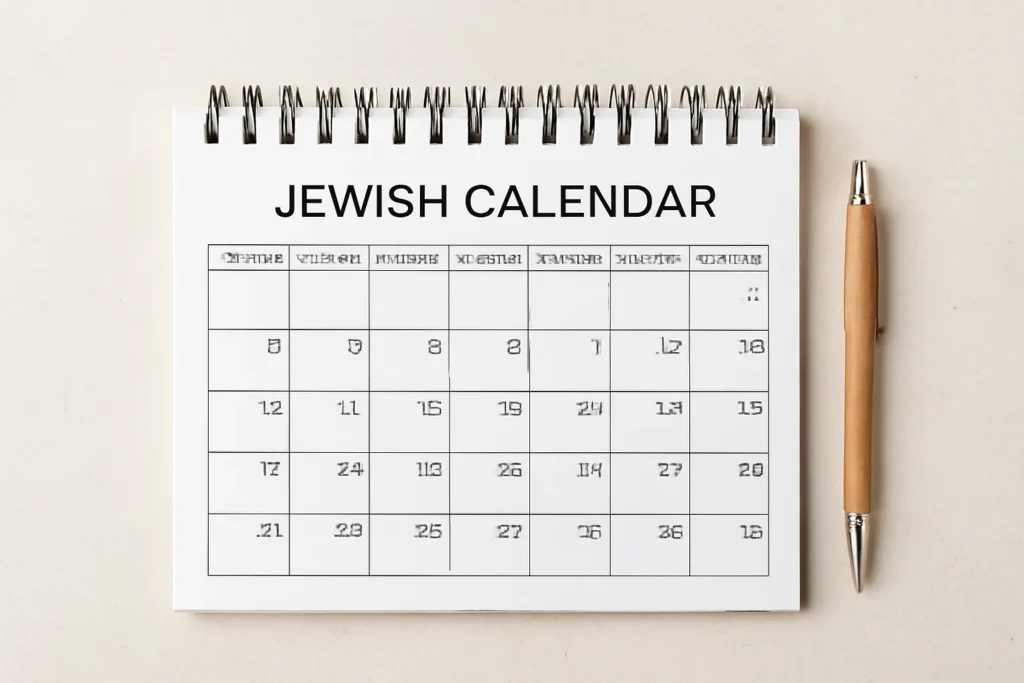
The Jewish calendar, also known as the Hebrew calendar, is more than a timetable for dates. It is a living framework that shapes religious practice, community life, and cultural memory for Jews around the world. This calendar is lunisolar, meaning it tracks both the cycles of the moon and the movement of the sun to keep holidays in their proper seasons. In practical terms, this means that some months begin with the new moon, while the overall year length is adjusted so that agricultural and seasonal markers align with the solar year. If you want to understand when to mark Shabbat, major festivals, or fast days, understanding the Hebrew lunisolar calendar is essential.
What is the Hebrew calendar, and why does it matter?
The Hebrew calendar is the official framework used by Jewish communities to determine the dates of holidays, Torah readings, and ritual life. It is a fusion of lunar months and solar-year alignment, which ensures that spring festivals like Passover occur in the spring and autumn celebrations like Rosh Hashanah occur in the fall. This system reflects centuries of rabbinic calculation, tradition, and practicality. Because it governs when holidays begin, when fasts occur, and even when certain ceremonial hours start, the calendar is a foundational tool for Jewish spiritual life.
Two core ideas shape the calendar:
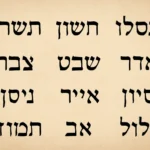
Month-by-month rhythm: Each month is tied to the lunar cycle. The months have traditional Hebrew names such as Nisan, Iyar, Sivan, Tammuz, Av, Elul, Tishrei, Cheshvan, Kislev, and for leap years, Adar I and Adar II.
Year alignment: The calendar must stay in sync with the solar year, so leap years insert an extra month and the lengths of certain months vary from year to year. This keeps the seasonal timing of major holidays consistent across the centuries.
For learners and travelers, the Hebrew calendar also helps explain why some holidays begin the evening before the stated date, why fast days move when a holiday interrupts them, and why some years feel longer or shorter than others. It is a calendar that serves both religious observation and agricultural memory, linking present practice to a long chain of tradition.
The metonic rhythm: the 19-year cycle and leap months
Central to the Jewish calendar’s structure is the Metonic cycle, named after ancient astronomers who noted that 19 solar years approximate 235 lunar months. The calendar uses this 19-year cycle to reconcile lunar months with the solar year. In practice, this means:
A 19-year cycle, with 7 leap years scattered through the cycle.
During leap years, an extra month is added, called Adar I, followed by Adar II (the regular Adar becomes Adar II in leap years).
Most common year lengths are 353, 354, or 355 days; leap years are 383, 384, or 385 days long.
These patterns are not arbitrary; they ensure that agricultural festivals tied to spring or harvest remain in their appropriate seasons. The calendar also uses fixed rules to determine the number of days in each month during various year types. Over centuries, scholars and communities refined the system so that the rhythm of holidays remains predictable yet flexible enough to accommodate the lunar cycle’s natural variation.
Months and core holidays: a month-by-month overview
The Hebrew calendar names each month in a sequence that echoes ancient Israelite life. The sequence is largely stable, with a key exception during leap years when Adar I and Adar II exist side-by-side. The following overview highlights the months and the major holidays that most people observe in those months:
Nisan — The month of liberation and rededication, hosting Passover (Pesach) on Nisan 15 (evening to evening). This is one of the calendar’s anchor celebrations, and it often features a two-day Yom Tov in the Diaspora.
Iyar — Follows Passover; often a quieter period, though some communities observe fasts or special prayers during this month.
Sivan — The month of receiving the Torah in the journey of liberation; Shavuot occurs on Sivan 6–7 (or 6–7, depending on calendar tradition), marking the giving of the Ten Commandments at Sinai.
Tammuz — A transitional month; the fast of the 17th of Tammuz occurs in many traditions, recalling the breach of the walls of Jerusalem in ancient times.
Av — A summer month in many regions; the 9th of Av (Tisha B’Av) is a major fast day recalling the destructions of the Temples and associated calamities in Jewish history.
Elul — A contemplative month leading into the new year; the shofar is often heard to awaken repentance.
Tishrei — The dramatic and sacred heart of the year, containing several major holidays in a single block: Rosh Hashanah (the Jewish New Year) on 1–2 Tishrei, followed by Yom Kippur on 10 Tishrei, and then the festival of Sukkot starting on 15 Tishrei, with Shemini Atzeret and Simchat Torah near the end of the month. The days in Tishrei shape the year’s character in many communities, as synagogue life and family meals center around these readings and prayers.
Cheshvan (MarCheshvan) — A month whose length varies; in some years it has 29 days, in others 30, depending on whether the year is short, regular, or long.
Kislev — Also length-variable; Kislev’s days may be 29 or 30, contributing to the overall year length and affecting when Hanukkah begins.
Adar I — In leap years, this additional month appears before Adar II. It is a full lunar month and helps align the calendar with the seasons.
Adar II — The month that carries Purim in most communities; in leap years, Adar II is the month in which Purim is celebrated, while Adar I is the extra intercalary month.
Notes on observance:
In the civil year (the count used for civil purposes and by many communities), the months are the same, but the exact day-of-week for holidays shifts from year to year due to the calendar’s arithmetic.
In a leap year, the addition of Adar I shifts the sequence so that Adar II becomes the month in which Purim is celebrated, while Passover and Shavuot retain their place in the spring.
The postponement rules and how the year is set
One of the distinctive features of the Hebrew calendar is the system of postponements, known as dehiyot in Hebrew. These rules regulate how the start of the year, 1 Tishrei, is determined to avoid problematic or impractical day-of-week alignments. Key concepts include:
Lo ADU Rosh: Rosh Hashanah cannot fall on Sunday, Wednesday, or Friday. This prevents certain combinations that could lead to fasts or passages in Torah readings that are awkward or problematic in the weekly cycle.
Another set of rules ensures that the molad (the average moment of the new moon) does not place Rosh Hashanah in a way that would create conflicting annual lengths or ritual constraints. If the molad occurs late on a given weekday, the calendar is adjusted (postponed) to the next permissible day.
In practice, these restrictions help prevent Rosh Hashanah and the year’s overall rhythm from producing certain problematic sequences of days for holidays like Yom Kippur or Sukkot.
The result is a calendar that is both rooted in lunar months and carefully managed so holidays can be observed with the right seasonal feel and weekday structure. While the exact calculations are highly technical, the practical effect is that the start of the year and the length of the year are predictable, with a well-understood set of postponement rules that keep holidays from landing on awkward days of the week.
Two-day observances, regional differences, and how holidays appear on the calendar
A hallmark of the historical Jewish calendar system is the practice of observing certain holidays for two days in many communities outside Israel. This tradition arose because ancient communities did not have the means to witness the new moon elsewhere with certainty, so two days were observed to ensure that the holiday began on the correct date. Today, the two-day practice persists in much of the Diaspora for some holidays, while Israel and many modern communities observe a single day for others. Important distinctions include:
Rosh Hashanah is observed on 1–2 Tishrei in most communities, including in Israel, reflecting its status as a major, year-opening festival.
Yom Kippur typically remains a one-day fast on 10 Tishrei across communities, though the preceding and following days can involve special prayers and prep.
Passover (Pesach) has a two-day Yom Tov at the start and end in many Diaspora communities, making the holiday span a total of eight days in those regions. In Israel, Passover begins on the 15th of Nisan and is observed for seven days, with an ending second day only in certain traditions or communities.
Shavuot is commonly observed as a one-day festival in Israel and as a two-day festival in many Diaspora communities, depending on local practice.
Sukkot and Shemini Atzeret have nuanced observances: in the Diaspora, the holiday structure often includes two days of Yom Tov at the start of Sukkot and two days of Yom Tov at its conclusion, while Israel typically follows a one-day pattern for some of these days, with combined observances on certain dates.
Despite these regional variations, the rhythm of the calendar remains coherent: the same year types and month order apply, while the number of observed days for certain holidays may vary by locale. This blend of unity and local practice is a distinctive feature of modern Jewish life across the world.
Some holidays occur on fixed dates within the Hebrew month, while others are fixed to a certain day of the week or to a specific number of days after a preceding festival. In particular, the months Cheshvan and Kislev show variation that affects the length of the year and, consequently, the placement of holidays in the calendar. For example:
The length of Cheshvan and Kislev can vary, creating short, regular, or long Hebrew years. This variability is what produces years of 353–355 days (common years) or 383–385 days (leap years).
The date of Hanukkah in the secular calendar shifts year by year because it begins on 25 Kislev, which moves in relation to the solar year. In some years it falls early in December, in others, it slides toward late December.
When you study the calendar, you will notice that some years feel longer or shorter in terms of the number of days between the High Holidays and wintertime celebrations. This is a natural outcome of the calendar’s structure and its continuous effort to maintain alignment with both lunar cycles and civil seasons.
Key holidays and their typical timing on the Hebrew calendar
Understanding where major holidays appear helps people plan, celebrate, and study. The following is a concise map of the main festival days and how they usually align within the Hebrew calendar year:
Rosh Hashanah — 1–2 Tishrei; the Jewish civil year begins with these two days of prayer and introspection.
Yom Kippur — 10 Tishrei; a day of fasting, repentance, and communal reflection.
Sukkot — 15–21 Tishrei (first days are festival days in most places outside the Land of Israel; Chol HaMoed spans 17–20 Tishrei).
Shemini Atzeret — 22 Tishrei (and in the Diaspora, Simchat Torah may occur on 23 Tishrei in some communities).
Hanukkah — 25 Kislev to 2–3 Tevet (about eight days; varies slightly due to Kislev’s length).
Purim — 14 Adar (or Adar II in leap years); celebrated with reading of the Megillah and festive meals.
Pesach (Passover) — 15–22 Nisan (the diaspora may observe two Yom Tov days at the start and end); includes the Seder on the evening of 15 Nisan.
Shavuot — 6 Sivan (one-day in many places, two days in others); marks the giving of the Torah at Sinai.
Rosh Chodesh — the beginnings of each Hebrew month, observed with special prayers and sometimes festive meals, varying in how it is celebrated across communities.
Beyond these, the calendar also marks fast days and special Shabbatot (Sabbaths) within the yearly cycle. The interplay of fixed dates and variable year lengths means that a family’s annual rhythm can feel quite different from one year to the next, even as the core holidays remain recognizable.
Practical use: reading the calendar, festivals, and daily life
For students, travelers, and practitioners, the Hebrew calendar is a practical tool for planning. Here are some helpful tips to engage with the calendar in daily life:
Know the week structure: A Hebrew day begins at sunset, so holidays often start in the evening before the calendar date shows. For example, the holiday begins on the evening of 1 Tishrei and ends at nightfall of the 2nd day.
Consult regional practice: Depending on where you live, some holidays may be observed for two days, while others are observed for a single day. Diaspora communities often observe two days for major holidays, while Israel generally follows a one-day pattern for most holidays, with some exceptions.
Use reliable conversion tools: If you need to convert a Hebrew date to a Gregorian date (or vice versa), online calendars and mobile apps can be very helpful. The conversion accounts for leap years and the variable lengths of months.
Plan around Shabbat: Shabbat timings and candlelighting vary by city and tradition. The Hebrew calendar’s structure helps you plan meals, synagogue attendance, and family time around these weekly cycles as well as the annual festivals.
For educators and organizers, a calendar-aware approach helps schedule community events, study sessions, and religious services in ways that respect both the lunar rhythm and the seasonal timing of the holidays. The calendar is not just a set of dates; it is a guide for communal life, study schedules, and the cadence of prayer across the year.
Calculating and following the calendar: a high-level overview
Below is a simplified sense of how the Hebrew calendar comes to life for a given year. The specifics of the algorithms are detailed and technical, but the overarching idea is accessible:
Determine the year type: Decide whether the year will be common (353–355 days) or leap (383–385 days). This is driven by the 19-year cycle.
Place the months: Assign the lengths of Cheshvan and Kislev to fit the chosen year type, ensuring that Rosh Hashanah (1 Tishrei) lands on an allowed weekday and that the year’s days align with the molad and dehiyyot rules.
Set holidays: Attach each festival or fast to its lunar date within the year, knowing that some observances begin the evening before and that some days are two-day events in the Diaspora.
Publish a calendar: Produce year-specific calendars that show the exact Gregorian dates for each Hebrew date, making it possible for communities to plan weddings, school calendars, and public events well in advance.
Although the math behind the calendar is intricate, the practical result is a reliable schedule that preserves ancient patterns while accommodating modern needs. The system’s resilience comes from its combination of fixed-month rhythm, variable year lengths, and thoughtful postponement rules, all of which ensure that holidays remain meaningful within the cycle of the year.
To navigate conversations about the calendar, here is a concise glossary of important terms. The bolded terms appear in the article to emphasize their significance:
Hebrew calendar — another name for the Jewish calendar; emphasizes Hebrew usage and cultural context.
Jewish calendar — a common variation of the same system; used interchangeably in everyday speech.
Lunisolar calendar — a calendar that tracks both lunar months and solar years to stay in season.
Metonic cycle — the 19-year cycle that governs leap years and intercalation of months.
Adar I and Adar II — the leap-month pair added in leap years; Adar II contains most of the Purim celebrations.
Tishrei, Nisan, Kislev, Cheshvan, Tevet — names of months in the calendar; they anchor holidays and readings.
Rosh Hashanah — the Jewish New Year, a two-day festival marking the start of the civil year.
Yom Kippur — the Day of Atonement; a one-day fast with intense prayer and reflection.
Sukkot, Shemini Atzeret, Simchat Torah — a cluster of autumn holidays following Rosh Hashanah and Yom Kippur, with distinct ritual days in and outside Israel.
Pesach (Passover) — a week-long festival celebrating liberation; its date is the 15th of Nisan.
Shavuot — the festival of weeks, marking the giving of the Torah at Sinai.
Molad — the approximate moment of the new moon used in calendar calculations.
Dehiyot — postponement rules that help determine the exact start of the year and the alignment of holidays.
Lo ADU Rosh — traditional rule restricting Rosh Hashanah from falling on Sunday, Wednesday, or Friday.
Cheshvan and Kislev — months with variable lengths that influence the year’s total days.
A practical guide for learners, families, and travelers
Whether you are studying Jewish history, planning a family celebration, or traveling during a Jewish holiday, a grasp of the calendar cycle enhances planning and respect for observances. Here are practical tips to keep in mind:
Look ahead at the year: Before a new year begins, many calendars show which holidays fall on which dates in the Gregorian year. This helps plan school calendars, trips, and family gatherings.
Note the evenings: Many holidays begin at sunset. If you are planning a meal, a outward-bound trip, or a flight around a holiday, account for the evening start time that marks the holiday’s first day.
Respect regional practice: If you’re joining a new community, be aware that some holidays may be observed for two days in the Diaspora, while Israel might observe a single-day pattern for the same holiday. When in doubt, consult a local synagogue or community calendar.
Use reliable resources: A trusted calendar app or official community calendar can help you track the Hebrew date alongside Gregorian dates, ensuring you don’t miss a key fast or festival.
The calendar is a bridge between ancient ritual and modern life. By knowing its logic and honoring its rhythms, you can participate more fully in holidays, routines, and learning opportunities across seasons and years.
Further reading and exploration
For readers who wish to delve deeper, consider exploring topics such as the historical development of the Hebrew calendar, traditional rabbinic rulings around calendar calculations, and a comparative look at how different Jewish communities observe holidays in relation to the calendar's structure. You may also encounter scholarly works that explain the interplay between lunar months, solar adjustment, and ritual life across centuries.
Summary: the essential portrait of the Jewish calendar
In sum, the Jewish calendar, or Hebrew calendar, is a meticulously crafted lunisolar system that coordinates months, years, and religious observances. Built on the Metonic cycle and guided by postponement rules, it reconciles lunar rhythm with solar seasons, keeping holidays in their proper time. Its structure—featuring leap months (Adar I and Adar II), variable month lengths (especially Cheshvan and Kislev), and region-specific practices for two-day observances—produces a calendar that is both stable and responsive to tradition and community needs. Whether you consult it to plan a trip, follow ritual readings, or mark birthdays and anniversaries in alignment with the year’s holy days, the broader purpose remains clear: the calendar is a map of time that anchors memory, faith, and daily life for Jewish communities around the world.





Leave a Reply