
What is the Jubilee Year (Yovel) in Jewish tradition?
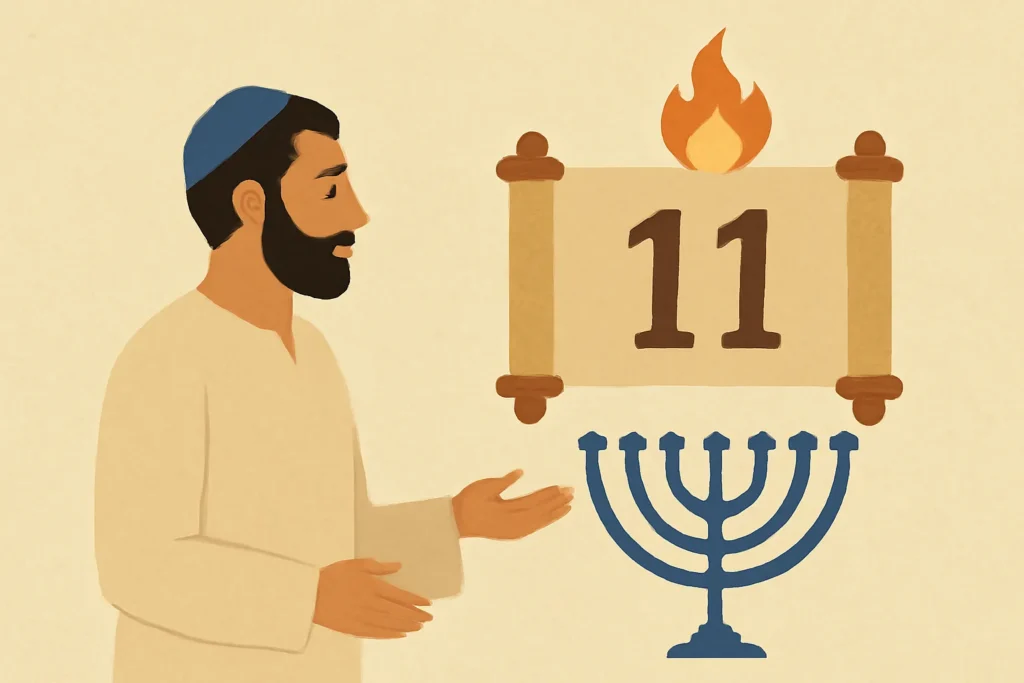
The Jubilee year, known in Hebrew as Yovel, is a foundational concept in Torah law that envisions a special release and reset every 50 years. According to the biblical text in Leviticus 25, the Jubilee year comes after seven cycles of seven years—a total of 49 years—followed by the 50th year, which is proclaimed as a year of release. In this year, several social and economic resets are imagined: land that had been sold or mortgaged should return to its original family, ancestral property should be restored, and Hebrew servants or indentured laborers were to go free. In short, the Jubilee year is a holistic reset of land tenure, debt, and social status within the Land of Israel, designed to prevent long-term inequities and to sustain a sense of communal balance across generations.
In rabbinic tradition, the Jubilee is closely linked with the Shmita cycle—the sabbatical year that occurs every seven years when the land is to lie fallow and debts may be forgiven. The Jubilee is the next, ampler release that completes the cycle. The two concepts are deeply connected: the Shmita year is the stepping stone toward the Yovel, and the Yovel looks back on the seven Shmita years as a larger frame for liberation and restoration.
Today, many people encounter the Jubilee primarily as a calendar and historical concept rather than a regularly observed holiday in modern life. The central reason is practical: the full implementation of a Jubilee would traditionally require an Israelite Temple and a Sanhedrin (the ancient Jewish high court) to declare and oversee the proceedings. Since the Temple in Jerusalem is not standing and the Sanhedrin does not function in the formal sense, most communities do not observe a Jubilee in the way ancient times envisioned. Nevertheless, the theoretical framework remains a powerful lens through which to study property, debt, and social justice in Jewish law.
Shmita and the Yovel: Key distinctions
Two related—but distinct—biblical cycles structure ideas about land, rest, and release. Understanding their differences helps clarify when the Jubilee would occur, and what would need to happen for it to be observed today.
- Shmita (the sabbatical year): Occurs every seven years. The land is to rest, and debts may be canceled according to rabbinic interpretation in many communities. Shmita sets the rhythm for a seven-year cycle, ending in a year commonly referred to as the shmita year.
- Yovel (the Jubilee year): Occurs every 50 Hebrew years, following seven complete shmita cycles. The Jubilee year is the culmination of a longer-term reset—the release of land for its original families, the freeing of Hebrew slaves, and the forgiveness or reset of certain debts.
- Practical distinction: Shmita is primarily a year-long rest and debt-relief mechanism; Yovel adds land restoration and broader social restoration. In the biblical text, the Jubilee is a more comprehensive release that operates on a national, land-focused level in the Land of Israel.
How the Hebrew calendar structures time
Hebrew calendar basics
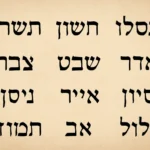
The Hebrew calendar is lunisolar, combining lunar months with solar-year adjustments to keep the calendar in step with the seasons. The basic unit is the month, traditionally 29 or 30 days, giving a lunar month of about 29.53 days. To synchronize with the solar year, the calendar inserts leap months in a 19-year cycle. The sequence of months has names that are familiar in Jewish life, such as Nisan, Iyar, Sivan, Tammuz, Av, Elul, Tishrei, Cheshvan, Kislev, Tevet, Shevat, and Adar (with Adar II in leap years).
The year type in the Hebrew calendar can be regular (common) or leap, with leap years containing an extra month (Adar II). The length of a Hebrew year varies, generally from 353 to 355 days in common years and from 383 to 385 days in leap years. The distribution is tied to an intricate arithmetic system designed to keep the calendar aligned with the seasons while preserving the lunar rhythm.
Rosh Hashanah, the Jewish New Year, marks the start of the civil year and the religious year for many purposes. It falls on 1 Tishrei, a date that shifts in the Gregorian calendar year-to-year but is anchored in the Hebrew lunar-solar cycle. Because the Jubilee is a Hebrew-year concept, the practical question of “when is the next Jubilee?” must be addressed in Hebrew years first, before translating to a Gregorian date.
Leap years and the Metonic-like cycle in practice
The Jewish calendar uses a 19-year cycle to synchronize months with the solar year by adding a leap month in certain years. In a typical 19-year cycle, there are seven leap years (years 3, 6, 8, 11, 14, 17, and 19 of the cycle, though the exact placement is part of the canonical rules). The addition of Adar II in leap years is what keeps the lunar months aligned with the solar year so that holidays occur in their proper seasons. This mechanism is essential to understanding how the Yovel would be calculated: even though the Jubilee is counted in Hebrew years, the day-to-day realization of a 50-year cycle interacts with these leap-year adjustments and the broader lunisolar structure of the calendar.
Calculating the Jubilee year: step-by-step
In contemporary discussion, there is no single official date for the next Jubilee because the Jubilee requires a declaration and the legal infrastructure that modern life does not currently provide. Nevertheless, the method for calculating the Jubilee in theory is straightforward: it is the 50th year after the beginning of a seven-cycle sequence of Shmita years, i.e., after 49 years of Shmita cycles. If an anchor year is established, every 50 Hebrew years from that anchor marks another Jubilee year. The practical steps below lay out how one would approach the calculation if a starting point were agreed upon.
- Identify the anchor year: Find a Hebrew year that is widely accepted as the starting point for the current counting cycle. In historical discussion, some anchor points are proposed by scholars, but none are universally accepted for practical observation today. A clear anchor is essential to determine a future Jubilee date in Hebrew years.
- Confirm the Shmita cycle alignment: The Jubilee sits on the 50th year after seven cycles of Shmita. Determine that the current Hebrew year is positioned as the culmination of seven shmita cycles or, if not, when the next shmita cycle ends. In other words, verify that the year in question corresponds to the 7th year of a shmita sequence that would lead into the 50th year.
- Add 50 Hebrew years to the anchor year to obtain the next potential Jubilee year in the Hebrew calendar. Formula: Jubilee year (Hebrew) = Anchor year + 50, then +50, and so on for subsequent Jubilees.
- Translate to the Gregorian calendar: Since the Jubilee is defined in Hebrew years, converting to Gregorian years involves a conversion that is approximate in practice because the exact day depends on Tishrei 1 (Rosh Hashanah) alignment. A typical conversion yields a range in the Gregorian calendar for the Jubilee year, often around the fall of the starting Hebrew year to the next year in the winter/ spring depending on the month alignment.
- Account for practical observance constraints: Even with a computed Hebrew-year date, the actual observance of a Jubilee would require the Temple and the Sanhedrin, ceremonial proclamations, and the social/legal mechanisms that the Torah outlines. Without those, the date remains a theoretical marker rather than a current, implementable holiday.
For a compact summary: the Jubilee is a 50-year milestone, measured in Hebrew years, anchored to a starting point in the seven-shmita-cycle framework. The steps above describe how a calculation would proceed if an official starting point were established and if the social/legal prerequisites for a Jubilee were in place.
Is there a next Jubilee? Current status and debates
The central question many readers have is whether there is a concrete, upcoming Jubilee in the Gregorian calendar. The honest answer in most rabbinic and academic discussions is nuanced: there is no current, universally recognized date for the next Yovel in the modern era. Several factors contribute to this reality.
- Temple and Sanhedrin prerequisites: The classical Jubilee depends on the worship structure and the legal authority to declare property restitution, debt forgiveness, and other aspects of the program. The loss of the Temple and the lack of a functioning Sanhedrin mean that, in practical terms, there is no formal declaration mechanism today.
- An agreed starting point: Different authorities and scholars have proposed various anchors for the counting, but there is no single, accepted starting Hebrew year that historians or halachic authorities uniformly endorse for today’s Jubilee calculation.
- Halakhic opinions about ongoing applicability: Some rabbinic authorities maintain that the land-restoration and debt-release laws are still conceptually binding, while others treat them as applicable only in a context where the Temple is standing and the land-market laws can be reinterpreted or reactivated. This divergence affects whether people actively try to predict or prepare for a future Jubilee.
- Calendar complexity: The Hebrew calendar’s leap-year structure, the precise alignment with Shmita, and the fact that the Jubilee is a national restoration concept all add layers of complexity that make a precise near-term date uncertain even for scholars who study the topic seriously.
What would be required for the next Jubilee to be observed?
- The construction or reconstruction of a central Temple apparatus and the means to perform the complex religious and legal procedures described in the Torah.
- A restored Sanhedrin or an authoritative modern equivalent capable of making binding proclamations about land, debt, and property restitution.
- A consensus among leading rabbinic authorities about the methodology of counting, including the starting point for the cycle and the interpretation of the applicable laws in a modern context.
- A political and social framework in which land tenure, debt, and family inheritance can be addressed according to the Jubilee’s framework while maintaining social stability and the rule of law.
Because these conditions are not currently met in most communities around the world, many people who follow Jewish law treat the next Jubilee as a future theoretical moment rather than an imminent, observable holiday. Yet the concept remains a powerful symbol for ideas about social justice, debt relief, and the restoration of land within Israel. In that sense, the Jubilee continues to serve as a guiding moral and legal ideal, even if the practical ceremony has not been enacted in modern times.
Hypothetical dates and illustrative scenarios
To illuminate how the calculation would work without asserting a definite near-term date, it can be helpful to consider a hypothetical anchor. Suppose a widely discussed anchor year is Hebrew year 5760 (a common reference point in discussions of late-1990s to early-2000s). If 5760 is treated as the starting point of a counting cycle, the next Jubilee would, in a straightforward arithmetic sense, occur in Hebrew year 5810. Translating these Hebrew years to the Gregorian calendar places the corresponding Jubilee period roughly in the late 2040s to early 2050s, depending on the exact Tishrei-to-Gregorian alignment used by a given conversion method. Here’s what that scenario would suggest in a compact form:
- Anchor year: 5760 (roughly 1999–2000 CE)
- Next Jubilee (theoretical): 5810 (roughly 2049–2050 CE)
- Subsequent Jubilees: 5860, 5910, and so on, each 50 Hebrew years apart
Important caveats for this illustrative approach:
- The above is a purely hypothetical demonstration. It does not reflect an official declaration or an agreed-upon modern practice for observing a Jubilee.
- The Gregorian dates are approximate because the Hebrew calendar is lunisolar and the exact day for a Jubilee would depend on a formal declaration and on how the calendar converts year boundaries.
- Different scholars or communities might prefer different anchor points, which would yield different Gregorian translations for the same Hebrew-year target.
Another illustration could choose a different anchor—say, a Hebrew year associated with a particular generational debate or a historical milestone. The core idea remains: once an anchor year is accepted, every 50 Hebrew years thereafter marks the Jubilee year by the cycle’s logic. The critical takeaway is that the presence or absence of an official anchor dramatically affects the ability to name a definite “next Jubilee” in our era.
Calendar details and practical implications for modern life
Beyond the philosophical and halachic debates, the Jubilee concept also touches practical questions about land, property, and debt in modern life—and how those ideas might be interpreted in Israel today if ever reinterpreted or reactivated in the public sphere. While the official Jubilee is not in effect, several themes from the Jubilee have informally influenced modern Jewish thought and policy thinking in various communities.
- Land ownership and restorative ideals: The Jubilee’s land-restoration impulse invites reflection on how land is allocated, how ownership is transferred, and how to mitigate long-term inequities that arise from inherited property and debt structures.
- Debt relief and economic justice: The idea of debt forgiveness in the Jubilee carries moral weight for discussions about fair lending, consumer debt cycles, and social safety nets in contemporary societies.
- Collective responsibility: The Jubilee underscores a communal accountability framework—the idea that a society can recalibrate after cycles of growth and stress to maintain balance and communal resilience.
- Halakhic flexibility: The modern conversation about the Jubilee illustrates how traditional legal systems can imagine future mechanisms for social reform, even when the original instruments (a standing Temple and Sanhedrin) are not present.
Readers fascinated by dates and calendars often ask not only “When is the next Jubilee?” but also “How do different calendars interact when you try to project a future Jubilee?” The answer lies in the relationship between biblical cycles and the astronomical logic of the Hebrew calendar. The Jubilee is anchored in a 50-year cadence, but the calendar that underpins that cadence is a carefully engineered lunisolar system with leap months and variable year lengths. The result is a date that must be interpreted within a precise set of rules and, in modern life, within a framework that recognizes the absence of a formal declaration or ritual apparatus for an official Jubilee.
Frequently asked questions about the next Jubilee
Can we ever know the exact Gregorian date of the next Jubilee?
Not with certainty in the present era. The calculation depends on an agreed starting point and on the ability to enact the Jubilee’s social and legal provisions. Without a functioning Temple and a recognized Sanhedrin, there is no official date to publish or verify. If a community or authorities were to establish a starting anchor year, then it would be possible to project subsequent Jubilees in Hebrew years and translate them into approximate Gregorian years, acknowledging that conversion carries some approximation.
Why doesn’t the Jubilee happen automatically every 50 Hebrew years?
The Jubilee is not a purely automatic civil calendar event. The Torah’s instructions anticipate a national declaration and a social mechanism for land return, debt release, and emancipation. The absence of a contemporary framework for declaring and implementing these laws means the Jubilee remains a theoretical milestone rather than a ready-to-activate celebration in most communities.
Are there modern groups that discuss possible Jubilee dates?
Yes. Various scholars, rabbis, and Jewish communities study the Jubilee in historical, legal, and ethical contexts. Some discussions focus on how a modern society could reinterpret the Jubilee’s principles in ways that fit contemporary legal and social realities, even if they stop short of claiming an imminent, calendar-driven Jubilee. It is important to distinguish between scholarly inquiry and a calendrical prediction or a proposed official observance.
Putting it all together: the bigger picture
The question “When is the next Jewish Jubilee?” intersects theology, calendar science, history, law, and social ethics. The Jubilee is a powerful scriptural concept that invites people to consider how a society might reset, restore, and renew itself after cycles of economy, land tenure, and debt. In the modern era, the absence of a Temple and a functioning Sanhedrin means the Jubilee is not currently a date on the calendar that can be proclaimed in the same way as other holidays. Yet the core ideas continue to influence discussions about justice, fairness, and communal responsibility in Jewish thought and in conversations about Israel’s land and economic laws.
For readers who want to stay informed about this topic, a practical approach is to follow scholarly work on Leviticus 25 and related rabbinic literature, monitor any official proclamations by credible halakhic authorities (should they arise), and keep in mind that the calendar itself can be studied independently of a formal Jubilee declaration. If you are curious about a hypothetical projection, you can use the method described above with an anchor year of your choosing to explore how a 50-year cadence would place a Jubilee in the Hebrew calendar. Just remember that any such projection is theoretical in the absence of an actual Jubilee declaration.
In sum, the next Jubilee, as a concrete date in the Gregorian calendar, is not currently fixed in Jewish practice. The concept remains a meaningful standard by which to measure social justice, economic balance, and family restoration within the Land of Israel. Whether future generations reintroduce a formal Jubilee ceremony or reinterpret its lessons in a modern context, the core values—resetting cycles to protect the vulnerable, restoring land to its original families, and freeing people from burdens—continue to resonate across centuries of Jewish thought.





Leave a Reply