Jesus Heals Woman with Bleeding: Faith, Healing, and the Bible Story
Jesus Heals Woman with Bleeding: Faith, Healing, and the Bible Story
The story commonly titled Jesus Heals the Woman with the Issue of Blood sits at a critical crossroads in the Gospels. It unfolds in a moment when a crowd presses in on Jesus, a desperate woman moves with quiet courage through the throng, and a bereaved expectation about another healing erupts into a living demonstration of faith, compassion, and divine power. This narrative, found in the Synoptic Gospels—the accounts of Luke, Mark, and Matthew—offers more than a miracle tale. It invites readers into a meditation on what it means to reach out in faith, to be healed, and to encounter Jesus in a way that redefines identity and hope.
Overview of the Story: A Snapshot of Faith and Healing
In its most recognizable form, the story centers on a woman who had suffered from a prolonged and debilitating condition. For twelve years, she lived under the shadow of a physical ailment that also carried social and religious stigma in her cultural setting. Her condition made her perpetually unclean, a status that affected her interactions, her worship, and her sense of self-worth. When she hears about Jesus, she embarks on a bold, almost secret plan: to touch the fringe of his garment in the hope that healing power would pass from him to her.
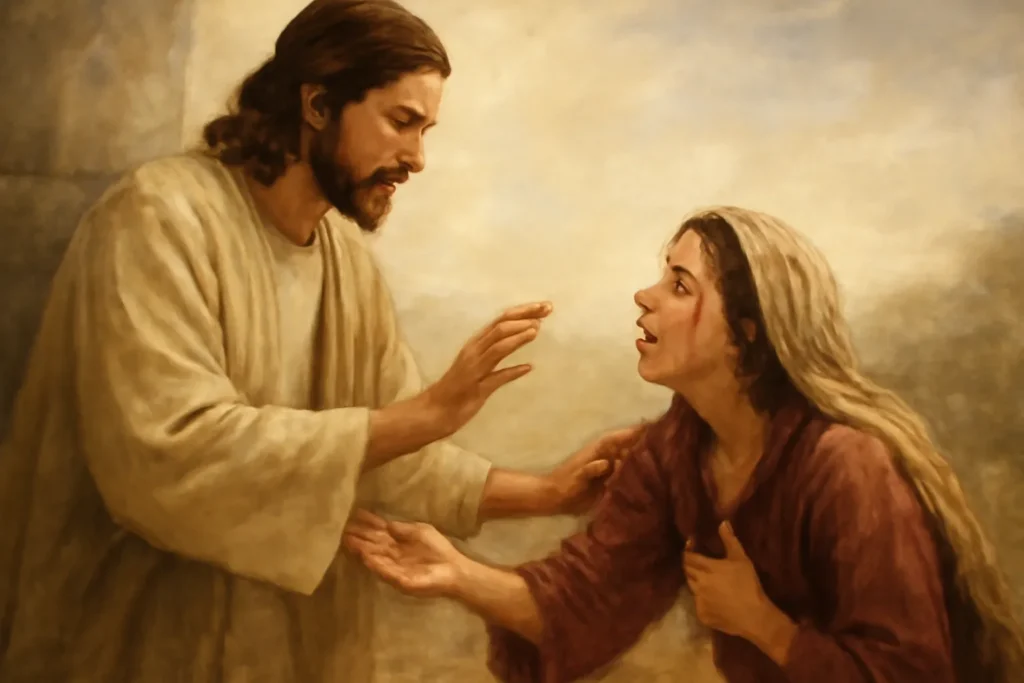
At first glance, the act seems simple—one touch, a whisper of faith. But the text unfolds a layered drama: a crowd near Jesus, an unassuming touch that triggers a public exchange, Jesus’ awareness of power going out from him, and then an intimate conversation that turns a private plea into a public declaration of healing. The moment culminates in Jesus’ tender affirmation: “Daughter, your faith has made you well. Go in peace.” What follows is not merely physical restoration but a redefinition of a life marked by long suffering.
Historical and Cultural Context: Why This Story Matters
To understand the weight of this story, it is essential to picture the social and religious ecosystem in which it occurred. In ancient Jewish culture, a person with a bleeding condition was considered ceremonially unclean. That status affected everyday life, worship, and community belonging. A woman dealing with a chronic geb and blood loss faced not only physical pain but also social isolation, exclusion from community gatherings, and a ceaseless sense of being on the margins of spiritual life.
The encounter with Jesus, therefore, is not just about healing in a medical sense. It represents a substantial disruption of stigma and a restoration of dignity. The narrative emphasizes that faith, not ritual purity, is the pathway to healing in this moment. In the broader arc of the Gospel accounts, this healing is intertwined with Jesus’ authority over illness, his compassion for the vulnerable, and his ability to bring reconciliation between God, people, and their deepest longings.
Characters in Focus: The Woman and Jesus
The two primary figures—the woman who had been bleeding and Jesus—teach readers about faith, vulnerability, and divine intervention.
The Woman: A Life Shaped by Suffering
The woman’s illness is described with precision: a long duration and a burden that is both physical and existential. Her resolve to approach Jesus, even within the confines of a crowded space, reflects a series of courageous choices. She is described not by her disease but by her determination to seek healing through faith. The narrative emphasizes that she had sought medical remedies and social relief for years without success, which amplifies the significance of her bold action.
In biblical storytelling, such a figure often stands as a representative of those who suffer in silence and yet, in a moment, are invited to speak and be heard. Her declaration of suffering becomes a testament; her touch—though seemingly inconsequential in the eyes of others—becomes a conduit for grace. The healing she receives is not merely physical relief; it is an empowerment that reconstitutes her personhood within the community and before God.
Jesus: Compassion, Power, and Personal Recognition
Jesus is not portrayed as an aloof healer but as one who notices the woman in the crowd. The moment when power goes out from him is framed as a dynamic exchange: a divine energy released in response to a faithful act. Jesus’ awareness—“Who touched me?”—breaks the silence of the surrounding throng and invites disclosure. The ensuing dialogue, in which the woman steps forward trembling yet affirmed, reposition Jesus as one who honors faith, even when faith is exercised in private or understated ways.
The exchange between Jesus and the woman is capped by a public affirmation that echoes through later Christian thought: her faith has brought healing, and the path to peace is now open. This is not a mere medical cure; it is a rite of restoration. The narrative suggests that healing flows through a meeting of human longing and divine willingness, a synergy that transforms both the revealer and the revealed.
The Moment of Healing: Touch, Faith, and Recognition
The healing moment in the story is often described using images of touch. The woman’s decision to reach out and touch the fringe of Jesus’ cloak becomes a powerful symbol. It is an act of faith that acknowledges Jesus’ authority and presence. Yet the healing is not accidental; it is deliberately linked to the woman’s faith—a faith that, in this narrative, is more than mere belief. It is trust expressed in action.
A striking feature of the account is Jesus’ response to the woman’s disclosure. He does not rebuke her or dismiss her. Instead, he honors her, praising her faith and addressing her as “Daughter”, a title of intimate care and belonging. The words “your faith has made you well” reassure the reader that healing is mingled with identity restoration: fear, shame, and exclusion are displaced by belonging, peace, and dignity.
The scene also demonstrates a delicate balance between private faith and public proclamation. The woman’s testimony becomes a moment of public faith witness, even though her initial action is deeply personal. In the surrounding culture, this is a reversal: the marginalized woman becomes a model of trust that prompts spiritual celebration and community recognition.
Key Phases in the Healing Exchange
Desperation and Decision: A long-standing affliction pushes the woman toward a bold, prostrate act of faith.
Touch and Transmission: A simple touch becomes a conduit for healing power.
Public Declaration: The crowd learns that healing has occurred through faith, not mere proximity to Jesus.
Affirmation and Identity: Jesus names the healing as an outcome of the woman’s faith and redefines her social and religious status.
Thematic Lenses: Faith, Healing, and Identity
This narrative offers multiple interpretive angles, which scholars and readers have explored for centuries. Three central threads emerge: faith, healing, and identity. Each thread interacts with the others to produce a multi-faceted teaching about how God works in human life.
Faith: The Courage to Reach Out
The story emphasizes a form of faith that is not dependent on overt miracles alone. Instead, faith here is action-oriented and exploratory: the woman does what she believes will bring healing even when the crowd and social norms create risk. The text suggests that faith involves trust that Jesus is attentive, powerful, and merciful—belief that God is present in the act of seeking.
Healing: Physical Restoration and Holistic Renewal
Healing in this account encompasses more than a cure for a bodily condition. It is an arc of restoration that touches emotional and social dimensions. The woman’s healing restores not only her health but also her dignity, her ability to participate in worship, and her sense of belonging within the community. This broad conception of healing invites readers to consider how faith communities might foster environments where holistic healing can be pursued—physically, emotionally, and socially.
Identity: From Outcast to Daughter
The moment Jesus calls her Daughter marks a reversal of status. The woman who had been marginalized becomes a person addressed with tenderness and affirmation. In this transformation, the narrative invites readers to reflect on how encounters with Jesus can reframe a life’s story—from isolation to inclusion, from fear to peace, from secrecy to witness.
Gospel Comparisons: The Story Across Matthew, Mark, and Luke
Although the core of the encounter is consistent, the three Synoptic Gospels provide slightly different emphases and details. Mark 5:25-34 and Luke 8:43-48 are often read together because they offer complementary textures: Mark emphasizes the immediacy of the crowd and the powerful response, while Luke foregrounds the woman’s social vulnerability and the personal dimension of Jesus’ address. Matthew 9:20-22 integrates the event into a broader sequence of miracles that showcase Jesus’ authority over disease and his compassion for those who are marginalized.
Across these accounts, the consistent elements include the twelve-year duration of suffering, the woman’s decision to seek healing, the public acknowledgment of healing, and the call to move forward in peace. The variations in wording—though subtle—help readers discern different theological emphases: divine power as a force at work through faith, Jesus’ personal care for the marginalized, and the communal implications of healing in the early Christian movement.
Lessons for Modern Readers: Applying the Story Today
The biblical narrative of Jesus healing the woman with bleeding continues to offer practical lessons for contemporary faith communities and individual believers. Here are several key takeaways that scholars and teachers often highlight.
Lesson 1: Faith Is Active, Not Passive
The courageous action of the woman—reaching out through a crowded throng—illustrates that faith involves initiative. It is not a passive hope but a deliberate step toward healing. In modern contexts, this suggests cultivating a spiritual posture of bold trust—whether in personal illness, relational brokenness, or systemic injustice—while seeking appropriate wisdom and community support.
Lesson 2: Healing Includes Dignity and Belonging
The restoration described in the story goes beyond physical relief. It restores the woman’s place in worship and in community life. Churches, clinics, and support networks can take this as a model for holistic care: healing that acknowledges human dignity, invites participation, and reduces stigma.
Lesson 3: Privacy and Public Witness Can Coexist
The narrative presents a tension between private faith and public testimony. The woman’s private act of faith leads to a public revelation of mercy. Christians today can reflect on how personal prayer and private seeking of healing relate to communal confession, testimonies, and shared experiences of grace.
Lesson 4: Authority and Compassion Go Hand in Hand
Jesus’ response—gentle, affirming, and empowering—highlights a model of leadership that couples authority with compassion. In organizations, families, or communities, this story invites leaders to exercise power with tenderness and to honor those who seek healing, even when their wounds are long-standing.
Integrating the Narrative into Teaching and Worship
For educators, pastors, and readers, the story offers rich material for discussion and reflection. Practical avenues include:
Developing small-group studies that explore the interplay of faith, fear, and restoration.
Creating personal reflection guides that invite people to name their own "years of bleeding" whether physical, emotional, or relational.
Designing liturgical moments that recall the tenderness of Jesus’ address, highlighting terms like “Daughter” and “Go in peace”.
Encouraging service projects that pursue holistic healing—combining charitable aid, medical access, and social inclusion.
Visualizing the Narrative: What the Text Invites the Eye to See
Although the story is a compact text, it opens imaginative space for readers and artists. Consider the following sensory elements:
The sound of a crowded street, with bustling voices vying for attention.
The hush that falls as the woman makes contact with Jesus’ garment, a moment of quiet power in a loud environment.
Jesus’ cadence when he speaks—calm, authoritative, compassionate—inviting courage in the listener.
The contrast between the woman’s fear of exposure and the public blessing that follows.
Variations of the Theme: Different Wording, Same Core Message
Throughout sermons, scholarly articles, and devotional writings, you may encounter variations of how the healing moment is described. Some common paraphrases and equivalents include:
“Jesus heals the woman who had been bleeding” in narrative summaries that emphasize the continuity of disease and mercy.
“Christ restores the woman’s health and status” when focusing on social implications of healing.
“The woman with the issue of blood is healed through faith” to stress the faith-centered angle rather than the physical symptom alone.
“Daughter, your faith has saved you” as a canonical phrase often quoted in catechesis and devotional material.
Key Takeaways for Readers and Students
The biblical account of Jesus healing the woman with the bleeding offers a compact yet rich framework for reflection. The following points summarize core insights:
Compassion is central: Jesus sees, responds, and dignifies the one who seeks healing.
Faith matters deeply: The woman’s action demonstrates that faith is active, hopeful, and personal.
Restoration is holistic: Healing encompasses physical well-being, social standing, and spiritual peace.
Identity is reimagined: The act of being named “Daughter” redefines who she is before God and people.
Impact on the wider narrative: The healing intersects with the Jairus story, highlighting that Jesus’ ministry addresses both personal pain and communal loss.
The tale of Jesus healing the woman with bleeding resonates across generations because it speaks to universal human experiences: vulnerability, longing for relief, and the longing to belong. Its enduring power lies in the way it frames healing as an intimate encounter with divine mercy that also invites public witness. It asks not only whether healing is possible, but whether we are willing to step toward healing with faith, humility, and courage, trusting that God meets us in our deepest needs.
In sum, the narrative invites readers to consider how faith, healing, and identity interweave in the life of a believer. It presents Jesus as a teacher of mercy who honors the vulnerable, restores dignity, and invites all who seek him to walk in peace. Whether one encounters this story as a devotional memory, a theological case study, or a historical-insightful reading, the message remains powerful: in the presence of Jesus, even the longest years of struggle can begin to yield to restoration, and a life once defined by exclusion can become a testimony of belonging.
For additional reading and study, consult parallel accounts in the Gospel of Mark and the Gospel of Luke, and compare how each writer foregrounds different facets of the same healing event. Reflect on how your community might embody the story’s principles in acts of care, inclusion, and compassionate leadership.









Leave a Reply