Ordained Minister Requirements: A Guide to Clergy Eligibility
Ordained Minister Requirements: A Guide to Clergy Eligibility
Becoming an ordained minister is a significant commitment that requires more than a good sermon. It sits at the intersection of faith, community service, and legal recognition. This guide explains the typical requirements for ordained ministers, how they vary by tradition, and practical steps to pursue credentialing. Readers will encounter different phrases for the same idea—ordination, ordination credentials, ministerial licensing, and clergy eligibility—as churches articulate the precise path to service in their context. The landscape is diverse: from formal seminaries and canonical ordination in historic churches to lay-based commissioning in independent congregations. This article provides a broad, structured overview to help you understand the core concepts, make informed decisions, and prepare for whichever pathway aligns with your beliefs and vocation.
What ordination means and why it matters for clergy eligibility
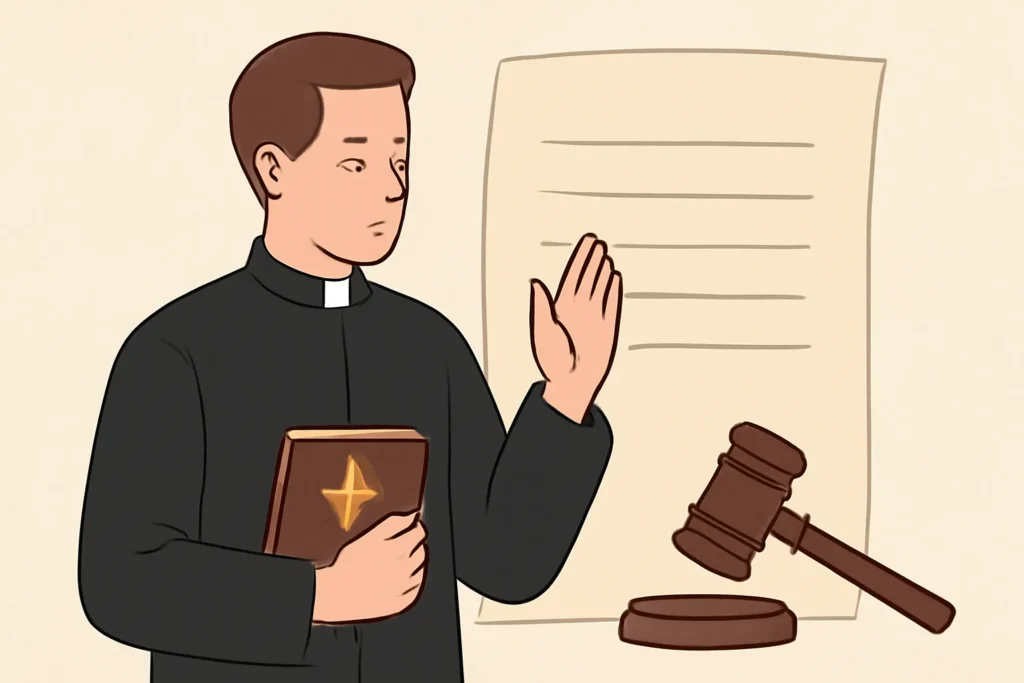
At its most basic level, ordination is a formal affirmation by a recognized religious body that an individual is prepared to exercise ministerial responsibilities. This includes preaching, administering sacraments or rites, providing pastoral care, and representing the church in civic or interfaith settings. While the precise authority granted by ordination varies by denomination, the common thread is that clerical credentials signify both competence and accountability in a public role. In many traditions, ordination is a ceremonial act that confers authorization to perform sacred duties within the church’s doctrine and governance structure. In others, a similar process is described as commissioning, licensing, or transferring the person into authorized ministry.
Understanding the purpose of such formal recognition is crucial for prospective ministers. For congregations, ordained ministers are trusted to uphold doctrinal integrity, model ethical conduct, and lead communities through pastoral care, leadership, and crisis response. For individuals, certification often unlocks opportunities for formal chaplaincy, religious education, mission work, and church governance roles. In several jurisdictions, the status of an ordained minister also intersects with legal rights or responsibilities—such as officiating weddings, serving as a chaplain in institutions, or receiving certain tax or nonprofit exemptions—which makes the distinction between simple preaching or lay leadership and ordained ministry important.
General eligibility for ordained ministry
While the specifics depend on the faith tradition, there are several core areas of eligibility that recur across most pathways to ordained ministry. Understanding these broad requirements helps clarify what belongs to the “minimum standard” and what may count as a distinctive credential within a given denomination.
Educational prerequisites
Formal theological education: Most traditions expect some level of advanced study, such as a Master of Divinity (M.Div.), Master of Theological Studies (M.T.S.), or equivalent graduate programs. Some traditions accept a bachelor’s degree plus seminary training or biblical study, especially in non-denominational settings.
Academic breadth: Coursework often covers biblical languages (Greek, Hebrew), theology, church history, ethics, homiletics, scripture interpretation, and pastoral care. For some paths, specialized tracks (youth ministry, chaplaincy, or worship leadership) may influence degree focus.
Academic credibility: Seminaries and accredited theological schools provide credentials that are recognized within denominations. In some contexts, recognized Bible colleges or Christian universities may suffice for initial candidacy, particularly in independent or non-denominational communities.
In addition to formal education, many paths value ongoing intellectual growth. Some denominations require a period of supervised ministry after coursework, during which practical competence in preaching, counseling, leadership, and administration is demonstrated before ordination is granted.
Character and background considerations
Moral character: Applicants typically undergo evaluation of personal conduct, spiritual maturity, integrity, and proven commitment to ethical standards.
Background checks: Most processes include background checks to assess concerns related to safety, child protection, or potential risk to vulnerable populations.
Recommended references: References from pastors, mentors, or church leaders who can attest to the applicant’s fitness for ministry are common.
Financial philosophy and accountability: Some pathways involve transparent financial stewardship expectations and a willingness to live within a church’s governance framework.
These elements help ensure that those entering ordained ministry are prepared to lead with trust, discretion, and a commitment to the community’s welfare. The emphasis on character often reflects the church’s understanding of ministry as a vocation with serious, lifelong implications.
Confessional stance: Denominations expect alignment with core theological commitments and the church’s confession of faith or doctrinal statements.
Mission and values: Prospective ministers should demonstrate alignment with the church’s mission, lifestyle expectations, and community service ethos.
Compatibility with governance: The applicant’s approach to church governance, congregational life, and pastoral leadership should mesh with the denomination’s authority structures.
Disagreements on non-essentials may be navigated in some traditions, while others require stronger doctrinal alignment or gradual convergence before ordination is possible.
Age, health, and legal capacity
Age requirements: Some traditions set a minimum age for ordination, while others permit mid-to-late career candidates.
Physical and mental health: The ability to perform demanding duties (preaching, counseling, travel, long hours) is considered, though accommodations may be made in certain contexts.
Legal capacity: Individuals must be legally eligible to contract ministry-related obligations, and no prohibitive legal impediments exist for fulfilling clergy roles in their jurisdiction.
Common steps in the ordination process
Although the “how” varies by tradition, most pathways share a sequence of stages designed to assess readiness, form community support, and confer official authority to perform ministerial duties.
Seeking a sponsoring church or denomination
Sponsoring body: Applicants typically establish a relationship with a local church or a denominational corps that agrees to sponsor them through the process.
Mentorship and discernment: A seasoned minister or a program director provides mentorship, guiding the applicant through self-reflection, vocational discernment, and practical skill development.
Statement of calling: Many pathways require a credible sense of divine calling, demonstrated through personal testimony and ongoing commitment.
Educational pathways and clinical training
Seminary enrollment or equivalent training programs to acquire knowledge and equip ministry leadership.
Field education: Practical ministry experiences, such as internships, field education units, or pastoral residencies, are commonly required.
Academic assessments: Some programs include comprehensive exams, written papers, or oral assessments to gauge readiness.
Assessment, interviews, and decision points
Interviews: Panels of ministers, elders, or bishops evaluate doctrinal understanding, leadership potential, and pastoral fit.
Examinations: Theological, ethical, and practical examinations may be administered to test knowledge and readiness for ministry roles.
Background and reference checks: Final steps often involve verifying character, past ministry performance, and integrity.
Ordination ceremony and authority
Ordination service: A formal ceremony often presided over by a bishop, senior pastor, or council, confers the official title and authority to perform sacraments, deliver sermons, and lead congregations.
Public declaration: The event publicly acknowledges the candidate as a minister in good standing within the community.
Post-ordination expectations: Newly ordained ministers are typically placed into lifelong accountability structures, guided by mentors and governance bodies.
Denomination-specific requirements and variations
Each tradition has its own vocabulary and requirements for becoming an ordained minister. Below are representative patterns from several major streams of Christian ministry, illustrating how the same core ideas can be expressed differently across communities.
Catholic and Orthodox traditions
In Catholic contexts, ordination is conferred within the sacramental life of the Church. Male candidates generally pursue a formal program of priestly formation that includes philosophy and theology studies, spiritual formation, and a long period of discernment. The process culminates in holy orders, with responsibility for celebrating the Eucharist and administering sacraments. For Orthodox churches, ordination to the priesthood is similarly sacramental and occurs within the life of the local and global church, emphasizing continuity with ancient practice and apostolic succession. In both traditions, ongoing formation and alignment with the church’s canonical discipline are essential elements after ordination as well as throughout a minister’s career.
Anglican/Episcopal and Lutheran models
Within Anglican and Episcopal structures, ordination commonly requires a combination of theological education, discernment, and ongoing accountability. A bishop or equivalent authority typically confirms fitness for ministry after evaluating a candidate’s theological alignment, leadership ability, and pastoral temperament. In many Lutheran churches, the path includes seminary study, denominational endorsement, and candidacy under a rostered ministry framework. Both traditions emphasize safeguards, mutual accountability, and a path to authorized sacramental ministry alongside lay leadership.
Baptist, Congregational, and non‑denominational routes
Baptist and Congregational traditions often emphasize local church authority and congregational discernment. Ordination may be framed as a credential granted by a local church or through a state or national association, rather than a centralized hierarchical process. For many non-denominational congregations, the pathway may be more flexible, combining seminary study, mentorship, and credentialing based on the church’s mission and its governance norms. The absence of a centralized authority means expectations for doctrinal clarity, theological competence, and pastoral reliability are still rigorously evaluated by the sponsoring church or network.
Pentecostal and charismatic traditions
In Pentecostal and charismatic churches, ordination often emphasizes Spirit-led gifting, preaching ability, and pastoral leadership alongside doctrinal alignment. While the specific rites vary, the process typically includes practical ministry demonstration, mentorship, and a commissioning or ordination ceremony that affirms authority to teach, administer rites, and lead churches or ministries. These pathways can be highly mission- and evangelism-oriented, with strong emphasis on personal spiritual experience and community validation.
Independent and non-traditional ministry tracks
Independent congregations or micro-denominations may articulate ministerial credentialing through unique combinations of seminary education, apprenticeship, and ecclesial approval. In these settings, the emphasis is often on demonstrated competence, theological clarity, cultural relevance, and the capacity to lead in creative ways while staying faithful to core convictions.
Beyond the spiritual and doctrinal dimensions, being an ordained minister often engages legal, regulatory, and professional aspects that shape how ministry is practiced in the modern world.
Marriage officiant rights: In many jurisdictions, ordained ministers have eligibility to officiate weddings, funerals, and certain rites, subject to civil law and local wedding licensure rules.
Tax-exemption and nonprofit status: Churches are typically nonprofit organizations, and ministers may receive tax-advantaged housing allowances or other benefits; conversely, ministers must follow professional and fiscal guidelines appropriate to religious employers.
Child protection and safeguarding: Many denominations require training in safeguarding, youth protection, and mandatory reporting of abuse, with ongoing updates and compliance checks.
Professional boundaries: Ethical guidelines govern pastoral boundaries, confidentiality, and relationships with congregants, reflecting the seriousness of the ministerial role.
Criminal history and civil issues: Disclosure of past convictions, civil judgments, or administrative actions may be required depending on the denomination and jurisdiction.
These considerations reinforce that credentialing for ministry is both an ecclesial and civic process. Clergy are expected to navigate administrative requirements, governance expectations, and public accountability with integrity.
Continuing education, accountability, and renewal
Ordination is not the final step in a lifelong vocational journey; it commonly begins a phase of ongoing formation and accountability. The specifics differ by tradition, but several common themes appear across most pathways to clergy eligibility:
Continuing education: Ministers engage in ongoing study, seminars, workshops, and specialization to stay current in theology, pastoral care, ethics, and leadership techniques.
Supervision and accountability: Regular supervision, peer reviews, and governance oversight help ensure ministry remains faithful to denominational standards and community needs.
Code of ethics: Many denominations require adherence to a ministerial code of ethics, with consequences for violations that can affect standing or license to practice.
Reaffirmation of ordination: Some traditions require periodic reaffirmation or credential renewal to maintain active status, especially for chaplain services or institutional assignments.
The commitment to lifelong learning is framed as a responsibility to the congregation and to the integrity of the church’s mission. This emphasis helps ministers stay equipped to address new social contexts, evolving pastoral challenges, and changing expectations from communities they serve.
Career implications and roles after ordination
Once ordained, ministers pursue a range of roles that leverage their training and authority. The exact job titles, responsibilities, and settings will vary, but several common trajectories illustrate how ordained ministry credentials translate into service opportunities.
Pastor or rector: Leading a local congregation, preaching weekly, administering sacraments, providing pastoral care, and guiding strategic direction.
Chaplaincy roles: Serving in hospitals, universities, military, prisons, or corporations, bringing spiritual care and ethical counsel to diverse populations.
Mission and outreach: Engaging in community development, evangelism, education, and cross-cultural ministry in local or global contexts.
Religious education: Teaching theology, ethics, and Bible studies in churches, seminaries, or youth programs, or serving as a director of religious education.
Administration and governance: Participating in church boards, committees, and denominational structures that shape policy and strategic planning.
Some ordained ministers pursue additional credentials, such as a clinical pastoral education (CPE) certification for chaplaincy or specialized endorsements for interfaith dialogue, counseling, or youth ministry. The career path often requires flexibility, relational skills, and the ability to adapt ministry practice to changing social realities while remaining rooted in doctrinal commitments.
How to choose a pathway: practical guidance for prospective candidates
Choosing the right route to ordained ministry depends on personal calling, doctrinal alignment, community fit, and practical realities. Here is practical guidance to help you navigate the decision process:
Clarify your calling: Engage in structured discernment with a pastor, mentor, or discernment committee. Document your sense of vocation, spiritual gifts, and leadership style.
Identify your tradition: Research denominations or church networks to understand their theological stance, governance, and credentialing expectations.
Assess educational options: Compare seminaries, Bible colleges, and program formats (residential, online, hybrid) for compatibility with your schedule, finances, and learning preferences.
Explore practical requirements: Learn about licensing, ordination timelines, and the conditions for eligibility in your jurisdiction. Consider how background checks, safeguarding training, and ethical standards will apply.
Seek experiential learning: Pursue internships, ministerial residencies, or volunteer leadership to gain taste of real ministry before committing to ordination.
Budget and funding: Understand tuition costs, scholarships, and financial obligations. Some denominations provide financial support tied to your vocational track.
Plan for the long term: Consider how the ordination fits into your career trajectory, family life, and geographic mobility, since some pathways require relocation or long-term commitments to a sponsoring church.
Global and cultural context: how country and culture shape ordination
Ministry credentialing occurs within legal, cultural, and civil frameworks that differ across nations. In many places, civil law intersects with ecclesial practices, so ordained ministers may exercise civil rights or rights to perform particular rites within specific jurisdictions. In other regions, church governance operates independently from state structures, with credentialing strictly a matter of internal church law. Differences in education systems, licensing processes, and professional expectations mean that aspiring ministers should research the standards relevant to their country, region, and religious community. Some countries maintain formal registers of clergy or credential rosters; others rely on voluntary recognition by denominational boards. Regardless of the system, the aim remains consistent: to ensure ministers are spiritually prepared, doctrinally sound, and ethically responsible in serving communities.
Ethical expectations and accountability in ordained ministry
Ethical integrity is central to the success and credibility of ordained ministers. The roles involve trust, confidentiality, and the exercise of moral leadership in moments of crisis, blessing, or loss. Therefore, accountability mechanisms are integral components of most ordained pathways:
Code of conduct: A formal code guides relationships, finances, and public behavior to protect congregants and the ministry’s integrity.
Peer and supervisory oversight: Regular reviews by mentors, elders, or bishops help maintain alignment with standards and address concerns early.
Transparent governance: Financial stewardship, decision-making processes, and accountability to a church community promote trust and legitimacy.
Safer ministry practices: Ongoing training in safeguarding, crisis response, and pastoral ethics reduces risk to vulnerable populations and supports responsible leadership.
In cases of ethical concerns or misconduct, denominations typically pursue a range of responses, from remediation and education to discipline or removal from ministry. The overarching principle is to protect the community while ensuring fairness and due process for the accused and the accusers alike.
Many people come to ministry with assumptions that are not universally true. Here are a few frequent misconceptions paired with clarifications:
Myth: Ordination guarantees a comfortable salary and stable workplace. Reality: Compensation and job stability vary widely by tradition, geography, size of congregation, and the financial health of the church.
Myth: Anyone who preaches regularly is automatically ordained. Reality: Preaching gifts are important, but ordination typically requires formal governance approval and credentialing.
Myth: There is a single universal standard for ministerial credentialing. Reality: The standard depends on denomination, jurisdiction, and church network; there are many valid pathways to ministry.
Myth: Background checks are optional in most traditions. Reality: In many contexts, background checks and safeguarding training are essential components of the process.
Glossary of key terms used in ordained ministry discussions
To aid understanding, here are concise definitions of some terms frequently used in this field:
Ordination: The formal conferment of ministerial authority by a church body.
Ministerial credential: The documented evidence of eligibility to perform ministry functions, such as ordination or commissioning.
Endorsement: A formal recommendation from a church body that authorizes certain ministerial roles, often in specialized contexts like chaplaincy.
Licensing: A legal or ecclesial authorization to practice ministry, sometimes used interchangeably with ordination depending on tradition.
Discernment: The process of seeking clarity about a call to ministry, including prayerful reflection and community input.
Canonical discipline: The rules and norms governing church order and the exercise of ministry within a tradition.
A practical checklist for prospective candidates
Below is a concise checklist that individuals considering ordained ministry can use as a planning tool. It emphasizes practical steps and highlights key decisions:
Clarify calling and write a personal vocational statement.
Research traditions and identify 2–3 denominations or networks that align with your beliefs and goals.
Assess education options and choose an educational path (seminary, Bible college, or ministry certificate) that fits your timeline and budget.
Initiate conversations with a pastor, mentor, or discernment committee about candidacy.
Prepare to meet eligibility criteria, including background checks, safeguarding training, and character references.
Engage in supervised ministry or internships to demonstrate pastoral skills and leadership potential.
Apply for candidacy with the sponsoring church or denominational body and complete required assessments.
Participate in the ordination process, including exams, interviews, and the ordination ceremony if approved.
Plan for ongoing formation—continue education, seek supervision, and participate in accountability structures after ordination.
By following a thoughtful, staged approach, you maximize your readiness for the responsibilities of ordained ministry and align your journey with a vibrant faith community that shares your convictions.
Conclusion: framing ordained minister requirements as a holistic path
While the specific requirements for ordained ministers differ across traditions, the core concept remains consistent: ordination criteria serve as a reliable benchmark of readiness to lead, teach, and shepherd a faith community. The pathway typically blends education, character formation, doctrinal alignment, practical ministry experience, and institutional accountability. It also encompasses legal and ethical responsibilities that enable ministers to serve publicly and responsibly in diverse contexts—from the pulpit to hospital corridors, from mission fields to school campuses. Whether you are drawn to a historic, sacramental lineage or a contemporary, non-denominational calling, the journey toward clergy eligibility is ultimately about preparing for a vocation that sustains communities, nurtures faith, and models service with integrity. By understanding the common threads and the meaningful differences between pathways, prospective ministers can navigate the landscape with clarity, intention, and a well-grounded sense of calling.







Leave a Reply