What Is Shabbat Day? A Comprehensive Guide to the Jewish Sabbath
What Is Shabbat Day? A Comprehensive Guide to the Jewish Sabbath
Shabbat Day, also called the Jewish Sabbath, is a weekly cycle of rest, reflection, and renewal that anchors Jewish time and life. It is observed by many Jewish communities around the world from Friday evening at sunset to Saturday night after three stars appear in the sky. This sacred pause offers a rhythm that separates ordinary workdays from a dedicated period for family, study, prayer, and community. While the core idea is shared across many Jewish traditions, the practice of Shabbat can look very different from one household to another, and from one community to the next. This guide presents a thorough overview of what Shabbat is, why it matters, how it unfolds in daily life, and how diverse Jewish communities understand and celebrate this day of rest.
At its simplest, Shabbat is a day set apart from the ordinary routines of the work week. But the meaning of this day extends beyond mere cessation from labor. It is a structured, intentional time for spiritual nourishment, familial bonding, and communal worship. In many sources, Shabbat is described as a “sign” or a covenantal marker between God, the Jewish people, and the ongoing history of Jewish life. The terms Shabbat and Sabbath can be used interchangeably in many English-speaking contexts, but the Hebrew word carries a sense of rest and cessation that is central to Jewish theology.
Across communities, the day is characterized by a family-friendly atmosphere, a focus on rest and rejuvenation, and a structure of rituals that elevate the ordinary into something sacred. Some describe Shabbat as a preparation for holiness, while others emphasize it as a time to “cease from labor” in a way that invites contemplation, gratitude, and gratitude for the gifts of creation. The idea of rest on this day is not merely physical rest; it also encompasses rest from certain kinds of speech, work, and digital activity, and an opening of space for study, prayer, and meaningful connection with others.
Origins and Foundations
The origins of Shabbat are rooted in ancient scripture and evolving rabbinic interpretation. The primary biblical source for the commandment is the Creation narrative in Genesis, where God creates the world in six days and rests on the seventh. The narrative frames the seventh day as holy, a pattern that becomes foundational for the weekly cycle. The Sabbath commandment is reaffirmed in the Exodus and Deuteronomy narratives, where the obligation is linked both to the divine act of creation and to the liberation of the Israelites from slavery in Egypt. Over centuries, rabbis and sages developed a rich body of literature to specify how the day should be observed, how to balance laws with humane practice, and how to adapt the rhythms of Shabbat to different times and communities.
Some scholars note that Shabbat operates on multiple planes: as a liturgical and spiritual experience, as a social and communal framework, and as a set of practical norms that guide everyday conduct. The day thus serves not only as a reminder of the divine rest but also as a blueprint for ethical behavior, hospitality, and generosity. In many Jewish communities, Shabbat appears in parallel with major holidays, yet it remains uniquely weekly in its cadence and expectations, offering a steady anchor in the flow of the year.
When Does Shabbat Begin and End?
The timing of Shabbat is anchored to the sun and the appearance of the stars. In practical terms, most communities light candles before sunset on Friday and begin the prayers of the Friday night service once twilight deepens. Shabbat ends on Saturday night after a time of delay known as tzeit hakochavim (the appearance of three stars in the evening sky), followed by the Havdalah ceremony to separate the holy day from the ordinary week.
The exact hour for candle-lighting and for Havdalah varies by location and season. In Israel and many other places, people plan ahead based on local sunset times, and some traditions prefer early candling to accommodate the evening sequence of meals and prayers. In more secular or mixed communities, families may begin Shabbat with a simple candle-lighting ritual a few minutes before sunset, while others observe precise times dictated by a local tradition or a rabbinic authority. The core idea remains: Shabbat begins with a deliberate transition from the week’s ordinary activities into a distinct, sacred space.
Practices and Observances
Shabbat is sustained through a blend of rituals, blessings, meals, and communal acts. The core framework includes lighting candles, reciting blessings, sharing meals, praying, and refraining from certain kinds of work. The exact practices can differ among families and communities, but several elements tend to recur across traditions.
Lighting Candles and Blessings
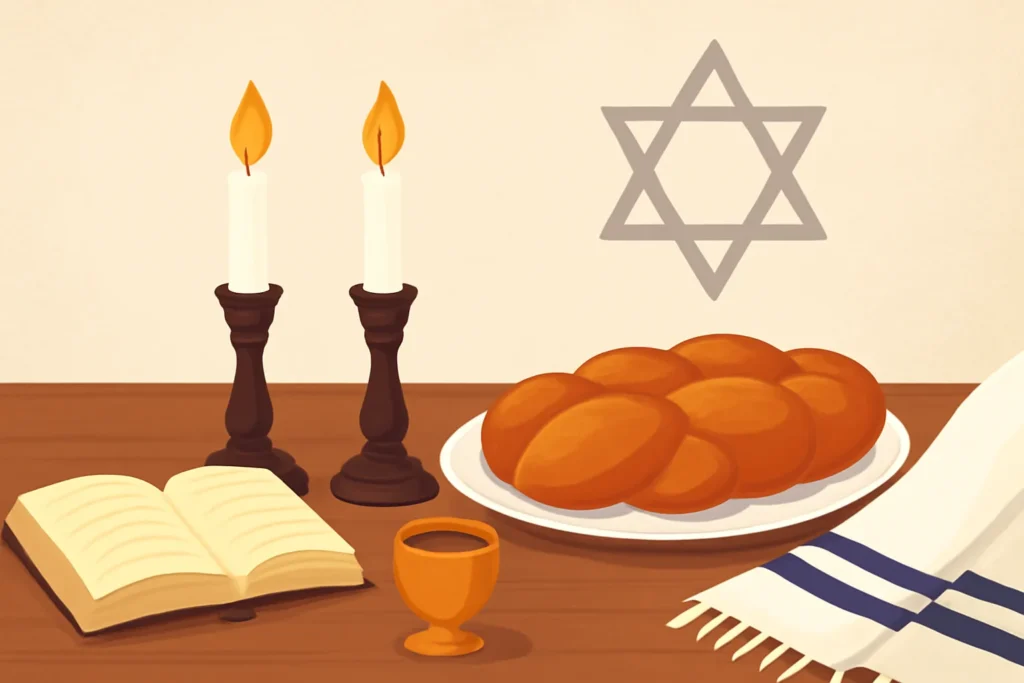
A common opening act is the lighting of candles shortly before sunset on Friday evening. In many households, two candles are lit to symbolize the commandment to remember and observe Shabbat. The blessing over the candles often proclaims the sanctification of the day and sets a mood of peace and welcome. In some places, a single candle or an additional candle is lit for elderly relatives or for those who are mourning.
The Kiddush is a blessing recited over wine or grape juice, sanctifying the occasion at the outset of the Friday night meal. The blessing is usually followed by the Challah bread, which is dipped in salt and blessed with a separate blessing before being shared. The Friday night meal is both a religious ritual and a family gathering; it is an opportunity to tell stories, sing songs, and extend hospitality to guests. Many families follow a sequence of three meals across Shabbat, with the main meal taking place on Friday night and two additional meals on Saturday.
Challah, Blessings, and Food
The bread of Shabbat, the Challah, is typically braided and enriched with eggs and sugar in some traditions. Blessings for the bread begin with Hamotzi, the blessing over bread, which is said before eating the bread at each meal. The meals—especially the Friday night and Saturday lunch—often feature a breadth of traditional dishes, reflecting local customs and seasonal ingredients. Food on Shabbat is a channel for hospitality, joy, and communal connection, rather than a mere source of sustenance.
Prayer and Study
Shabbat includes time for personal prayer and collective worship. Many congregations hold a Kabbalat Shabbat service on Friday evening, followed by the Ma'ariv (night prayer). On Shabbat morning, services often feature a longer liturgy, Torah readings, and a sermon or discussion. For families and individuals, Shabbat is also a moment for study—commentaries on the weekly Torah portion, ethical readings, or classical Jewish texts.
Havdalah and the End of Shabbat
As Shabbat draws to a close, the Havdalah ceremony marks the boundary between holy time and ordinary weekday life. The ritual typically uses a multi-waceted spice box (besamim), a braided candle, and a cup of wine or grape juice. The blessing over the spice and the light is designed to carry forward the sense of blessing and sweetness into the coming week.
What Not to Do: Prohibitions and Boundaries
A central component of Shabbat practice is the idea of refraining from certain kinds of work known in Hebrew as melacha. The traditional categories cover a wide range of activities that are forbidden or restricted, with the aim of preserving a day of pause from daily labor, creation, and utility-driven actions.
Avoidance of work: The classical prohibitions include tasks that involve building, creating, tearing down, writing, tearing, or using machinery. These acts are understood as forms of productive labor that would detract from the sacred character of Shabbat.
Avoiding fire and electricity as a stand-in for work on some days: In many communities, lighting a flame, igniting or stoking a fire, and operating electronic devices are considered forms of prohibited labor, though exceptions exist for urgent needs or life-sustaining circumstances.
Limitations on carrying in public spaces: In places without a defined private domain, some communities rely on an eruv—a ritual enclosure that permits carrying within a designated neighborhood. The details of eruvs vary by location and tradition.
Restrictions on commerce and procurement: Shopping, handling money, and handling business transactions are typically avoided during Shabbat, which can lead families to prepare in advance for the needs of the day and the following week.
It is important to note that Shabbat is not a day of deprivation dictated by fear. Across Jewish communities, rabbis and scholars emphasize that Shabbat offers dignity, joy, and spiritual renewal. Many people find that the prohibitions foster a sense of intentional living, minimizing distractions and allowing space for meaningful conversations, deep listening, and gratitude.
Rituals and Blessings
The heart of Shabbat lies in its rituals and blessings, which create a repeating rhythm that helps the family and community orient toward holiness. The rituals are designed to be carried out with intention, meaning, and warmth.
Welcoming Shabbat with Light and Song
The evening is a time for candle-lighting, blessing, and songs that welcome the Shabbat queen, a poetic metaphor for peace and sanctity. The atmosphere is often calm, with candles casting a soft glow and words of peace and harmony spoken or sung as a family sits down to the first meal.
The Kiddush and Hamotzi blessings frame the meals. Sharing food becomes a ritual of gratitude for creation, sustenance, and nourishment. In many households, guests are welcomed at the table as an extension of hospitality, a core Jewish value that Shabbat invites and elevates.
Torah Reading and Learning
On Shabbat morning, many congregations read from the Torah portion for the week. The ritual may include both a public sermon and a time for personal study. For families, reading together from a children’s or family-friendly commentary can deepen understanding and involvement. Shabbat is a chance to connect the ancient text with contemporary life, ethics, and values.
Havdalah: Closing the Day of Rest
The transition from Shabbat to the workweek is marked by Havdalah, which emphasizes fragrance, light, and blessing. The ceremony contains sensory elements—smell of spice, sight of the burning candle, and the taste of wine—that symbolize leaving the sanctified time and taking its sweetness into the ordinary week.
Shabbat in Daily Life: Family and Community
For many families, Shabbat is the weekly centerpiece around which plans, meals, and activities revolve. It can be a time of storytelling, rest, and deliberate unplugging from the digital world. In some communities, Shabbat meals are opportunities to invite neighbors, friends, and newcomers to share in hospitality and celebrate together. The day fosters a sense of belonging that can extend beyond the home to the synagogue, school, and neighborhood.
Hospitality and guest welcome: Shabbat is an occasion to welcome guests and strengthen communal bonds.
Family time and education: The day lends itself to storytelling, teaching children about values, and sharing age-appropriate Torah study.
Peace and contemplation: A slower pace invites introspection, gratitude, and peaceful conversation.
Music and singing: Traditional prayers, Psalms, and folk songs often enrich the Shabbat atmosphere.
Synagogue participation: Attending the Friday night service and the Saturday morning service is central for many communities, while others emphasize private prayer and study at home.
The balance between home-centered rituals and communal worship varies. Some families emphasize the home as the primary arena of Shabbat practice, while others emphasize the synagogue as the core setting for worship, study, and shared meals.
Shabbat and Different Jewish Traditions
Across Jewish communities, Shabbat is observed with distinctive customs and interpretations. These variations reflect historical developments, geographic influences, and theological priorities.
Orthodox and Traditional Communities
In Orthodox and many traditional communities, the norms around Shabbat are explicit and carefully observed. The day is marked by extensive restrictions on work and use of technology, with a strong emphasis on ritual purity, family roles, and adherence to halacha (Jewish law). Friday night meals are an anchor of weekly life, and the synagogue provides a formal framework for prayer and Torah study. The sense of Shabbat as a divine gift and covenant is central to daily practice, and the day tends to be highly structured.
Conservative and Reform Perspectives
In Conservative Judaism, there is a range of observance that respects tradition while allowing for modern adaptation. Some communities may permit limited driving to attend services or navigate priorities for young families, though many still observe the prohibitions more strictly than in Reform communities. Reform and other progressive streams often reimagine Shabbat in ways that emphasize ethics, social justice, and spiritual reflection, with a greater openness to technology and secular life on the day. The spectrum can include communal learning, social action projects, and inclusive prayer services that welcome diverse participants.
Chasidic and Sephardic Variations
Within Hasidic and Sephardic traditions, there can be distinct customs around songs, liturgy, and meals. Hasidic communities place a strong emphasis on joy and ecstatic praise during Shabbat, including lively singing and instruction from a rebbe or spiritual leader. Sephardic and Mizrahi communities bring different liturgical melodies, food customs, and timing, reflecting regional culinary traditions and languages. Nevertheless, all share the core conviction that Shabbat is a special time set apart from the ordinary workweek.
Shabbat for Families and Children
For families with children, Shabbat offers a powerful platform for teaching values and building a sense of belonging. The day can be structured to include age-appropriate activities that reinforce the themes of rest, gratitude, and community. Many families incorporate stories about the week that has passed, songs, and simple crafts that reflect the weekly Torah portion or parables about kindness and justice.
Short, engaging readings that connect ancient texts to modern life
Creative arts and storytelling that reinforce ethical lessons
Family walks or nature time that align with a leisurely, contemplative pace
Welcoming guests and sharing meals as a form of hospitality
Shabbat and Modern Life
In contemporary society, many Jews navigate the balance between Shabbat observance and the demands of work, school, and digital life. Some communities encourage a broader “digital Shabbat” that minimizes screen time, reduces social media use, and promotes real-time conversation. Others hold to traditional practices with careful boundaries around electronics and transportation. The core aim remains: to carve out a period for contemplation, ethical reflection, and communal connection that can reorient priorities for the week ahead.
The modern experience of Shabbat may include logistical adaptations, such as commuting to a synagogue or hosting a potluck meal at a home with guests from diverse backgrounds. It may also involve initiatives to foster accessibility, such as inclusive services, child-friendly programming, and collaboration with local organizations to support families, students, and seniors. Even as lifestyles shift, the day’s structure continues to provide a meaningful framework for rest, study, and hospitality.
Common Misconceptions
Several misunderstandings about Shabbat persist in popular culture. Clarifying these points helps readers appreciate the nuance and depth of the practice.
Shabbat is only about rest. In truth, it is also a time for spiritual renewal, study, prayer, and deepening relationships.
Shabbat forbids all forms of joy or celebration. On the contrary, many Shabbat meals, songs, and acts of generosity create a joyful and festive atmosphere within a framework of sanctity.
Technology is uniformly prohibited on Shabbat. Rules vary by tradition; some communities allow certain forms of technology for life-sustaining needs or for communication with those in urgent situations.
Shabbat cannot be observed outside the home. Communities cultivate spaces for Shabbat hospitality, synagogue services, and public gatherings that align with their customs.
Resources for Further Learning
If you would like to explore Shabbat more deeply, several reputable sources offer accessible introductions, prayer guides, and practical guidance. The following are widely used across communities to study Shabbat, its laws, and its meanings:
My Jewish Learning (myjewishlearning.com): A comprehensive online resource with articles on Shabbat practices, prayers, and modern-day applications.
Chabad.org (chabad.org): A traditional and practical guide to Shabbat, with explanations of blessings, candles, Kiddush, and meals.
Judaism 101 (judaism.about.com or updated platforms): An accessible overview of Shabbat history, customs, and differences among communities.
Encyclopaedia Judaica and scholarly compendia: For readers seeking in-depth study of the rabbinic discussions surrounding Shabbat laws.
Local synagogues and rabbis: Many communities offer introductory classes, Shabbat services, and family programs that provide hands-on experience and guidance tailored to your locale.
Ethical and Social Dimensions of Shabbat
Beyond ritual specifics, Shabbat carries ethical and social aims. It encourages gratitude for creation, generosity toward the vulnerable, and a conscious reorientation away from consumerism and speed. The day invites people to reflect on how they use time—how work, leisure, and cultural consumption affect personal growth and communal responsibility. In many communities, Shabbat also serves as a model for civil discourse, hospitality, and peaceful coexistence. The practice can be a force for social justice and for building bridges between families, neighbors, and strangers.
Glossary of Key Terms
Here is a concise glossary to help readers navigate the language often used when discussing Shabbat.
Shabbat or Sabbath: The weekly day of rest and sanctity from Friday evening to Saturday night.
Melacha: The traditional categories of prohibited work on Shabbat, based on creative activity in the Mishkan (Tabernacle).
Kiddush: The blessing over wine or grape juice sanctifying the Shabbat meal.
Hamotzi: The blessing over bread before eating.
Challah: The braided Shabbat bread, often enriched with eggs.
Kabbalat Shabbat: The Friday evening service welcoming Shabbat as a divine gift.
Ma'ariv: The evening prayer service on Shabbat and weekdays.
Havdalah: The ceremony marking the end of Shabbat and the separation from holy time to regular weekday life.
Eruv: A symbolic boundary that allows certain customary activities, like carrying, within a defined area.
Practical Suggestions for Observing Shabbat Today
If you are new to observing Shabbat or are seeking to deepen your practice, here are practical ideas that can help you approach the day with intention and flexibility:
Plan ahead with meals and provisions so that you are not rushing from one task to another as the sun sets.
Create a simple song and study plan for Friday night and Saturday morning—short readings, brief prayers, or conversations about values you want to carry into the week.
Designate a family time for storytelling or sharing personal reflections from the week, emphasizing gratitude and kindness.
Set boundaries with technology that feel meaningful for you, whether that means a strict halt to screens or a limited, purposeful use for essential communication.
Invite others to join you in meals or walks, making hospitality an active practice rather than a mere tradition.
Whether you follow a traditional or a modern approach, approaching Shabbat with intentionality can make the day feel both rooted and expansive. The sense of rest, reflection, and community can carry into the rest of the week, shaping attitudes toward work, relationships, and the world around you.




Leave a Reply