Jewish Sabbath Rules: A Comprehensive Guide to Shabbat Observance
Jewish Sabbath Rules: A Comprehensive Guide to Shabbat Observance
Shabbat, the weekly day of rest and spiritual renewal in Judaism, is observed by millions around the world with a distinctive cadence of prayers, meals, study, and peaceful restraint from ordinary work. This guide offers a comprehensive overview of the traditional rules, rituals, and practicalities that shape Shabbat observance. It aims to be informative for newcomers, useful for families coordinating observance, and a helpful refresher for those studying Jewish law and practice. The discussion covers core prohibitions, ceremonial preparations, ritual milestones, and the diverse ways communities interpret and apply the ancient guidelines in modern life. Throughout, key terms and phrases are emphasized to help readers recognize the essential ideas behind Shabbat practice.
Shabbat begins at sunset on Friday and ends after nightfall on Saturday, typically extending for about 25 hours in many communities. The exact start and end times vary with locale and tradition, but the intention is constant: a sacred pause from the ordinary workweek and a shift toward rest, prayer, family, and study. In practice, many households prepare on Friday afternoon to greet Shabbat with a sense of welcome and sanctity. The experience blends ritual, spirituality, and communal memory, drawing on biblical language and rabbinic interpretation to create a weekly rhythm that anchors Jewish time.
Two central concepts weave through Shabbat: sanctification and rest from work. Sanctification is marked by welcoming Shabbat with lighting, blessings, and songs that elevate the hour from ordinary to holy. Rest from work is not merely physical idleness; it is a deliberate withdrawal from creative labor, business concerns, and mundane electronic activity that could distract from the day’s reflective purpose. Shabbat also offers a framework for hospitality, study, and joy, so that the day becomes a shared experience of meaning rather than a private retreat alone.
The Core Prohibitions and the Idea of Melachot
The traditional framework for Shabbat observance identifies a defined set of forbidden types of work, known in Hebrew as the melachot (singular: melachah). These categories originate from the kinds of work that were performed in the biblical Temple and were abstracted into 39 basic categories of labor. The practical upshot is that many everyday activities on Shabbat are restricted or reframed. The list is ancient in origin, but its implications are extended through rabbinic interpretation to address new technologies and everyday needs.
In contemporary practice, observers recognize that the aim of the melachot is not to micromanage every granular action but to preserve a day set apart from the week’s labor. This means thinking about intention, result, and context. For example, many people distinguish between actions that create a lasting change in the physical world and those that do not. The ritual and legal literature explain which actions are prohibited, which are allowed with safeguards, and how one can plan ahead to enjoy Shabbat without violating prohibitions when possible.
Within this framework there are several key subtopics that frequently arise in daily life:
Carrying (hotza’ah): In public or semi-public spaces, transporting objects can be restricted unless the items are within a designated area or carried in a way that complies with halachic rules. This affects holding groceries, pushing strollers, or moving chairs between rooms in certain contexts.
Kindling and extinguishing fires (afarah/ner): Creating or intensifying a flame is typically prohibited, which has practical consequences for cooking, heating, and lighting. It also informs debates about electricity and modern appliances.
Cooking and food preparation (bishul): Turning raw ingredients into edible food through heat is generally not permitted during Shabbat. Pre-cooked or fully prepared dishes that only require reheating can be handled with specialized restrictions.
Writing and erasing (k’tiv/’sorag): Any act of writing or erasing is typically forbidden, which affects using devices, taking notes, or signing documents.
Work-like activities beyond creating a tangible product: The categories also include subtypes like harvesting, building, sewing, measuring, and other practical actions that appear in varied modern situations.
Because the 39 melachot were formulated in classical rabbinic law, different traditions may interpret edge cases differently. For this reason, there is a spectrum of practice from strict to lenient, with pikuach nefesh (the obligation to save a life) always exempt from restrictions. For many families, practical decisions reflect a balance between reverence for tradition and ordinary life demands, and communities often rely on local rabbinic authorities to resolve questions specific to their circumstances.
Shabbat unfolds through a rhythm of ceremonial occasions and meals designed to sanctify the day, nurture communal bonds, and enable rest. The major milestones typically include Friday candle lighting, Friday evening services and Kiddush, the Shabbat morning prayer services and Torah reading, Seudat Shabbat (the Shabbat meals), and Havdalah at the close of the day. Each component reinforces the sense of special time and deliberate living that defines Shabbat.
Friday Preparations and Lighting the Candles
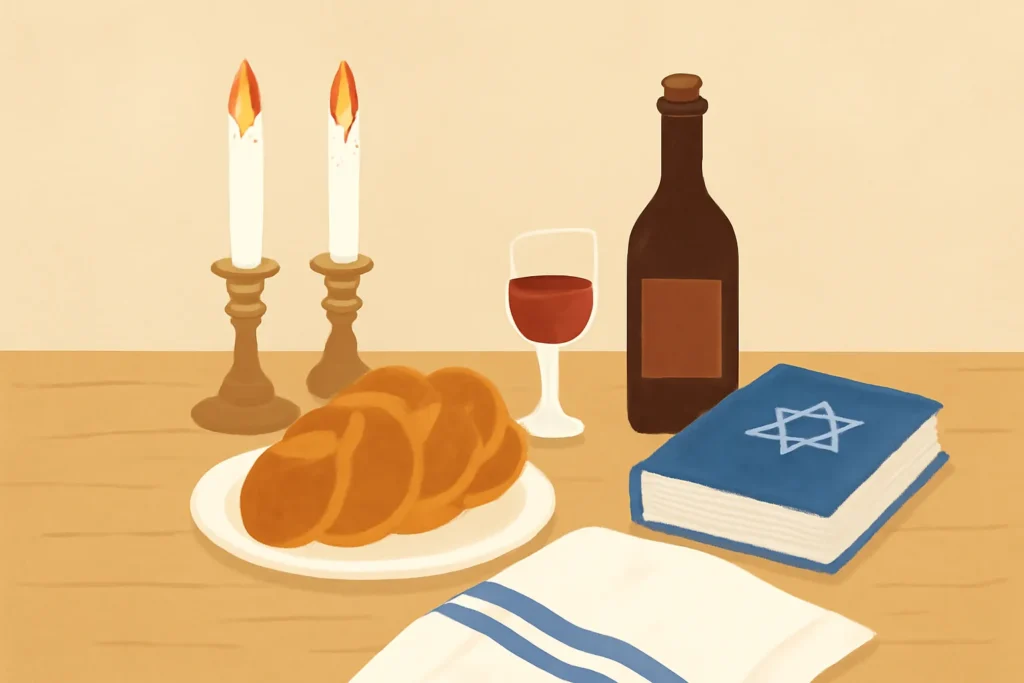
The arrival of Shabbat in many homes is announced by the candles the woman or the household lights, usually about 18 minutes before sunset, though customs vary. The lighting is often accompanied by a blessing over the candles and a moment of quiet anticipation. The candles symbolize bringing peace and sanctity into the home, and the lighting itself changes the physical atmosphere as the day transitions from weekday activity to sacred time.
In parallel with lighting, many families recite the Kabbalat Shabbat prayers, which are a welcoming, poetic entrance to the Sabbath. The Kiddush, a blessing over wine (or grape juice), is recited at the start of the Friday night meal. The blessing sanctifies Shabbat and creates a shared sense of purpose for the family gathered at the table. The two loaves of challah placed on the table symbolize manna from heaven and the dignity of the Shabbat meal, with blessings about treating the day as special and distinct from the ordinary weekdays.
Friday Night and Saturday Day: Prayer, Meals, and Rest
Shabbat observance continues with the Friday night service and the Shabbat morning service, which includes the Torah reading and singing. These services are found in synagogue and in many households as part of a home-based rhythm too. The allowance for hearing or reciting prayers on Shabbat is part of the broader aim to elevate the day through study, praise, and communal reflection.
The daytime portion of Shabbat emphasizes rest and family time, often featuring a second Friday meal and a third meal later on Saturday afternoon. The meals are festive and are imbued with blessings and songs. Between meals, many people engage in Torah study, conversation that deepens shared values, or outdoor strolls in some communities that encourage a break from screen-based life. The Shabbat afternoon period often includes additional prayers and, for many, study sessions or discussing ethical teachings relevant to daily life.
Seudat Shabbat, the meals themselves, form a central social and spiritual axis of the day. The meals are typically structured with blessings over bread (the hamotzi blessing) and blessings over wine for each course, with expressions of gratitude for the bounty and for the opportunity to rest and reconnect with family and faith. The spiritual mood of the day is often described as one of peace, gratitude, and attentiveness to more elevated concerns than the pressures of everyday schedules.
Havdalah: Marking the End of Shabbat
As Shabbat ends, the Havdalah ceremony distinguishes the sacred time from the ordinary week. Havdalah is recited over a cup of wine, with a braided candle, and spices to evoke a sense of transition and renewal. The ritual invites participants to carry the quiet beauty of Shabbat back into the coming week, with a blessing that divides the light from the dark, the holy from the ordinary, and the sacred from the mundane.
For households seeking to observe Shabbat, practical planning helps transform intention into achievable practice. The following guidelines address common situations and concerns, while recognizing that individual and communal norms will vary.
Pre-Shabbat preparation: Many families cook and bake in advance, set the table with candles and challah, and prepare hot drinks and ready-to-eat foods so that nothing burdens the Shabbat kitchen during the day itself. A common practice is to prepare two loaves of challah and to set aside meals that can be enjoyed without further cooking on Friday night and Saturday.
Food and heating: Refrain from turning on stoves or ovens during Shabbat. If a meal was begun before Shabbat, some traditions permit keeping it warm by allowed means or by using a pre-set warming mechanism that is considered permissible within the halachic framework. Modern traveling and camping scenarios often require consultation with a rabbinic authority to determine options that preserve Shabbat sanctity while addressing practical needs.
Electricity and electronics: The question of using electrical devices on Shabbat is nuanced. Traditional practice prohibits turning on or off electrical devices, which creates a shift in everyday routines. Some communities adopt leniencies during certain periods (e.g., using pre-programmed timers or devices considered to be passive readers rather than active operators). Others adhere to stricter interpretations that treat most electronic use as a form of prohibited labor. Travelers, students, and professionals may encounter these differences and should plan accordingly.
Travel and transportation: Driving is typically not allowed on Shabbat in traditional Orthodox practice, except in cases of danger or life-saving circumstances. Some communities and individuals use walking or trolleys, or organize Shabbat-friendly transportation options within a community. Balancing the desire to participate in gatherings with adherence to norms often leads to careful scheduling and local arrangements.
Work and shopping: Engaging in commerce or professional tasks is generally prohibited. Shopping for groceries, clothing, or other needs is avoided on Shabbat unless there is a need for essential items that were planned or purchased in advance. This requires careful preparation and planning to avoid situations in which essential items run out mid-Shabbat.
Havdalah and the transition: The end of Shabbat is marked by Havdalah, which helps participants shift from a sacred frame of mind to the ordinary week ahead. The ritual includes music, blessings, and the tasting of a few tastes of wine or grape juice, and it is often a moment to reflect on the day’s experiences and future intentions.
Shabbat practice is interpreted differently across Jewish denominations and communities. Understanding these differences helps explain why observance can look very different from one family or synagogue to another.
Orthodox Practice
In Orthodox communities, Shabbat observance tends to be centered on a comprehensive set of prohibitions designed to preserve a clear boundary between sacred time and weekday life. This typically includes stringent rules about electricity, driving, and certain kinds of work-related activities. Prayers, family meals, and study are emphasized as central pillars of the day, and there is often a well-defined structure of services and study that members follow weekly. The halachic framework is applied with the aim of consistent adherence that respects traditional rabbinic authority.
Conservative Practice
Conservative congregations often seek to balance the letter of the law with the needs of modern life. They frequently permit certain activities that Orthodox authorities may restrict, under guided rabbinic oversight. Electricity use for lighting or fans may be approached more flexibly, but the core goals of rest, sanctification, and communal life remain central. Conservative communities may also offer more inclusive options to accommodate families with differing levels of observance while maintaining a coherent Shabbat framework.
Reform and Renewal Practice
Reform and Renewal communities often interpret Shabbat through a broad, inclusive lens focused on personal meaning, justice, and communal strength. Some groups observe Shabbat with less emphasis on prohibitions and more on opportunities to rest, learn, and connect with family. Others retain traditional liturgy and rituals while allowing modern adaptations in the name of spiritual growth and social ethics. The common thread is a commitment to creating a meaningful Shabbat that strengthens community bonds and personal spirituality.
The home is the core locus of Shabbat for many families. A typical cycle centers on a Friday evening gathering, a Saturday morning service or Torah study, and a Revived sense of peace that pervades meals and conversations. Hospitality is often highlighted in traditional households: welcoming guests for Shabbat meals extends the sense of sanctity beyond the nuclear family and transforms a private day into a shared celebration. Texts, songs, and blessings are integrated into the meals, turning the home into a sanctuary where everyday concerns are temporarily set aside in favor of gratitude and communal connection.
In practice, the home schedule can look like this: Friday afternoon cleaning and cooking to prepare for candles; the Friday night meal with Kiddush and two loaves of challah; a Saturday morning service and Torah reading; a midday study or rest period; the third meal with more singing and warmth; and Havdalah at nightfall. Each phase contributes to a cumulative sense of peace, rest, and reflection.
Beyond the legal restrictions, Shabbat advances a spiritual atmosphere centered on gratitude, relationship-building, and spiritual growth. The day invites a retreat from distraction and an opening to study, prayer, and contemplation. The intention is to cultivate a sense of presence, where time itself is honored as a gift and not merely a resource to be consumed. The aim is not only to refrain from certain actions but to cultivate positive acts: hospitality, charity, listening, and thoughtful conversation. Shabbat becomes a weekly opportunity to recalibrate one's values, to nurture family ties, and to connect with tradition that links past, present, and future.
There are essential exceptions and empathetic allowances in Shabbat practice. The most important is the principle of pikuach nefesh—the obligation to save a life—which overrides most prohibitions. This means that if any life is in danger, urgent medical care, transportation, and other necessary actions are permitted. In addition, life-cycle events such as a community’s need for safety, rescue operations, and certain travel circumstances may require exemptions or flexible interpretation under rabbinic guidance. Communities also adapt Shabbat observance for travelers, students, or people staying in places with limited resources, seeking to maintain the spirit of Shabbat while meeting practical realities.
Visiting a synagogue or a home for Shabbat presents opportunities to participate in ritual life and to experience the day’s atmosphere. Guests should feel encouraged to observe respectfully, asking questions about local practices when appropriate. For hosts, clear communication about expectations and logistics helps create a welcoming environment that honors both tradition and the guests’ needs. In some cases, guests can contribute by bringing a dish that aligns with the meal structure or by joining in the singing and learning that characterize many Shabbat gatherings.
Cultural traditions influence practical details, including the foods served, the melodies sung during services, and the cadence of meals. Ashkenazic communities might emphasize certain liturgical tunes and a particular order of blessings, while Sephardic communities may have distinct prayer melodies, recipes, and customs for Friday night and Saturday meals. Both traditions share the underlying framework of Shabbat—sanctity, rest, and community—but they celebrate it through diverse languages, cuisines, and tunes. These variations enrich Jewish life by offering multiple expressions of the same sacred intention.
To help readers navigate the language of Shabbat practice, here is a compact glossary of important phrases often heard in discussion and study:
Shabbat (Shabbos): The Jewish Sabbath, observed Friday evening through Saturday night.
Kiddush: A blessing over wine or grape juice that sanctifies the Shabbat.
Kabbalat Shabbat: The welcoming prayers and songs that usher in the Sabbath on Friday evening.
Challah: The braided bread used in Shabbat meals.
Birkat Hamazon: The Grace After Meals, recited after Shabbat meals.
Havdalah: The ceremony that marks the end of Shabbat and separation from the holy time.
Melachot: The 39 categories of prohibited labor on Shabbat.
Muktzeh: Objects that are set aside on Shabbat and typically may not be moved.
Pikuach nefesh: The principle that preserving human life overrides nearly all prohibitions.
Many people have questions about Shabbat rules and how they play out in modern life. Here are a few commonly asked topics, with concise clarifications:
Is listening to music allowed? Before modern technology, music was a common feature of Shabbat joy. Some communities permit listening to music in a way that preserves the day’s sanctity, while others avoid certain types of music or electronic amplification. The answer often depends on tradition and community guidelines.
Can I use a heating device or a warming tray? Old restrictions on heating affect food kept warm on Shabbat. Many households use pre-warmed dishes, specialized equipment, or methods that comply with local rabbinic guidance. It’s best to follow the local authority’s ruling or plan ahead for Shabbat meals accordingly.
What counts as “work” on Shabbat? Work is defined not just by “labor” but by the 39 melachot and their subcategories. As a result, the line between permissible and prohibited actions can be nuanced. When in doubt, ask a rabbinic authority or rely on the community’s guidelines.
How does technology fit in? Many people prefer to minimize or avoid nonessential digital activity. Some communities use unplugged devices, timers, or “Shabbat mode” settings as permissible tools, while others maintain stricter boundaries. Individual choice and communal norms play major roles.
Shabbat is not merely a set of prohibitions; it is a weekly invitation to pause, reflect, and reorient one’s life around higher priorities. The rules, when understood as a framework for intention and meaning, help cultivate a sense of gratitude, family connection, and spiritual focus. As communities and individuals navigate modern life, they adapt within the guidance of tradition, keeping the heart of Shabbat intact while finding practical ways to honor it in today’s world. The result is a weekly moment of sanctity that offers rest, memory, and hope—an enduring gift that transcends time and place.
Whether you are joining a Shabbat service for the first time, preparing a Friday night meal with family, or studying the legal texts that gird the practice, the essence remains: Shabbat invites a deliberate pause, a shared table, thoughtful study, and a rest that nourishes body and spirit. By balancing tradition with personal and communal needs, Jewish families and communities continue to enact this ancient covenant in a dynamic and meaningful way. May your Shabbat be a source of peace, connection, and renewal as you enter into its quiet, radiant hours.





Leave a Reply