Overview of the Garden of Gethsemane: location, significance, and what you’ll find
The Garden of Gethsemane, often called the Place of the Agony in the Garden, is one of the most storied outdoor spaces in the world. It sits at the foot of the Mount of Olives, on the eastern fringes of Jerusalem’s Old City, where ancient olive trees still lend shade to a sacred plateau. This site is not only a quiet green space; it is steeped in Christian tradition as the place where Jesus prayed before his arrest, a moment widely commemorated in liturgy, art, and pilgrimage. The garden forms part of a larger sacred complex that includes the Basilica of the Agony, also known as the Church of All Nations, and it is cared for by the Franciscan Custody of the Holy Land.
In this article you will discover where the Garden of Gethsemane lies within the geography of Jerusalem, how to visit, what to expect when you arrive, and how to combine a visit with other nearby sacred and historical sites. Throughout, you’ll see how the garden’s olive grove and the surrounding chapels frame a narrative that spans millennia of faith and history.
Where is the Garden of Gethsemane located in Jerusalem?
The Garden of Gethsemane sits at the base of the Mount of Olives, directly across the Kidron Valley from the heart of Jerusalem’s Old City. This is a hillside area that has long served as a sacred landscape for Jews, Christians, and Muslims alike, but it is the Christian tradition that most visitors associate with the garden today.
Specifically, the garden is located on the western slopes of the Mount of Olives. If you are approaching from the Old City, you would travel eastward along the valleys and then ascend toward the Mount of Olives. The entry to the garden is tied to the adjacent Basilica of the Agony (the Church of All Nations), which sits within the garden's precinct. This proximity means that a single visit can combine the outdoor groves with the interior of the church, where a famous sacred rock is traditionally venerated.
The site is part of the modern city’s landscape in East Jerusalem, near several vantage points that overlook the Kidron Valley and the broader city. Because of its location on a hillside and its rich layering of religious, cultural, and historical associations, it’s important to approach the place with both curiosity and respect for its religious importance.
The geography around the Garden of Gethsemane
Geographic context and topography
The Mount of Olives forms a ridge running along the eastern edge of the Old City. The Garden sits on the western flank of this ridge, where terraces and olive groves have been cultivated for centuries. The Kidron Valley lies below, creating a dramatic slope that has framed the landscape since biblical times. The combination of hills, valleys, and the ancient trees gives the site a sense of timelessness.
Nearby landmarks and how they relate to a visit
Church of All Nations (Basilica of the Agony) — immediately adjacent to the garden; its rock-cut interior carries the rock traditionally associated with Jesus’ agony.
Dominus Flevit Church — perched further along the Mount of Olives, overlooking the Old City; a frequent add-on for pilgrims walking this part of Jerusalem’s landscape.
Church of Mary Magdalene — a distinctive church on the Mount of Olives that often appears on itineraries that explore the area around Gethsemane.
Mount of Olives panorama vantage points — many visitors combine their Gethsemane visit with a stroll along the ridge to enjoy sweeping views of Jerusalem and the surrounding landscapes.
The olive grove and the garden layout
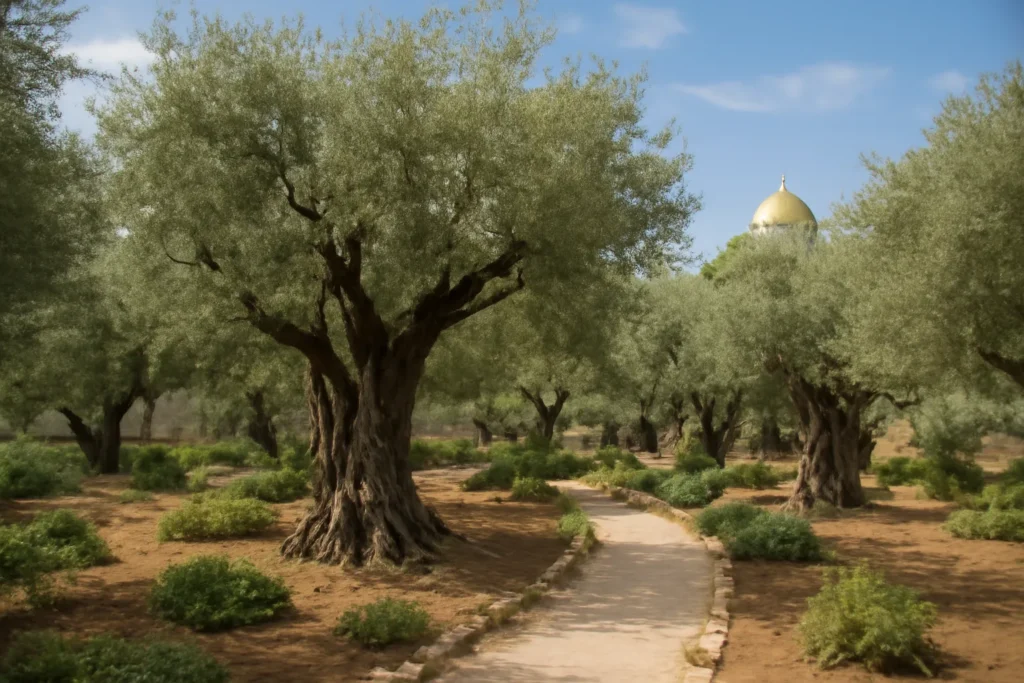
A defining feature of the Garden of Gethsemane is its grove of ancient olive trees. Visitors often remark on the trees’ gnarled trunks, history-shaped branches, and narrow canopies that have seen generations of the city’s life unfold beneath them. While the exact ages of these trees are difficult to verify, many are believed to be centuries old, with some trunks commonly described as being nearly two millennia old. Regardless of precise age, the trees symbolize endurance and sacred memory for many pilgrims and scholars.
The garden itself contains paths and shaded areas that allow visitors to reflect in a peaceful setting. Within a relatively compact space, it preserves a sense of agrarian practice from antiquity—olive trees grown for sustenance, shade, and ceremonial use—paired with the more recent architecture of the Church of All Nations and other devotional spaces.
The Church of All Nations and sacred spaces within the precinct
The Church of All Nations is a notable architectural feature within the garden. Its architecture blends a modern exterior with a solemn, contemplative interior where the rock said to be the place of Jesus’ agony is housed. The church’s name, “All Nations,” reflects a tradition of international cooperation in its construction, and its interior acts as a spiritual counterpart to the garden’s outdoor serenity.
Beside the church, you’ll often find small chapels, prayer spaces, and seating areas designed to support quiet reflection. The combination of olive trees, stone paths, and liturgical space makes the site a place where the physical landscape and spiritual narrative intersect.
Historical and spiritual significance
The Garden of Gethsemane holds a central place in Christian narrative as the location of Jesus’ moments of prayer, distress, and decision before his arrest. In the canonical Gospels, this is the moment when Jesus is said to have spoken with his disciples about the challenges ahead, and where his resolve to fulfill a broader divine plan is deeply expressed. The garden’s spiritual weight is reinforced by the nearby church, which venerates the sacred memory at its core.
Over the centuries, the site has attracted pilgrims, scholars, and travelers from around the world. It has also become a touchstone in Christian art, literature, and music, where the themes of sorrow, resolve, and hope are interwoven with the landscape’s enduring natural elements—the olive trees—whose longevity resonates with the sense of enduring faith across generations.
How to visit: planning your trip to the Garden of Gethsemane
Practical considerations for a thoughtful visit
Open hours and access: The site is generally accessible during daylight hours. The Church of All Nations has its own liturgical schedule, which can affect access to some interior spaces. Plan to visit in the morning or late afternoon for softer lighting and fewer crowds.
Admission and fees: Access to the garden itself and the church tends to be free or donation-based, though some interior spaces may request an entry donation or have guided-tour fees. Always check current information with the Custody of the Holy Land before you go.
Dress code and conduct: As a site with religious significance, dress modestly and behave respectfully, especially if you intend to enter chapels or attend services. Photography may be allowed in outdoor areas, but it’s polite to avoid strong flash inside sacred interiors.
Best times to visit: Early morning light offers a serene atmosphere for photography and reflection, while late afternoon can reveal dramatic skies over the Old City. If you’re combining the garden with other Mount of Olives stops, plan for a pacing that suits your energy and weather conditions.
What to expect inside the Church of All Nations
Inside the Basilica of the Agony, the rock traditionally associated with Jesus’ agony is kept in a central location that visitors can venerate. The interior space is designed for contemplation, with subdued lighting and reverent acoustics. Because this church remains an active place of worship, some hours may be set aside for Mass or private prayer. If you arrive with a group, you may have access to short guided experiences that explain the historical and spiritual context of the space.
How to get to the Garden of Gethsemane: transport and directions
Getting to the Garden of Gethsemane is usually straightforward for visitors already in Jerusalem. The garden’s location on the Mount of Olives makes it reachable from the Old City by a short walk or a bus ride, followed by a brief stroll along its roadways.
On foot from the Old City
If you enjoy a walk and want to experience the landscape up close, you can start from the Old City gates and make your way toward the Mount of Olives. A typical route runs along pathways that ascend gradually, offering views toward the Kidron Valley and the surrounding hills. This approach allows you to connect the Garden of Gethsemane with other Mount of Olives landmarks along the way.
Local buses operated by the city and regional services will commonly serve stops near the Mount of Olives and the Church of All Nations. If you prefer a more direct option, a taxi ride from the Old City or central Jerusalem will bring you to the gate of the garden or the church complex quickly. Always confirm the exact drop-off point with the driver, as some routes may stop at different entry points depending on traffic and day.
Guided tours and combined itineraries
Many guided tours of Jerusalem include a stop at the Garden of Gethsemane as part of a broader Mount of Olives itinerary. These experiences can provide historical context, religious background, and navigational tips for visiting multiple nearby sites in a single day.
What to see and do at the Garden of Gethsemane
Beyond admiring the ancient olive trees and walking paths, visitors to the Garden of Gethsemane have several meaningful experiences:
Reflect beneath ancient olive trees in a historical grove that echoes with centuries of memory.
Visit the Church of All Nations and contemplate the sacred rock and the architectural setting that frames the garden’s spiritual narrative.
Take photographs with sensitivity of the landscape, the stone walls, and the interplay of light across the grove.
Pair the visit with neighboring sites such as the Dominus Flevit and other Mount of Olives landmarks for a fuller sense of Jerusalem’s sacred geography.
What you should not miss
While the main draw remains the olive grove and the Basilica, consider pausing by the gate where the garden and church meet to absorb the atmosphere, read placards about the site’s biblical associations, and note the way pilgrims from around the world come and go with their own prayers and intentions.
Best times to plan a visit and seasonal considerations
The Garden of Gethsemane is an outdoor, weather-influenced space. Your experience can vary with seasonal light, temperature, and crowds. To maximize your visit:
Choose a morning hour for cooler temperatures and softer light for photography and contemplative walks.
Late afternoon can offer dramatic skies as the sun sets over the city, though crowds may be larger.
Winter months can be milder in Jerusalem but include a higher chance of rain, which changes the ambiance of the grove.
Spring and autumn generally present pleasant temperatures and comfortable walking conditions.
Regardless of when you go, plan for about 60 to 120 minutes to enjoy the garden, the church interior, and any optional guided commentary. If you’re combining the visit with other Mount of Olives sites, you may extend your time to half a day.
Dominus Flevit Church (the Church of the Lord Wept) for a front-row view over the Old City and a chance to reflect on the emotional arc of the biblical narrative.
Chapel of the Ascension or other vantage points along the Mount of Olives that provide panoramic vistas of Jerusalem’s skyline.
Church of Mary Magdalene with its distinctive domes and its role in modern pilgrimage traditions.
Other walkable paths on the Mount of Olives that reveal tombs, mosques, and monasteries, illustrating the religious diversity of this high ground above the city.
Practical tips for respectful travel and spiritual sensitivity
When visiting a site of such profound religious meaning for many people, a few guidelines help ensure that your experience is respectful and enriching:
Dress modestly and remove hats if appropriate in sacred spaces.
Keep noise to a minimum in prayer areas and when the church is in use.
Respect photography rules inside church spaces; outdoor photography is usually permitted, but be mindful of others who may be praying.
Respect others’ rituals and avoid interrupting ceremonies or processions.
Support the custodial care by following posted guidelines and contributing to any visitor donations if available.
Historical context and bibliographic notes for the curious traveler
For readers who enjoy deeper historical context, the Garden of Gethsemane sits at a crossroads of ancient, medieval, and modern Jerusalem. Its olive trees are symbols of continuity in a city where layers of history are visible in the street plans, the stones, and the religious institutions that grew up around the site. Scholarly resources on the Mount of Olives often discuss the garden not merely as a biblical site but as a living landscape that has witnessed centuries of political change, religious devotion, and cultural exchange.
If you wish to explore further, you can read about the Franciscan Custody of the Holy Land, the organization responsible for the care and accessibility of the garden and church. Their publications and guided tours frequently explain the site’s role within Christian pilgrimages, its architectural features, and how local communities maintain the grounds today.
You will encounter several expressions that refer to the same place, each offering a slightly different shade of meaning:
Garden of Gethsemane — the formal biblical name for the outdoor space.
Gethsemane garden or the garden at Gethsemane — common conversational variants that emphasize the garden aspect.
Place of the Agony in the Garden — a traditional title that foregrounds the moment described in the Gospels.
Gethsemane olive grove — a phrasing that highlights the grove of olive trees as the landscape feature.
Gethsemane site or Gethsemane precinct — terms used in guidebooks to denote the broader sacred area around the church and garden.
These variations are helpful when researching travel information, maps, or scholarly articles, because they reflect the site's layered identity as a biblical location, a living religious space, and a natural landscape.
For travelers seeking a meaningful, compact spiritual stop, the Garden of Gethsemane is an ideal anchor. It enables you to step from the bustle of the Old City into a quieter, contemplative zone that has been a site of pilgrimage for centuries. The adjacent Basilica of the Agony ensures that you can connect outdoor landscape with interior devotion in a single visit. If you are planning a longer exploration of Jerusalem, consider pairing the Gethsemane stop with a walk along the Mount of Olives ridge to reach the Dominus Flevit and the panoramas that overlook the ancient city walls.
For those who prefer structured experiences, a guided tour can coordinate a morning or afternoon itinerary that includes the Garden of Gethsemane, the Church of All Nations, and surrounding overlooks. These tours often provide historical background, translations of inscriptions, and context for the site’s role in Christian liturgy and biblical history.
Location: Foot of the Mount of Olives, opposite the Kidron Valley, near the Old City of Jerusalem.
Main features: Ancient olive trees, Garden paths, Church of All Nations (Basilica of the Agony), prayer spaces.
Access: Open during daylight; interior church access may depend on service schedules; guided tours available.
What to do: Reflect, photograph, visit the church, combine with Dominus Flevit and other Mount of Olives sites.








Leave a Reply