Cross Palm Sunday: Meaning, Symbolism, and How to Observe
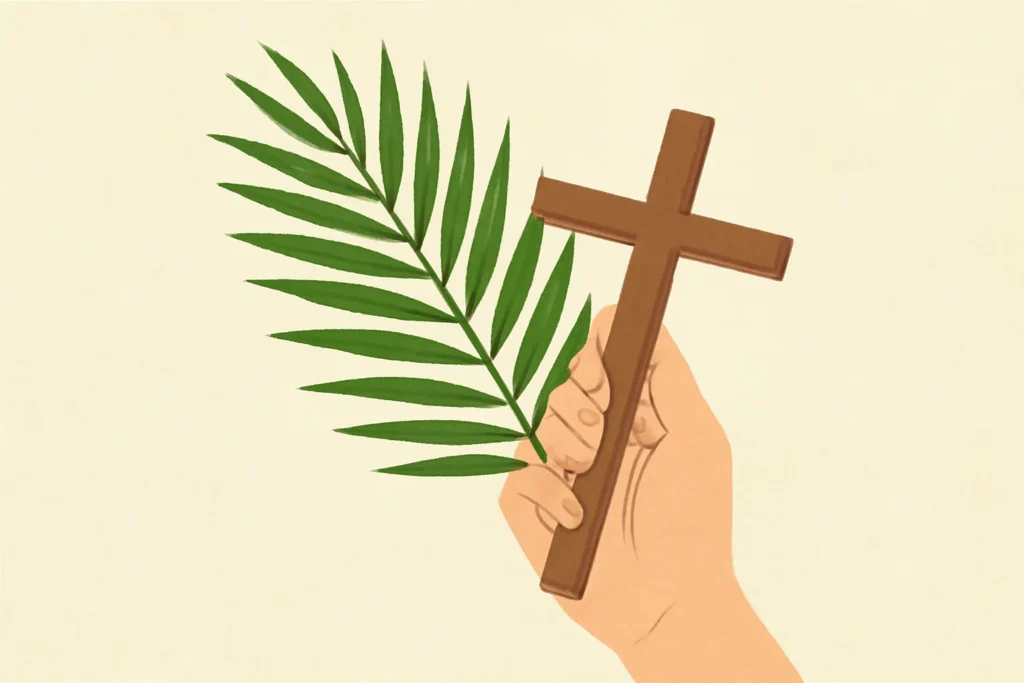
Cross Palm Sunday is a phrase that captures a unique blend of two potent Christian symbols and seasons: the triumphal entry of Jesus into Jerusalem, celebrated as Palm Sunday, and the cross, the central symbol of Christian faith. While many communities mark Palm Sunday with processions and blessing of palm branches, the practice of intertwining the cross with the palms—whether through crafting palm crosses, weaving palms into cross shapes, or simply reflecting on the cross as the path of Holy Week—gives this observance added depth. This article explores the meaning, the symbolism, and the practical ways to observe and participate in Cross Palm Sunday, in churches and homes around the world.
What is Cross Palm Sunday?
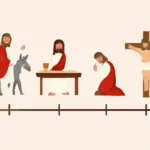
At its core, Cross Palm Sunday signals the moment when the joy of Jesus' royal welcome on Palm Sunday meets the somber anticipation of the Passion that follows in Holy Week. In many traditions, congregations bless palm fronds on Palm Sunday and then transform or repurpose those fronds into palm crosses for personal reverence at home. Some regions emphasize the crossmaking aspect explicitly, inviting believers to weave, braid, or press the leaves into a cross shape as a tactile reminder that triumph and suffering belong together in the story of salvation. In essence, this observance invites believers to hold both the victory implied by the palms and the sacrifice symbolized by the cross in one frame of mind.
Historical roots and meaning
The roots of Palm Sunday lie in the Gospel accounts of Jesus’ entry into Jerusalem, when crowds spread palms and shouted “Hosanna!” (a cry recognizing Jesus as Messiah). This scene, described in the four Gospels, became a priming moment for Holy Week. The cross is the central emblem of Christianity, representing Jesus’ crucifixion and the theological truth of redemption through sacrifice. The combination found in Cross Palm Sunday is not a single rite with a fixed rite book in every tradition, but a symbolic pairing that many churches and families deliberately emphasize in the weeks leading up to Easter.
Historically, Christians have used blessed palms in liturgical settings and carried them home to display as a sign of faith. In some cultures, palm fronds are kept for years, pressed between pages or hung on walls with the blessing that they may bring blessings to the household. The practice of turning palms into cross shapes is a natural extension of that habit—an act that makes the symbolism tangible and portable. Thus, Cross Palm Sunday is not just about memory; it is about transforming a liturgical symbol into a personal devotional practice.
Symbolism: Palms and the Cross
Two symbols dominate the narrative of Cross Palm Sunday: palms and the cross. Each carries layered meaning that enriches the observance.
Palms as a symbol
Victory and peace: In ancient cultures, palms signified victory, triumph, and flourishing life. When Christians recall Jesus’ entry into Jerusalem, the palms echo that triumphal recognition, even as the week’s events move toward suffering and salvation.
Hosanna and petition: The crowd’s cries of “Hosanna” celebrate Jesus as the anticipated Messiah, inviting believers to reflect on the prayers for salvation that accompany the season.
New life through faith: Palms also symbolize the hope of resurrection—an anticipation of life beyond death, which frames Holy Week as both a journey toward the cross and toward Easter dawn.
Fragrant reminder: Palms have a living, aromatic quality that invites sensory memory; their scent and texture become a tangible reminder of faith in daily life.
The Cross as a symbol
Redemption through sacrifice: The cross signifies Jesus’ voluntary suffering for humanity’s salvation, a central claim of Christian theology.
Love made visible: The cross embodies love’s willingness to bear suffering for others, offering a model of self-giving and mercy.
Hope amid sorrow: The cross is not only about pain; for believers it points to victory over sin and the promise of new life in Christ.
Continuity with Holy Week: The cross in Palm Sunday observances acts as a bridge to Maundy Thursday and Good Friday, reminding worshipers that triumph and trial are inseparable on the path to Easter morning.
When seen together—Cross Palm Sunday invites participants to hold the paradox of celebration and sorrow in a single seasonal moment. The palms celebrate the coming of the Messiah; the Cross points toward the Passion. In many communities, weaving palms into cross shapes makes this paradox concrete: a living symbol that is at once a gift, a craft, and a prayer.
Cross Palm Sunday: variations across denominations
Across Christian traditions, the way Cross Palm Sunday is observed varies in emphasis, ritual detail, and sacred object use. Below are some broad patterns that readers may encounter in different churches and cultures.
Catholic and Anglican Province practices
In many Catholic parishes, a formal blessing of palms occurs during the Mass on Palm Sunday. Some communities then distribute palm crosses or provide materials for making palm crosses at home.
Anglican and Episcopal churches often emphasize processions with blessed palms, hymnody, and the reading of the Passion narrative. Some parishes encourage parishioners to take palm crosses home as a devotional sign.
In both traditions, the color purple (violet) is commonly used during Lent, including the Palm Sunday liturgy, signaling penitence and anticipation of Easter joy.
Orthodox and Eastern Christianity
Orthodox Christians celebrate Palm Sunday (often called Sunday of the Palms or Branch Sunday) with an emphasis on liturgical ritual and sometimes a procession of liturgical greens or branches. The cross remains central, and faithful may bring blessed greenery home as a sacred symbol for the week ahead.
In some Eastern churches, there are distinctive hymns and liturgical motions that accompany the blessing of palm or olive branches, creating a rich tapestry of sound and symbol during the service.
Protestant traditions
Many Protestant churches observe Palm Sunday with a blend of processions, scripture readings, and congregational singing. Some congregations explicitly focus on the cross by including readings about the Passion in their Palm Sunday service.
In several Protestant contexts, families engage in home projects related to the Cross Palm Sunday motif, including making palm crosses as personal devotion aids for Holy Week.
Cultural and regional variations
In parts of Latin America and the Caribbean, Palm Sunday is celebrated with distinctive processions, with locals using locally grown palms and sometimes weaving them into crosses as part of community rituals.
In the Philippines, Spain, and parts of Europe, the tradition of blessing and distributing palm fronds (and sometimes crosses) extends beyond the church, leading into public processions and family customs.
In Africa, some communities blend Palm Sunday devotion with traditional music and storytelling, drawing from local imagery of crossing and journeying with faith.
Traditional observances around Cross Palm Sunday
Across denominations, certain core elements recur in observances of Cross Palm Sunday. Here is a practical outline of what to expect in many churches, and what to participate in if you attend or want to observe at home.
Blessing of palms: A priest, pastor, or lay leader blesses the palms or branches, invoking God's grace for the congregation and for the world.
Procession: A public procession with palms, banners, or greens often accompanies the service, symbolizing Jesus’ entry into Jerusalem and inviting the faithful to join in a ceremonial movement toward Holy Week.
Gospel reading from the Passion narrative: A key reading that recounts the events of Holy Week, grounding the congregation in the path toward the crucifixion and resurrection.
Hymns and prayers: Psalms and hymns of praise, lament, and trust are sung, and prayers reflect on both triumph and suffering, hope and humility.
Distribution of palm crosses or materials for crafts: Many communities encourage the faithful to take home a cross made from palm fronds or a kit to weave one during the week.
Church-specific practices
Some parishes set up a palm cross workshop after the service, inviting families to participate in a simple craft that turns the liturgical symbol into a personal keepsake.
In some churches, the palms from the Mass or service are distributed with care instructions, including suggestions for preserving the palm crosses for use in the days ahead or for reviving memory during the Easter season.
For those who cannot attend a service, many congregations provide online resources, including text of liturgy, hymns, and instructions for making their own cross from home-sent palms.
How to observe Cross Palm Sunday at home
Observing Cross Palm Sunday at home can be meaningful for individuals, couples, and families with children. Here are practical, respectful, and accessible ideas to bring the message of Cross Palm Sunday into your living space.
Prepare a small sacred space: Place a cross, a small bouquet of palm-like greenery, or a simple palm cross on a table or shelf. Add a candle and a printed or handwritten reflection for the week ahead.
Bless or bless yourself: If you have blessed palms from a church service, display them with gratitude. If not, you can quietly bless a bunch of greenery or a palm cross you’ve crafted yourself.
Make a palm cross: Use fresh or dried palm fronds (or substitute with similar greenery) to weave a cross. There are many simple patterns, from a basic two-strip cross to more elaborate braided crosses. The act of weaving becomes a meditative practice.
Pray through the week ahead: Use a short daily prayer focusing on the contrast between victory and sacrifice. A suggested cadence might be: morning praise, midday request for strength, evening reflection on humility and service.
Read a Passion text: Choose a Gospel Passion narrative (Matthew 21-27, Mark 11-15, Luke 19-23, or John 12-19) to reflect on as you begin Holy Week.
Light a candle for peace and mercy: Each day of Holy Week leading to Easter, light a candle and offer a prayer for people who are suffering or in need of comfort.
Engage in a family craft: Create palm crosses together, doing a simple method for younger children and a more intricate one for older participants. Display the finished crosses in windows or on the family altar.
Serve others: Consider acts of service—volunteering, donating to a charity, or helping a neighbor—embodying the cross’s call to self-giving love.
Crafts and traditions: palm crosses and more
Crafting with palms is a prominent facet of Cross Palm Sunday observances. Below are ideas and steps to explore this tactile tradition in a thoughtful, meaningful way.
Weaving a traditional palm cross
Here is a simple method suitable for beginners, using two strips of palm frond or any flexible greenery. The steps are presented in a concise sequence to make the process accessible for families and classrooms alike.
Prepare two long, flexible strips of palm or other greenery. Lay them crosswise in a plus sign, with the plain tip ends at the center.
Fold the upper strip over the lower strip to create the first crossbar; press gently to secure a neat joint.
Take the left extension and tuck it under the right side, then pull through to form a loop, creating a small knot that stabilizes the first arm of the cross.
Repeat with the opposite side, weaving the extensions in alternating fashion to produce a compact cross shape.
Trim any excess ends and arrange the cross so that the arms are symmetrical. Allow the cross to dry and set if you are using fresh palm fronds.
You can enhance the cross with a ribbon, a small bead, or a simple name tag or blessing for your family. The cross created in this way becomes a tangible reminder of both the entry into Jerusalem and the path toward Easter.
Palm garlands: Weave several palm fronds into a decorative garland to hang above a doorway or on a wall near your devotional space.
Cross-in-a-frame: Place a palm cross or palm branch in a small framed display for a home shrine.
Temple candles and palms: Combine palm leaves with a candle and a short prayer on a card; use it as a weekly devotional piece.
Cross Palm Sunday in culture and geography
The way this observance unfolds can vary by culture and geography, reflecting local liturgical styles, languages, and customs. Here are a few regional snapshots to illustrate the breadth of practice around the world.
The Americas: In many Latin American communities, Palm Sunday is a festive occasion with processions, musicians, and community feasts. Palms are often blessed, distributed, and then turned into crosses or kept as symbols in homes and churches.
Europe: In parts of Southern Europe, palm branches are blessed ceremonially, and some families craft crosses to place near home altars. The focus on Holy Week is strong, with a blend of contemplative worship and public processions.
Africa: In several African contexts, Palm Sunday rituals blend traditional rhythms and songs with Christian liturgy. Palm crosses become part of personal devotion and community identity during Holy Week.
Asia-Pacific: In places with diaspora communities, Cross Palm Sunday can be observed alongside other cultural practices, often combining local greenery with canonical palms and cross motifs.
Theological reflections: meaning for a modern believer
For many Christians, Cross Palm Sunday invites a thoughtful meditation on how solemn fidelity and joyful prophecy intersect in the life of faith. The day invites believers to consider questions such as:
What does it mean to welcome Jesus? The palm thrusts forward a welcome that is sincere but can be tested by events to come. It invites a discernment about the nature of true discipleship in a world of competing loyalties.
How do joy and sorrow coexist? The juxtaposition of triumphal praise and the shadow of the cross encourages a faith that is resilient in both celebration and suffering, recognizing that the path to Easter passes through the Passion.
What is our response to the cross? The cross is not merely a symbol of pain; it is a call to self-giving love, mercy, and service to others—an invitation to live out the gospel in concrete acts of compassion.
In this way, Cross Palm Sunday becomes a catechetical moment as well as a liturgical one: a pedagogical opportunity to teach faith through symbol, ritual, and family practice. The palm cross, the blessed palm, and the liturgical procession all point toward a single narrative—one that culminates in Easter morning but is lived every day by believers who choose to follow in the way of Christ.
Practical guidance for communities and leaders
For churches and faith communities seeking to emphasize Cross Palm Sunday, here are some practical suggestions to deepen the experience for participants, including families with children.
Provide clear instructions: If the service includes crafting palm crosses, offer simple, easy-to-follow instructions or a short handout that families can take home.
Include intergenerational elements: Plan activities that involve children and adults, such as a family procession, a shared reading, or a hands-on palm-cross workshop after the service.
Offer devotional resources: Create printable reflections or short devotionals that families can use during Holy Week, tying together Palm Sunday themes with the cross and Easter hope.
Encourage home observances: Supply palm fronds or cross-making kits for home use or share digital resources that explain how to observe Cross Palm Sunday in a household setting.
Highlight inclusivity: Acknowledge that not all participants may be able to attend a service; provide online options or at-home prayer guides to keep everyone connected to the shared meaning.
Frequently asked questions about Cross Palm Sunday
What is the main difference between Palm Sunday and Cross Palm Sunday?
Palm Sunday marks Jesus’ entry into Jerusalem and is celebrated with palm processions and readings about triumph. Cross Palm Sunday emphasizes the cross’s symbolism on the same day, often by creating or displaying palm crosses, thereby linking welcome and sacrifice in a single observance.
Who usually blesses the palms on Cross Palm Sunday?
In most liturgical settings, a priest or pastor blesses the palms during a service. In some churches, lay ministers or deacons may participate in the blessing, especially in large or community-oriented congregations.
Can I observe Cross Palm Sunday at home even if there is no palm in my area?
Yes. You can use any flexible greenery available to you, or craft a palm cross from simple paper or cardboard as a symbolic substitute. The key is the meaning you attach to the cross and the palm—welcome, praise, sacrifice, and hope—rather than the specific material itself.
Why is the cross important on Palm Sunday?
The cross anchors the Lenten and Holy Week narrative. It reminds believers that the triumph celebrated on Palm Sunday is inseparable from the cross that will soon be approached, and that Easter glory rests on the foundation of Christ’s crucifixion and resurrection.
Conclusion: Embracing the meaning of Cross Palm Sunday
Cross Palm Sunday invites believers to hold a dual awareness: the public confession of Jesus’ identity as Messiah, and the intimate anticipation of the cross and resurrection that defines Christian salvation. Whether experienced through a liturgical procession, a whispered prayer over a palm cross, a home-making craft, or a family devotion, this observance offers a powerful invitation to reflect on faith in action—celebration that is grounded in humility, mercy, and hopeful anticipation. By exploring the meaning, symbolism, and practical ways to observe, readers can participate in a devotion that is both traditional and personally transformative. The practice of turning palm fronds into crosses—whether by weaving, shaping, or simple arrangement—becomes a living symbol of a journey: from welcome to witness, from triumph to sacrifice, and toward the glorious dawn of Easter.





Leave a Reply