In this article we explore what a Didache is, its definition and historical background, and how this ancient text fits into the bigger story of early Christianity. The Didache, often called The Teaching of the Twelve Apostles, survives as one of the most important and intriguing sources for understanding how early Christian communities practiced worship, ethics, baptism, and church governance. Rather than a book of doctrine in the modern sense, the Didache functions as a practical manual—an instructional document that reveals the everyday life of believers, their liturgy, and their ideas about community boundaries. In seeking to answer the question what exactly is a didache, we will survey its meaning, its historical moment, and its enduring influence on scholarship and religious practice.
The short answer to what is a didache is that it is an early Christian writing presenting instruction on ethics, liturgical practice, and church organization. In more formal terms, a didache is a didactic treatise that offers guidance to communities on how to live in the light of Jesus’ teaching. The word itself comes from the Greek didachē, meaning instruction or teaching, so the very term signals a transmission of practical knowledge rather than a purely philosophical or theological treatise. The work is typically titled The Teaching of the Twelve Apostles, underscoring the claim of apostolic origin or at least an apostolic lineage, even though modern scholars debate how strictly historical that claim was.
The historical significance of the Didache lies in its placement at the crossroads of early Christian practice. It is not a complete or uniformly “canonical” document in the way later Christian writings were codified, yet it appears to have circulated widely enough to influence a range of communities across the Mediterranean. Because it addresses practical matters—how to baptize, how to fast, how to pray, how to celebrate the Eucharist, how to distinguish true teachers from false ones, and how to organize itinerant ministers—the Didache gives researchers a vivid window into the lived religion of early believers. In many ways, the Didache reads like a user’s manual for a nascent church, showing how a faith community translates doctrine into daily routines and communal norms.
The Didache’s discovery and transmission are themselves a tale of scholarly work. The most famous entry point for modern readers is a 19th-century discovery by the monk and scholar Philotheos Bryennios, who published a Greek manuscript in 1883 that opened a new chapter in New Testament apocrypha studies. Since Bryennios’s discovery, a multiplicity of manuscripts, versions, and scholarly editions have expanded our understanding. While the exact dating remains a matter of debate, most scholars situate the text as originating in the late first century or the early second century, making it one of the earliest extensive Christian documents outside the New Testament canon. This early dating is important because it implies that the Didache could reflect practices that predate more formalized church structures, while also revealing how communities were negotiating authority, ritual, and ethics in the first generations of Christianity.
Definition and Terminology
Etymology and Meaning
The key lexical point is straightforward: didache derives from the Greek didachē, meaning instruction or teaching. In everyday language, a didache is a piece of guidance passed along to learners or followers. When scholars speak of the Didache, they are referring to a discrete text that embodies that sense of practical instruction—an organized collection of guidelines designed to shape behavior, worship, and communal life. Because the title foregrounds instruction, readers often encounter the Didache as a bridge between early Christian pedagogy and ritual practice.
In addition to The Teaching of the Twelve Apostles, the document is sometimes described as the Didache or, in scholarly shorthand, D or Didachē. Some discussions emphasize its function as a catechetical manual (that is, a guide for catechesis or instruction of new converts). Others highlight its role as a liturgical manual, because it includes concrete instructions about when to fast, how to celebrate the Eucharist, and how to conduct baptism and prayer. The flexible labeling—catechetical, liturgical, ethical—helps capture the Didache’s multi-functional character. The broader sense of “two ways” (the Way of Life and the Way of Death) appears as a defining motif, underscoring the text’s emphasis on choosing a path that reflects allegiance to the Messiah.
Historical Background and Dating
Origins in Early Christian Communities
The Didache appears to have originated within a network of early Christian communities that valued both instruction and practical discipline. The text’s content reflects a world in which believers navigated baptismal initiation, family life, economic sharing, and communal worship, all while repeatedly negotiating questions of who may teach and how authority circulates. The presence of itinerant apostles and prophets in the Didache points to a period when leadership structures were still fluid, and communities relied on direct guidance from traveling teachers and recognized leaders. This fluidity is a clue to the text’s origin: a setting where churches were forming, scripts were being collected, and communities sought a framework for cohesion and discernment.
Scholarly debate about dating the Didache centers on the tension between internal cues (references to practices that resemble later church customs) and external cues (the lack of explicit mention of a fully developed episcopal hierarchy). Some argue for a date in the late first century, suggesting a context close to the apostolic era. Others propose a second-century date, arguing that the Didache reflects the concerns and vocabulary of communities that had already experienced a degree of institutional development. The safest stance is to acknowledge a likely range, roughly between c. 50–150 CE, with most specialists favoring a window that places the composition and circulation of the full text in the late first to early second century. Regardless of precise dating, the Didache’s vantage point offers a rare glimpse into how early Christians organized worship, taught neighbors about the moral life, and maintained a sense of community across diverse local settings.
Content and Structure of the Didache
Two Ways: Way of Life and Way of Death
One of the most distinctive features of the Didache is its opening moral framework: a clear articulation of two paths for human life. The Way of Life is a program of ethical behavior that emphasizes love of God and neighbor, obedience to the commandments, and acts of mercy. By contrast, the Way of Death catalogs temptations, vices, and social harms that lead away from the good life. This binary structure functions as a practical spiritual diagnostic: communities are invited to examine their conduct and align themselves with the Way of Life through concrete acts of virtue.
Within the Way of Life, the Didache offers concrete instructions such as:
Love of God and inclusion of neighbors in ethical obligations
Proscriptions against murder, adultery, theft, deceit, and hypocrisy
Practical guidance on generosity, hospitality, and care for the poor
Ethical admonitions about wealth, social usage, and discipline within the community
In the Way of Death, the text warns against behaviors that degrade communal life, including envy, pride, malice, and violent or immoral conduct. The explicit contrast is intended to shape a lived moral posture, encouraging adherence to a way that reflects allegiance to God through Jesus’ teachings. This binary framing makes the Didache an especially powerful tool for catechesis or ongoing instruction for new converts and for those responsible for teaching the faith.
Ritual Instructions: Baptism, Eucharist, and Prayer
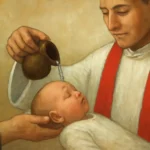
The Didache is not merely theoretical ethics; it is a hands-on guide to worship and sacramental life. It provides practical steps for key rites and rituals, including baptism, the Eucharist, and prayer. For baptism, the text specifies the formula and mode to be used, usually instructing baptism in the name of the Father, the Son, and the Holy Spirit. The sacramental rite is paired with cautions about preparation and proper intent, reflecting concerns about eligibility and discernment in the early church.
The Eucharistic section gives concrete directions on the use of bread and cup, urging reverence and gratitude, as well as a rhythm of prayer. The Didache also contains a version of the Lord’s Prayer, aligning Jesus’ own teaching with the community’s liturgical life. The combination of ritual practice with prayer shows how early Christians merged memory, confession, and thanksgiving into a cohesive worship experience.
The Didache also delineates fasting practices and liturgical calendars, indicating when fasting should occur and how often. Interwoven with these directives is a concern for unity and order: the text cautions against allowing unapproved teachers to disrupt community life and it emphasizes the importance of hospitality, mutual aid, and care for those in need.
Ethics and Social Ethic
A core strand of the Didache is its ethics of neighbor love and social conduct. The instructions cover everyday moral decisions, including honesty in business, generosity toward the poor, and the fair treatment of strangers. The Didache’s social ethic is practical: it asks readers to embody their beliefs in concrete actions, from compassion toward the vulnerable to the integrity of communal life. By foregrounding social responsibility, the text links individual virtue with the health of the whole congregation.
Church Order and Apostolic Authority
Beyond personal virtue, the Didache engages questions of church structure and apostolic authority. It discusses the roles of apostles and prophets, offering guidelines about how traveling teachers should be received, how they should be tested, and how their messages should be weighed against established teaching. The document suggests a practical approach to discernment: new voices are welcomed with hospitality, yet their teachings must align with the community’s recognized tradition. This makes the Didache a valuable source for understanding early models of church governance, including concerns about orthodoxy and community boundaries.
Manuscripts, Transmission, and Discovery
Origin of the Text and Discoveries
The modern life of the Didache is inseparable from the story of its manuscript history. The most famous discovery came in the late 19th century when Philotheos Bryennios published the Greek text in 1883, based on a manuscript he found in a monastery library. This publication opened new lines of inquiry for scholars who had long known about the Didache mainly through later references. The Bryennios manuscript became the anchor for subsequent textual work and critical editions, though it was far from the only witness to the Didache in antiquity. The discovery highlighted the Didache’s status as a widely read and circulated text in antiquity, even if it did not achieve universal canonical status.
Manuscript Tradition and Versions
Today scholars distinguish among the primary Greek witness and several versions in other languages, including Syriac and Latin. The Greek text remains foundational for interpretation, but the existence of translations and partial copies across different linguistic communities demonstrates the Didache’s broad reach. The textual history is important for understanding how early Christian communities read, adapted, and transmitted instructions about baptism, ritual practice, and life in the church. The variants among manuscripts also fuel debates about original wording and how liturgical formulas may have evolved as Christianity spread across diverse cultures.
Relation to the Canon and Early Christian Practice
Not Canonical but Influential
The Didache is not part of the canonical New Testament, but its influence on early Christian practice is undeniable. It sits alongside other early Christian writings that circulated widely, shaping how believers studied, worshiped, and organized themselves. Its presence in the broader stream of apostolic tradition—whether as an actual apostolic document or as a text attributed to apostolic figures—speaks to the shared memory and shared concerns of early Christian communities. For scholars, this raises important questions about the nature of apostolic authority, the process of canonicity, and the boundaries between tradition and innovation in the formative centuries.
In practice, the Didache’s content often overlaps with what would later be codified in broader liturgical rites and catechetical catechisms. Its practical instructions for baptism, prayer, fasting, and the Eucharist correspond to concerns that strongly shaped liturgical life and catechesis in some later Christian communities. Even though the text itself did not constitute a canonical standard for the whole church, its model of structured teaching and ritual care influenced many local churches and the way they trained new members. The Didache’s presence in antiquity demonstrates how early Christians imagined the intersection of belief, practice, and communal order.
Impact, Legacy, and Modern Scholarship
Scholarly Debates
Contemporary scholars continue to debate the Didache’s dating, provenance, and degree of dependence on other early Christian writings. Some argue for a close affinity with early Jewish-Christian traditions, while others emphasize its distinct Hellenistic and Greco-Roman cultural milieu. The debates often revolve around questions of authentic authorship, liturgical forms, and the text’s precise place in the transition from a largely oral culture of teaching to a more written, standardized form of Christian instruction. The diversity of scholarly opinions reflects the Didache’s complexity: it is both a practical manual and a document that invites reflection on how communities framed their faith in action.
Impact on Liturgical Practice
The Didache’s liturgical content—especially its remarks on baptism, the Eucharist, and the order of worship—has led some traditions to reflect on the continuity between early Christian practice and later liturgical developments. While no single Christian tradition claims the Didache as its sole origin for rites, the document’s influence is visible in the way many communities conceive of rite and rite distinction, and in how they understand the relationship between instruction and worship. Even in modern scholarship, the Didache is used as a case study for how early Christian communities formalized rites, paid attention to liturgical propriety, and resisted innovations that would fracture communal harmony.
Didache in Education and Research
For researchers, students, and clergy, the Didache offers a valuable corpus for exploring the interplay between ethics, ritual life, and church governance in antiquity. It is a touchstone for discussions about how early Christian education operated, how pastoral care functioned in itinerant ministry, and how communities navigated questions of discipline and hospitality. In graduate seminars, the Didache often appears as a key text for analyzing not only content but also the form of early Christian instruction: a blended genre that fuses moral exhortation, liturgical instruction, and organizational guidance into a single document.
The Significance of the Didache Today
In a broad sense, the question what is a didache invites us to consider how ancient documents shaped the everyday life of faith communities. The Didache offers a unique lens into how early Christians translated belief into concrete practice—how they taught new members, welcomed strangers, and maintained a community that was guided by shared ethics, liturgical rhythm, and a sense of shared authority. Its legacy endures in academic inquiry and in the continuing interest of religious communities that value the historical roots of Christian practice.
For readers seeking a compact summary: the Didache is an early Christian teaching document that blends two ways of living (Way of Life and Way of Death) with practical instructions on baptism, The Eucharist, prayer, fasting, and church order. It is not a canonical text in the same way as the New Testament letters, yet its representation of early Christian life remains a vital resource for understanding how faith communities formed identity, governed themselves, and sustained a shared moral vision in the first centuries after Jesus.







Leave a Reply