Baptism in the Early Church: Origins and Practices
In the baptismal life of the early Christian communities, baptism was more than a rite of passage. It stood at the center of how a person entered the Christian community, received forgiveness, and began a lifelong journey of discipleship. The earliest followers of Jesus understood baptism as participation in the death and resurrection of Christ, a symbolic and spiritual turning point that reoriented a person’s identity, loyalties, and hopes. From the first century onward, baptism was inseparable from catechesis, worship, and the formation of a new public life within the church. This article surveys the origins, the varying practices, and the rich theological meanings attached to baptism in the early church, using evidence from apostolic teaching, patristic writings, and the liturgical life of the first generations of Christians.
Origins and theological foundations
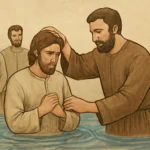
The seeds of early Christian baptism lie at the intersection of two streams: the Jewish practice of ritual washings and the baptism of John the Baptist. In the Gospels, Jesus Himself is presented as receiving baptism from John, not because He needed purification but to identify with human sin and to inaugurate a new saving mission. Early Christians read this event as the fulfillment and transformation of a baptismal pattern into a Christian rite that would seal the believer with the Holy Spirit.
John’s baptism was a baptism of repentance—an invitation to turn toward God and away from sin. The early church interpreted John’s baptism as a sign pointing toward a greater baptism in Christ. As the gospel witnesses took root, baptism acquired new depth: it would not be merely a symbolic washing but a new birth that makes one a member of the body of Christ. The apostolic preaching repeatedly linked baptism with forgiveness of sins, new life, and incorporation into the Christian community.
The apostolic writings and early apostolic communities emphasize that baptism is intimately connected to the Trinitarian confession: in the name of the Father, and of the Son, and of the Holy Spirit. This formula, grounded in Jesus’ commissioning, became the standard mode for conferring the sacrament in the first generations. The early church also recognized that water baptism signified more than an external cleansing; it signified a spiritual death to the old self and a resurrection to new life in Christ.
Early catechesis and the catechumenate
In the early Christian catechumenate, baptism was not simply an isolated moment but the culmination of a robust program of instruction, discipline, and spiritual formation. Converts typically underwent a period of preparation—often called the catechumenate—that could last from a year to several years depending on location and circumstance. This preparation was designed to form the candidate intellectually, morally, and spiritually before admission to the church’s rites.
The catechumenate usually involved:
Instruction in core Christian beliefs (the Creed, the life of Christ, the commandments),
Ethical formation and the transformation of behavior,
Exorcisms or renunciations of evil powers symbolically expressed during purification rites,
Public readings from Scripture and the teaching of the apostles to ground the candidate in the life of the community,
Guidance through a supportive network of sponsors or godparents who stood with the catechumen and eventually with the newly baptized.
The culmination of the catechumenate was the baptismal initiation, followed by additional rites such as the reception of the Eucharist. In some places, youth and adults who completed the catechumenate would receive baptism during the Easter vigil, aligning the rite with the commemoration of the Lord’s Passion and Resurrection. In other communities, baptism for converts could occur at different times of the year or during special liturgical seasons. The overarching aim was to ensure that the candidate was ready to live publicly as a Christian and to participate fully in the life of the church.
Modes of baptism in the early church
The early church employed several practical modes of administering baptism, with the central aim of cleansing from sin and initiating a person into the body of Christ. The most common mode in the earliest periods was immersion in water, which symbolized dying to the old person and rising to the new life in Christ. However, the historical record also makes room for alternative forms, especially in cases where immersion was impractical.
Immersion and tri-fold immersion
In places where living water was available, candidates could be immersed completely three times, often in the name of the Father, Son, and Holy Spirit. The threefold immersion was a powerful sign of purification, union with Christ’s death and resurrection, and admission into the Trinity’s life. It reflected the early church’s sense that baptism is both a symbolic act and a real joining to the divine life of God.
The Didache, an important early Christian manual from the late first or early second century, shows flexibility in practice. It provides instructions for baptism when running water is available and also for cases where water is scarce: pouring water on the candidate’s head three times in the name of the Father, and of the Son, and of the Holy Spirit. This practice—affusion by pouring—was adopted in various regions and persisted in some communities alongside immersion, particularly where climate, geography, or logistical constraints made immersion less feasible.
From the earliest centuries, the key theological point remained: baptism is not primarily about technique; it is about entering into the mystery of salvation inaugurated by Christ. The mode used served the liturgical and pastoral needs of the local church while safeguarding the sacramental significance of the rite.
Baptismal rites and the significance of the act
The baptismal rite in the early church encompassed more than the physical act of washing with water. It was a multi-part initiation that expressed conviction, confession, and community renewal.
Renunciation of Satan and profession of faith
A core element of the baptismal ceremony in many early Christian communities was the renunciation of Satan and the profession of faith on behalf of the candidate. The person being baptized, or the catechumen in their name, would publicly renounce the powers of evil and confess their belief in the triune God. This act signified repentance, turning away from former idols, and a decisive commitment to live under God’s grace.
The catechumen allies—often called sponsors or godparents—implicitly affirmed this commitment, vowing to support the candidate in the new life of faith. The act of renunciation was not merely a private moment; it was a communal pledge that the church would help the baptized live consistently with the gospel.
Profession of faith and the Trinitarian formula
After the renunciation, the candidate would make a public profession of faith. This declaration was frequently accompanied by the administration of the Trinitarian baptismal formula—“in the name of the Father, and of the Son, and of the Holy Spirit”—affirming the believer’s new life within the Triune God. The profession of faith served to align the community with the new member and to anchor the person’s identity in the gospel.
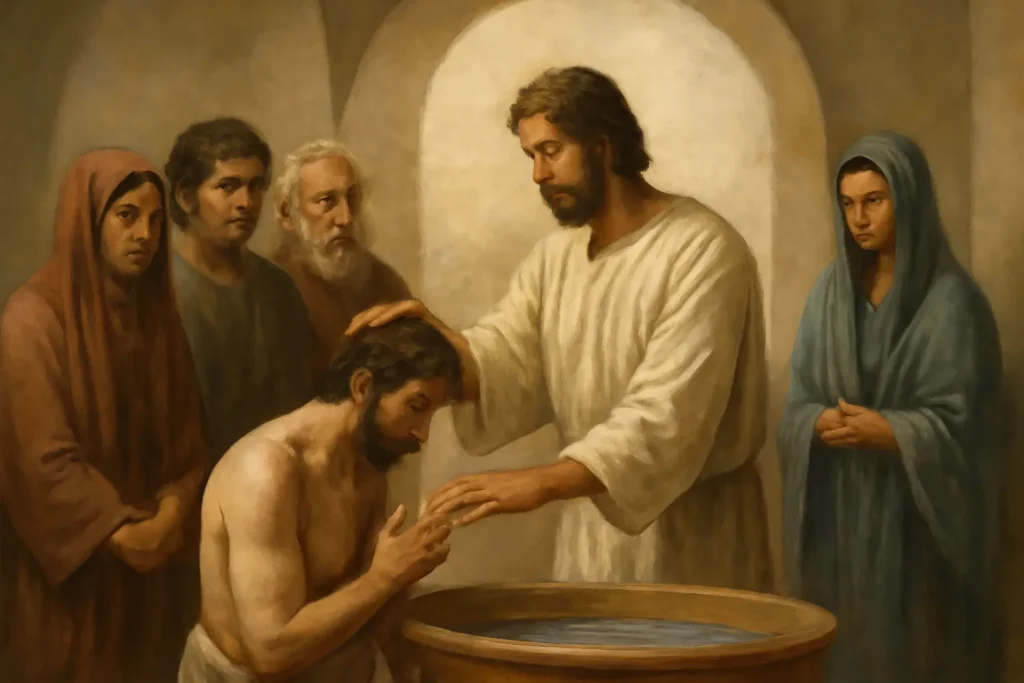
The early church also connected baptism with the reception of the Holy Spirit. After the water rite, the bishop or presiding minister might lay hands on the baptized and invoke the Spirit’s gifts upon them. The laying on of hands signified apostolic continuity and the transmission of grace through the church’s ministry.
Baptismal signs and post-baptismal rites
Once baptized, the new Christian often received additional symbols and rites that carried forward the virtue of the baptism.
Oil or chrismation—Anointing with aromatic oil signified the seal of the Holy Spirit and divine empowerment for Christian living. In the East, chrismation often followed baptism as a distinct act; in the West, its exact ordering varied, but the symbolism remained strong.
White garment—The baptismal robe or garment symbolized the newly washed and clothed life in Christ, representing purity and newness of life.
Lighted baptismal candle—Carrying a light from the Paschal candle or a baptismal candle expressed the believer’s call to walk as children of light in a world often ruled by darkness.
Eucharistic participation—In many communities, the baptized immediately joined in the communal meal of the church, thereby sharing in the body and blood of Christ as a full member of the Christian family.
The catechesis surrounding baptism also involved the exorcisms and the washing away of sin as a formative preparation for communion with the church. The rite thus functioned as both cleansing and commissioning for mission within the larger body of believers.
Recipients: infants, children, and adult converts
The question of who receives baptism in the early church was not merely a question of age. It reflected a broader understanding of how the church welcomed new members into the covenant.
Infant baptism and household baptism
In the earliest centuries, the question of infant baptism was debated in different regional churches. Some communities emphasized adult baptism as the normative mode of entry, especially within the context of the catechumenate. Other communities documented attempts to bring entire households to baptism, including infants and children, based on the belief that households shared faith and covenantal life. The household baptisms described in the New Testament (for instance, the Philippian jailer’s household in Acts 16:33) provided a scriptural pattern that some later theologians and church leaders used to justify infant baptism.
By the third and fourth centuries, the practice of baptizing infants became increasingly common in many parts of the church, though not universally universal in every locality. Figures such as Cyprian of Carthage argued compellingly for the baptism of infants, while other writers in different regions stressed the endurance of a separate catechumenate for adults before baptism. The tension between the adult catechumenate and infant baptism reveals the diverse, organic development of the church’s discipline as it sought to balance pastoral care with doctrinal clarity.
There were strong pastoral concerns on both sides. On one hand, infant baptism ensured the child’s inclusion in the Christian community early, addressing the reality of family life and the fate of children within a Christian household. On the other hand, postponing baptism allowed more time for catechesis and examination of faith, which some communities valued as a safeguard for conversion and commitment.
Where baptism took place: rivers, pools, and baptisteries
The physical setting for baptism varied across time and place. In the earliest period, baptism often occurred in natural bodies of water—rivers, streams, or lakes—where the candidate could undergo a full immersion as a public witness to the transformative work of God. As Christian worship spaces became more formalized, dedicated baptisteries were built near or within churches, providing a controlled space for baptismal rites and a liturgical route into the church.
Archaeological and textual evidence points to early baptisteries being distinct rooms or structures designed for the administration of baptism, especially in urban centers. The existence of large, octagonal baptisteries in some ancient churches reflects the liturgical importance of baptism as a central act of worship and initiation. In addition, rivers and water sources continued to serve as viable sites for baptism, particularly in regions where building a baptistery was impractical.
Liturgy, calendar, and the integration with Christian worship
Baptism in the early church was not a standalone ceremony but an integrated element of the church’s liturgical life. The timing and rhythm of baptism often aligned with major festivals, particularly Easter and, in some places, Palm Sunday or other holy seasons. The Easter vigil, in many communities, became a focal moment for baptism, as catechumens would be received into the church at the time when the church celebrated the Lord’s Resurrection.
The liturgical sequence associated with baptism emphasized continuity with the Christian story. Baptism signified a person’s entry into the Church’s life, their joining in the narrative of salvation, and their involvement in the ongoing mission of the church. After baptism, the new Christian would typically participate more fully in the Sunday assembly, the reading of Scripture, the proclamation of the gospel, and the celebration of the Eucharist.
Confirmation, laying on of hands, and post-baptismal rites
In the earliest centuries, the practice of confirming or completing baptism with the laying on of hands developed as a parallel or sequential rite in many regions. The practice can be understood as a form of confirmation that completed what baptism began, especially in communities where the bishop’s presence signified the fullness of apostolic authority. The laying on of hands often accompanied prayers for the Holy Spirit and the strengthening of the believer for service and witness.
The sequence and terminology varied. In some places, chrismation (anointing with oil) occurred immediately after baptism, while in others it occurred in a separate rite at a later time. The development of a two-step initiation—baptism followed by confirmation or chrismation—would later crystallize in the Western church as baptism and confirmation and in the Eastern church as baptism and chrismation together as a unified sacrament.
Sponsors, godparents, and community responsibility
The early church placed significant emphasis on the relational and communal dimension of baptism. Sponsors or godparents stood in as spiritual advocates for the candidate, pledging to teach, support, and model the Christian life. This sponsorship highlighted two essential aspects:
Personal accountability and ongoing spiritual formation for the baptized,
Public witness by the church to the transformed life of the new member.
Sponsors often included a pair or small group, reflecting the communal nature of faith formation in the early Christian community. The presence of sponsors underscored that baptism was not an isolated event but a social and ecclesial act that connected the individual with the wider church body.
Theological meaning: baptism as participation in Christ
Across the early centuries, theologians and church leaders consistently described baptism as a participation in the mystery of Christ’s death and resurrection. The language of death to sin and new birth to life captured the transformative power that baptism was meant to confer. Patristic writers emphasized that the baptized was united with Christ, incorporated into the body of believers, and called to live as a disciple in a world in need of the gospel.
A recurring theme is the continuity between baptism and Christian life. Baptism marks the entry into a way of life governed by grace, guided by the Spirit, and expressed in the moral and liturgical rhythms of the church. The baptized person is now a member of a worshiping community and a participant in the mission of proclaiming the gospel to others.
Baptism and Christian identity in the early church
The early church used baptism to shape a distinctive Christian identity that set believers apart from surrounding social and religious norms. The act of being baptized—whether in a river or a baptistery—assessed a person’s allegiance, committing them to serve Christ and to embody the gospel in daily life. This identity was not a private assurance alone; it was a public declaration that grounded a person in a community with a shared story, shared worship, and shared expectations for ethical living.
The resulting community could then be mobilized for mission. Baptism, with its rich symbolism and communal formation, formed the basis for ongoing Christian witness, service, and liturgical participation. In this way, the baptismal rite functioned as a formative event—one that shaped a person’s future choices, loyalties, and vocations within the church’s life.
The evidence from early Christian literature and from liturgical practice reveals a tapestry of variations in baptismal practice across regions, times, and communities. Some communities emphasized adult baptism and a thorough catechetical process, while others gave greater prominence to household baptism that included children. Some favored immersion as the primary mode, with affusion used in particular circumstances. The presence of baptisteries alongside natural water sources demonstrates how geography and infrastructure influenced practice.
Importantly, though practices differed, the central aim remained consistent: to bring a person into the life of Christ, and to welcome them into the church as a new creation. The common thread is the sense that baptism is a divinely administered gift that inaugurates a life of prayer, worship, and service within the believing community.
From the early church to later formations: a lasting legacy
The early church’s baptismal theology and practice laid the groundwork for later Christian traditions. Over time, the church’s sacraments and rites were developed, codified, and sometimes standardized, but the core conviction persisted: baptism = new birth, baptism = membership in Christ’s body, baptism = the Spirit’s seal and empowerment for mission. The way baptism was understood and celebrated in the early centuries profoundly influenced how later generations would speak about grace, salvation, and church life.
For readers exploring the history of baptism, it is crucial to appreciate the interplay between liturgical practice, pastoral care, and theological reflection that shaped early Christian initiation. The text of the Didache, the writings of the apostolic Fathers, and the later patristic commentaries together reveal how a single rite could carry multiple layers of meaning—ceremonial, symbolic, spiritual, and communal.
In sum, baptism in the early church was a rich and multifaceted practice that served as the gateway to the Christian life, the source of spiritual power through the Holy Spirit, and the anchor of Christian identity within a growing movement of believers spread across the Roman world and beyond. Its origins lie in the baptismal expectations of Jesus and John, its shape was refined through catechetical formation, and its lasting influence shaped the way Christians would worship, teach, and live together for centuries to come.
The story of baptism in the early church is not a single uniform script but a narrative of adaptability, devotion, and shared faith. Across diverse churches, geographic regions, and generations, Christians held a common conviction: through baptism, God’s grace was communicated in ways that formed communities devoted to Christ, shaped by the Spirit, and called to bring the gospel to the world.
As you reflect on this ancient practice, you may notice the enduring questions that resonate in the church today: How should baptism relate to age and readiness? What is the right balance between personal faith and communal initiation? How do the modes of baptism, the rites that accompany it, and the ongoing life of the baptized express a faithful witness to the gospel in every culture? The early church did not settle every answer in a single text or a single practice, but it did establish a robust framework for understanding baptism as a divinely graced, church-centered initiation into a life of discipleship.







Leave a Reply