What Ordination Means in Ministry: Definition, Roles, and Significance
What Ordination Means in Ministry: Definition, Roles, and Significance
The word ordination appears in many Christian communities with different nuances, but it consistently refers to a formal process by which a person is set apart for a particular kind of sacred service. While the exact rites, competencies, and theological claims vary from tradition to tradition, the core idea remains: a community recognizes that a person carries a divinely oriented calling and entrusts them with a specific scope of leadership, responsibility, and authority. In practical terms, ordination is more than a title or a ceremony; it is a public, communal, and ongoing way of naming a life of service, accountability, and fidelity to a shared mission. This article explores what ordination means in ministry from definition through roles and significance, tracing its historical roots, its diverse forms, and its contemporary implications for churches and their communities.
Ordination is a formal recognition by a church or denomination that an individual is divinely called and officially authorized to assume a particular ministry. In most traditions, this is accompanied by a rite or ceremony that includes prayer, the laying on of hands, and a solemn vow or affirmation. The effect of ordination is frequently described as a conferral of a calling, a commission to leadership, and, in many traditions, access to certain sacred duties and rites that non-ordained leaders do not perform.
While “ordination” is the common term, related concepts exist in different linguistic and ecclesial contexts. Some traditions speak of licensing or commissioning for certain forms of ministry, or of consecration as a rite that places a person within a sacred order. In others, the language centers on being a deacon, priest, or bishop, each with its own set of powers and responsibilities. Across these variations, a few shared elements recur:
Public recognition of a divine call and a community’s responsibility to respond in faith and accountability.
Formal authorization to perform leadership tasks, teach scripture, and administer certain rites.
Ongoing formation and accountability to a wider church body, a particular local congregation, or a hierarchical structure.
Laying on of hands and prayer as a symbolic act that conveys grace, blessing, and the transmission of authority in many traditions.
Vows or promises that bind the ordained person to a disciplined life of service, ethical conduct, and fidelity to doctrine and church polity.
Different traditions summarize the aim of ordination in slightly different phrases, but the aim is consistent: to recognize and empower a person to carry forward the ministry of the church with integrity, competence, and spiritual accountability.
Historical Roots and Theological Foundations
Biblical precedents
The biblical record offers a number of key moments that many Christian communities see as foundational to ordination. Jesus’ selection of the twelve and their commissioning in the Gospels is often cited as the origin of apostolic ministry. The New Testament speaks repeatedly of laying on of hands as a practice accompanying the transmission of responsibility and impartation of the Spirit, not only to new leaders but also to individuals who would be entrusted with oversight, teaching, and sacramental roles. For example, in the Acts of the Apostles, the apostles appoint leaders, lay hands on them, and equip them for service. The letters of Paul emphasize gifts, callings, and the orderly appointment of individuals to serve the church in specific capacities. Across these strands, the scriptural inkling is that leadership in the church is not merely a matter of personal charisma or academic achievement; it is a divinely oriented call that the community confirms and sustains through prayer and recognition.
In traditions that emphasize apostolic succession, the idea is that the authority to lead and to administer sacraments is not arbitrarily conferred but is transmitted through a lineage of laying on of hands that traces back to the apostles themselves. In other settings, ordination may be understood more as a formal enlistment within a local congregation or a denomination that inherits its authority through governance structures rather than a visible apostolic chain. Yet even in non-successional communities, the biblical pattern of deliberate calling, testing, and sacramental or symbolic act remains central to how people understand the purpose and gravity of ordination.
Early church practice
In the earliest centuries of the church, distinct offices emerged—deacons, presbyters (elders), and bishops—each associated with particular responsibilities and rites. The practice of ordaining leaders through a sacramental ceremony, often involving prayer and the laying on of hands, became a cornerstone of continuity and order in communal worship. The early church also framed these offices within a broader vision of church leadership as a shared, coral-like body—people with different gifts but united in confession, mission, and shepherding. This historical development formed a framework in which ordination would become both a visible sign of divine calling and a structural mechanism for sustaining church life across generations and geography.
As centuries passed, major branches of Christianity refined their understanding of these orders. In the Catholic and Orthodox traditions, the threefold structure of Holy Orders—deacon, priest, and bishop—came to be seen as distinct sacraments or rites with real, sacramental grace attached. In many Protestant traditions, the emphasis shifted toward a formal recognition of an individual’s gifting and vocational calling, with ordination as a rite that validated that calling within a local church or denomination, and sometimes without a sacramental claim in the same sense as the earlier churches. These historical conversations continue to shape contemporary practice, even as local churches experiment with forms that fit their theological emphases and cultural contexts.
Forms of Ordination in Different Traditions
Catholic and Orthodox understandings
In Catholic and Orthodox contexts, ordination is inseparably linked to the concept of Holy Orders. A bishop confers ordination to new deacons, priests, and bishops themselves in ceremonies that include precise liturgies, the invocation of the Holy Spirit, and the laying on of hands. The belief is that the ordination confers an indelible spiritual character and grants sacramental grace necessary to perform sacred duties, most notably the celebration of the Eucharist, the absolution of sin, and the pastoral governance of the faithful. In these traditions, the line of succession is valued as a continuity of apostolic leadership, and the authority granted by ordination is exercised within a structured hierarchy and sacramental economy.
Anglican, Lutheran, and many Protestant frameworks
Among Anglicans and many Protestant bodies, ordination is a bounded act that grants authority for specific ministries—preaching, teaching, administering the sacraments as accepted by the tradition, and shepherding the flock. In Anglican and some Lutheran communities, ordination is framed as a sacramental act within a broader liturgical life, with bishops playing a central role in conferring orders. In many Protestant churches, however, the emphasis may be on a calling validated by a local congregation and a denomination’s governing bodies, with ordination serving as a formal installation or commissioning rather than a sacramental sign in the same sense as Catholic and Orthodox theology. In these traditions, commissioning or installation might accompany or follow ordination, depending on tradition and context, to designate the individual’s role in a particular era or mission field.
Pentecostal, Charismatic, and independent traditions
In Pentecostal and charismatic circles, ordination often centers on a demonstrated gifting, a clear sense of calling, and the approval of elders or a sending church. While many Pentecostal groups practice ordination, they may not emphasize apostolic succession as a theological necessity. Instead, emphasis may be placed on divine gifting, the baptism of the Holy Spirit, and anointing for ministry. Independent and non-denominational churches may have their own distinct rites, which can blend elements from several traditions—prayerful discernment, laying on of hands, and a public commissioning for service—without a fixed denominational template. Across these settings, the vision of ordination remains: to distinguish those who will lead, teach, and shepherd the community in accordance with the church’s beliefs and mission.
Other cultural and regional variations
Globally, different Christian communities emphasize distinct aspects of ordination in light of local culture, language, and history. Some contexts stress the ceremonial beauty of liturgical forms, others highlight the practicality of leadership for community development, and still others foreground the spiritual authority that comes with exercise of church governance. Regardless of form, ordination remains a shared recognition that leadership within the church is not merely a personal achievement, but a call that the community identifies, affirms, and sustains through ongoing accountability and pastoral service.
The Process and Steps Involved
Discernment and calling: A sense of vocation emerges in the personal life of the candidate and is tested through spiritual disciplines, life experience, and the counsel of mentors, peers, and faith communities.
Education and formation: Depending on tradition, this may involve theological study, biblical languages, pastoral training, ethics, church history, and practical ministries like preaching and counseling. Formation often includes supervised practice and feedback to shape character, competence, and ministerial judgment.
Local church endorsement: A congregation or local ministry unit must affirm the candidate’s gifts and readiness to serve the community. This often involves interviews, demonstrations of preaching, and evidence of spiritual maturity and relational integrity.
Denominational oversight and examination: In many traditions, a denominational body reviews the candidate’s theology, life, and readiness to assume duty. Assessments may include written statements, interviews with senior leaders, and assessments of doctrinal fidelity.
Rite of ordination: The actual event—often a liturgical service—where hands are laid on the candidate, prayers are offered, and the community publicly assigns the candidate to a particular ministry. This rite may also include the provision of symbols (stoles, rings, books) and the reception of credentials or documents signifying authority.
Installation or commissioning: In many contexts, the ordination is followed by installation in a particular church or assignment to a mission field. This formalizes the person’s role within a specific community and often includes a commitment to accountability structures, ongoing education, and service expectations.
Ongoing formation and accountability: After ordination, most ministries maintain a structure of ongoing education, peer review, and spiritual accountability to ensure the person grows in leadership while remaining faithful to doctrine and ethical standards.
These steps are not uniform across all traditions. Some communities emphasize the spiritual gift and the call’s inward confirmation primarily, while others highlight a structured, one-to-one conformity to a wider theological and institutional framework. What endures in all cases is a sense that ordination represents a turning point: a transition from a personal sense of calling to a public, shareable, and accountable ministry within the church’s life.
Roles, Powers, and Responsibilities of the Ordained
The precise powers granted by ordination depend on tradition, but several core responsibilities recur across most Christian bodies. An ordained person is typically entrusted with leadership, teaching, and pastoral duties that require a trusted relationship with the community, a strong moral character, and a clear doctrinal alignment. The following list highlights common roles and responsibilities:
Preaching and teaching: Proclaiming the gospel, interpreting Scripture, guiding congregants in faith, and equipping lay leaders for service.
Administering sacraments or rites: In sacramental traditions, celebrating the Eucharist or Communion, baptizing, and, in some orders, performing weddings and funerals as permitted by the church’s theology and polity.
Pastoral care and counseling: Providing spiritual guidance, visiting the sick, supporting families, and offering crisis care.
Leadership and governance: Serving on boards or councils, guiding the spiritual and administrative health of the congregation, and promoting mission and vision in collaboration with others.
Discernment and vision-casting: Helping the community discern God’s will, define priorities, and articulate a long-term plan for ministry and mission.
Equipping and mentoring: Training lay leaders, deacons, elders, and volunteers to exercise their gifts responsibly and fruitfully.
Representing the church: Serving as a public face for the church in relationships with other churches, secular authorities, and the broader community, all within agreed-upon boundaries of authority and accountability.
Accountability and ethics: Submitting to oversight structures, maintaining ethical standards, and addressing issues of conflict, harm, or misconduct in a manner consistent with church discipline norms.
It is important to note that not all functions are universally available to every ordination category. In some traditions, only priests may preside at the Eucharist or celebrate certain rites; in others, deacons or licensed ministers may lead in preaching and administrative tasks while not officiating at sacraments. The nuanced distribution of duties is shaped by doctrine, church law, and local needs, but the shared thread is that ordination grants a recognized mandate to exercise a particular form of ministry under the community’s authority.
Significance for the Church and for the Person
The significance of ordination operates on multiple levels—spiritual, communal, and practical. For the church, ordination serves as a visible and tangible expression of vocation and mission. It communicates to the congregation and to the wider society that someone has earned the church’s trust to lead, teach, and shepherd in concert with other leaders. This public affirmation helps cultivate accountability, fosters unity around shared beliefs, and anchors the church’s continuity through time and space.
For the individual, ordination represents a deep conversion of calling into vocation. It often accompanies a recommitment to lifelong learner status—an openness to the work of the Spirit, ongoing formation, and adherence to ethical norms. The process can be transformative, including the development of spiritual disciplines, humility, and a sense of stewardship for the community’s health and witness. Beyond the personal sense of purpose, ordination also inherits responsibilities: the care of the vulnerable, the integrity of teaching, and the careful stewardship of religious authority in ways that honor both conscience and conscience-bound accountability to the church’s tradition.
In many communities, ordination also has a ceremonial and symbolic dimension. The act of laying on of hands, the wearing of a stole or other symbolic vestments, and the public pronouncement of a calling create a shared memory that binds the ordained person to the church’s story. This memory serves as a reference point for pastors, elders, and lay members as they seek to live out faith in daily life, respond to ethical questions, and navigate complex social issues. For churches facing rapid social change, ordination is sometimes a touchstone for communicating stability, continuity, and a process by which communities remain accountable to their core beliefs while bearing witness to love, justice, and mercy in the world.
Contemporary Debates and Clarifications
As with any longstanding practice, ordination raises debates that reflect broader theological, cultural, and social questions. Several themes recur across denominations and cultures, inviting careful reflection and respectful dialogue.
One of the most sustained debates concerns whether women may be ordained to the same offices historically reserved for men. In many traditions, ordination of women as deacons, priests, or bishops is now accepted and practiced, often with careful attention to doctrinal understandings of gender and pastoral authority. In other communities, rigid interpretations of doctrine or historical prohibitions continue to limit or exclude certain ordination pathways for women. These differences reflect deeper theological convictions about what constitutes legitimate leadership, how Scripture is interpreted, and how church tradition relates to contemporary understandings of equality and service. The conversation about gender and ordination remains an important indicator of how churches interpret authority, vocation, and access to public ministry.
Authority, succession, and governance
Questions about the source and scope of authority accompany ordination in diverse ways. Some churches emphasize a strong sense of apostolic succession and hierarchical governance, arguing that the transmission of ordination confers a stable and enduring authority. Others stress congregational autonomy or synodical governance, seeing ordination as a function of discernment within a faith community rather than a guarantee of unbreakable jurisdiction. The practical implications include how ordination affects appointment to parishes, control over sacramental rites, and the ability to discipline or remove a pastor. Regardless of the model, most traditions insist on some structure of accountability to prevent abuse, ensure doctrinal alignment, and protect the welfare of the congregation and the broader witness of the church.
Sacramental validity vs. functional authorization
In sacramental traditions, ordination is often seen as conferring real grace and spiritual authority that enables a person to carry out sacramental duties. In other streams, ordination may be viewed primarily as a public declaration of calling and a formal permission to perform certain functions within a church’s life. The tension between sacramental validity and functional authorization can shape conversations about ecumenism, interfaith cooperation, and intra-church policy. The key is to recognize that different traditions may use the same language—“ordination”—to express rather different theological convictions about what grace, authority, and leadership look like in practice.
Celibacy, vows, and lifestyle commitments
Some traditions associate ordination with vows of celibacy or other lifelong commitments that shape the candidate’s public persona and daily practice. Others permit married candidates to be ordained and lead within the same church context. Debates about lifestyle expectations, financial integrity, and family life often intersect with discussions about ordination, as communities seek to balance fullness of calling with humane and realistic expectations for leaders. The ongoing conversation about vows, accountability, and pastoral integrity remains central to the integrity of ordained ministry in every tradition.
Continuing Education, Renewal, and Formation
Ordination is rarely viewed as a one-time event; it is part of an ongoing journey of formation, learning, and accountability. Most traditions encourage or require continuing education, spiritual disciplines, and professional development to sustain effectiveness and fidelity over a pastor’s or minister’s career. Some common avenues for ongoing growth include:
Professional development: Ongoing theological study, preaching workshops, counseling training, and leadership development programs.
Spiritual disciplines: Regular practices such as prayer, scripture study, fasting, silence, and retreats to nurture personal holiness and compassion.
Supervision and accountability: Regular reviews with mentors, peers, or denominational bodies to address ethical issues, burnout, and personal growth.
Community feedback: Engagement with congregations and community stakeholders to stay attuned to needs and to model humility and openness to criticism.
Ethical and doctrinal refreshers: Refresher courses or governance updates to keep the ordained person aligned with evolving doctrinal understandings and social responsibilities.
Because leadership is dynamic, many churches treat ordination as a lifelong calling that requires ongoing renewal and accountability. This approach emphasizes that the ordained minister is never beyond correction, always accountable to the community they serve, and always invited to deepen their fidelity to the gospel and to the church’s mission.
Distinctions: ordination vs commissioning vs licensing
To navigate the practical landscape of ministry roles, it helps to distinguish among a few related terms that are sometimes used interchangeably but have distinct meanings in various traditions.
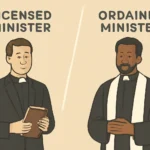
Ordination: A formal ceremony that confers authority and responsibility to lead, teach, and perform certain rites within the church. In many traditions, ordination is associated with specific offices (such as deacon, priest, or bishop) and may carry sacramental significance or lasting authority.
Commissioning: A formal sending into service for a defined period or mission, often without conferring the full range of sacramental or permanent authority associated with ordination. Commissioning can be for missionary work, specific project leadership, or temporary interim roles.
Licensing: A permission granted by a denomination or church body to exercise particular ministerial functions (such as preaching, counseling, or leading worship) that may not require full ordination. Licensing is often a step toward ordination or a separate track for lay or non-ordained ministers.
Consecration or highlighting rites: In some traditions, consecration signals a sacred setting apart for a specific purpose, sometimes overlapping with ordination, but the term may be used differently depending on liturgical and ecclesial context.
Understanding these distinctions helps communities communicate clearly about roles, permissions, and expectations. It also clarifies questions about authority, accountability, and how a ministry fits into the life of the local church and the wider tradition.
Practical Implications for Churches and Communities
For congregations and denominations, ordination is not merely ceremonial; it has tangible implications for how a church operates, how communities are cared for, and how the church bears witness in the world. Some practical implications include:
Clarity of leadership: An ordained leader provides clear governance, with defined roles that help the church function smoothly, especially in times of transition or crisis.
Accountability frameworks: Ordained leaders are typically subject to oversight structures, ethical codes, and reporting systems that promote transparency and trust.
Consistency of teaching: Ordination aims to align preaching and teaching with the denomination’s doctrinal standards, ensuring a coherent witness to the faith.
Rite and identity: The rites associated with ordination reinforce the church’s identity, linking present members to a long history of faith-filled leadership.
Community formation: The process of discernment and formation often strengthens the faith community by inviting lay members into active participation and stewardship.
Pastoral care capacity: A growing roster of ordained leaders enables churches to provide consistent pastoral care, sacramental leadership (where applicable), and mission outreach.
At the same time, churches must navigate practical challenges—finances, governance, and the evolving expectations of members and society. The ongoing conversation about ordination invites church leaders to consider how to cultivate leadership that is compassionate, capable, and faithful to the church’s mission in a changing world.
Global Perspectives and Cultural Variation
Across the globe, the practice and meaning of ordination reflect a rich tapestry of cultures, church histories, and theological emphases. In some regions, ordination remains tightly linked to episcopal structures, with bishops serving as primary custodians of the rite and its doctrinal meaning. In other contexts, regional synods, metropolitan councils, or congregational leaders may play prominent roles in calling and ordaining ministers. Theologies of church order, the nature of sacramental grace, and the role of laypeople in leadership influence how ordination is perceived and lived out.
In many developing regions, ordination is entwined with church planting and community development. Leaders ordained in these settings may bear heavy responsibilities for education, healthcare, social services, and relief work, blending spiritual leadership with practical mission. In diaspora and immigrant communities, ordination can symbolize continuity with ancestral faith communities while adapting to new cultural landscapes. Across these variations, the essential aim remains: to equip leaders who are trustworthy, capable, and committed to serving the church and its neighbors with fidelity and love.
With authority comes responsibility. The ethical dimension of ordination requires transparency, humility, and accountability. Ordained leaders are often called to model integrity, to avoid abuses of power, and to pursue justice and mercy within and beyond the church’s walls. This ethical dimension intersects with public witness—how a church’s ordained leadership speaks to moral questions in society, engages with people of other faiths, and participates in broader social concerns such as poverty, human rights, and environmental stewardship.
Moreover, ordination rituals themselves can carry ethical weight. The public vow to shepherd with care, to teach with fidelity, and to protect the vulnerable bears witness to the church’s commitments. How communities interpret and practice ordination can either strengthen public trust or invite scrutiny, especially when ministers face ethical challenges, financial pressures, or moments of institutional crisis. The ongoing renewal of ordination rites, the accountability mechanisms behind them, and the pastoral culture surrounding them all contribute to the church’s credibility and resilience in a pluralistic society.
Conclusion (Reflections on Purpose and Future)
While the word ordination varies in form and emphasis across traditions, the core idea remains a profound claim: a faith community publicly recognizes a person as called, equipped, and authorized to lead in service to the gospel and to the people it serves. The practice embodies a balance between divine calling, human formation, and communal accountability. It anchors the church’s identity in a living history while inviting new generations to participate in a shared mission of proclamation, healing, and reconciliation. As churches continue to respond to new contexts—cultural shifts, moral questions, and social needs—ordination will continue to adapt in form and emphasis while preserving the essential vision: leadership rooted in vocation, guided by truth, and carried forward in love for God and neighbor.
In sum, ordination in ministry is best understood as a complex yet coherent practice that binds calling, character, and community into a meaningful whole. It is a rite of passage that is also a covenant for ongoing service. It marks the moment when private sense of vocation meets public responsibility and spiritual authority, and it invites the ordained into a lifelong rhythm of learning, accountability, and faithful witness.









Leave a Reply