Where Were the Dead Sea Scrolls Discovered? A Brief History
The question where were the Dead Sea Scrolls discovered sits at the center of a dramatic archaeological story that spans desert landscapes, remote caves, and decades of scholarly pursuit. The scrolls themselves are a sprawling collection of ancient Jewish manuscripts dating from roughly the 3rd century BCE to the 1st century CE, and they offer remarkable windows into biblical texts, religious practices, and the diversity of Jewish life in Late Second Temple Judaism. This article traces the discovery—from the first cave along the northwest shore of the Dead Sea to the broader phenomenon of excavation, publication, and interpretation that followed. Along the way we will explore where the discoveries occurred, who participated, and why the location matters so much for our understanding of the Scrolls and their world.
Geography and Setting: the physical stage of a historic find
The Dead Sea Scrolls were found in the Judaean Desert, a stark and rugged landscape that runs along the northwest shore of the Dead Sea. The core site is Khirbet Qumran, an archaeological mound adjacent to a network of caves carved into the chalk and bedrock that line the valley bluff above the water. In contemporary terms, this place sits in the West Bank, placing the discovery within a landscape that has long been a crossroads of cultures, religions, and political change.
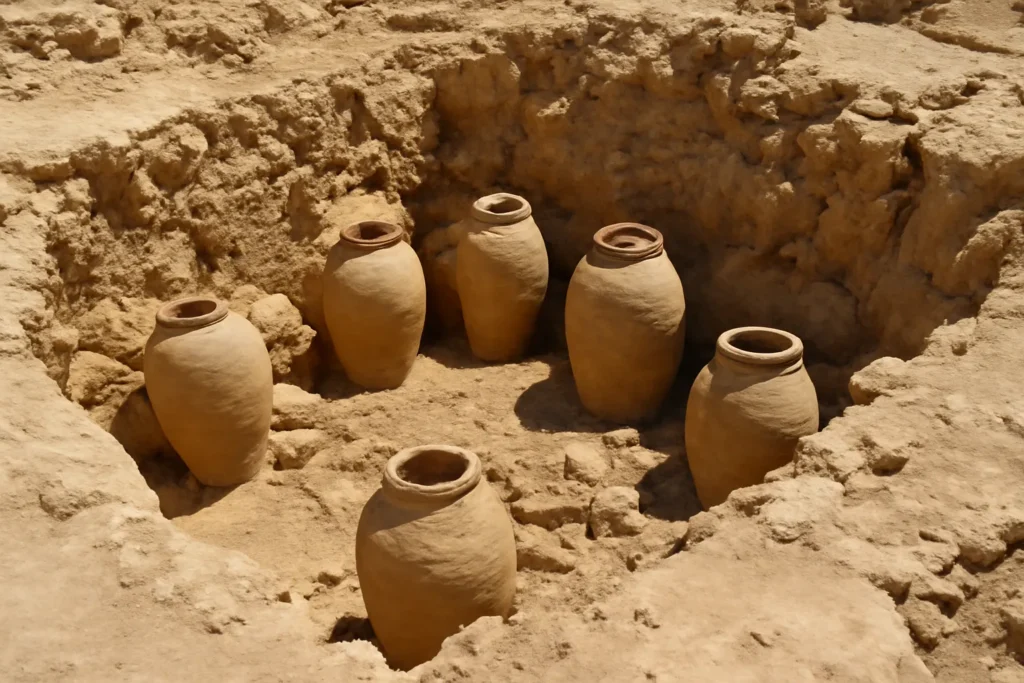
The physical geography helps explain how the scrolls survived and where their story begins. The caves along the cliffs were natural shelters, and the dry, stable climate of the Judaean Desert aided the preservation of fragile parchment, leather, and copper inscriptions. The pressure of time and the advancing layers of occupation over centuries meant the scrolls were concealed, sometimes in jars, and left to endure until someone would uncover them decades later.
Qumran settlement: a nearby community that scholars debate in terms of function—ritual center, scriptorium, or a wealthy villa—yet which undeniably provided a cultural backdrop to the manuscripts.
Immediate environment: desert cliffs, caves, and a water supply that made the site habitable and navigable for inhabitants and travelers alike.
Modern geography: the discoveries occurred in the 1940s–1950s, with the site lying in what is now considered the Palestinian territories under various administrative arrangements through history.
Because the site is physically tied to the Dead Sea and the surrounding desert, the question where were the scrolls found is inseparable from the natural landscape that preserved them. The caves along the cliffs became an unrivaled archive, and the surrounding townships and routes of desert travel connected the story of the Scrolls to broader networks of trade, scholarship, and religious life in antiquity.
The first discoveries: Bedouin shepherds and a moment of chance
The very first step in the chain of discovery occurred in 1947, when a group of Bedouin shepherds exploring the Qumran area stumbled upon a cave whose seemingly ordinary appearance concealed something extraordinary. This initial encounter sparked a sequence of events that would turn an isolated desert find into a global scholarly pursuit. The Bedouin discovered pottery jars and manuscripts, and the tale quickly moved from a local anecdote to a matter of international interest.
The Bedouin discovery and early ownership
The earliest scrolls entered the public record through a practical, human moment: a shepherd, his companions, and a local trader. The initial scrolls were reportedly taken to a local antiquities dealer, who in turn presented them to scholars. The name most often associated with the earliest transfer is Khirbet Qumran’s orbit of dealers and collectors—a reminder that the Scrolls’ path to scholarship began with the interactions of local communities and the formal antiquities market.
From this first contact, a chain of custody developed that connected the finds to major academic institutions and scholars. The import of the discovery lay not only in the texts themselves but also in the fact that the manuscripts offered a new, tangible link to the language, script, and religious practices of a people who thrived in this desert corner of the ancient world.
From local discovery to scholarly custody: the road to publication
After the initial Bedouin encounter, the Scrolls moved through a sequence of buyers, dealers, and researchers that culminated in scholarly custody and systematic publication. The early handling of the manuscripts—who acquired them, how they were preserved, and who studied them—shaped the pace and nature of our understanding. The process highlighted the dual challenges of access and preservation: the desire of scholars to study the texts and the practical concerns of ensuring their survival and accurate transcription.
Key figures in the early phase
Kando (the name often attached to a Damascus-based antiquities dealer) played a pivotal intermediary role by bringing the initial scrolls into contact with researchers and institutions.
Eliezer Sukenik and, later, his son Yigael Yadin were central to establishing official custody and directing excavations at Qumran. Their involvement helped transform a local discovery into a major, methodical project.
Scholars from the Hebrew University and the Israel Museum participated in the early documentation, providing the foundation for a systematic publication program that would unfold across decades.
The early phase was marked by a combination of excitement and caution. While the finds offered unprecedented access to ancient texts, the political and logistical complexities of the region influenced how quickly and comprehensively the texts could be studied, translated, and published. The outcome was a steadily expanding corpus—biblical and non-biblical texts alike—that would redefine approaches to biblical criticism, intertestamental literature, and the study of Second Temple Judaism.
The cave system and the breadth of texts: what was actually found
Over time, archaeologists identified a network of caves in the area that yielded a remarkable range of texts. The materials discovered across these caves represent a spectrum of literature: biblical passages, apocryphal works, and sectarian writings that illuminate the beliefs, regulations, and social life of a community in the desert. A few examples illustrate the diversity:
Isaiah Scroll (a complete copy of the book of Isaiah) from one of the early caves, which provided a pristine example of the masoretic-style text and a window into early script and orthography.
Community Rule (often associated with the Essenes) and other sectsarian manuscripts that outline communal practices, vows, and membership criteria.
Temple Scroll from Cave 11, notable for its expansive, future-oriented liturgical and legal prescriptions and its reflection of a liturgical imagination tied to the Jerusalem temple.
Other biblical texts and paraphrases, as well as non-biblical writings, such as psalms, hymns, and commentary literature—all contributing to a more nuanced picture of religious life in the period.
The caves yielded a larger corpus than a single archive; the distribution of texts across multiple caves indicates both a preserved library and the possibility that different communities or households stored scrolls for specific purposes. The content ranges from scriptural copies to interpretive commentaries (pesharim) to ritual and community rules, revealing the layered complexity of Jewish culture during the late Second Temple era.
Why the location matters: what the discovery teaches us about context
The fact that the scrolls were found at Qumran and in the surrounding caves matters for several reasons. The geography of the Dead Sea region intersects with questions about who produced and used the texts, why they were hidden, and how the texts circulated in the years before and after the destruction of Jerusalem in 70 CE. The site’s proximity to desert trade routes, water sources, and a relatively isolated community setting invites interpretations about a possible separate community or a monastic-literate milieu that valued scriptural study, ritual purity, and communal governance.
Additionally, the discovery of a broad array of materials—biblical, apocryphal, and sectarian—illustrates the diversity of Jewish thought in the period. The Scrolls are not a single voice but a mosaic of voices, some aligned with temple-centered practice, others oriented toward an ascetic or community-based interpretation. This complexity has led scholars to emphasize that the archives may reflect multiple groups or a single community with evolving practices across time.
What the finds reveal about language, script, and transmission
The Dead Sea Scrolls are a crucial resource for linguists and textual critics because they preserve earlier copies and variants of biblical texts. In many cases, the scripts reveal archaic features that help scholars reconstruct the development of Hebrew, Aramaic, and related script traditions. The discovery of the various script styles and orthographic forms demonstrates how texts were transmitted and adapted across generations and communities.
The language material and textual variants also fuel discussions about the transmission of canonical texts, questions of biblical canon formation in the Second Temple period, and the interplay between scripture and interpretation. The depth and breadth of the corpus allow researchers to compare readings with later Masoretic editions, the Septuagint, and other ancient textual witnesses, enhancing our understanding of how the Bible as we know it was shaped.
Where are the scrolls now? A brief note on custody and access
In the decades since the initial discovery, the scrolls have entered a system of public custody designed to balance scholarly access with preservation. The majority of the fragments and complete scrolls are held in major institutions, with the Israel Museum’s Shrine of the Book in Jerusalem serving as a prominent repository for many of the most famous pieces. Other fragments are distributed among regional and international partners, with some holdings in Jordan and elsewhere for study and conservation.
The publication program surrounding the Scrolls has also evolved. Early publications relied on the work of a handful of researchers, but over time a global scholarly undertaking has produced a massive, multi-volume corpus that addresses paleography, philology, and interpretation. This has included critical editions, paleographic studies, and digital projects that make many texts more accessible to researchers and the public alike.
A living legacy: how the discovery of the Dead Sea Scrolls shaped later scholarship
The question where were the Dead Sea Scrolls discovered has a layered answer: it was the desert site of Khirbet Qumran and the series of surrounding caves, a discovery mission that began with Bedouin shepherds and unfolded into a formal academic enterprise. The Scrolls reshaped biblical studies, archaeology, and the study of early Judaism by providing a relatively uninterrupted snapshot of textual and liturgical life in a critical historical period.
Beyond their textual significance, the Scrolls have had an enduring impact on how scholars approach the relationships between texts, communities, and material culture. The discovery emphasized the importance of context—geography, social organization, and religious practice—in interpreting ancient manuscripts. It also highlighted the interplay between field archaeology and textual transmission, reminding researchers that manuscripts are not merely static artifacts but products of their own historical ecosystems.
Modern implications: culture, preservation, and access for future generations
The story of where the Dead Sea Scrolls were discovered continues to influence contemporary debates about cultural heritage, repatriation, and scientific access. Preservation challenges—temperatures, humidity, and potential physical risk to fragile parchment—require ongoing conservation work and careful institutional stewardship. Digital projects and high-resolution imaging have opened new avenues for researchers and the public to engage with these texts without risking damage to the originals.
Public interest in the Scrolls also raises important questions about how fragile artifacts from contested regions are shared and studied. Balancing scholarly openness with ethical considerations, provenance, and the rights of communities connected to the sites remains a defining feature of modern archaeology and manuscript studies.
Key takeaways: answering variations of the question
When asked where were the Dead Sea Scrolls discovered, the most immediate answer points to the caves along the northwest shore of the Dead Sea near Khirbet Qumran in the Judaean Desert (the West Bank).
The initial discovery in 1947 by Bedouin shepherds marked the start of a long process that brought the manuscripts into formal scholarship and international attention.
The cave system yielded a diverse library: biblical texts, sectarian writings, and apocryphal works, offering a window into religious life and textual transmission in the late Second Temple period.
Questions about who produced the texts, what communities they served, and how the texts were used have driven ongoing interpretations and debates in biblical studies, archaeology, and history.
The legacy of the discovery continues in present-day efforts to preserve, digitize, and explain the Scrolls to new generations of readers and scholars.
In short, the answer to where the Dead Sea Scrolls were discovered is not a single location or a single moment. It is a layered story tied to a desert landscape, a community of people who valued writing and ritual, and a long arc of scholarship that has brought ancient texts into conversation with contemporary science, historiography, and culture. The site—Khirbet Qumran and its surrounding caves—remains a crucible for understanding how texts travel from a remote corner of the desert to the heart of modern biblical studies.









Leave a Reply