You may read Zechariah 1 and wonder why it begins with a warning about earlier generations before shifting into mysterious scenes of horses, myrtle trees, horns, and craftsmen. The chapter’s message is more coherent than its imagery first suggests: God calls his people to return, assures them that he has not abandoned Jerusalem, and promises to confront the powers that have scattered them.
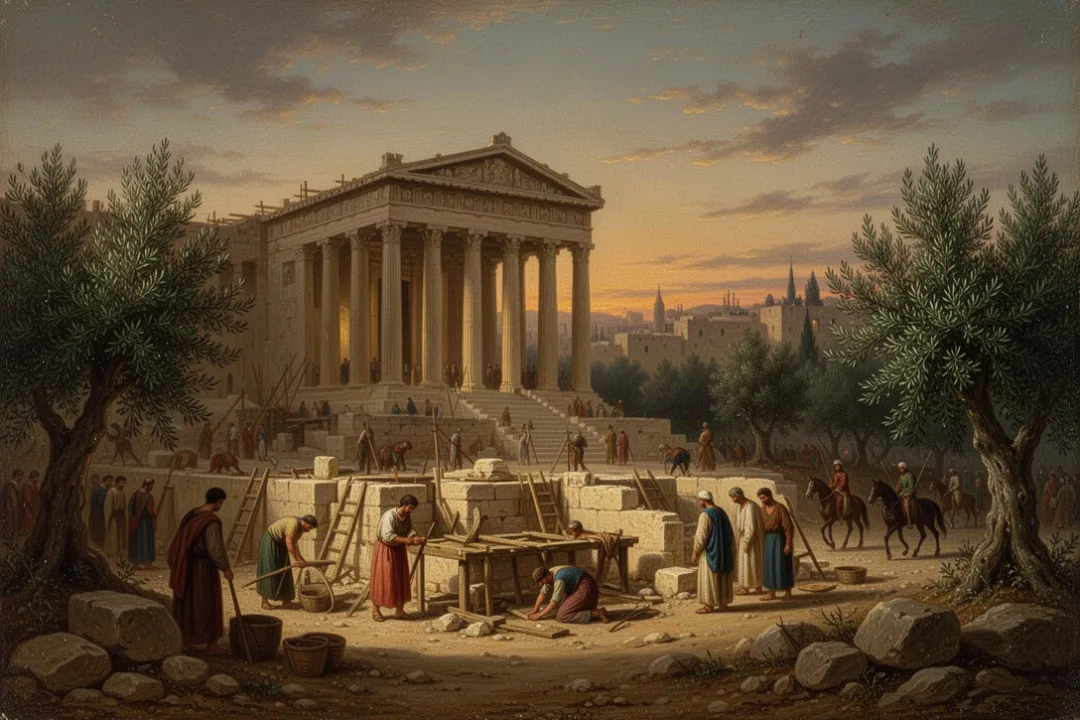
Zechariah 1 belongs to the period after Judah’s exile in Babylon. The people had returned to their land, but Jerusalem remained damaged and the temple had not yet been fully restored. The prophet speaks into that discouragement, reminding the community that restoration depends not only on rebuilding structures but also on renewed faithfulness to God.
The chapter contains two closely connected movements. Verses 1–6 give a direct prophetic message about repentance and the lesson of Israel’s past; verses 7–21 record the first two of Zechariah’s night visions. Together, they explain why the returned community should trust God’s promises while taking its own spiritual condition seriously.
Zechariah began prophesying in the second year of King Darius, during the eighth month. This places his opening message around 520 BC, when the Persian Empire ruled the region and Jewish exiles were returning from Babylon. The book identifies Zechariah as the son of Berechiah and grandson of Iddo, placing him within a priestly family connected with Jerusalem’s religious life.
The setting matters because the people were living between loss and renewal. Babylon had destroyed Jerusalem and its temple decades earlier. Persia later permitted exiles to return, but the restored community faced opposition, limited resources, and the difficult work of rebuilding. Their return home did not instantly restore the political strength or visible glory associated with earlier Jerusalem.
Zechariah ministered around the same time as the prophet Haggai. Haggai strongly urged the people to resume work on the temple, while Zechariah addressed the deeper questions beneath that work: Would God forgive them? Had he rejected Jerusalem permanently? Could the community trust him after the judgment their ancestors had experienced?
Zechariah 1 answers those concerns through both plain speech and symbolic revelation. The plain speech makes the human responsibility clear: the people must return to God. The visions then show that God is actively observing the nations and remains committed to Jerusalem, even though his purposes are unfolding in a way the people cannot yet see.
Historical setting: Zechariah 1 speaks to a small, vulnerable community after exile. Its promises are not detached from real hardship; they address people rebuilding worship, identity, and hope in a damaged city.
What Zechariah 1:1-6 says about returning to God
The chapter opens with a message from the Lord through Zechariah: the people are to return to God, and God will return to them. This is the central statement of the chapter. It presents repentance as a restored relationship, not merely regret over past mistakes or compliance with a religious routine.
God then points the people toward their ancestors. Earlier prophets had warned those generations about evil actions and disloyalty, but the warnings had not produced lasting change. The ancestors eventually died, and the prophets also passed away. Yet the words spoken against the nation had come true, demonstrating that God’s warnings were not empty threats.
The returned exiles could have assumed that the passage of time had erased the past. Zechariah rejects that assumption. The older generation’s punishment should teach the new generation humility: God’s word remains reliable even when fulfillment takes time. At the same time, the descendants are not told that they are trapped by their ancestors’ choices. They are given a present decision—to return.
This balance is essential. Zechariah 1 does not say that every individual in the restored community is personally guilty of every earlier sin. It does say that the community must learn from its history rather than repeat it. Inherited religious identity cannot replace personal obedience, and physical return to the land does not automatically mean spiritual return to God.
The phrase “return to me” includes a change in direction. In the chapter’s context, that means turning away from the patterns of rebellion that brought judgment and embracing a renewed relationship with God. The command is both serious and hopeful because it assumes that return is possible.
How the opening warning applies to faith today
The first six verses invite careful self-examination without encouraging unhealthy obsession with the past. You can ask whether your habits, loyalties, and decisions are moving you toward God or away from him. Zechariah’s emphasis is not on performing anxiety about failure; it is on responding to God’s invitation to return while there is still time.
The passage also teaches that spiritual lessons should be remembered across generations. A community can preserve stories of failure without using them merely to shame people. The purpose of remembering judgment is to cultivate wisdom, repentance, and trust in God’s word.
God’s patience does not mean that wrongdoing has no consequences.
God’s judgment does not mean that repentance is impossible.
A new generation must make its own faithful response.
Past experience should produce wisdom rather than fatalism.
For a reader studying this chapter, the opening section provides the interpretive key for the visions that follow. The visions are not designed simply to satisfy curiosity about symbolic creatures or hidden events. They reinforce the message that God is dealing with sin, watching over his people, and judging oppressive powers.
What the riders among the myrtle trees mean
The first night vision begins on the twenty-fourth day of the eleventh month in the second year of Darius. Zechariah sees a man riding a red horse, standing among myrtle trees in a ravine. Behind him are other horses of different colors. The scene is quiet and mysterious, but the conversation that follows explains its main concern: the condition of the nations and Jerusalem.
The riders report that they have gone throughout the earth and found it at rest and quiet. That report creates tension. The nations appear settled, while Jerusalem and Judah remain in distress. Political calm does not necessarily mean that justice has been done. The apparent peace of the empires contrasts with the suffering of God’s people.
An interpreting angel asks how long God will withhold mercy from Jerusalem and the cities of Judah, which have experienced his displeasure. The question gives voice to the concern of the returned exiles: How long will restoration take? Their return from Babylon had not erased the effects of destruction, and the surrounding nations still seemed secure.
The Lord responds with gracious and comforting words. He declares his concern for Jerusalem and Zion and expresses displeasure toward the nations that have gone too far in harming his people. The image is not of God ignoring history. It is of God observing the nations and preparing to act according to his covenant purposes.
The vision then promises that Jerusalem will again experience prosperity and that the temple will be rebuilt. The city’s future includes renewed presence, worship, and security. These promises address more than personal comfort. They speak of the restoration of a whole community, including its city, temple, land, and relationship with God.
The myrtle trees contribute to the vision’s atmosphere. They stand in a low place, and the riders are among them rather than on a grand battlefield or in a royal court. The setting reflects a people who are not yet exalted. Yet the vision shows that humble circumstances do not place them outside God’s attention.
The horses and riders should not be forced into a detailed symbolic code for every color or feature. The text emphasizes their patrol throughout the earth and their report about the nations. Their role is connected with divine observation and the larger movement of God’s purposes. The central point is not that every color has a separate prediction, but that God knows what is happening beyond Jerusalem.
“Therefore, thus says the Lord: I have returned to Jerusalem with compassion.”
This quotation is a brief rendering of the chapter’s message, not a replacement for reading a Bible translation. Its emphasis is clear: God’s return to Jerusalem is described through compassion, and that compassion leads toward rebuilding and renewed blessing.
Why the first vision offers hope without denying suffering
Zechariah 1 does not pretend that the exile was insignificant or that recovery would be immediate. Jerusalem is still described as a city that has suffered. The hope comes from God’s commitment to act, not from the community’s current strength.
That distinction helps modern readers avoid a shallow interpretation. The vision is not a promise that every difficult situation will change on a preferred schedule. It is a revelation of God’s character: he hears the appeal for mercy, opposes arrogant violence, and remains faithful to his purposes even when circumstances seem settled against his people.
What the four horns and four craftsmen represent
The second vision appears in verses 18–21. Zechariah sees four horns and asks what they are. The angel explains that these horns represent powers that scattered Judah, Israel, and Jerusalem. In the ancient world, the horn commonly symbolized strength, military power, and the ability to conquer, so the image naturally represents forces that have harmed God’s people.
The chapter does not provide a simple list naming four specific empires. Some readers connect the horns with major powers involved in Israel’s history, while others understand the number four as representing the nations from every direction or the complete scope of the threat. Because the text does not identify each horn by name, it is best to avoid treating one proposed list as certain.
Zechariah then sees four craftsmen, or artisans. They come to terrify and throw down the horns. Their exact identity is not explained in detail, but their function is unmistakable: the powers that scattered Judah will not remain unchecked. God has means of confronting the forces that appeared too strong for his people.
The contrast between the two images is striking. The horns represent threatening authority, while the craftsmen represent skilled agents equipped to dismantle it. The vision does not suggest that Israel will defeat its enemies through its own military power. It shows that God can bring down oppressive strength, even when that strength appears established and intimidating.
The horns picture powers that attack, scatter, or intimidate God’s people.
The craftsmen picture the agents God uses to restrain and overthrow those powers.
The fourfold pattern communicates broad or complete opposition rather than requiring a speculative chart.
The vision’s movement goes from fear to reassurance: every threat remains answerable to God.
These craftsmen should not automatically be identified with one modern nation, political movement, or individual. Prophetic imagery can speak to the recurring reality of arrogant power without giving readers permission to label every contemporary opponent as the final fulfillment. The text’s stable message is that no empire has unlimited authority before God.
Interpretive caution: Zechariah 1 gives the meaning of the horns’ threat and the craftsmen’s role, but it does not name four exact historical empires. Treat detailed identifications as interpretations, not as explicit statements of the chapter.
Major themes that connect the whole chapter
Several themes tie the opening exhortation and the two visions together. The first is divine faithfulness. The people’s ancestors ignored prophetic warnings, but God’s words proved true. The same God who judged rebellion now promises mercy and restoration to a repentant community.
The second theme is accountability for nations. The first vision depicts the nations as quiet while Jerusalem suffers, but their apparent stability does not place them beyond God’s judgment. The second vision reinforces this point by showing that the powers responsible for scattering Judah can themselves be confronted.
The third theme is the relationship between repentance and restoration. Zechariah does not present rebuilding as a substitute for spiritual renewal. The people must return to God, and the promised restoration flows from his compassionate commitment. Worship, community life, and physical rebuilding all belong within that larger return.
The fourth theme is the difference between what people see and what God is doing. The returned exiles saw ruins, opposition, and weak political circumstances. The visions reveal heavenly awareness and future action that were not obvious from ground level. Visible conditions are not the full measure of God’s activity.
The chapter also holds together warning and comfort. A reading that emphasizes only comfort misses the call to repentance. A reading that emphasizes only judgment misses the compassion promised to Jerusalem. Zechariah’s message requires both: take sin seriously, and trust that God welcomes those who return.
How Zechariah 1 relates to the rest of the book
Zechariah 1 begins a series of night visions that continues through the early chapters of the book. Later visions develop themes introduced here, including the cleansing of guilt, the rebuilding of the temple, the removal of wickedness, and the future leadership of God’s people.
The first chapter therefore functions as a doorway into the book’s larger message. It establishes the need for repentance, the reality of spiritual opposition, the promise of Jerusalem’s restoration, and the certainty that God has not abandoned his covenant purposes.
Readers should also notice how the chapter combines historical and symbolic language. The dates ground the message in a real post-exilic moment, while the visions communicate truths through images that are broader than a single political event. Good interpretation respects both dimensions instead of reducing the chapter to either a newspaper-style prediction or a purely private devotional metaphor.
How to study and apply Zechariah 1 responsibly
A fruitful study begins with the chapter’s own sequence. Read verses 1–6 first and identify the direct command. Then read each vision separately, noting who speaks, what Zechariah sees, what question is asked, and what explanation is supplied. This method keeps the clear statements from being overshadowed by speculation about symbols.
Use the following questions to guide personal or group study:
What does returning to God require in the attitudes and actions of your present situation?
What lessons from earlier generations should be remembered rather than repeated?
Where might outward calm conceal unresolved injustice or suffering?
Which parts of the chapter offer comfort to people who feel forgotten?
Are you treating an uncertain symbolic interpretation as though it were explicit?
How do repentance, worship, community restoration, and hope belong together?
Cross-references can clarify the historical setting. The books of Ezra and Nehemiah describe the post-exilic community and the rebuilding of Jerusalem. Haggai provides a closely related prophetic voice from the same broad period. Other passages about God’s concern for Zion and his judgment of the nations can illuminate the themes, but they should not be used to erase the distinct emphasis of Zechariah 1.
When applying the chapter personally, start with its direct invitation rather than trying to decode every detail. Ask where you need to return to God in trust, obedience, or worship. Then let the visions correct two opposite assumptions: that evil powers are invincible, and that God must prove his presence by changing circumstances immediately.
For a church or study group, the chapter can support a thoughtful conversation about collective memory. Communities need to remember past failures honestly, but remembrance should lead to repentance and renewed faithfulness rather than endless blame. The restored exiles were called to become a different kind of community because they had learned what happened when God’s warnings were ignored.
Zechariah 1 finally directs attention away from human strength and toward God’s authority. The people are small, the city is damaged, and the nations appear settled. Yet the chapter’s message remains firm: return to God, trust his compassion, and do not mistake present appearances for the final outcome.
Frequently asked questions
Is Zechariah 1 the same as Zachariah 1?
Yes. “Zachariah” is a common spelling variation, but most English Bibles title the book “Zechariah.” The chapter describes the prophet’s call to repentance and his first two night visions after the Jewish exile. Searching for either spelling should lead you to the same biblical chapter, although Bible editions may use different transliterations.
What is the main message of Zechariah 1?
The central message is God’s call for his people to return to him, joined with a promise that he will return to them. The chapter also assures the post-exilic community that God sees Jerusalem’s suffering, intends to restore the city, and will ultimately confront the powers that scattered his people.
Do the four horns in Zechariah 1 name four specific countries?
The chapter identifies the horns by their effect: they scattered Judah, Israel, and Jerusalem. It does not name four countries. Some interpreters connect them with historical empires, while others see the number as symbolizing widespread opposition. The safest reading focuses on the vision’s clear point: hostile powers are subject to God’s judgment.
How should Christians interpret the night visions in Zechariah 1?
Read them in their historical setting and follow the explanations given in the text. The visions encourage trust in God’s care, warn against arrogance, and promise restoration; they are not a license for confident predictions about every modern nation or event. Compare the chapter with the rest of Zechariah and related post-exilic books before drawing broader applications.









Leave a Reply