Psalms 51 KJV: Verse-by-Verse Analysis, Meaning, and Prayer
Psalm 51 in the King James Version stands as one of the most enduring expressions of penitence, humility, and the longing for spiritual renewal. Traditionally attributed to David after his sin with Bathsheba, this psalm moves from a plea for mercy to a confession of sin, to a request for cleansing, and finally to a recommitment to righteous living and worship. In the KJV, the diction carries a beauty and weight that has shaped countless prayers and meditations. The verses continually reassert that true restoration comes not merely from sacrifice but from a broken and contrite heart.
This article offers a verse-by-verse analysis of Psalm 51 (KJV), explores its meaning in theological and devotional terms, and presents a model of prayer drawn from its language. For readers seeking a broader comprehension, we will also note how variations in phrasing across translations illuminate different facets of the same truth—while staying rooted in the timeless KJV text.
Overview and Context
Key features and themes that recur across the psalm include:
Mercy and lovingkindness as the basis for God’s response to sinners.
A twofold confession: personal guilt and recognition of sin’s impact on relationship with God.
A longing for cleansing and renewal of the heart and spirit.
Recognition that true worship and righteous living arise from inner transformation rather than external sacrifice alone.
The expectation that, as a result of restoration, the speaker will engage in testimony and worship that points others toward God.
Verse-by-Verse Analysis
Verses 1–2: Plea for Mercy and Cleansing
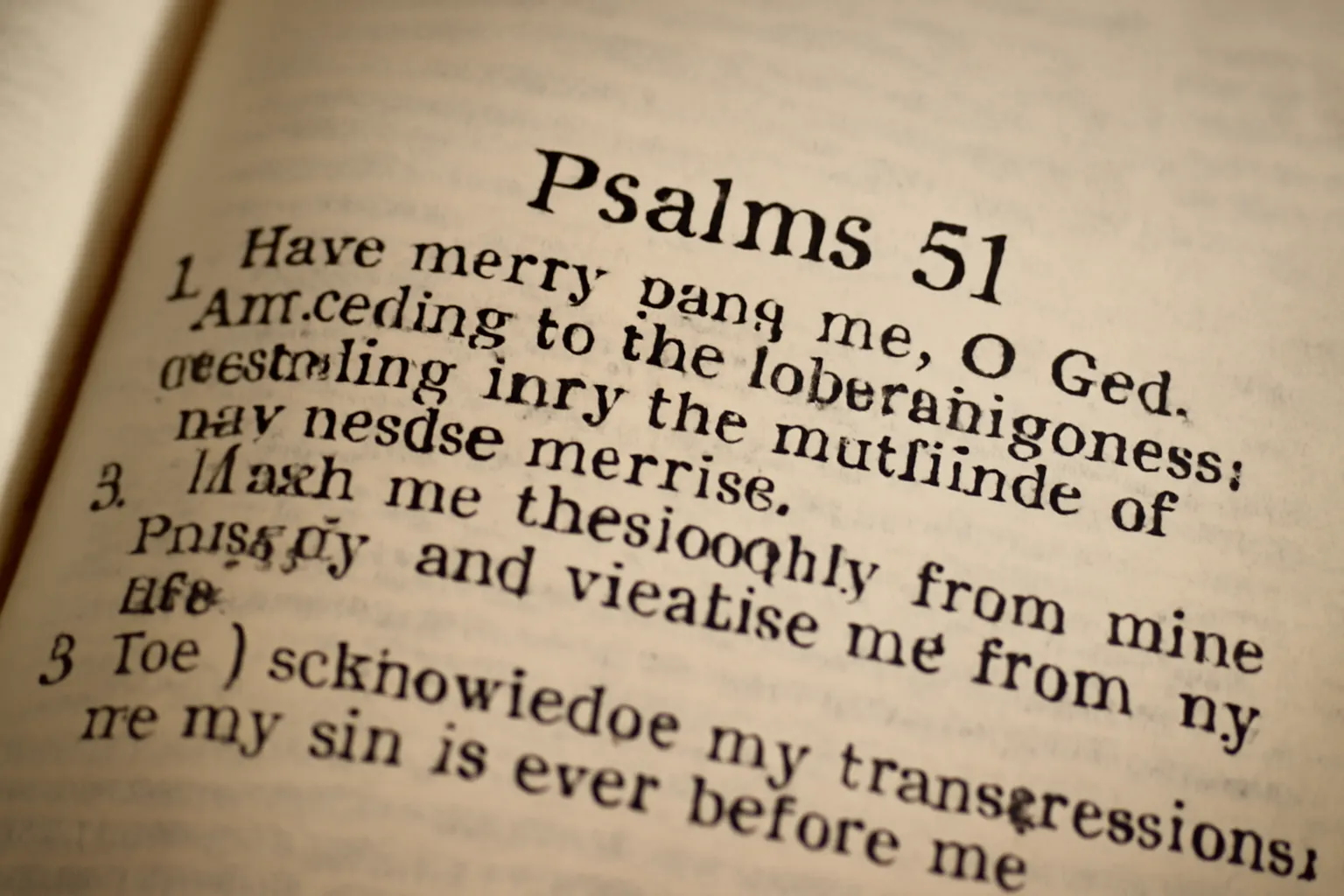
Have mercy upon me, O God, according unto thy lovingkindness: according unto the multitude of thy tender mercies blot out my transgressions.
Wash me throughly from mine iniquity, and cleanse me from my sin.
In these opening lines, the psalmist appeals directly to God’s character—noting lovingkindness and tender mercies as the basis for intervention. The repetition of mercy emphasizes that the plea stands on God’s faithfulness rather than the merit of the petitioner. The two requests—blot out transgressions and wash/cleanse from sin—establish a pattern that recurs throughout the psalm: forgiveness precedes purification, and purification precedes renewal.
Expression to note: the word transgressions signals deliberate rebellion against a holy standard, while iniquity and sin present the more interior, persistent problems of the human heart. The opening verses frame repentance as a plea for divine restoration within a relationship, not merely a change of behavior.
Verse 3: Acknowledgment of Sin
For I acknowledge my transgressions: and my sin is ever before me.
This verse moves from pleading for mercy to a transparent confession. The psalmist does not obscure the gravity of sin; it is ever before me, a constant reminder of the breach in fellowship with God. The repetition of “transgressions” and “sin” reinforces the severity of guilt and the need for a precise self-honesty that precedes true repentance.
Impact on prayer life: honest self-awareness is presented as a prerequisite for genuine appeal to God. The Psalmist models an approach that avoids minimizing sin or shifting blame, thereby aligning the heart with God’s standard.
Verse 4: Personal Guilt and God’s Right Judgment
Against thee, thee only, have I sinned, and done this evil in thy sight; that thou mightest be justified when thou speakest, and be clear when thou judgest.
The tone shifts to an intimate confession of guilt before God. Although human beings are affected by the consequences of sin, the psalmist recognizes that sin is ultimately a matter of violating God’s law and authority. The phrase “against thee, thee only” underscopes the primacy of God’s holiness. The aim of confession is not merely to repair societal harm but to acknowledge that God’s righteous judgment is just and that the sin has real divine consequence.
This verse invites readers to reflect on how sin distorts relationship with God and how confession aligns the heart with God’s verdict, paving the way for true cleansing and restoration.
Verse 5: The Humble Starting Point
Behold, I was shapen in iniquity; and in sin did my mother conceive me.
Here the psalmist evokes the humbling truth of human nature: the fallen condition from birth. This verse does not simply excuse behavior but situates sin within the larger frame of human fallenness. It reinforces the need for divine intervention to effect real transformation. The phrase emphasizes that the origin of sin is not merely an act, but a spiritual condition that must be addressed by God’s grace.
Interpretive note: some readers find the line controversial; in the KJV, it has been read as an acknowledgment of original condition and the pervasive reach of sin. The response in prayer is for God to encounter the root issue of the heart, not merely symptoms of misdeeds.
Verse 6: Inner Truth and Wisdom
Behold, thou desirest truth in the inward parts: and in the hidden part thou shalt make me to know wisdom.
This verse identifies the genuine core God seeks: truth in the inward parts, a candid, unmasked honesty before the Creator. The inward life is where God’s work begins, producing a wisdom that governs outward action. The juxtaposition of inward truth and hidden wisdom points to a lasting transformation: the God who sees the heart will then shape the mind and conduct.
Implication for spiritual practice: any healthy spiritual life must target the inner person—habits of prayer, confession, and repentance that change motives, not merely appearances.
Purge me with hyssop, and I shall be clean: wash me, and I shall be whiter than snow.
The imagery of cleansing is rich. Hyssop is a traditional symbol of purification in the Hebrew Bible. The parallel forms purge
and wash emphasize both immediate cleansing and a thorough, ongoing purification. The contrast “clean” and “whiter than snow” communicates a dramatic restoration of purity that is both moral and ritual, pointing to the certainty of a renewed standing before God.
Verse 8: Restoration of Joy
Make me to hear joy and gladness; that the bones which thou hast broken may rejoice.
After cleansing, the psalmist longs for restored joy and delight in life and worship. The phrase about the bones being “broken” evokes deep suffering; God’s cleansing has a physical, embodied impact, renewing vitality and enabling worship that previously could not be expressed. This verse links inner healing to outward expression, illustrating how spiritual restoration reanimates the whole person.
Verse 9: The Removal of Sin from God’s Sight
Hide thy face from my sins, and blot out all mine iniquities.
The imagery here reflects a plea for divine remission and possession of a clear memory before God. The request to “hide” and “blot out” implies a sovereign, compassionate cleansing that removes the stigma of sin before the divine gaze. The language expresses not only forgiveness but a restoration of fellowship and a fresh start in the sight of God.
Verse 10: A Clean Heart and Renewed Spirit
Create in me a clean heart, O God; and renew a right spirit within me.
This is arguably the central plea of the psalm. Creation of a clean heart is a theologically rich request, invoking God as the divine author of inner renewal. The second clause, “renew a right spirit within me”, expresses ongoing vitality in faith—an internal renewal that enables steadfast obedience and emergent trust in God’s directing presence.
Verse 11: Presence of God and the Spirit
Cast me not away from thy presence; and take not thy holy spirit from me.
The psalmist fears spiritual estrangement—the loss of presence and, more provocatively, the withdrawal of the Holy Spirit. This verse underscores the intimate relationship between divine companionship and spiritual vitality. The language has resonances with later biblical themes about remaining in fellowship with God and the indispensable role of the Spirit in guiding and sustaining the believer.
Verse 12: Restoration of Joy and Sustaining Spirit
Restore unto me the joy of thy salvation; and uphold me with thy free spirit.
The psalmist desires not only forgiveness but the joy of salvation as a sustained reality. The phrase “uphold me with thy free spirit” conveys divine enablement—grace empowered by the Spirit to persevere in obedience and worship. This verse links salvation joy with divine sovereignty and personal responsibility to remain faithful.
Verse 13: Transformation into a Channel of Others’ Conversion
Then will I teach transgressors thy ways; and sinners shall be converted unto thee.
The redeemed life is depicted as a conduit of outreach. The psalmist’s cleansing and renewal become a witness that leads others toward God. The emphasis on teaching “transgressors” and witnessing conversion highlights the community impact of personal revival: healed individuals become instruments of divine mercy to those still in need.
Verse 14: Thanksgiving and Public Confession
Deliver me from bloodguiltiness, O God, thou God of my salvation: and my tongue shall sing aloud of thy righteousness.
Here gratitude, confession, and public worship intersect. The prayer for deliverance from bloodguiltiness acknowledges the weight of sin’s consequences, while the promise to sing of God’s righteousness foregrounds the transformed believer’s desire to declare God’s faithfulness publicly. The conjunction of deliverance and worship underscores that salvation motivates praise beyond personal benefit.
Verse 15: Open Lips as Genuine Worship
O Lord, open thou my lips; and my mouth shall shew forth thy praise.
Opening the lips becomes a symbolic turning point: the sinner who was silent under guilt is now prepared to declare God’s praise. The act of opening the lips signifies not merely ritual speech but authentic vocal worship—an outward expression of inner transformation. The pairing of open lips and praise frames worship as both privilege and obligation for a renewed heart.
Verse 16: The Supremacy of God over Sacrifice
For thou desirest not sacrifice, else would I give it: thou delightest not in burnt offering.
This verse challenges a common assumption about religious life. God desires mercy, not ritual, and the heartfelt condition of the heart outruns any external sacrifice. It anticipates the biblical critique that true obedience is rooted in fidelity and righteousness, not merely in ceremonial acts. The psalmist recognizes that a transformed life is the true offering that pleases God.
Verse 17: A Contrite Heart as the Acceptable Sacrifice
The sacrifices of God are a broken spirit: a broken and contrite heart, O God, thou wilt not despise.
This is a foundational affirmation: God values a broken and contrite heart above all forms of ritual. The image of a “broken spirit” communicates vulnerability before God and dependence on divine grace. The assurance that God will not despise this posture offers comfort and exhortation to readers to come to God in sincere humility rather than in pretense.
Verses 18–19: Social Justice, Restoration, and Worship
Do good in thy good pleasure unto Zion: build thou the walls of Jerusalem.
Verse 18 expands the vision from personal restoration to the welfare of the city and community. It invites God to bless and empower communal healing and rebuilding. Verse 19 adds a note about the proper outcome of sacrifice and worship after inner renewal: righteous offerings that align with a transformed life. Taken together, these verses broaden the psalm’s horizon from private contrition to public worship and communal renewal.
Note on wording: The KJV renders some terms with a ceremonial and covenantal resonance, underscoring a theology in which inner transformation and external worship are harmonized through God’s gracious work in the heart.
Practical Application: How to Use Psalm 51 in Prayer
Begin with mercy: Acknowledge God’s steadfast love and plead for cleansing first, before addressing duties or resolutions.
Own the sin: Speak honestly about personal transgressions, recognizing their impact on relationship with God and others.
Invite inner truth: Ask for God to reveal hidden motives and to replace deception with genuine wisdom.
Seek cleansing and renewal: Pray for purification and a renewed heart capable of righteousness and joyful worship.
Invite the Spirit’s presence: Request that God not withdraw the Spirit, but sustain you in the path of obedience.
Offer to serve and testify: Let the transformed life become a witness to others, inviting them toward God’s ways.
Worship as a lifestyle: Move beyond ritual into heartfelt praise that reflects God’s mercy and truth.
Prayer Model: A Contemporary Psalm 51 Template
Below is a practical, contemporary prayer inspired by Psalm 51’s structure and language. It mirrors the verse-by-verse logic while using modern phrasing, suitable for personal devotion or group reflection. Text in bold highlights the keynote actions and themes.
O God, show me mercy in your steadfast love. Based on your faithful compassion, blot out my sins and cleanse me from the things I have done that separate me from you.
I acknowledge my failures; my thoughts and deeds reveal them before you. Help me to see what I cannot see, and grant me wisdom to follow you more closely.
Create in me a clean heart, O God, and renew a right spirit within me. Do not cast me away from your presence, and do not take your Spirit from me.
Restore to me the joy of salvation and sustain me with a willing spirit. Then I will teach others your ways, and sinners will be drawn to you.
Deliver me from guilt and empower my voice to testify to your righteousness. Open my lips so that my praise may naturally flow from a heart transformed by your mercy.
Let my life honor you more than any sacrifice; you desire a broken spirit, a contrite heart—these you will not despise.
Bless the city and its people through me, that your healing may reach the walls we live within. And in the end, may my offerings rise as a righteous response to your grace.
Variations and Intertextual Echoes
While Psalm 51 (KJV) stands on its own as a distinct discourse of confession and renewal, its language reverberates throughout biblical literature. Readers may notice:
Echoes of the need for inner renewal in prophetic and wisdom literature, where God’s desire is for truth in the inward parts.
Parallels with New Testament themes about the new heart and the Spirit’s indwelling, illustrating continuity of God’s work from the Hebrew Bible to the church era.
Shared imagery of purification through cleansing rites and the transformation of life that leads to praise and worship.
Different translations and paraphrases can illuminate additional shades of meaning. For example, some renderings emphasize the ethical dimension of repentance, while others highlight the relational aspect—God’s presence with the sinner and the shift from guilt to worship. Yet, the core message remains: God’s mercy makes cleansing possible, and a contrite heart is the proper offering that aligns the believer with divine purposes.
Conclusion
Psalm 51 in the King James Version offers a timeless template for dealing with sin: plead for mercy, confess honestly, seek cleansing and renewed life, and commit to worship and service after restoration. The arc from sin to forgiveness to worship demonstrates a holistic approach to spiritual healing that remains relevant for readers today. Whether approached as a personal prayer, a study text, or a liturgical contemplation, Psalm 51 invites us to encounter God with a broken yet hopeful heart, confident that God’s mercy and cleansing are available to all who come to Him with humility and faith.
For further study, readers can pair Psalm 51 with passages about the heart’s transformation in other biblical books, observing how the themes of mercy, cleansing, and renewed relationship continue to shape the people of God across the scriptures.

 Por Laura Jara