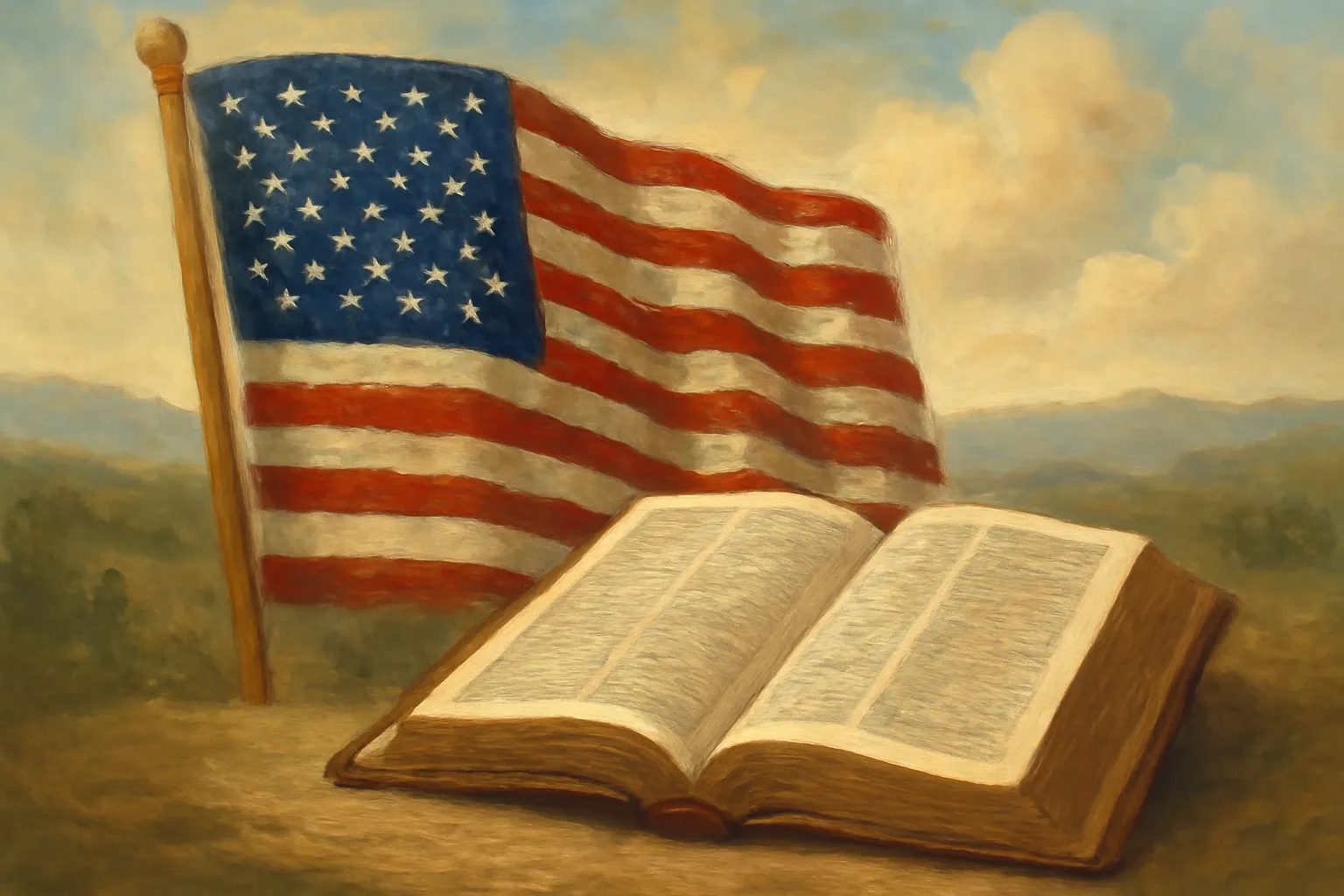
America in Scripture is a question that sits at the crossroads of theology, history, and national memory. This article surveys how biblical language and themes have been used to interpret the life and development of the United States, the broader Americas, and the imagined possibilities of a New World. Because the Bible does not contain a direct prophecy about modern nations, readers must carefully distinguish between explicit biblical texts and the later interpretive frameworks that Christians have woven around their national experience. In this sense, America in Scripture is less about locating a single verse in scripture and more about tracing how biblical ideas—blessing and responsibility, liberty and justice, judgment and mercy—have informed American religious culture, civic dialogue, and public ethics.
Framing the Question: What does “America in Scripture” mean?
When scholars and pastors discuss America in Scripture, they are often engaging with a twofold inquiry: first, how biblical language has historically influenced American self-understanding, and second, how readers today interpret biblical messages in light of national narratives. This framing invites three kinds of inquiry:
Historical inquiry: How did early Americans, including settlers, Puritans, and revivalists, use biblical motifs to justify or critique their civic projects?
Exegetical inquiry: How do biblical themes such as blessing, land, exile, covenant, and urban witness relate to concepts like government, freedom, and human dignity?
Contemporary inquiry: How do modern Christians read scripture in relation to public policy, national character, and international responsibility?
Throughout this article, the term America will be used in several senses: the United States, the broader Americas, the historical idea of a New World, and the cultural ideal of a land where religious liberty and moral responsibility meet political life. Each usage reflects a spectrum of interpretations, from supporting liberty and justice to warning against idolatry of nationalism. The goal is not to promote a single reading but to present the landscape of perspectives and their historical anchors.
Historical context: discovery, naming, and the religious backdrop
The emergence of the New World as a focal point of global exploration in the late medieval and early modern periods created a context in which religious groups saw opportunity and peril in the same breath. The land across the Atlantic was, for many Christians, both a stage for faith to spread and a field of moral testing.
Historical anchors include:
The age of exploration and the encounter of European powers with indigenous cultures, which prompted theological reflection on empire, justice, and stewardship.
The naming of the land after Amerigo Vespucci, leading to the designation “America” in maps and common speech, and how that naming intersected with Christian conceptions of discovery, vocation, and blessing.
The enduring influence of Christian pietism, Puritan covenant theology, and revivalist movements that shaped laws, education, and social reform in colonial and early federal periods.
In the early colonial era, the idea of a covenant community—a people bound by a shared religious foundation—often paralleled the language of the biblical Old and New Testaments. The aspiration to build a society that honored God while pursuing liberty led to a durable tradition in which religious liberty and civic responsibility were read as mutually reinforcing goods. This historical trajectory helps explain why many 17th- and 18th-century figures spoke of the land as a place of opportunity and moral testing, yet also warned that blessing carries responsibility.
Biblical themes and parallels to American experience
The Bible speaks in universal categories—nations, cities, lands, blessings, curses, exile, and restoration—that readers frequently align with their contemporary national stories. In examining America in Scripture, several recurring themes emerge as interpretive anchors, even though no verse directly names the modern United States.
Blessing, calling, and national vocation
A common pattern in American religious rhetoric is to frame the nation as entrusted with a blessing that also carries responsibility. The biblical pattern of blessing given to a people who then embody justice and mercy has been invoked to justify civic virtue while warning against excess. The idea of a land of opportunity and a people called to bear witness to liberty resonates with scriptural narratives about God’s favor and human stewardship.
The land as a gift and a test
The biblical notion of land as a divine gift that also requires obedience—“to whom much is given, much will be required” (paraphrasing Luke 12:48)—has been used to describe the United States in its prosperity and its challenges. American interpreters have often linked the physical geography of the continent with spiritual vocation: land for settlement, resources for development, and institutions for governance that reflect moral ideals.
City on a hill: urban witness and public life
The phrase “a city set on a hill” from the Gospel of Matthew has become a central image in American civil religion. Patrician, political, and religious leaders—most famously John Winthrop, the colonial governor of Massachusetts—used this biblical image to describe the United States as a moral example before the world. This metaphor has been employed to frame public life as a moral laboratory in which religious ideals are meant to inform law, education, and social policy.
Judgment, mercy, and national accountability
The Bible consistently links national fortunes with fidelity to God’s moral law. In American contexts, this has produced a spectrum of statements—from calls for national repentance in times of crisis to confident assertions of providential favor in moments of national triumph. The tension between assurance and humility, between faith in national purpose and accountability before God, is a persistent thread in the conversation about America’s biblical horizons.
Interpretive traditions shaping American Christian thought
Americans have approached scripture through diverse interpretive lenses. These traditions have each shaped how readers understand the relationship between faith and national life.
Puritan covenant and civil religion
The Puritans framed political order as a covenantal enterprise—a relationship between a people and their God that demanded obedience, discipline, and communal responsibility. Over time, this covenant imagination contributed to a broader sense of civil religion in which national events could be understood as part of God’s plan. The concept of a righteous republic—governed by moral principles drawn from scripture—left a lasting imprint on rhetoric surrounding political leadership, law, and education.
Dispensationalism and prophetic readings
In the 19th and 20th centuries, many Protestant readers adopted dispensationalist frameworks that viewed world events as a process leading to biblical fulfillment. Within this lens, global politics and national destinies often appeared as stages in a prophetic drama. While not universal among American Christians, dispensational readings have helped shape popular expectations about foreign policy, the role of Israel, and the interpretation of contemporary events in light of biblical prophecy.
Covenant theology and social reform
Covenant-based readings emphasize continuity between Old Testament promises and New Testament fulfillment, applied to national life by linking religious liberty, moral economy, and social reform. This line of thought contributed to movements such as abolitionism, temperance, and educational reform, where religious conviction motivated public action for justice and progress.
Liberty-centered theologies and civil rights
A growing strand of Christian thought in the United States has connected biblical liberty with human rights and social justice. The biblical motif of freedom—in scriptural narrations such as the Exodus and the Gospel’s emphasis on liberation from sin—has inspired advocates for civil rights, immigrant justice, and inclusive governance. In this frame, biblical liberty becomes a normative resource for critiquing oppression and shaping public policy toward greater equity.
Common reference points and landmark readings
Across centuries and denominations, certain biblical motifs recur in American public discourse. While these readings are contested, they provide a named vocabulary for public debates and religious identity.
City on a hill as a symbol of exemplary public life and moral leadership.
Blessings and responsibilities associated with national prosperity, calling presidents, legislatures, and citizens to pursue justice.
Land and legacy in which the physical landscape becomes a stage for moral testing and communal flourishing.
Judgment and repentance as aspects of national life that require humility, prayer, and reform.
Religious liberty as a constitutional principle with biblical resonances and practical implications for pluralism and the governance of conscience.
In debates about the United States’ role in the world, scriptural language has been deployed to argue for human rights, humanitarian aid, and peaceful diplomacy, while also being used to critique idolatrous nationalism or the misuse of scripture to justify exploitation. The same biblical vocabulary can support diverse political programs, which is why careful exegesis and historical awareness are essential to responsible interpretation.
Critiques and cautions: reading responsibly
The use of scripture to justify national policy is not without risk. Critics warn against equating national interest with divine will, thereby turning God into a national mascot or projection of collective desires. Others caution against eisegesis—reading into the text what one already wants to find—when scripture is pressed into a single political script.
Idolatry of nation: When patriotism eclipses the worship of God, scripture can be misread as a tool for uncritical nationalism rather than a source of moral critique.
Selective readings: Emphasizing certain verses while ignoring others can distort the broader biblical witness about justice, mercy, and humility.
Historical distance: The context of biblical texts differs greatly from modern political contexts; responsible interpretation requires attention to genre, audience, and historical setting.
Thoughtful readers acknowledge that the biblical call to righteousness has universal dimensions that transcend nation-states. In this view, America’s story is best understood not as a replacement for biblical revelation but as a human story within which scripture can illuminate moral reflection, challenge arrogance, and invite repentance and reform when nations stray from justice.
Modern implications: faith, policy, and public life
In contemporary discourse, the phrase America in Scripture often surfaces in conversations about civil religion, moral leadership, and the role of faith in public institutions. While many Christians affirm the importance of religious liberty and a public square shaped by moral discernment, others advocate for a clear separation between religious conviction and governing power to protect pluralism and prevent coercion.
Some practical themes that emerge in modern discussions include:
Religious liberty as a constitutional and ethical value that protects plural voices in public life.
Education as a theater for moral formation, informed by a biblical sense of wisdom and a commitment to human dignity.
Human rights as a universal justice principle that grows from biblical concerns for the vulnerable and the oppressed.
Foreign policy shaped by a commitment to peace, aid for the vulnerable, and the pursuit of global justice, rather than triumphalism.
Readers and leaders who engage with scriptural instincts about national life often emphasize humility, repentance, and accountability. They also recognize that biblical ethics invites responsibility for both the flourishing of a people and the care of the vulnerable—across borders and across generations.
Variations and variations on the theme: semantic breadth in practice
To capture the diverse ways scripture intersects with national life, one can track a family of terms and ideas connected to the broader question of America in Scripture. Here are some key semantic threads that scholars and commentators frequently explore.
America, the United States, and the U.S. as a case study in how a modern nation navigates biblical ethics in public life.
New World as metaphor for renewal, mission, or testing of faith in unfamiliar conditions.
Americas in a continental sense, inviting cross-border dialogue about indigenous justice, immigration, and historical memory.
Land of plenty and its dangers, such as complacency, inequality, or spiritual inflation, prompting calls for reform and humility.
Civic religion as a cultural phenomenon whereby religious symbols, rituals, and language shape national identity even when church-state boundaries exist.
These semantic threads reveal how interpretive communities—evangelical, mainline Protestant, Catholic, Jewish, and secular scholars—can agree on certain motifs while diverging on their political implications. The conversation is enriched by listening across traditions, acknowledging historical complicity in injustices, and seeking a more faithful alignment between scripture and public life.
How to read scriptural motifs in relation to the modern state
For readers who want to approach the question of America in Scripture responsibly, several practical guidelines can help:
Context matters: Interpret biblical passages within their literary genre and historical setting, then consider how the themes might translate when applied to a modern nation.
Balance blessing with accountability: Recognize the biblical pattern that blessing comes with responsibility, including care for the vulnerable and a just social order.
Distinguish divine sovereignty from political ambition: Acknowledge that God can work through imperfect institutions while still challenging corruption and injustice.
Listen to minority voices: A vital aspect of biblical ethics is the protection of the marginalized; diverse perspectives help avoid nationalist distortions.
When these guidelines are followed, discussions about America’s biblical vocation become less about proving a predetermined destiny and more about striving for a more righteous and compassionate public life. In this sense, the conversation remains open-ended, inviting ongoing reflection rather than definitive conclusions.
Conclusion: navigating scripture and national memory
The question of America in Scripture is not a single map but a landscape of interpretive paths. The Bible provides enduring themes—faithfulness, justice, mercy, repentance, freedom, and communal responsibility—that have both illuminated and complicated the American project. By examining the historical backdrop, the major interpretive traditions, and the contemporary implications, readers can better understand how scriptural language has shaped, and continues to shape, the moral imagination of a nation that has long claimed to be a light to the world.
In the end, the American story in light of the Bible invites a careful balance: celebrate the authentic commitments to liberty and human dignity while remaining vigilant against uses of sacred language that elevate nation over moral truth. As the conversation about America in Scripture evolves, it remains a living discipline—one that calls Christians and citizens alike to humility, courage, and a persevering pursuit of justice rooted in a faithful reading of scripture.

 Por Laura Jara