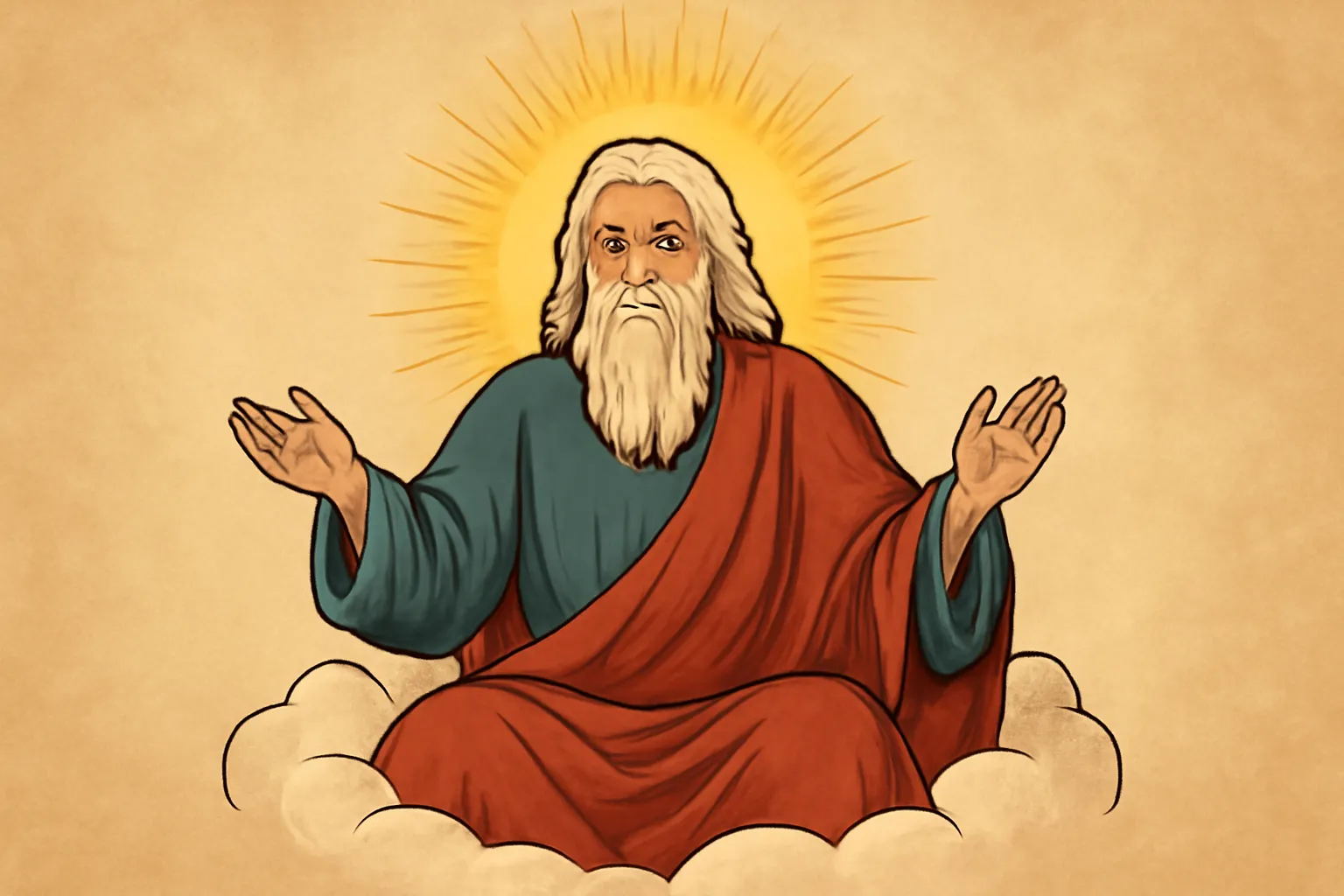
Attributes and Names of God: a timeless subject that spans theology, devotion, and philosophy. This guide explores the divine qualities, the titles, and the epithets by which the divine is described across major religious traditions. By examining both attributes (what God is like) and names (how humans refer to and relate to the divine), readers gain a richer vocabulary for understanding the sacred and for personal reflection in prayer and study.
Names and attributes serve several practical and spiritual purposes. They offer revelatory insight into the nature of the divine, provide a framework for theological discourse, and function as instruments of devotion. When believers utter a particular name or contemplate a specific attribute, they often cultivate a relationship with the divine that corresponds to that quality—whether it is the mercy of a loving God, the sovereignty of a Creator who orders the cosmos, or the holiness that calls for moral clarity. In scholarly terms, attributes can be categorized as incommunicable (aspects that belong to God alone) and communicable (aspects that humans can imitate in measure). Names, meanwhile, function as conscious cues that shape theology, liturgy, and daily practice.
Core Attributes of the Divine
Across traditions, many attributes recur as foundational descriptions of God. These attributes are not merely labels; they point to aspirations, boundaries, and the cosmos’ deepest ordering principles. The following list distinguishes two broad families: incommunicable attributes (qualities that are characteristic of God alone) and communicable attributes (qualities humans can reflect in limited, imperfect ways).
Omnipotence — God’s all-powerfulness and the ability to effect any possible outcome consistent with goodness and wisdom. It is not arbitrary force but sovereign power over the universe.
Omniscience — Perfect knowledge of past, present, future, and hidden conditions. Omniscience encompasses perfect wisdom and discernment beyond human reach.
Omnipresence — God’s presence everywhere in time and space, not spatially limited but ever-present with creation.
Eternality — Timeless existence or dwelling beyond time; God’s being is without beginning or end, sustaining all that exists.
Immutability — Unchanging nature in will and character, providing reliability and constancy amid change in the created order.
Simplicity — Non-compositeness of divine nature; God is not composed of parts yet manifests a unified, coherent essence.
Holiness — Transcendent moral perfection, setting God apart from all impurity and inviting reverence, worship, and ethical submission.
Love — Perfect love and benevolence, expressed in compassion, justice, mercy, and a longing for the good of others.
Mercy and Compassion — Compassionate oversight toward creation, coupled with a readiness to forgive and heal.
Justice — Perfect righteousness, ensuring moral order and fair judgment that aligns with truth and mercy.
Wisdom — Discerning and right judgment, guiding creation toward its true telos and fitting responses to circumstance.
Sovereignty — Ultimate authority over all things, governing history, nature, and human freedom with purpose.
Knowability — God’s self-revelation through creation, scripture, and prophetic or mystic encounter, allowing humans to know God truly, though not exhaustively.
Transcendence and Immanence — Transcendence denotes God’s otherness beyond creation; immanence indicates God’s nearness, presence, and active involvement within the world.
Within these broad categories, scholars distinguish ranges of divine attributes that illuminate both the moral life and the cosmic order. For example, holy justice points to a God who both loves mercy and demands righteousness; loving kindness underscores an accessible, relational dimension; and glory captures the overwhelming radiance of divine being that invites awe. When you encounter an attribute, consider its theological significance (What does this reveal about God’s character?) and its practical relevance (How should it shape worship, ethics, and daily life?).
Names and Epithets in Hebrew Scripture: The God Who Speaks by Name
In the Hebrew Bible, names and titles are not mere identifiers; they are revelatory acts that disclose aspects of the divine relationship with Israel and with all creation. The practice of naming God reflects a dynamic interaction between divine self-disclosure and human response. The following list gathers some of the most influential Hebrew names and epithets, along with brief explanations of their significance.
YHWH (often rendered Yahweh or historically as Jehovah): the personal name of God revealed to Moses. It conveys nearness and self-existence—“I am who I am” or “I am who I will be.”
Elohim — a foundational term rendered as God in English, emphasizing God’s panultimate power and creative sovereignty, often used with verbs that point to intrepid majesty and judgment.
El Shaddai — commonly translated as God Almighty, a name that highlights omnipotence and the sufficiency of God to fulfill divine promises.
El Elyon — “God Most High,” a title stressing sovereign supremacy over all nations and powers.
Adonai — “My Lord” or “My Master,” a liturgical substitute for the sacred name out of reverence; it signals a covenantal lordship over God’s people.
El Olam — “Everlasting God,” pointing to eternity and the enduring existence of the divine plan beyond time.
El Roi — “The God Who Sees,” highlighting God’s watchfulness and intimate awareness of human experience.
El Roni — a title found in certain psalms such as “the God who sings” or “God my shepherd,” capturing tender companionship in divine-human encounters.
Jehovah-Jireh — “The Lord Will Provide,” reflecting God’s provision amid crisis and testing of faith (Genesis 22:14).
Jehovah-Rapha — “The Lord Who Heals,” emphasizing healing of body and soul as part of divine mercy and restoration.
Jehovah-Nissi — “The Lord Is My Banner,” symbolizing divine protection and victory in spiritual warfare and life’s journey (Exodus 17:15).
Jehovah-Shalom — “The Lord Is Peace,” describing a profound sense of restorative tranquility granted by God’s presence.
Jehovah-Tsidkenu — “The Lord Our Righteousness,” signifying God’s provision of righteousness for the community and for individual lives (Jeremiah 23:6).
Jehovah-Mekoddishkem — “The Lord Who Sanctifies You,” underscoring the process of consecration and growth in holiness.
These names are not isolated labels; they are narratives of relationship. When a reader encounters a name like YHWH, the surrounding text invites contemplation of God’s self-disclosure, covenant faithfulness, and the possibility of approaching God in prayer with trust and reverence. The diversity of Hebrew names reflects the multifaceted ways God interacts with history, justice, mercy, and worship.
Interpreting Hebrew Names in Practice
In worship, readers often echo a name that captures the moment’s need, such as El Shaddai when praying for strength and blessing.
In study, exploring YHWH invites reflection on God’s self-existence and faithfulness through the biblical story.
In ethical reflection, considering Jehovah-Rapha invites prayers for healing and reconciliation in communities dealing with suffering.
Names and Epithets in Islam: Asma’ul Husna (The 99 Names of Allah)
In Islam, the divine names are known as Asma’ul Husna, “the Most Beautiful Names.” Muslims believe each name reveals a facet of Allah’s essence, inviting believers to contemplate those facets as they worship and live righteously. The names are often memorized, recited in prayer, and invoked in supplication. Below are representative groupings of these names, with brief explanations of their significance.
Ar-Rahman — The Most Compassionate; universal mercy that encompasses creation.
Ar-Rahim — The Very Compassionate; particular mercy toward the believers and the righteous.
Al-Malik — The King; sovereignty over the heavens and the earth, with authority over all things.
Al-Quddus — The Pure; holiness and freedom from any deficiency or blemish.
As-Salam — The Source of Peace; safety, tranquility, and protection for creation.
Al-Mu’min — The Giver of Faith; the one who grants security and belief in righteousness.
Al-Muhaymin — The Guardian; watchful protector of truth and order.
Al-Aziz — The Mighty; strength and power that cannot be thwarted.
Al-Jabbar — The Compeller; the one who restores and reconciles, mending what is broken.
Al-Mutakabbir — The Proud, The Supreme in Greatness; transcendence beyond all pride, a reminder of God’s ultimate grandeur.
Al-Khaliq — The Creator; originator of all that exists from nonexistence to form and function.
Ar-Razzaq — The Provider; sustainer of every living being, ensuring daily needs are met.
Al-Wadud — The Loving; tender affection toward creation, especially toward the righteous and the faithful.
Al-Latif — The Subtle; precise, gentle, and nuanced care in unfolding the world’s affairs.
Al-Hayy — The Ever-Living; the continuous presence that sustains all life.
Al-Qayyum — The Self-Existing, The Sustainer; the one who upholds existence without need of others.
Al-Rafi — The Exalted; elevating those who seek truth and justice; deserving of reverence.
Al-Ghaffar — The All-Forgiving; enduring forgiveness toward repentant souls.
Al-Hafiz — The Preserver; protection and safeguarding of life, truth, and order.
Al-Basir — The All-Seeing; awareness of every act, motive, and intention.
Al-Sami — The All-Hearing; perfect responsiveness to prayers and supplications.
Scholars emphasize that these names are not a single catalog but a living lens through which believers encounter Allah. Islamic practice often involves reciting a subset of the 99 names, reflecting the particular quality one wishes to invoke in prayer or in moments of need. The names encourage humility, accountability, and trust in a divine wisdom that transcends human limits.
Names and Epithets in Other Traditions: A Cross-Religious Perspective
Beyond Judaism and Islam, many religious traditions offer alluring names and titles for the divine that illuminate distinctive theological emphases. While the vocabulary differs, several shared motifs emerge: the divine as creator, sustainer, judge, redeemer, and guide; the divine as immanent with humanity and as transcendent beyond all comprehension; and the divine as worthy of worship, memory, and ethical imitation.
Hinduism: The term Ishvara or Bhagavan signals a supreme being who undergirds the cosmos. Names such as Vishnu, Shiva, and Shakti reflect distinct aspects or manifestations of the same ultimate reality (Brahman) through various forms or avatars. Attributes often highlighted include omniscience, omnipotence in cosmic order (rita/dharma), and compassion for beings in samsara.
Sikhism: The central doctrine expresses God as Ik Onkar—the One, indivisible Creator. Names such as Waheguru convey awe, wonder, and the indescribable nature of the divine, who is ever-present and merciful to the righteous.
Other traditions often use epithets that reflect cosmic order, justice, and salvation. While the terminology varies, the impulse to name God in a way that guides moral life, communal harmony, and personal devotion remains a common thread across cultures.
Historical Development: How Names Emerge and Change
Names and attributes do not exist in a vacuum; they evolve with linguistic shifts, cultural contact, and theological reflection. The emergence of a name often corresponds to a dramatic event in a community’s history (e.g., a deliverance, a crisis of faith, or a deep season of prayer). Over time, interpreters refine how a name is understood—shifting from a literal description to a symbol that points to a relational reality. This dynamic process can be summarized in a few trends:
Covenantal Revelation: Names arise as God reveals a specific facet of the relationship with a people or community (e.g., a name tied to rescue, provision, or sanctuary).
Contextual Application: Names gain local color through liturgy, poetry, and communal memory, becoming shorthand for prayerful requests or gratitude in daily life.
Theological Reflection: Theologies of attributes (e.g., God’s justice, mercy, or sovereignty) attract attention in ethical debates, sermon series, and catechesis, further enriching the corpus of titles.
Interreligious Dialogue: Encounter with other traditions can lead to broadened understandings and more nuanced naming practices that emphasize common ground and respectful difference.
Practical Guide: How to Use Names and Attributes in Devotion and Study
Names and attributes can shape prayer life, ethical conduct, and communal worship. The following practices provide a practical framework for engaging with divine names in a thoughtful, reverent, and informed way.
Choose a Name for Reflection: Pick a name that resonates with your current spiritual need—e.g., Ar-Rahman when emphasizing universal mercy, or El Shaddai when seeking strength and sufficiency.
Contextual Reading: Read passages where the attribute is highlighted, and note how the surrounding narrative or psalm points to that quality in God and in human life.
Prayer with Names: Use the name in personal prayer as a focal point. For example, recite, “O El Elyon, you reign over all nations; grant me clarity in times of confusion.”
Ethical Imitation: Reflect on how a given attribute invites you to imitate God in your own actions, such as practicing justice and mercy toward others.
Liturgy and Song: Explore hymns, psalms, and liturgical phrases that honor specific names, thereby connecting personal devotion with communal memory.
Cross-Tradition Awareness: When studying multiple traditions, note how different communities name and describe the same ultimate reality, and consider what is gained by each perspective.
The following glossary provides quick definitions of some central terms used in this guide. Bold terms indicate the key concepts discussed in depth above.
Omnipotence — God’s all-encompassing power to do anything that is consistent with divine nature.
Omniscience — God’s perfect knowledge of all things, including hidden motives and future possibilities.
Omnipresence — God’s presence everywhere at all times, not confined by space.
Eternality — The quality of existing without beginning or end.
Immutability — The unchanging nature of God in will and character.
Holiness — Being morally perfect and utterly distinct from moral impurity.
Love — A defining attribute of benevolence, compassion, and active care for the good of others.
Mercy — Compassionate pardon, kindness, and relief toward those in distress.
Justice — Right ordering of things; fair judgment that aligns with truth and righteousness.
Wisdom — Knowledge rightly applied for the good and for the right ends of creation.
Asma’ul Husna — The 99 Names of Allah, each highlighting a divine attribute and invitation to contemplation and prayer.
YHWH — The personal name of God in the Hebrew Bible, signifying self-existence and relational presence.
El Shaddai, El Elyon, El Olam — Hebrew epithets emphasizing power, sovereignty, and eternity.
Waheguru — A sacred name in Sikhism for the One, beyond description, guiding truth and liberation.
Names and attributes are not merely academic categories; they are living tools for understanding, honoring, and engaging the divine. By considering the varied names across traditions—be they YHWH, El Shaddai, Ar-Rahman, Al-Malik, or Ik Onkar—readers glimpse the breadth of human language applied to the infinite. The attributes illuminate what God is like, while the names open pathways for memory, praise, supplication, and moral formation. Whether you approach them through scripture, poetry, liturgy, or quiet contemplation, these terms invite a disciplined affection for the divine and a restrained, hopeful imagination about the possibilities of sacred encounter.
In studying attributes and names, readers should remain attentive to context, humility, and accuracy. Names reflect contexts of revelation and faith—they do not exhaust the mystery of God. Yet within that mystery, they also provide a map for devotion, ethical living, and theological reflection. As you explore the divine qualities, may you encounter the loving care and unsearchable wisdom of the God who sustains all things, holds history in divine hands, and invites every person into a relationship marked by trust, reverence, and hope.

 Por Laura Jara