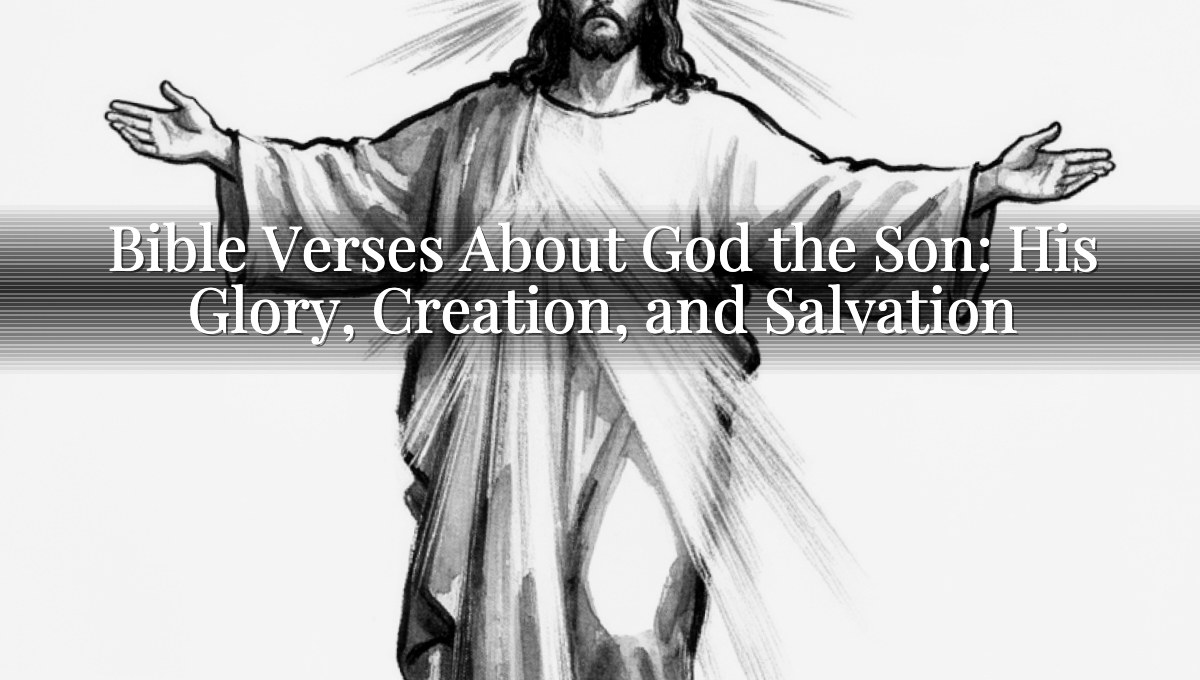
Bible Verses About God the Son: His Glory, Creation, and Salvation
Quick Answer: These bible verses about God the Son reveal that Jesus is the visible image of the invisible God, actively involved in creation, and fully God in bodily form. They also teach that Christ sustains all things by His word, purges sins, and now reigns at the Father’s right hand—offering believers hope, reverence, and confidence.
When Christians read the Bible with reverence, they discover that Jesus Christ is more than a teacher—He is the image of the invisible God, the One who upholds all things, and the One in whom the fulness of the Godhead dwelleth bodily. That means your faith is not built on speculation, but on clear revelation. These truths bring comfort when life feels unstable, and they bring worship when your heart needs perspective. In a world that often reduces Jesus to a symbol or moral example, the Word of God shows the Son as Creator, Sustainer, Sin-Purger, and King. As you meditate on these passages, let them shape how you pray, how you trust, and how you praise—because God the Son is not distant from your life; He is fully present in His reign and redeeming work.
At a Glance — Verses in This Article
Colossians 1:15-16
Colossians 2:9
Hebrews 1:3
Bible Verses
Colossians 1:15-16 (King James Version)
“Who is the image of the invisible God, the firstborn of every creature: For by him were all things created, that are in heaven, and that are in earth, visible and invisible, whether they be thrones, or dominions, or principalities, or powers: all things were created by him, and for him:”
This passage directly describes the Son’s identity and authority in creation, making it central to learning who God the Son is.
Colossians 2:9 (King James Version)
“For in him dwelleth all the fulness of the Godhead bodily.”
It clearly states Christ’s bodily fullness of the Godhead, strengthening confidence that Jesus is truly God the Son.
Hebrews 1:3 (King James Version)
“Who being the brightness of his glory, and the express image of his person, and upholding all things by the word of his power, when he had by himself purged our sins, sat down on the right hand of the Majesty on high;”
It highlights Christ’s glory, power to uphold all things, His cleansing from sin, and His present royal position.
The Son Revealed: The Image, the Creator, the King
One of the most tender ways Scripture speaks about the Son is by making Him knowable—without shrinking Him down. In Colossians 1:15-16, Jesus is called “the image of the invisible God.” That phrase matters because it teaches that if you want to understand what God is like, you don’t search only for abstract ideas; you look to Christ. The Son is not merely reflecting God; He is the faithful revelation of God’s character and authority.
This same passage also tells us the scope of Christ’s work: “For by him were all things created.” Creation is not treated as accidental or random—Christ stands at the center of all “thrones… dominions… principalities, or powers.” Even invisible forces are included in the reach of His creative authority. That means your faith is not threatened by unseen events. Nothing exists outside the boundary of the Son’s rule.
Then the passage adds a purpose that deepens worship: “all things were created… for him.” God the Son is not only the agent of creation but also the One for whom creation exists. When believers feel pulled between pressures, disappointments, and confusion, meditating on Christ’s position restores alignment. You begin to view life under a Creator-King, not under chaos.
Taken together with the rest of Scripture in this article, Colossians 1 shows the Son’s identity and authority, preparing the heart to receive the further truths that He is fully God, and that He sustains and redeems. This is why verses about Jesus Christ the Son don’t just fill Bible knowledge—they rebuild trust.
Christ’s Deity in Fullness: God the Son in Bodily Form
A common human temptation is to treat Jesus as “important” but not fully divine—something like a great messenger, a wise prophet, or an exalted spiritual being. Yet Colossians 2:9 confronts that reduction directly: “For in him dwelleth all the fulness of the Godhead bodily.” This is not a partial statement; it is total. “All the fulness” means the completeness of God’s nature is not withheld from the Son.
The word “bodily” is also crucial. It reminds believers that Christ’s divine identity was not theoretical. God the Son did not only represent God from a distance; He came near, in a real human setting. That matters for your prayers and your comfort. If Jesus is truly God in bodily form, then you can approach Him with confidence that His power is not limited by our weakness, and His love is not a temporary emotion.
This verse also supports a strong foundation for resisting error. When believers feel pressured to compromise doctrine, the truth of Colossians 2:9 becomes a safeguard: Christ is God—fully. That means salvation, forgiveness, and spiritual strength do not depend on a fragile chain of human effort. The living God Himself stands behind the promises.
When you meditate on Christ’s divinity, you can also reinterpret suffering. If the Son is God, then His reign is not threatened by circumstances. If God is the one sustaining and acting, then you are not abandoned.
But Scripture does not stop at identity—it moves toward the Son’s ongoing work. That leads us to Hebrews 1:3, where the same Christ is described not only in glory, but in sustaining power and cleansing purpose. Learning Christ’s deity is meant to produce worship, not confusion—and it prepares the heart to trust Him fully.
Sustaining Power and Cleansing Mercy: The Son Uplifts and Purges
In Hebrews 1:3, Jesus is described with sweeping clarity: He is “the brightness of his glory” and “the express image of his person.” This language echoes the earlier teaching that Christ reveals the invisible God. But Hebrews intensifies it by showing that Christ’s glory is not reflected imperfectly; He is the brightness itself.
Then the verse turns practical, because it says He “upholding all things by the word of his power.” Your life—your days, your decisions, your fears, your responsibilities—does not float in an empty universe. The Son holds everything together. That doesn’t mean believers never experience trouble, but it does mean trouble does not have the final say.
Hebrews 1:3 also connects Christ’s identity directly to salvation: “when he had by himself purged our sins.” The Son is not only glorious and powerful; He is merciful and cleansing. Sin is not ignored, excused, or merely managed. Christ purges it—personally, decisively, and completely.
Finally, the verse emphasizes Christ’s current position: “sat down on the right hand of the Majesty on high.” That posture signifies completion and authority. The Son’s work is finished in the sense of atonement, and His reign is active in the sense of rule. For the believer, that means confidence. You can pray without wondering whether Christ’s victory is real; Scripture portrays His victory as enthroned.
When you combine these truths with Colossians 1:15-16 and Colossians 2:9, you get a full portrait: the Son is the image of God, fully divine, creator and king, sustaining all things by power, and purging sin. These scriptures revealing God the Son are meant to steady the soul—so your worship becomes grounded, and your hope becomes durable.
How to Live Daily in Light of the Son’s Glory
Bible study can stay abstract if it doesn’t touch your daily habits. These truths about the Son of God in the Bible are meant to become rhythms of life.
First, practice worship shaped by identity. When you read that Jesus is “the image of the invisible God,” pause and ask, “What does this change about how I see God?” Then respond with praise that is specific, not vague. Let Colossians 1:15-16 move you from curiosity to reverence.
Second, pray with confidence because Christ is truly God. If you remember that “in him dwelleth all the fulness of the Godhead bodily,” you can bring your weakness to Him without shrinking your request. Try turning one worry into one prayer: “Lord Jesus, You are fully God; uphold me by Your word of power.” This is how Christ’s deity in fullness becomes lived faith, not only learned doctrine.
Third, remember Christ’s cleansing when you feel condemned. Hebrews says He “purged our sins.” That means guilt is not the final voice. When you feel unworthy, go back to the reality that the Son has dealt with sin Himself. Ask for repentance, yes—but also ask for renewed assurance.
Fourth, steady your thoughts by acknowledging His sustaining rule. In a stressful season, say out loud (or in your heart), “He upholds all things.” Then order your next step. Your day may not become easy immediately, but it can become steady.
These simple practices help your heart live in the truth that God the Son is not only admired, but trusted.
Frequently Asked Questions
What are the most encouraging bible verses about Jesus Christ the Son for worship?
Colossians 1:15-16 shows Jesus as the image of the invisible God and the One through whom all things were created “for him.” Colossians 2:9 then confirms His full divinity. Hebrews 1:3 reveals His sustaining power and His purification of sins—perfect fuel for worship.
How do scriptures revealing God the Son help when life feels unstable?
Hebrews 1:3 teaches that the Son is “upholding all things by the word of his power.” That means your circumstances are not spinning outside God’s control. Because the Son also purged your sins, your stability is not only external—it is rooted in His completed work.
Are there Bible passages on Christ’s divinity that strengthen doctrine and faith?
Yes. Colossians 2:9 is direct: “in him dwelleth all the fulness of the Godhead bodily.” This guards believers from lowering Jesus to less than God. It also strengthens trust, because salvation and sustaining power belong to the fully divine Son.
What truths about the Son of God in the Bible show He is both Savior and King?
Hebrews 1:3 describes Christ purging sins by Himself and then “sat down on the right hand of the Majesty on high.” That combination shows both cleansing mercy and reigning authority—He saves and He rules.
A Short Prayer
Lord Jesus, You are the image of the invisible God, and You reveal the Father to us with perfect clarity. Thank You for being the Creator through whom all things were made, and for being fully God in bodily form. Teach us to trust Your word of power as You uphold all things, and to rest in the mercy that purged our sins. Receive our worship today, and keep our hearts fixed on Your reign. Amen.
Key Takeaway: God the Son is fully divine, actively sustaining creation, and personally purging sin—so believers can worship with confident hope.

 Por Fernando Ortiz