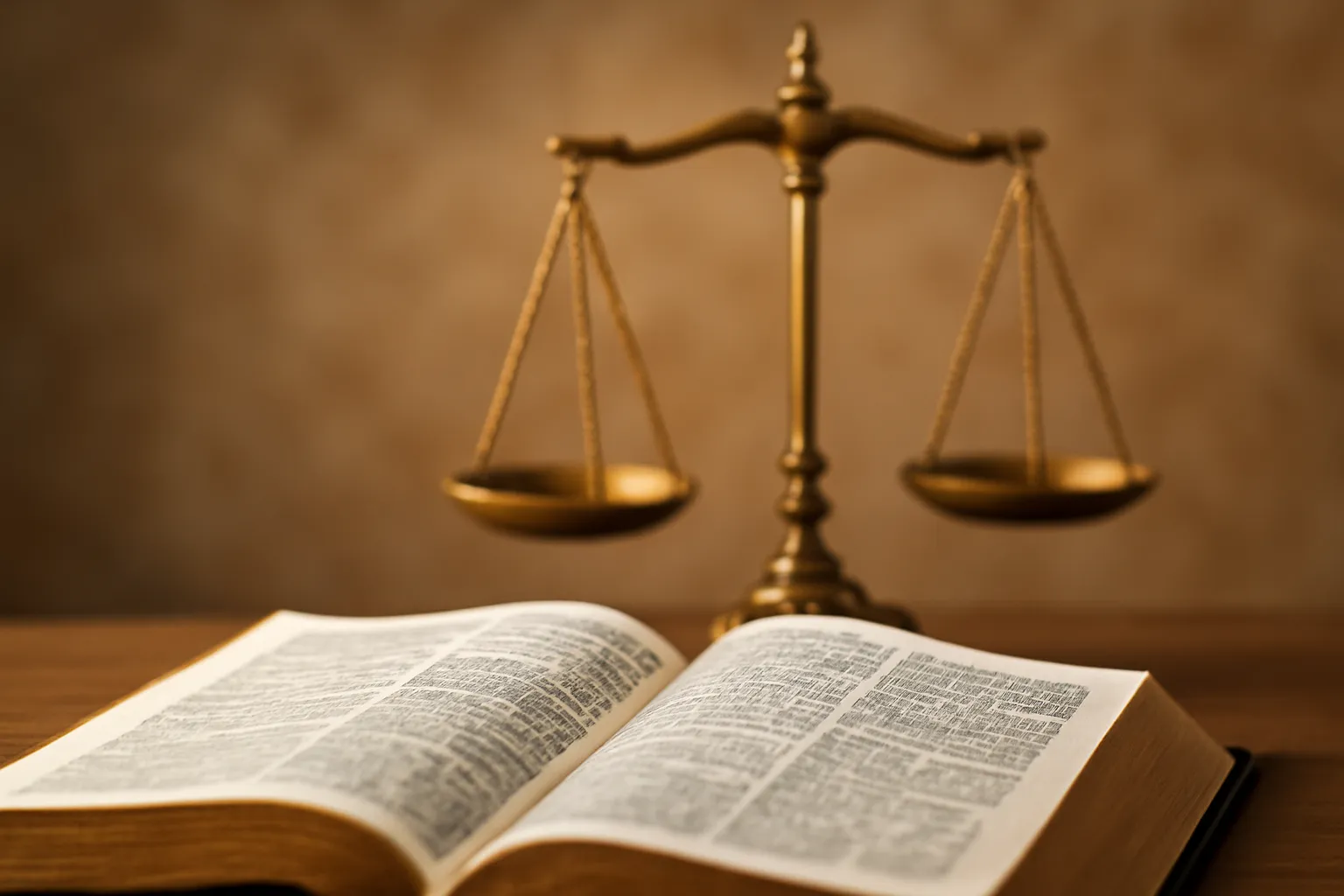
The topic of bible verses on God’s justice sits at the crossroads of truth, mercy, and accountability. In Scripture, God’s justice is not a dry ledger of penalties but a dynamic, steadfast expression of his character. It encompasses both his rightness in judging sin and his faithfulness in upholding righteousness for the vulnerable and for all who seek him. This article surveys key scriptures about God’s justice, outlining essential themes such as the foundation of God’s throne, impartial judgment, mercy alongside judgment, and the ultimate fulfillment of justice in the eschatological hope of the gospel.
Across the biblical narrative, the language of justice often travels with related terms like righteousness, judgment, and mercy. Readers encounter a robust ethics: God is just in creation, just in punishment, just in mercy, and just in salvation. By examining representative verses from both the Old and New Testaments, we can build a coherent picture of what it means to live under a God who is perfectly just.
In biblical terms, God’s justice is the orderly, righteous administration of his will. It includes the fairness by which he rewards what is good, punishes what is evil, and sustains a world where truth, mercy, and equity are not merely human ideals but divine realities. The justice of God is inseparable from his holiness and faithfulness; it is not a punitive impulse alone but the consummation of his covenant faithfulness and his love for truth and mercy. A number of foundational thoughts emerge from Scripture:
Impartiality: God does not show favoritism or partiality in judgment. His verdicts are based on reality as he sees it, not on human status or power.
Righteousness: God’s actions reflect what is right; his justice aligns with his holy character.
Mercy and truth: Justice in Scripture is tempered by mercy, so that divine judgments may lead to restoration rather than destruction wherever possible.
Accountability: Human beings are responsible before God, and justice requires a reckoning of deeds, intentions, and the heart.
Old Testament portraits of God’s justice
Foundations of justice: the throne and the righteous judgment of God
The Psalms anchor God’s justice in the imagery of a throne and a divine character that cannot be compromised. For instance, the throne is described as a place where righteousness and judgment dwell in harmony with mercy and truth. Consider these short reflections from the Psalms:
“Righteousness and judgment are the habitation of thy throne: mercy and truth go before thy face.” — Psalm 89:14
“Clouds and darkness are round about him: righteousness and judgment are the habitation of his throne.” — Psalm 97:2
“He loveth righteousness and judgment: the earth is full of the goodness of the Lord.” — Psalm 33:5
“For the Lord is righteous, he loveth righteousness: his countenance doth behold the upright.” — Psalm 11:7
From these verses, we see that God’s justice is not a distant abstraction; it is woven into the very fabric of his kingship. The throne is a place where rightness and fairness are realized, and where the faithful can trust that God will guard the oppressed and uphold truth in every circumstance.
Justice that protects the vulnerable: a call to action
Scripture repeatedly links justice with care for the vulnerable—the widow, the orphan, the poor, the immigrant. The prophetic voice often pairs calls to justice with an invitation to obedience and mercy. A few representative anchors show this:
“Learn to do well; seek judgment, relieve the oppressed, judge the fatherless, plead for the widow.” — Isaiah 1:17
“But let judgment run down as waters, and righteousness as a mighty stream.” — Amos 5:24
“He hath shewed thee, O man, what is good; and what doth the Lord require of thee, but to do justly, and to love mercy, and to walk humbly with thy God?” — Micah 6:8
These passages remind us that God’s justice is not merely a courtroom ideal; it is a call to ethical living—an invitation to align behavior with the righteous standards God reveals and to advocate for those who cannot advocate for themselves. In the Old Testament, justice is inseparable from covenant loyalty and moral action in everyday life.
Judgment as a corrective term and covenant faithfulness
Judgment in the Old Testament can function as corrective and preservative—meant to purify, restore, and realign people with God’s covenant purposes. The Scriptures often present judgment as a necessary response to sin, but always within the broader frame of God’s longing to bring about repentance and restoration. A few representative statements illustrate this nuance:
“The Rock, his work is perfect: for all his ways are judgment.” — Deuteronomy 32:4
“There is no God else beside me; a just God and a Saviour; there is none beside me.” — Isaiah 45:21
“Shall not the Judge of all the earth do right?” — Genesis 18:25
These lines acknowledge that while God’s justice may be severe toward sin, it is always faithful to his character as the God who saves and redeems. The biblical narrative moves toward a vision in which justice and mercy are reconciled in the person and work of a Messiah who fulfills the covenant promises.
New Testament reflections on God’s justice
Impartial judgment and the universal reach of God’s justice
The New Testament expands the theme of justice to include the revelation of Jesus Christ and the declaration that God’s judgments are true and fair in light of the gospel. The apostle Paul emphasizes that God renders to each person according to their deeds, and that his judgments are not tainted by favoritism. A succinct, representative statement is:
“Who will render to every man according to his deeds.” — Romans 2:6 (KJV)
“For there is no respect of persons with God.” — Romans 2:11 (KJV)
In these verses, the New Testament stakes a claim that God’s justice is universal and objective. No one escapes accountability before the divine standard, and yet the same God offers mercy to all who seek him in faith through Jesus Christ.
Righteousness, justification, and the display of divine justice in salvation
God’s justice is not confined to punishment; it is also the arena where salvation is demonstrated. The gospel presents justice as both a verdict and a gift—declaring people righteous through faith and offering reconciliation with God. While some passages articulate this in the language of justification by faith, others highlight the continuity of God’s righteous dealing with humanity. A few verses capture this interplay:
“Seeing it is a righteous thing with God to recompense tribulation to them that trouble you.” — 2 Thessalonians 1:6 (KJV)
“True and righteous are thy judgments.” — Revelation 16:7 (KJV)
The New Testament therefore portrays God’s justice as the culmination of divine mercy—justice that punishes evil while rescuing and transforming sinners who trust in Christ. It is the justice of God that undergirds the new covenant, bringing forgiveness, renewal, and the hope of a perfectly restored creation.
Judgment at the end of the age: the final separation of the righteous and the wicked
Christians understand that a decisive future judgment awaits all people. This eschatological dimension of God’s justice is woven through Jesus’ teaching and the apocalyptic vision of Scripture. A few weighty statements point toward this final reckoning:
“And these shall go away into everlasting punishment: but the righteous into life eternal.” — Matthew 25:46 (KJV)
“Even so, Lord God Almighty, true and righteous are thy judgments.” — Revelation 16:7 (KJV)
“For he shall have judgment without mercy, that hath shewn no mercy.” — James 2:13 (KJV)
These passages emphasize that God’s justice culminates in a final, public, cosmic act where each person receives a verdict according to the pattern of mercy that has been shown and the deeds that have been done. Yet even in this sober anticipation, the Bible invites trust in God’s wisdom, knowing that his judgments are perfectly true and just.
Practical implications: what God’s justice means for life today
Understanding biblical justice has real-life implications for personal conduct, community life, and social ethics. The texture of these verses invites believers to:
Live with integrity before God and others, because God’s justice requires honesty and righteousness in everyday choices.
Champion the vulnerable and oppose oppression, following the prophetic call to do justice, love mercy, and walk humbly with God (Micah 6:8).
Rejoice in God’s impartiality and trust that eternal justice will be realized in the final day while praying for the redemption of the world here and now.
Christians are called to embody a justice that is rooted in God’s character—justice that is not merely punitive but restorative, that seeks to transform both heart and society, and that points beyond the present to the promised fullness of God’s kingdom. The Gospel reveals that God’s justice has a center in Jesus Christ, who fully bears judgment against sin and offers forgiveness and life to all who trust in him.
To vary the language while keeping the same essential idea, readers may encounter several synonymous or closely related phrases in Scripture and theological writing. Here are common variants and how they relate to the central idea of God’s justice:
Righteousness and justice as a pair: «righteousness and judgment» or «righteousness and justice» highlight the two poles of God’s moral governance—the rightness of actions and the fairness of judgments.
Justice of God as a principle that governs all ages: it includes creation order, moral governance, human accountability, and eschatological vindication.
Divine judgment as corrective or punitive, but always aimed at restoration and sanctification when possible.
Mercy mingled with justice in the gospel: a theme that shows how mercy does not erase justice but satisfies it in Christ.
The Bible presents God’s justice as a compelling and hopeful reality. It is not merely about punishment; it is about the right ordering of creation, the protection of the vulnerable, and the ultimate triumph of truth and righteousness. The arc of Scripture—from the throne of God in the Psalms to the throne of heaven in Revelation—reveals a God who is relentlessly faithful to his promises. He is a God who judges with perfect knowledge, a God who loves mercy, and a God who invites humans to participate in his just and gracious rule through faith, repentance, and acts of mercy in daily life.
For readers today, these verses offer both a warning and an invitation. They warn against hardness of heart, deception, and oppression, while inviting believers to become instruments of justice in a world that desperately needs the fair and good governance of God. By meditating on biblical verses about God’s justice, Christians can cultivate a moral imagination that seeks justice, embodies mercy, and points others toward the gracious judge who, in the fullness of time, will set all things right.
In sum, God’s justice is a multi-faceted divine attribute that encompasses creation, moral order, personal faith, communal life, and cosmic destiny. Whether one reads from the Psalms, the prophets, or the New Testament epistles, the message remains clear: a just God governs the world with integrity, calls his people to walk in righteousness, and ensures that ultimate justice will prevail in the new heaven and new earth promised to renew all things.

 Por Laura Jara