All the Different Names for God: A Guide Across Religions
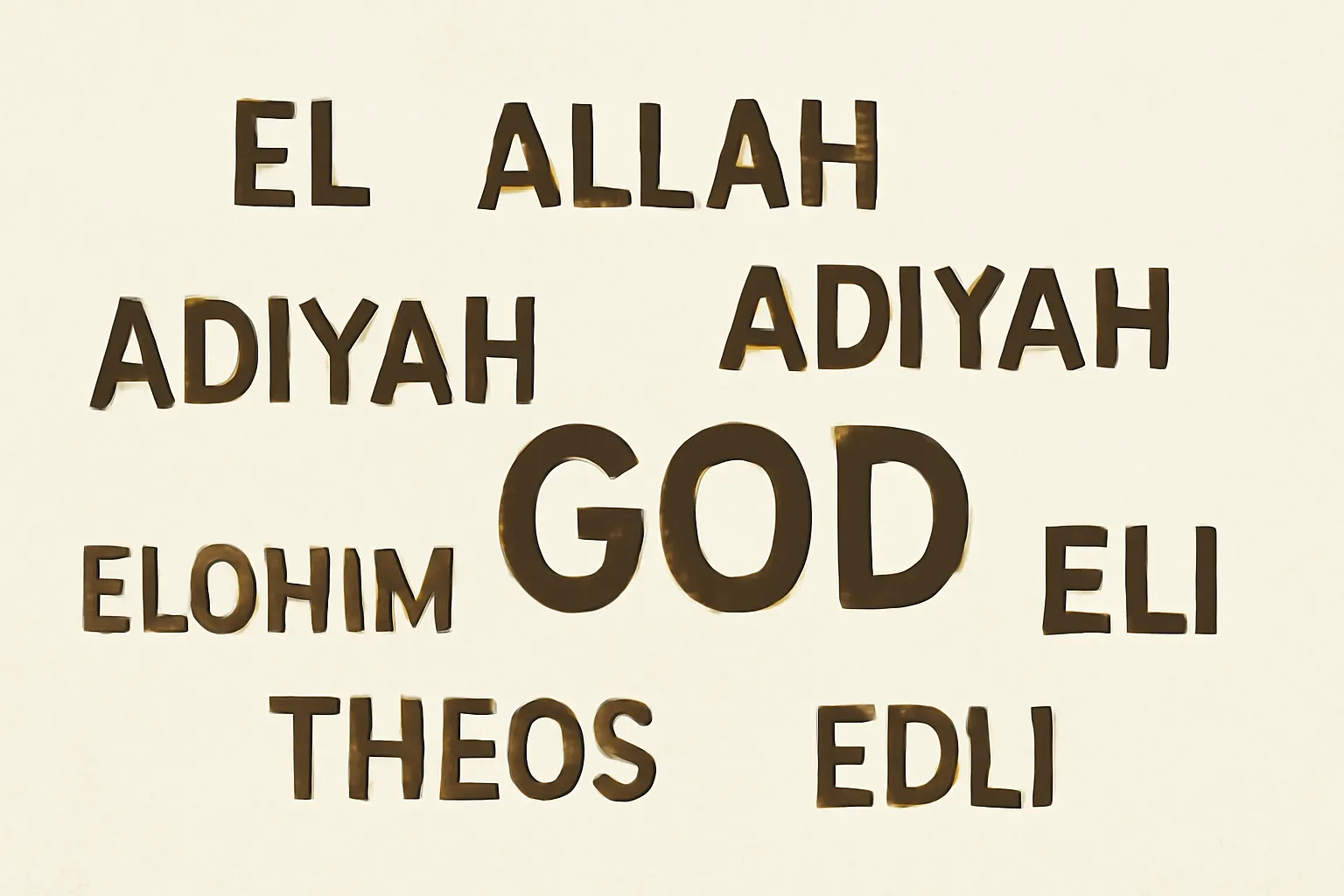
Across the world’s many faith traditions, people have given the divine a multitude of names. Each name carries layers of meaning, inviting us to consider different aspects of the sacred: power and sovereignty, mercy and compassion, creation and sustenance, or the mystery beyond language itself. This guide offers a broad survey of some of the most widely used names for God or the Divine in various religious traditions. It is not exhaustive, but it aims to provide semantic breadth, historical context, and examples of how names are used in worship, scripture, liturgy, and everyday speech.
Judaism: Names of the God of Israel
In Judaism, names of God are inseparable from reverence, tradition, and the sense of a personal relationship with the divine. Some names are considered sacred to the point of being rarely spoken aloud in casual settings. Others appear frequently in liturgy, scripture, or biblical poetry. Here are some of the most central names and titles.
YHWH (Yahweh, the Tetragrammaton)
The most revered name in Jewish tradition, YHWH (often rendered Yahweh or Yehovah in English) is traditionally not pronounced as written. Instead, readers substitute Adonai or Hashem when encountering the sacred four-letter name in text. The name is understood as the eternal I AM, signaling God’s self-existent, unchanging nature. Its utterance is tied to awe, given the belief that the divine name reveals God’s essence in ways beyond ordinary description.
Elohim
One of the oldest and most common designations for God in the Hebrew Bible, Elohim is a plural form that, when paired with a singular verb, is understood to express majesty, fullness, and sovereignty. It appears frequently in creation stories and in prayers that speak of God’s might and judgment as well as care for the world.
Adonai and Hashem
Because the Tetragrammaton is considered too sacred to speak, Jews often say Adonai (my Lord) in recitation. In everyday conversation, many say Hashem (the Name) as a respectful stand-in when referring to God in ordinary speech. Both terms function as reverent substitutes that preserve the sanctity of the divine name.
El Elyon and El Shaddai
These two names emphasize different attributes: El Elyon translates roughly as “the Most High,” highlighting God’s supreme sovereignty over all powers. El Shaddai is often rendered “God Almighty,” pointing to God’s all-sufficient strength and blessing. In Jewish liturgical poetry and biblical prose, these titles celebrate divine majesty and care for creation.
Tzevaot (Sabaoth)
Often translated as “the Lord of Hosts,” Tzevaot reflects God’s command over the heavenly armies and the forces of nature, history, and history’s moral arc. It appears in prophetic writings and psalms that speak of divine power in safeguarding the righteous and judging the wicked.
Ehyeh (Ehyeh asher Ehyeh)
In the biblical phrase Ehyeh asher Ehyeh (“I am who I am” or “I will be what I will be”), God speaks of self-definition and constancy. This name emphasizes the divine self-revelation and permanence through history, especially in moments of crisis and covenant-making.
Christianity: Names of God in the Christian Tradition
Christian understandings of God frequently draw on names and titles that reflect the Trinity, the incarnate Word, and the Fatherly relationship believers are invited to cultivate with the divine. Names from the Greek, Latin, and Hebrew linguistic streams appear in creeds, liturgy, and devotional practice.
Theos is the Greek word most often translated as “God,” used in the New Testament to refer to the one supreme divine being. Kyrios, meaning “Lord,” named God’s sovereignty and lordship in Christian worship. In many contexts, Kyrios also aligns Jesus with divine authority, underscoring the Christian claim of Jesus’s divinity within the Trinity.
Pater and Abba
In the New Testament, God the Father is addressed as Pater in Greek, and a personal, intimate form emerged with Abba (an Aramaic term akin to “Dad” or “Father”). These terms emphasize relational closeness, trust, and tenderness within the divine-human bond described in Jesus’s teachings.
Jehovah / Yahweh as encountered in some Christian traditions
Some Christian communities use the forms Jehovah (transliteration of YHWH) or honor the Tetragrammaton in specific liturgical or devotional contexts. Others prefer Yahweh or avoid vocalization altogether in favor of titles like God or the Lord. The variety reflects different historical translations and devotional practices rather than a single universal usage.
El Shaddai and other titles
Among Christians, El Shaddai—often translated as “God Almighty”—appears in biblical and liturgical contexts, especially in passages that extol God’s power and blessing. Other honorifics such as the Most High, the Almighty, and the Eternal likewise appear in hymns and creeds to articulate different facets of God’s character.
Adonay / Adonai in liturgy
In medieval and modern Christian usage, variants of Adonai (the Hebrew term for “my lords” used in addressing God) appear in liturgical settings, especially in translations and paraphrases of Hebrew scriptures that Christians read in the context of the Old Testament.
Islam: Names of God (Allah) and the 99 Names
In Islam, the singular name Allah is used to designate the one God, the Creator of all that exists. Beyond this, Islamic theology enumerates a rich set of divine names and attributes—collectively known as the Asma’ul Husna (the 99 Names of God). These names describe the divine essence from various angles: mercy, justice, sovereignty, and beauty, among others.
Key names from the 99
Ar-Rahman — The The Compassionate
Ar-Rahim — The The Merciful
Al-Malik — The The King
Al-Quddus — The The Holy
As-Salam — The The Source of Peace
Al-Mu’min — The The Granter of Security
Al-Aziz — The The Mighty
Al-Jabbar — The The Compeller
Al-Khaliq — The The Creator
Ar-Razzaq — The The Provider
Al-Ghaffar — The The Forgiving
While Allah is the proper noun used in everyday faith life, the Asma’ul Husna and related phrases appear in prayers, supplications, and the Qur’an to evoke God’s multifaceted nature. The practice of invoking multiple divine names in supplication expresses a holistic view of God’s attributes—inviting trust, dependence, gratitude, and awe.
Hinduism: Names of the Divine Across Paths and Deities
Hinduism presents a venerable spectrum of names for the divine, ranging from the impersonal principle of ultimate reality to personal gods with distinct narratives and powers. Names can refer to the singular ultimate reality or to specific deities who are manifestations of that one reality. Here are representative strands and examples.
Brahman and Parabrahman
The term Brahman designates the ultimate, unchanging reality that pervades all existence. Some schools speak of Parabrahman as the absolute, transcendent reality beyond all names and forms. These terms anchor the philosophy that all gods and all worlds derive from a single, indivisible source.
Ishvara and Bhagavan
Ishvara (often translated as “lord”) points to a personal aspect of the divine who governs, preserves, and responds to prayers. Bhagavan is a respectful epithet used for revered manifestations of God such as Krishna, Rama, and Vishnu in devotional contexts.
Vishnu/Narayana/Vasudeva and other manifestations
In Vaishnavism, the divine is frequently named through multiple identities that are different manifestations of the same supreme reality. Vishnu, Narayana, and Vasudeva refer to the Supreme Being in various cosmic roles of preservation and benevolent governance. Krishna and Rama are widely revered avatars—the celebrated deeds and teachings of these figures are central to many devotional traditions.
Across Shaiva and Shakta traditions, Shiva stands as a principal cosmic force—the destroyer and transformer of the universe in a cycle of creation and dissolution. Shakti (and Devi) represent the feminine divine energy that empowers, sustains, and liberates. These names express the dynamic interplay of masculine and feminine principles within the divine order.
Ganesh and other deities in personal worship
Many Hindus engage in bhakti (devotional love) toward various personal deities. Names like Ganesh (the remover of obstacles), Hanuman (the devoted, mighty helper), and Durga or Kali (forms of the Divine Mother) appear in temples, chants, and festivals. While each deity has a story and sphere of influence, many Hindus view all these forms as expressions of the same divine reality.
Om / Prajnam and other sacred syllables
In addition to personified names, Hindu practice often centers on sacred syllables such as Om (AUM), a syllable that is believed to contain the universe’s vibrational essence. Om is a spiritual signifier of the ground of being and is chanted in meditation, prayer, and ritual.
Sikhism: The One Divine With Many Reflections
In Sikhism, the primary focus is on the One God who is both transcendent and immanent. Names and phrases emphasize unity, oneness, and the ethical relationship of the self with the divine.
Waheguru
The central name for God in Sikhism, Waheguru (often translated as “Wonderful Lord” or “Wondrous Teacher”) names a divine reality that is perfect, fearless, and all-pervasive. It appears in and around the practice of prayer, the singing of hymns, and the meditative repetition of Gurbani.
Ik Onkar
Ik Onkar (often rendered “There is One God”) is a foundational concept in Sikh theology, expressing monotheism and the unity of all existence. It is both a doctrinal statement and a devotional axis that shapes prayer, daily conduct, and the Sikh sense of cosmic order.
Buddhism: Names for the Sacred in a Theistic and Non-Theistic Framework
Buddhism is diverse in its theological outlook. While many traditions are non-theistic, they still address the sacred in meaningful ways—through the figure of the Buddha, the Dharma (the cosmic law), and celestial Buddhas and bodhisattvas who assist beings on the path to awakening. Here are representative names and terms used across Buddhist traditions.
Buddha and Gautama
Buddha means “Awakened One” and is a title given to Siddhartha Gautama in historical contexts and to later enlightened beings in Mahayana and Vajrayana traditions. Buddhas are understood as teachers who reveal the path to liberation, not as gods who create the universe.
Dharma and Dharmakaya
Dharma refers to the universal law, the teachings, and the path to enlightenment. Dharmakaya is the “truth body” of a Buddha—the ultimate reality that underlies appearances. These names shift the focus from worship of a personal god to alignment with cosmic order and wisdom.
Amitabha and other celestial Buddhas
In Mahayana and Pure Land traditions, figures such as Amitabha (the Buddha of Infinite Light) are venerated as benevolent beings who assist beings toward rebirth in favorable realms. Names like Avalokiteshvara (bodhisattva of compassionate action) reflect the compassionate energy of the cosmos rather than a single creator deity.
Indigenous and Traditional Belief Systems
Across many indigenous and traditional religious systems, the divine is often described as a supreme being or a life force expressed through nature, ancestors, and sacred landscapes. Names vary widely, reflecting local languages, cosmologies, and rituals.
Olodumare and Orunmila (Yoruba religion)
In Yoruba-speaking regions, Olodumare (also called Olodùmàrè) is the Supreme God who creates and orders the universe. Olorun is another name used in some communities. The pantheon includes numerous orisha (deities) who mediate with humans, yet Olodumare remains the ultimate source of life and order.
Nyame (Akan and neighboring cultures)
In Akan religion, Nyame or Onyame is the supreme being who oversees the cosmos. Like many traditional belief systems, Nyame is approached through ritual, prayer, and offerings to maintain harmony and protection for the community.
Among some Plains Indigenous peoples, Wakan Tanka—often translated as the “Great Spirit” or “Great Mystery”—expresses the overwhelming sacred reality behind the natural and spiritual worlds. Worship and ritual encourage balance with the sacred order and respect for all beings.
Zoroastrianism: Ahura Mazda and the Cosmic Order
In Zoroastrianism, the supreme god is Ahura Mazda, the wise lord who represents truth (asha), order, and cosmic struggle against deceit and chaos. Names like Asha (truth/order) and Spenta Mainyu (the Holy Spirit or Bounteous Spirit) describe the moral and metaphysical framework of the faith, in which humans participate as co-workers with the divine in maintaining cosmic harmony.
Names for the Divine in a Global Perspective
Beyond the big religious families, many languages offer terms for the Divine that appear in poetry, liturgy, and everyday speech. These terms reflect cultural values and can range from personal to impersonal conceptions of the sacred. Some examples include:
Deus (Latin, used in Roman Catholic and other Christian contexts)
Dios (Spanish), Dieu (French), Gott (German)
Paramatma (the Supersoul, in some Hindu contexts)
Prabhu or Parameshwara (Tamil and other South Asian contexts)
Isvara / Ishwara (Sanskrit usage in many devotional traditions)
God, the Divine, the Almighty (English-language liturgy and prayer)
How Names Shape Practice and Understanding
Why do so many names exist? Names encode the attributes, relationships, and mysteries believers find most meaningful in their encounters with the sacred. Here are a few patterns to consider:
Attributes and virtues: Names like Ar-Rahman and El Shaddai emphasize mercy and power, guiding prayers for protection and blessing.
Relations and intimacy: Terms like Pater and Abba in Christianity, or Waheguru in Sikhism, highlight a dynamic relationship between the devotee and the divine.
Cosmic order: Names such as Brahman or Dharma focus on the foundational laws that govern existence, inviting ethical alignment and wisdom.
Personal manifestations: Hinduism, Buddhism, and some indigenous traditions honor specific forms of the divine (deities, Buddhas, or celestial beings) as accessible entry points for devotion and practice.
Transcendence vs. immanence: Some traditions emphasize a distant, supreme source (transcendent), while others celebrate a God or Divine that is intimately present in daily life and natural phenomena (immanent).
Respectful Engagement with Names Across Traditions
When exploring or discussing the names of God across cultures, a few guidelines help maintain respect and accuracy:
Honor the context: Names carry religious significance and liturgical usage. Use them appropriately within the cultural and doctrinal setting described.
Mind transliteration and pronunciation: Different languages render names differently. When possible, follow the community’s preferred pronunciation or transliteration to avoid misrepresentation.
Avoid appropriation: Learn what is sacred to a community and what is meant for insiders. Seek permission or guidance when engaging with ritual practices or sacred texts.
Acknowledge diversity within traditions: Even within a single faith, there are multiple names, titles, and understandings of the divine. The list here reflects a broad cross-section rather than a single doctrinal line.
Conclusion: The Rich Mosaic of Divine Names
Names for God or the Divine function as windows into how communities perceive the ultimate reality, the nature of covenant, and the posture of reverence before the sacred. From the tightly guarded, sacred name in Jewish tradition to the intimate, personal addresses in Christian and Sikh worship, from the 99 attributes of God in Islam to the vast pantheon and the subtle monism of Hindu spirituality, and onward to the diverse expressions in indigenous and Zoroastrian streams — the tradition of naming the sacred is as varied as humanity itself. Yet across these names, common threads emerge: reverence, wonder, dependence, and a longing to be aligned with a reality that surpasses human understanding.
In reading about the different names, you may notice how each term foregrounds a particular aspect of the divine—justice, mercy, sovereignty, immeasurable compassion, or the mystery beyond speech. This plurality does not necessarily fragment belief; for many people, it enriches devotion by offering multiple avenues to encounter the sacred. Whether through study, prayer, singing, or quiet contemplation, the names of God invite humans to draw near to something larger than themselves—an invitation that repeats across cultures, languages, and centuries.

 Por Laura Jara