Introduction: Bible Learning Games and Why They Matter
Bible learning games are a proven way to combine faith formation with hands‑on, engaging activities. Rather than passively listening to a lesson, children explore biblical stories, characters, and core values through play. This approach aligns with active learning, boosts retention, and helps kids connect ancient truths to their everyday lives. When designed well, Bible games offer a safe space for questions, discovery, teamwork, and reflection. The goal is not simply to win a game but to deepen biblical literacy, nurture moral reasoning, and cultivate a genuine sense of wonder about God, Scripture, and community.
In this article, you’ll find a wide range of variations of bible learning games—from simple classroom warm‑ups to longer, multi‑step activities that work well at home, in Sunday school, or in youth groups. Each activity is described with practical tips, materials, age adjustments, and learning outcomes so you can adapt them to your setting. Whether you’re a teacher, parent, or volunteer, these ideas can help you create memorable moments that reinforce Scripture in a joyful, participatory way.
What Makes Bible Learning Games Effective?
The most effective bible learning games share several core characteristics:
Age‑appropriate design: Activities are matched to developmental levels, with clear instructions and achievable goals.
Story integration: Every game ties to a biblical passage, parable, or theme such as faith, forgiveness, courage, or service.
Active engagement: Children move, talk, create, and collaborate, not merely listen.
Reflection opportunities: Time for questions, discussion, and personal application follows each activity.
Inclusivity and accessibility: Materials and instructions consider diverse backgrounds and abilities.
Assessment through observation: Facilitators look for understanding, participation, and character growth rather than tests.
When you combine these elements, you create learning experiences that are memorable, meaningful, and spiritually formative.
Core Types of Bible Learning Games
The following sections categorize common game formats you can use, each with a few sample activities. You’ll notice terms like scavenger hunts, bingo, memory match, and storytelling challenges. The goal is to provide a spectrum of options so you can mix and match depending on your setting, time constraints, and learning goals.
Classic Card and Board Games with a Biblical Twist
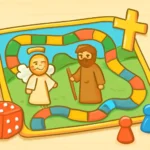
Card and board games are accessible and familiar to many children. You can adapt existing games or design Bible‑specific versions that emphasize key stories, characters, or verses.
Bible Charades: A cooperative variation where players act out biblical characters or events (without speaking) while teammates guess. This builds comprehension of narratives and encourages expressive communication.
Bible Scene Memory: Use a deck of cards with biblical scenes. Players match paired cards (e.g., Creation, Noah’s Ark, Moses Parting the Red Sea) and retell the corresponding story in their own words. This reinforces story recall and sequencing.
Bible Card Snap or Go Fish (with verses): Cards feature verses or character cards. When two players have a matching verse or character, they race to claim the pair. Optional extension: read the verse aloud and discuss its meaning in a sentence or two.
Theme Bingo: Create bingo cards with key words, characters, or places from a set of Bible stories. Call out clues or read verses; players cover matching items to win. This builds vocabulary and rapid recall.
Active and Movement‑Based Games
Movement helps kinesthetic learners engage more deeply with the material and allows for high energy seasons like Sunday school breaks or midweek ministries.
Animated Bible Relay: Teams sprint to complete a short task at stations, such as acting out a parable, building a small craft linked to a story, or locating a truth in a verse. Each station reinforces key takeaways from a passage.
Prayer Walk or Treasure Hunt: Hide clue cards or objects that reference verses about prayer, gratitude, or service. Kids find items, read the associated verse aloud, and discuss how it applies to everyday life.
Story Switch Relay: A relay where teams pass a storyteller’s baton and one child adds a sentence to continue a biblical story. This activity emphasizes narrative structure and collaborative storytelling.
Scripture Scavenger Search: In a classroom or church hall, hide items related to stories (e.g., a rainbow image for Noah, a staff for Moses). Children search, then share the verse that connects to each item.
Crafts provide tangible takeaways, helping kids solidify learning through creating a physical reminder of a story or verse.
Verse Craft Cards: Create art cards featuring a verse and a short interpretation doodle. Children present their cards and explain how the verse connects to daily life.
Bible Timeline Wall Mural: Build a large, collaborative timeline on a wall or board. Each child adds a story tile with a short summary, a date or era, and a personal reflection. This reinforces chronological understanding of biblical events.
Parable Puppets: Kids design and perform short puppet shows illustrating parables like the Lost Sheep or the Good Samaritan. The activity anchors moral lessons and invites empathetic interpretation.
Character Portraits: Create character studies by drawing or painting a biblical figure and listing traits, choices, and consequences. This supports character analysis and virtue literacy.
Digital and Interactive Games
Technology can extend learning beyond the physical space, offering interactive experiences, adaptive challenges, and self‑paced exploration. Use responsibly and with clear time limits.
Bible Quest Apps: Apps or web platforms that present short stories, games, and memory challenges tied to Scripture. They can be used as centers, homework, or enrichment during class time. Focus on digital literacy built around biblical content.
Interactive Storytelling: Use multimedia tools to create a choose‑your‑own‑adventure style narrative where kids decide how a biblical story unfolds. This enhances cause‑and‑effect thinking and engagement with plot lines.
Virtual Bible Jeopardy: A timer‑based quiz game with categories such as People, Places, Miracles, and Parables. It reinforces rapid recall and friendly competition in a controlled environment.
Digital Craft‑Pad Activities: Tablet or computer stations where kids design digital art or slideshows about their favorite Bible stories, encouraging creative synthesis and digital presentation skills.
Storytelling and Narrative Games
Narrative‑driven activities help children internalize biblical themes by actively constructing meaning from stories.
Retell in Your Own Words: A simple story retelling game where kids paraphrase a passage in age‑appropriate language, then discuss the message and application. Builds comprehension and communication.
Story Sequencing: Provide picture cards or sentence fragments from a story. Kids arrange them in correct order and then orally summarize the sequence. This supports story structure awareness and memory.
Dialogues with Biblical Characters: Small groups write and perform short dialogues between two characters from a scripture passage, exploring motives and choices. Encourages empathy and critical thinking.
Prayerful Reflections Journal: A guided journaling activity after a story, prompting kids to write how the passage speaks to their lives, what they learned, and one practical application. Emphasizes reflection and personal faith formation.
Hands‑On Bible Building Activities
When kids physically build or assemble something related to a story, they form concrete associations that endure beyond the moment of play.
Ark Construction Challenge: Using simple blocks or recyclable materials, students build Noah’s Ark and discuss what animals were saved and how obedience and faith played a role. This supports conceptual understanding of salvation narratives.
Jesse Tree Ornaments: Create ornaments representing biblical stories that illuminate God’s redemptive plan through the seasons of Advent or a faith‑formation cycle. Kids connect each ornament to a verse or lesson, reinforcing thematic continuity.
Tabernacle Model: A classroom project where kids assemble a simplified model of the tabernacle, labeling furniture and explaining its use. Encourages archaeology of worship and liturgical literacy.
Miracle Craft Towers: Build towers or structures that demonstrate a miracle (e.g., the parting of the Red Sea with dry ground as a base). Kids explain how faith, obedience, and God’s power intersect in the story.
Design Principles for Effective Bible Learning Games
To create impactful experiences, consider a few guiding principles that help games become robust learning tools rather than mere entertainment.
Clear learning objectives: Start with what you want children to know, feel, or do after the activity, and design the game around those outcomes.
Balance of challenge and support: Provide tasks that are achievable but require effort, with scaffolding such as prompts, sentence starters, or demonstration models when needed.
Relevance to everyday life: Connect biblical themes to real‑world situations children encounter, such as friendships, honesty, or helping others.
Differentiation: Offer multiple entry points so younger children and older siblings can participate meaningfully together using parallel goals.
Reflection and debrief: Conclude with guided discussion or journaling that helps children articulate what they learned and how they can apply it.
Children vary widely in development, attention span, and background knowledge. Here are age‑specific strategies to adapt Bible learning games.
Preschool and Early Elementary (Ages 3–7)
Use short, lively stories with bold visuals and repetition.
Choose simple actions for games (e.g., act out Noah’s Ark as “animals entering two by two”).
Keep sessions short (15–20 minutes) with frequent transitions and lots of praise.
Focus on concepts of God’s care, kindness, and sharing rather than complex doctrinal points.
Lower Elementary (Ages 7–9)
Introduce basic verse memory challenges and short retelling tasks.
Incorporate simple sequencing games to build narrative understanding.
Encourage partnerships and small groups to foster collaboration and peer learning.
Upper Elementary and Early Teens (Ages 10–13/14+)
Use more complex character studies and moral reasoning discussions.
Incorporate literacy‑rich tasks such as paraphrasing verses, analyzing themes, or debating interpretations in a respectful context.
Include project‑based options (e.g., create a mini‑presentation or a digital story) to deepen biblical literacy and critical thinking.
Facilitating Bible Learning Games: Practical Tips
Whether you’re in a classroom, Sunday school, or family setting, these tips help you run smoother sessions and maximize learning outcomes.
Prepare materials in advance, including visuals, timers, and any craft supplies. A well‑organized setup reduces downtime and keeps energy positive.
Set clear rules and expectations at the start. Explain how to win, what counts as a fair move, and how to rotate roles or partners.
Monitor attention and energy by offering short, varied activities and quick transitions to sustain engagement.
Incorporate a debrief time after each game, inviting kids to share what they learned, what surprised them, and how the passage applies to daily life.
Be culturally sensitive and inclusive, ensuring stories and activities respect diverse backgrounds while remaining faithful to biblical content.
Differentiate assessment through observation, quick checklists, or reflective prompts rather than formal tests.
Sample Activity Plans: Ready‑to‑Use Sessions
Below are example templates you can adapt. Each plan includes a biblical focus, a game format, materials, step‑by‑step instructions, and learning outcomes.
Plan A: Creation Story Puzzle Relay (Age 5–8)
: Genesis 1–2 (Creation) and God’s sovereignty over creation.
: Relay with puzzle pieces representing days of Creation.
Materials: Simple puzzle pieces or cards with day icons, a timer, and a finish poster with the Creation summary.
Setup: Divide kids into two teams. Place puzzle pieces at a distance from the finish line. Label days 1–7 with corresponding imagery.
Instructions:
Each team selects a piece, runs to the finish line, places the piece in the correct order, and reads a short summary aloud.
Once all pieces are in order, teams chant or sing a short verse about creation and reflect on God’s design.
Learning outcomes: Recall of Creation sequence, understanding of God’s creative work, ability to articulate a simple reflection on God’s order in the world.
Plan B: Bible Verse Match and Discuss (Age 7–11)
: Colossians 3:12–14, demonstrating virtues like compassion, kindness, humility, and patience.
Game format: Memory match with virtue cards and verse references.
Materials: Cards with verses on one side, virtue definitions or examples on the other; a timer; a small reward for participation.
Setup: Shuffle cards and lay them face down. Create a simple rubric for what counts as a good match (e.g., the verse aligns with the virtue).
Instructions:
Players take turns flipping two cards.
If a match is found (verse and virtue relationship), the player explains how the verse supports the virtue and keeps the pair.
After all cards are matched, discuss practical ways to show each virtue at home, school, or church.
Learning outcomes: Verse recognition, connection between biblical text and moral conduct, and practical application ideas.
Plan C: Parable Puppet Theater (Age 6–12)
: Parables of Jesus (e.g., Good Samaritan, Prodigal Son).
Game format: Puppet theatre with short scripts created by the group.
Materials: Simple puppets, a small stage area, props, and printed paraphrase prompts.
Instructions:
In small groups, kids choose a parable and adapt it into a short dialogue. They should identify the main characters, the conflict, and the lesson.
Groups perform their scenes for the class, followed by a brief discussion about the message and its modern application.
Learning outcomes: Comprehension of parables, ability to identify central lessons, and skill in presenting a message with empathy and clarity.
Assessment and Progress Tracking in Bible Games
Assessment in game‑based Bible learning should emphasize growth, participation, and understanding rather than test scores. Consider these practical approaches:
Observational rubrics: Create simple checklists for facilitators to note whether a child demonstrates narrative comprehension, teamwork, verbal articulation, and reflective thinking after each activity.
Reflection prompts: Use exit tickets or quick journals asking questions like “What did I learn today about God?” and “How can I live this out?”
Peer feedback: Encourage positive, constructive feedback among peers during debrief sessions to foster a supportive learning community.
Portfolio of artifacts: Collect a small set of artifacts (drawings, short writings, craft designs) over a term to illustrate growth in biblical literacy and application.
Inclusivity means ensuring that every child can participate fully and feel valued. Consider these practices:
Access as a right, not a privilege: Offer materials in multiple formats (large print, picture supports, or audio options) for learners with different needs.
Respectful content: Handle sensitive topics with care, providing age‑appropriate explanations and supportive guidance for questions.
All voices welcome: Encourage diverse perspectives and ensure that every child has a chance to contribute in small groups if needed.
Safe space: Establish clear norms for kindness, listening, and constructive collaboration, so children feel secure enough to participate.
Creating a Bible Learning Game Library for Your Setting
To sustain momentum, consider building a library of ready‑to‑run activities and rotating through them. A well‑curated set of games can prevent fatigue and offer variety for different seasons.
Seasonal themes: Align games with liturgical seasons (Advent, Lent, Easter) or church events to reinforce seasonal learning.
Resource catalog: Maintain a catalog with activity goals, required materials, time estimates, and best‑fit age ranges.
Rotation plan: Schedule a rotation so each week features a different type of activity (story‑driven, craft‑focused, movement, tech‑based).
Volunteer guidelines: Provide training sheets for volunteers outlining how to facilitate each game and how to adapt for different groups.
Safety, Ethics, and Respect in Bible Games
As with any educational activity, safety and ethical considerations are essential.
Physical safety: Ensure equipment, space, and materials are age‑appropriate and free of hazards. Supervise active games to prevent injuries.
Content accuracy: Use biblically sound sources and consult leaders when uncertain about interpretation or doctrinal nuances.
Respectful dialogue: Teach children to listen to others’ viewpoints and respond with kindness, even in disagreement.
Privacy: Respect children’s personal reflections. Share anecdotes only with consent, and avoid exposing sensitive information.
Incorporating Bible Learning Games into Different Settings
Bible learning games are more than just entertainment; they are a vehicle for spiritual growth, biblical literacy, and communal formation. When thoughtfully designed, these activities transform quiet, passive listening into active, participatory learning where kids remember stories, understand core values, and see how Scripture speaks to their lives. The joyful energy of play, combined with clear learning goals and reflective moments, helps children form a lasting connection to God, Scripture, and a community that cares for one another.
By embracing a diverse catalog of bible learning games, you can create a rich, sustainable program that thrives across seasons and settings. Whether you’re facilitating a weekly class, leading a family devotions night, or supporting a children’s ministry, these activities can be adapted to fit your context while maintaining fidelity to the biblical message. The ultimate aim is not only to teach facts but to cultivate hearts that know and love God, living out faith with courage, compassion, and hope.

 Por Laura Jara