The Advent wreath is a seasonal centerpiece that encircles many homes and churches during the weeks of anticipation before Christmas. Central to this tradition are the Advent candles—four or sometimes five lights that symbolize strands of waiting, hope, and spiritual preparation. While the visual is simple—a wreath of evergreen with candles lit in successive weeks—the meanings attached to each flame run deep. Across cultures and denominations, the basic idea remains: you illuminate the season with light as you reflect on the promises of the season, rejoice in anticipation, and mark the journey from darkness toward illumination.
In this article, we explore the symbols embedded in the candles themselves, trace the history of the Advent wreath and its illumination practices, and describe the blessings that accompany lighting. Whether you are decorating a home altar, a church sanctuary, or a classroom, understanding the candles’ meanings can deepen daily devotion and create a rhythm of reflection for the Advent season.
The language of candlelight is a language of patience and expectation. Each flame invites a moment of pause, gratitude for past blessings, and an outlook toward the divine coming into our midst. The candles—and the rituals surrounding them—offer a way to slow down in a busy season and to name the virtues that guide a faithful life: hope, peace, joy, and love.
Different Names, Similar Meanings
Throughout the Christian world, you may hear phrases like Advent wreath candles, Advent candles and wreath, candle prayers for Advent, or seasonal candles for Advent. All of these refer to the same central practice: lighting a circle of candles to mark the weeks of Advent. While regional customs vary—colors, the order of lighting, or the inclusion of a central Christ candle—the core intention remains consistent: to accompany worship with light during a season of waiting and preparation.
Symbols, Colors, and Meanings: The Four (or Five) Candles
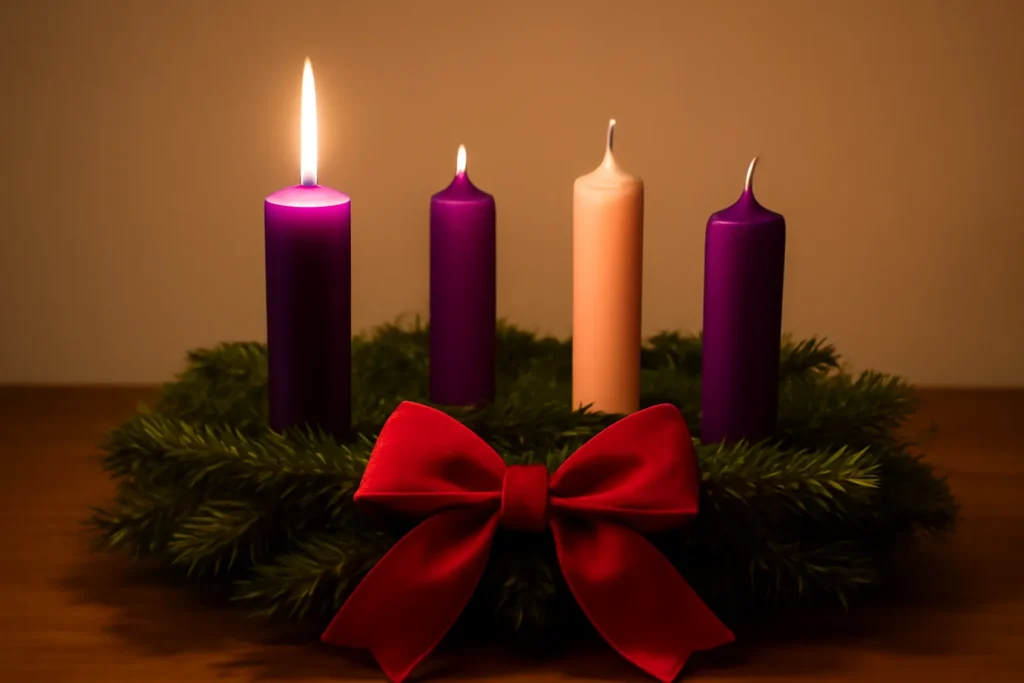
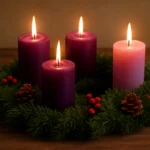
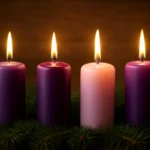
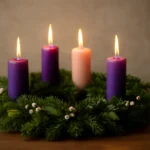
Most Advent wreaths feature four candles arranged around a circular evergreen base. In many traditions, each candle is associated with a specific theme. Some wreaths also include a fifth, larger candle—the Christ Candle—placed in the center, lit on Christmas Eve or Christmas Day. The colors—traditionally purple (violet) for penance and preparation, with rose (pink) for joy on Gaudete Sunday, and sometimes blue in some churches—carry symbolic weight as well.
The First Candle: Hope (Hope, Expectation, and Promise)
The opening flame on the Advent wreath is often linked to hope—a patient waiting for fulfillment and a trust that God’s promises endure. The symbolism invites worshippers to reflect on the ways in which hope sustains us during seasons of waiting. In many traditions, this first candle represents the prophetic anticipation that lights the path toward the coming Messiah.
The Second Candle: Peace (Peace as Trust and Reconciliation)
The second candle speaks to peace, a peace that can be understood both as inner calm in the soul and as a reconciled world where justice and mercy take root. Lighting this candle often accompanies prayers for harmony in homes, communities, and the wider world. It encourages contemplative awareness of how personal and systemic conflict can be transformed by faith, humility, and reconciliation.
The Third Candle: Joy (Joy in Expectation and Community)
The middle Sunday of Advent is commonly known as Gaudete Sunday in many liturgical traditions. The joy candle is lit to acknowledge the growing certainty that the divine promise is near. This flame invites exuberant gratitude and a shared sense of gladness, even as life remains imperfect. The inclusion of a rose or pink candle in several rites marks the shift from preparation to celebration.
The final ordinary Sunday candle centers on love, the courage and compassion by which people live out their faith day after day. As Advent nears its close, the light of this candle encourages acts of kindness, generosity, and service—an invitation to embody the love that Christmas proclaims in word and deed.
In some traditions, a fifth candle—the Christ Candle—is placed in the center and lit on Christmas Eve or Christmas Day. This central flame represents Christ as the light that comes into the world. It is a symbolic reminder that the season’s prior weeks of waiting culminate in the arrival of the Incarnate Word.
Historical Roots: The Advent Wreath and Its Candlelight Journey
The Advent wreath has a rich history that blends biblical symbolism, liturgical practice, and regional customs. While no single, definitive origin story tells all the details, there are some core threads that connect its present-day form to its past.
Origins in Europe: Pagan Roots, Christian Adaptation, and the Advent Spirit
The idea of a circular evergreen arrangement honoring time and season has deep roots in European cultures. Evergreen boughs symbolize immortality and resilience, and circular shapes convey continuity and eternal life. Some scholars point to pre-Christian traditions in which circles and lights marked the year’s cycles and the approach of winter. When Christian communities adopted these motifs, they reinterpreted the symbolism in the language of faith—turning a seasonal circle into a liturgical instrument that frames hope in anticipation of Christ’s coming.
Adoption in Lutheran and Catholic Traditions: Rituals Take Shape
By the late Middle Ages and into the early modern era, the practice appeared in various forms across Europe. The wreath as a centerpiece for Advent worship gained particular traction in Lutheran, Catholic, and Anglican contexts. The candles introduced a progressive rhythm to worship: each week, a flame would be lit to symbolize the increasing light—the dawning of the Messiah’s advent—while Scripture readings and prayers reinforced the spiritual themes.
As Christianity spread to the Americas, Africa, Asia, and other regions, Advent wreaths took on local flavors. Some churches adopted more minimalistic wreaths built from simple greens and a handful of candles, while others embraced elaborate designs with additional ornaments, ribbons, or symbolic figures. In homes, the wreath became a personal practice, often arranged on a kitchen table or in a family prayer corner. The core concept—lighting candles in a circle to mark the weeks of Advent—remained a unifying thread that could be adapted to different cultural aesthetics and liturgical calendars.
Blessings, Prayers, and Liturgical Moments
Lighting the Advent wreath is not merely a decorative act; it is a moment of blessing and prayer. The words spoken over the candles, the posture of the family or congregation, and the questions asked during the lighting cycle all contribute to creating a devotional rhythm. Blessings may be recited before or after lighting, depending on tradition, and they often emphasize gratitude, hope, and readiness for divine grace to unfold in the world.
Blessings Before Lighting
A typical blessing before lighting the Advent candles might be simple, reverent, and focused on the themes of the season. For example:
We light this first candle as a sign of hope, trusting in God’s promises and the light that guides us through darkness.
As we kindle the second flame, we pray for peace in our homes, our communities, and the world.
With the third light, we celebrate joy in God’s present and coming: may our hearts be glad in the journey toward Christmas.
With the fourth flame, we ask for the grace to love others as Christ loves us, showing love through acts of mercy and service.
Prayers of Reflection and Gratitude
In many households and parishes, a brief prayer or reading accompanies each lighting. This practice might involve a Scripture verse, a short meditation, or a personal reflection on the week’s theme. The prayers can be adapted to individual needs—families may include the names of loved ones, communities may lift up neighbors in need, and congregations may recall global concerns. The candlelight becomes a focal point for contemplation, gratitude, and intention-setting for the days ahead.
Practical Guidance: Using the Advent Wreath in Home and Church
Whether you are planning a home devotional routine or preparing a worship service, the Advent wreath offers practical ways to structure time, foster community, and cultivate a contemplative atmosphere. Here are some practical considerations and best practices.
Construction, Placement, and Maintenance
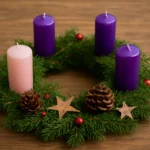
Material and design: Wreaths are typically made with evergreen branches to symbolize enduring life. Pine, fir, or spruce are common choices, sometimes embellished with dried fruits, ribbons, cones, or metallic accents.
Layout: The standard layout is a circular arrangement with four evenly spaced candles around the ring. In some designs, a fifth central candle is added.
Placement: Position the wreath in a safe location where families gather for meals or worship. Keep it away from flammable decorations, drafts, or heat sources, especially if real candles are used.
Safety: When using real candles, never leave them unattended. Keep children and pets at a safe distance. Extinguish candles after each lighting session if the ritual is shorter than a full service.
Color Schemes and Their Variations
Traditional purple and rose: Purple or violet represents preparation and penitence, while rose on Gaudete Sunday signals joyful anticipation.
Blue adaptations: In some churches and households, blue or blue-violet candles are used in place of purple, offering a fresh take on Advent symbolism.
LED options: Modern wreaths often use LED candles for safety and convenience, providing a steady, flickering glow without the hazards of flame.
Rituals for Lighting the Candles
Weekly rhythm: Light one candle on the first Sunday of Advent, adding a new flame each week until all four are lit.
Laudate style: Use a short verse or reading before each lighting, linking the week’s theme with daily life—work, school, family duties, and acts of service.
Community engagement: In a church setting, a layperson or pastor can lead the lighting and share a brief message or reflection about the candle’s meaning.
Variations and Modern Adaptations
The Advent wreath has proven adaptable to new contexts while preserving its essential symbolism. Here are some popular variations and contemporary practices.
Indoor and outdoor wreaths: Some families display the wreath on a mantel or table indoors, while parishes may place larger structures in foyers or sanctuaries for communal visibility. Outdoor wreaths also exist in public spaces, offering a visible sign of seasonal reverence.
Family-centered rituals: In homes, the focus can be on family storytelling, sharing memories of past Christmases, or expressing gratitude for blessings received during the year.
Ecumenical and interfaith resonances: In ecumenical contexts, the Advent wreath can become a shared symbol that invites conversation about light, hope, and goodwill across traditions while respecting doctrinal distinctions.
Educational settings: In schools and churches, the candles may be used as a teaching tool to explain biblical prophecies, New Testament fulfillments, and the theological meaning of incarnation.
Advent Wreath Candles and Meaning Across Traditions
The symbolism of Advent wreath candles has particular resonance within different Christian traditions. While the core ideas of hope, peace, joy, and love are widely recognized, the emphasis and liturgical language can differ.
Western Christian Traditions
In many Protestant and Catholic communities in the Western world, the Advent wreath serves as a quiet, participatory practice in worship or family life. The use of violet candles underscores penitence and contemplation, with rose for the midpoint Sunday highlighting joy. The weekly candle-lighting ritual becomes a shared spiritual discipline.
In some Eastern Christian contexts, similar concepts of light and anticipation appear in Advent-related rituals, though the exact format of the wreath may differ. The emphasis on anticipating Christ’s coming aligns with the broader liturgical calendar, even if the dwelling in which the candles are used takes a different shape.
Liturgical and Devotional Variations
Some congregations incorporate additional elements such as Scripture readings, hymns, or seasonal prayers aligned with the candle cycle. Others pair the wreath with a “Jesse Tree” or other Advent symbols to expand the storytelling dimension of the season.
Frequently Asked Questions About Advent Candles and the Wreath
What is the main purpose of the Advent wreath? The wreath serves as a visual and tactile reminder of the season’s themes—anticipation, preparation, and the coming of Christ—through lit candles and reflective practice.
What do the candle colors signify? Traditionally, purple signifies penitence and preparation, rose signals joy, and white (in the central Christ Candle) represents purity and the presence of Christ. Blue is used in some regions as an alternative color scheme.
Can I use a wreath with LED candles? Yes. LED candles offer safety and convenience while preserving the symbolic light. They are particularly suitable for homes with small children or for public spaces where open flames are impractical.
Is the order of lighting important? In most traditions, the order progresses from hope to peace to joy to love, with the final Christ Candle lit on Christmas Eve or Christmas Day in the center, depending on custom.
What prayers accompany the lighting? Prayers vary by community, but typical elements include gratitude for God’s gifts, petitions for peace and justice, and a reflection on how to embody love in daily life.
Concluding Reflections: The Living Light of Advent
The practice of lighting Advent wreath candles offers more than a seasonal ritual; it is a way to slow down in a fast-paced world and reframe time around spiritual meaning. Each week, as a new flame is kindled, a story is told—not only the ancient prophecy and the long-awaited coming of the Messiah but also the ongoing presence of grace in everyday life. The Advent candles and their meaning invite believers to cultivate hope amid challenge, pursue peace in personal and public life, embrace joy as a stance of gratitude, and practice love through acts of mercy and generosity.
No matter how you choose to observe Advent—whether with a traditional circle of four candles and a fifth Christ Candle, a blue or violet color scheme, or a modern LED arrangement—the essential idea endures: the light coming into the world is a gift that calls for reflection, action, and community. The candles encourage a cadence of anticipation that culminates in the celebration of Christmas, when the promised Light is understood to have entered human history in a transformative way.
If you are designing your own Advent experience, consider combining the symbolic candles with activities that fit your household or congregation. You might pair each lighting with a short reading or a brief act of service for the week—such as donating food to a local pantry, writing notes of encouragement to people in need, or volunteering your time. In this way, Advent wreath candles and meaning become a practical pathway from contemplation to compassionate action.
In sum, the Advent wreath and its candles offer a timeless language of light for a season of waiting. They are a reminder that even as the days grow shorter, the promise of illumination remains with us. By honoring the symbolism of hope, peace, joy, and love—together with the ritual blessing and lighting—families and communities can create a meaningful, resonant practice that enriches the Advent journey and prepares hearts for the joyous celebration of Christmas.




Leave a Reply