Advent and Advent Wreath: Meaning, History, and Decorating Ideas
Advent and Advent Wreath: Meaning, History, and Decorating Ideas
Across many Christian communities, the weeks leading up to Christmas are marked by a tradition known as Advent. This season of anticipation frames both worship and daily life in a rhythm of preparation and hopeful expectation. A central symbol in homes and churches during this time is the Advent wreath, a circular evergreen arrangement that holds candles and invites families and congregations to slow down, reflect, and anticipate the coming of Christ. In this article we explore the meaning, history, and practical decorating ideas surrounding Advent and the Advent wreath, with tips for mindful celebration that can fit a variety of traditions and spaces.
The word Advent comes from the Latin adventus, meaning "coming" or "arrival." It is a season in the Christian liturgical year that highlights the dual sense of preparation: the first anticipation is the coming of Christ in the Nativity at Christmas, and the second is the promise of Christ's return at the end of time. The traditional calendar spans four Sundays leading up to Christmas Day, though some churches observe a longer pre-Christmas period that begins on the Sunday closest to November 30. During this time, believers are called to a balance of readying the heart for the Savior and rejoicing in the Advent message of hope.
Theological themes frequently associated with Advent include expectation, repentance (in a lighter form than Lent), patience, and joyful longing for the incarnate Word. Families and parishes often pair scripture readings, prayers, and hymns with the lighting of candles to mark each week. In many homes, the Advent season becomes a preferred rhythm that sets apart the weeks before Christmas as a time of reflection and shared anticipation.
Advent Wreath: Symbolism and History
Origins in 19th-Century Germany
The Advent wreath as we know it today emerged from Germany in the 19th century, most famously through the work of a Protestant pastor, Johann Hinrich Wichern. In 1839, he established a mission school for children in the city of Hamburg and created a wooden ring filled with 24 small candles, which served as a visual countdown to Christmas. The initial purpose was educational and practical: to teach the children about the days of December and to bring light into the dark winter days. Over time, the elaborate 24-candle version simplified into the more familiar four-candle Advent wreath that corresponds to the four Sundays of Advent.
From those beginnings, the practice spread beyond its origin in northern Europe and gradually took on a global presence within many Western Christian traditions. The circular evergreen wreath became a unifying symbol—continuous life and unbroken hope—while the candles provided a concrete ritual that people could enact week by week. The evolution from a classroom demonstration to a family prayer ritual is a testament to how rituals adapt to different settings while preserving core meanings: anticipation, light in darkness, and shared worship.
Evolution of the Practice
As the Advent wreath traveled through diverse cultures, it absorbed local preferences and liturgical colors. Today, you may encounter variations such as:
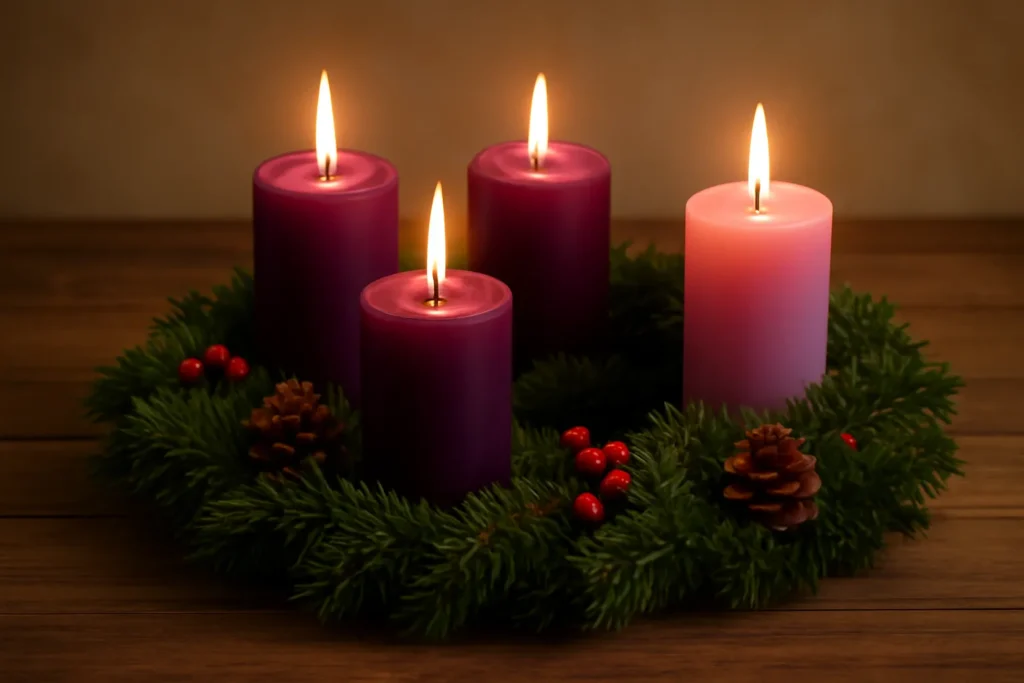
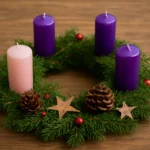
Four candles in a circle, typically arranged with three purple candles and one pink candle, sometimes accompanied by a white Christ candle in the center or on a separate holder.
Alternative color schemes in some traditions, including blue or purple and blue combinations, reflecting regional liturgical calendars.
Different materials for the ring, such as grapevine, foam, or metal, and a range of greenery options (pine, fir, cedar, holly).
Colors, Candles, and the Lighting Ritual
The Candle Pattern and Its Significance
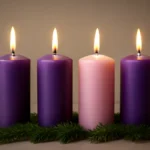
The typical Advent wreath holds four candles arranged around a circular evergreen frame. The candles symbolize the four Sundays of Advent and their progression through the season. The conventional color sequence is:
First candle: a purple (violet) candle is lit on the first Sunday of Advent, representing hope or prophecy.
Second candle: another purple candle is lit on the second Sunday, signifying preparation or peace.
Third candle (pink/rose): lit on the third Sunday, known as Gaudete Sunday, which means "rejoice" and marks a shift toward joy.
Fourth candle: a purple candle is lit on the fourth Sunday, completing the sequence of expectation, preparation, and rejoicing.
In many households, a white Christ candle sits in the center and is lit on Christmas Eve or Christmas Day, signaling the incarnation and the arrival of Christ Jesus into the world. This central candle serves as a focal point for celebration and prayer after the Advent candles have completed their weekly lighting.
Symbolism of the Evergreen Ring
The round, evergreen base is more than a decorative touch. It embodies the idea of eternal life and the unending faithfulness of God. Since evergreen branches remain green and vibrant through winter, they remind believers that God’s promises endure, even in the darkest days of the year. The circle’s endless shape reinforces the notion of and the continuous cycle of Advent anticipation that leads to Christmas joy.
Materials and Construction
The Ring, Greenery, and Structure
An Advent wreath can be as simple or as elaborate as you like. The core elements are:
Ring or base made from durable material (metal, grapevine, foam, or wood).
Evergreen greens such as pine, cedar, or fir, which create the traditional fragrance and color.
Candles that are securely mounted so they stand upright and can be lit safely.
Decorative accents like pinecones, berries, ribbons, dried fruit, or small symbolic figurines.
Safety is an important consideration when constructing or purchasing an Advent wreath. If you plan to light real candles, place the wreath on a non-flammable surface, away from draperies and heat sources, and never leave lit candles unattended. For households with small children or pets, or for those who prefer a low-mm risk option, consider using LED candles or battery-powered lights.
Traditional Advent wreaths often use beeswax or paraffin candles. Beeswax candles have a natural fragrance and a longer burn time, while paraffin candles are often more economical and come in a wider variety of colors. Some families opt for scented greens such as pine or spruce to evoke the fragrance of the season without relying on perfumed candles. If you use colored candles, match the colors to your church tradition or your home décor.
Advent Wreath in Different Traditions
Catholic, Lutheran, Anglican, and Methodist Practices
The practice of lighting an Advent wreath is widespread across Western Christian traditions, though details vary by denomination. In Catholic, Lutheran, Anglican, and Methodist contexts, the wreath is typically placed in a central worship space or at home as a symbol of communal and family preparation. In many parishes gathered for Advent worship, a lector or family member lights the candles and offers a brief reflection or prayer passage. The ring’s symbolism—eternal life, light in darkness, and progressive revelation—is shared across these communities, even though the liturgical color conventions may differ slightly.
Practical differences can include the order of lighting, the exact shade of candles, and whether a central white candle is used. Some communities emphasize a week-by-week meditation on scripture passages related to hope, peace, joy, and love, while others focus on family storytelling, hymns, and simple acts of service during the Advent season.
Decorating Ideas: Home and Community Use
Indoor Displays
An Advent wreath on a dining table, coffee table, or entryway can become a family focal point during December. Here are some ideas to adapt the wreath for your space:
Place a simple centerpiece on the dining table with a low profile so guests can see one another across the table while candles are lit.
Create a color-coordinated arrangement with napkins, textiles, and ornaments that reflect your home’s palette, whether you favor traditional purples and pinks or a more contemporary scheme.
Combine symbolism and memory by adding small tags or cards that note blessings or prayer intentions for each week.
For homes with smaller children or pets, consider LED candles for a safe yet luminous effect. You can still preserve the ceremony by keeping the lighting schedule and prayers, but replacing flame with gentle, flickering battery-powered light.
Outdoor and Door Decor
In many cultures, Advent wreaths extend beyond the interior. Outdoor displays or a wreath mounted on a door can welcome guests and set a festive mood. Practical tips:
Choose a weather-resistant base designed for outdoor use or enclose the ring in a protective lantern or glass cover.
Add a weatherproof ribbon or burlap band to secure the greens against wind and rain.
Ensure candles or lights are rated for outdoor use and positioned away from flammable materials.
Color Variations and Personal Touches
While tradition often uses purple and pink candles, you can adapt the color scheme to your broader decor or to reflect your own family’s symbolism. For example:
Blue Advent wreaths emphasize the waiting and hopeful expectation of the season in some traditions.
A wreath with white or gold accents can highlight the Christmas celebration that follows Advent.
In school or community settings, decorating an Advent wreath with student-made ornaments can foster engagement and learning.
Advent Activities and Family Rituals
Weekly Readings and Reflections
A central practice is pairing candle lighting with Scripture readings or devotional reflections. Each week can focus on a theme—hope, peace, joy, and love—and may include a short prayer, a song, or a quiet moment of reflection. The ritual becomes a recurring anchor in the week, a reminder that the season is about more than gifts and parties.
Prayers, Hymns, and Songs
Music and prayer align with the candle lighting to deepen the sense of reverence. Singing traditional Advent hymns or listening to seasonal carols can transform ordinary evenings into experiences of worship and anticipation. Families often choose a favorite Advent hymn to accompany lighting on the relevant Sunday.
Educational and Community Benefits
The Advent wreath can be a teaching tool for children and adults alike. It invites curiosity about the season, liturgy, and history, helping learners connect symbol to meaning. In classrooms or church centers, a display with explanatory notes can illuminate:
The historical origins and the ecumenical spread of the tradition.
The biblical themes associated with each candle and how they relate to Advent scripture.
How rituals and decorations can shape spiritual life and family memory.
DIY Advent Wreath: Crafting and Personalization
Getting Started with a Simple Build
Building an Advent wreath at home can be a meaningful family project. Here is a practical guide to a simple, durable, and customizable wreath:
Choose a base: metal ring, grapevine, or wooden hoop.
Add greenery: secure evergreen sprigs around the ring for fullness and fragrance.
Mount candles: insert four candles at evenly spaced intervals, ensuring they are stable and upright.
Decorate with natural accents: pinecones, dried orange slices, or cinnamon sticks add texture and scent.
Pick a lighting option: real candles for a traditional feel or LED/flameless options for safety.
Budget-Friendly and Creative Variations
You don’t need an expensive setup to enjoy an Advent wreath. Consider these budget-friendly ideas:
To keep the Advent wreath a safe and cherished tradition, consider the following practical notes:
Stability: ensure the base is stable on the surface and that candles are securely fixed to prevent tipping.
Safety: keep flames away from curtains, paper, and upholstery, and never leave lit candles unattended.
Maintenance: trim wicks to prevent excessive smoke and to promote a cleaner burn, and remove spent candles carefully at the end of the week.
Historical Reflections: Advent Wreath Through Time
The path from a schoolroom demonstration to a household ritual illustrates how religious symbols adapt to new environments while retaining core meaning. The Advent wreath’s journey from a wooden ring with many lights to a compact four-candle arrangement demonstrates a broader pattern in Christian practice: rituals become more intimate and portable, enabling private families to participate in communal faith even far from a church setting.
Common Questions About Advent and the Advent Wreath
What is the difference between Advent and Christmas?
Advent is the season of spiritual preparation that leads up to the celebration of Christ Mass, while Christmas celebrates the birth of Jesus. Advent emphasizes waiting, longing, and preparation; Christmas focuses on the incarnation, joy, and the arrival of the Savior among people.
Why are there four candles?
The four candles symbolize the four Sundays of Advent. Each week brings a new moment of light into the darkness, reflecting the gradual revelation of God’s plan for salvation and the growing anticipation of the coming Messiah.
Is an Advent wreath the same in all churches?
While the general concept is shared—an evergreen ring with candles—the exact colors, number of candles, and the use of a Christ candle can vary by denomination and tradition. The wreath’s core message—hope, preparation, joy, and love—remains consistent across contexts.
Conclusion: Keeping the Light Alive During Advent
The Advent season invites families, worshipping communities, and individuals to slow down the pace of life and enter a period of meaningful waiting. The Advent wreath acts as a tangible companion on that journey, a circle that reminds us of the continuity of life and the light that enters the world in the birth of Jesus. Whether you embrace a simple home display or a richly ceremonial wreath used in a church setting, the core practice remains the same: to acknowledge the longing for Christ’s arrival and to prepare one’s heart for the gift of Christmas.
If you are new to this tradition, start with a modest wreath, light a single candle on the first Sunday, and gradually add light in the weeks that follow. If you already celebrate Advent, consider sharing the practice with someone new—a child, a neighbor, or a friend—so that the ritual continues to grow, just as the light around the wreath grows brighter with each passing week.






Leave a Reply