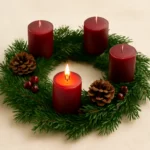
Advent Wreath Origin: History, Symbolism, and Traditions Explained
The Advent wreath is one of the most recognizable symbols of the Christmas season in many Christian households and churches around the world. Its round, evergreen ring of branches, crowned with candles, carries a history that entwines education, devotion, and communal celebration. While today you might find wreaths in living rooms, classrooms, and sanctuaries, the tradition began as a practical teaching tool in 19th‑century Germany and gradually evolved into a portable ritual that crosses confessional boundaries. In this article, we explore the origin of the Advent wreath, its symbolic meanings, and the various customs that have grown up around the wreath across cultures and denominations.
Origins and History
The origin of the Advent wreath is most often traced to Johann Hinrich Wichern, a Lutheran pastor and social reformer who founded the Rauhes Haus, a charitable mission for disadvantaged children in Hamburg, Germany, in 1839. The story goes that Wichern wanted to help urban youth grasp the passage of time in the lead-up to Christmas. To do this, he devised a large wooden wheel or ring that would be used as a visual countdown. On this wheel he placed a substantial number of lights and candles to represent the days of December and the approach of Christmastide.
The earliest versions of the Advent wreath were not a closed ring with four candles as we commonly know it today. Instead, they were more like a wheel or a frame densely lined with candles or lamps—often several dozen small lights—to mark the days of December. This «countdown to Christmas» served both as a pedagogical instrument and as a form of devotional practice. In many descriptions, the wheel included around 24 lights to symbolize December’s days, with some versions featuring a larger, central candle to signify Christmas itself.
Over time, the ritual underwent a simplification that helped it spread beyond Wichern’s immediate circle. By the late 19th and early 20th centuries, many Protestant churches in Germany and neighboring regions adopted a version that used four candles placed on a circular evergreen ring. Each candle was associated with one of the Sundays of Advent. This transition—from a densely lit wheel to a pared‑down, four‑candle arrangement—played a key role in the wreath becoming a widespread, family‑friendly practice.
The diffusion of the Advent wreath out of Germany followed a broader pattern: the 19th‑ and 20th‑century Christian world absorbed many German devotional practices, and the wreath found a natural home in Protestant and Catholic communities alike. In many places, the wreath became an everyday object in churches and homes during Advent, turning a seasonal season of waiting into a rhythm of weekly devotional lighting, prayer, and reflection.
It’s important to note that, while the Wichern narrative provides the most widely cited origin, there are regional variations in how the wreath developed. Some sources describe earlier, smaller ritual customs involving evergreen circles or rings used in various European cultures before the Wichern era. Others describe 19th‑century domestic adaptations that predate the standardized four‑candle version. What unifies these accounts is the core idea: evergreen timekeeping that marks the Advent season with light and anticipation.
In sum, the Advent wreath origin story centers on a German innovation designed to educate and illuminate a waiting season. It was the spark that transformed an instructional tool into a spiritual symbol that, in its many forms, invites families and congregations to socialize with time itself—counting weeks, kindling light, and turning attention toward the message of Christmas.
1839–1840: Johann Hinrich Wichern establishes the Rauhes Haus and creates the original Advent countdown wheel with many lights.
Late 19th century: A shift toward the four‑candle circle emerges in German churches and homes.
20th century: The practice spreads to other European nations and North America, taking on regional variants.
Contemporary era: Wreaths appear in churches, schools, and homes worldwide, often adapted to local liturgical calendars and aesthetics.
Symbolism: What the Advent Wreath Represents
The Advent wreath is a compact monument to time, light, and faith. Each element—from the endlessly looping ring to the progressively lit candles—carries layers of meaning. When you encounter a wreath, you’re looking at a deliberately curated system of symbols that invites contemplation as the season unfolds.
Evergreen branches are the most visible living material in the wreath. Their color, unchanged through winter, represents eternal life and the hope of Christ’s birth as a source of spiritual renewal. The circular shape of the wreath is equally significant: a circle has no beginning and no end, thus it embodies eternity and the unbreakable bond between God and humanity.
The candles are the core liturgical elements. On a typical four‑candle Advent wreath, each flame stands for a specific theme tied to the Sundays of Advent and the anticipation of Christmas. The progression of light—from one candle gradually to four—mirrors the “journey toward the light” that marks the season. In many traditions:
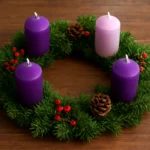
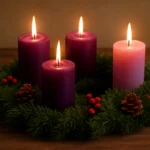
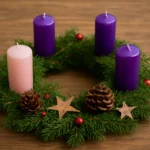
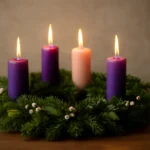
The purple (or violet) candles symbolize penitence, expectation, and preparation for the coming of Christ.
The rose (pink) candle, lit on Gaudete Sunday, signals joy in the approaching feast and a temporary lightening of the penitential tone.
The Christ candle (often white) may be placed in the center and lit on Christmas Eve or Christmas Day in some traditions, signifying Christ the Light of the World.
The arrangement and colors can vary by tradition, but the shared thread is the transformation of waiting into a ritual of light. For many families, the candles are not mere decorations; they are invitations to read Scripture, offer prayer, sing carols, and reflect on biblical themes such as hope, peace, joy, and love.
Structure, Colors, and Variations
Although the most widely recognized version features four candles arranged around a circular evergreen ring, the Advent wreath structure has notable regional and denominational variations. These shifts reflect liturgical calendars, local customs, and evolving sensibilities about what Advent should emphasize in different contexts.
Four‑candle format: the standard model
In the classic design, there are four candles placed evenly around the ring. The candles may be purple, violet, or lavender, with the possible inclusion of a pink rose candle for Gaudete Sunday. The candles are lit one by one across the Sundays of Advent:
The First Sunday—one candle is lit, often accompanied by prayers about waiting and preparation.
The Second Sunday—a second candle joins, intensifying the light and the sense of anticipation.
The Third Sunday—the rose candle, if used, joins the sequence, representing a shift toward joyful expectation.
The Fourth Sunday—all four candles are lit, culminating in Christmas Eve or Christmas Day in many traditions.
Center or additional candles
Some wreaths include a central Christ candle that is lit on Christmas Eve or Christmas Day, turning the wreath from a prop for Advent to a symbol of Christ’s nativity in the heart of the season. In other variations, churches or families use additional white candles on the ring to mark particular feasts or to emphasize certain themes, though this is less common in traditional home settings.
Colorful and regional takes
In different Christian traditions, the palette and the symbolism shift slightly:
In some Catholic and Anglican communities, the candles are entirely purple or violet with one pink rose candle for Gaudete Sunday, while the central Christ candle remains white.
In some Lutheran and Protestant contexts, the four candles might all be the same color, with the emphasis on liturgical symbolism rather than a strict color code.
In some Eastern European or Scandinavian contexts, local customs incorporate additional symbolic elements—such as names for each candle, or integrating family-specific prayers—without altering the core idea of counting down to Christmas with light.
Traditions and Practices: How Families and Churches Use the Advent Wreath
The Advent wreath serves as a focal point for nightly or weekly devotions during the weeks leading up to Christmas. The practice shifts from a purely decorative object to a ritual instrument that organizes time, invites prayer, and creates shared memory. Below are common patterns and some of the rituals that accompany the wreath:
Family and home rituals
Weekly lighting during Advent Sunday gatherings, often followed by a short bible reading and a prayer.
Carols and hymns sung or played during lighting moments to heighten the sense of anticipation.
Scripture readings tailored to the themes of hope, peace, joy, and love as the Sundays progress.
In homes, the wreath often sits on a dinner table or a prominent corner, turning family meals into moments of reflection.
Church use and liturgical adoption
Advent worship services frequently feature the wreath as a visual anchor, with liturgy that weaves in the lighting, scripture, and prayers.
In many parishes, the role of the candles is tied to specific readings from the lectionary and to visions of peace, expectation, and divine promise.
Some churches incorporate smaller wreaths in classrooms or meeting spaces to remind participants across contexts that Advent is a time of preparation for Christ’s coming.
Educational and cultural dimensions
Schools and youth groups often use the Advent wreath to teach time, seasons, and liturgical calendars to students and participants.
Communities may pair wreath lighting with service projects or charitable collections, emphasizing the season’s call to care for others.
In some traditions, the wreath becomes a symbol of ecumenical unity when multiple denominations light candles together during joint services.
Practical Guide: How to Make and Use an Advent Wreath
If you’re considering inviting this tradition into your home or congregation, you’ll find that a basic wreath is accessible to people with a range of DIY skills. The core elements—an evergreen ring, four candles, and a simple set of prayers or readings—offer a timeless format that can be customized to fit your space and beliefs.
Materials and safety considerations
Wreath ring (metal, wire, or sturdy plastic) or a prepared pre‑formed evergreen ring.
Evergreen boughs or artificial greenery for fullness and scent.
Candles (four standard candles for weeks, plus a possible center candle).
Candle holders or a tray to secure the candles and catch wax.
Scissors or pruning shears, floral wire or twist ties for assembly, and optional decorative accents (ribbon, pinecones, berries).
For safety: place the wreath on a nonflammable base and keep candles away from drafts and flammable decorations. Never leave lit candles unattended.
Step‑by‑step assembly guide
Choose a size that fits your space, whether a table display for a family dinner or a larger version for a church altar.
Attach evergreen branches to the ring using floral wire, creating a dense, even look around the circumference.
Place the four candles evenly around the ring; secure them with holders or a stable base so they won’t tip.
Decide on your color scheme. If following traditional liturgical colors, select purple or violet candles, with a pink rose candle for Gaudete Sunday if desired.
Prepare a simple liturgy: a brief reading, a prayer, and a hymn or carol for each lighting moment.
For families: assign lighting duties to different members or designate a “lighting leader” for Sundays.
While the Advent wreath began as a German devotional invention, it quickly traveled beyond Germany’s borders and adapted to diverse cultural landscapes. Today, you’ll find the wreath used in North America, Europe, Africa, Asia, and beyond, each region importing the ritual with local flavor while preserving its core symbolic language of time, light, and preparation.
Western Europe and North America
In many Catholic, Protestant, and Anglican churches, the wreath is both a public symbol in worship and a private devotional in homes. The color palette commonly follows the liturgical year, with purple or violet candles, a rose candle on Gaudete Sunday, and a possible white Christ candle. Sunday lighting remains a central practice, often coordinated with readings from the lectionary, hymns, and prayers.
Scandinavian and Baltic traditions
Nordic countries often emphasize the wreath as a family activity that marks the season’s long dark days with light. The wreath may incorporate natural materials like pinecones, berries, and cinnamon for scent, and the lighting sequence is used to rehearse patience and hope during the Advent season.
Eastern Europe and beyond
In some Eastern European communities, Advent preparations may be embedded within local customs that blend liturgical readings with folk prayers and seasonal songs. The basic concept—using light to symbolize anticipation and the coming of Christ—remains central even as decorative styles vary, including the use of colored ribbons and regional motifs.
Modern and ecumenical reinterpretations
Contemporary designers and worship planners experiment with LED candles, battery‑powered solutions, and sustainable materials. Some ecumenical communities use the wreath as a shared symbol to emphasize unity during Advent, while others adapt the ritual to align with secular or interfaith contexts, maintaining the essential theme of light in the waiting season.
The enduring appeal of the Advent wreath origin lies not only in its historical novelty but in its capacity to cultivate a weekly rhythm of contemplation. The gentle lighting of candles across four Sundays invites participants to slow down, observe time, and consider the spiritual significance of preparation. The symbolism—an eternal circle of evergreen, the progressive illumination of candles, and the emergence of joy as Gaudete Sunday approaches—speaks across cultures and time.
For families and communities, the wreath becomes more than decoration. It becomes a moral and liturgical map of the Advent season, guiding prayers, readings, and songs. It can function as a bridge between the contemplative focus of the season and the practical acts of service and generosity that accompany the Christmas celebration. When you light the first candle and mark the passage of time, you participate in a tradition that has connected generations—past, present, and future—around the simple yet profound idea: light enters the world in the darkest season.
Conclusion: The Advent Wreath as a Living Tradition
From a German classroom workshop to a global emblem of Advent, the Advent wreath has proved remarkably adaptable while remaining faithful to its core purpose: to help people prepare their hearts for Christmas through light, prayer, and shared reflection. Its history, symbolism, and customs offer a lens on how communities remember time, celebrate hope, and cultivate peace during a season of expectation. Whether you encounter a wreath in a parish, a school, or a family living room, you’re stepping into a ritual that invites you to slow down, notice the light, and be part of a long, luminous tradition.

 Por Laura Jara