Catholic Prayers Before Communion: A Practical Guide
Catholic Prayers Before Communion: A Practical Guide
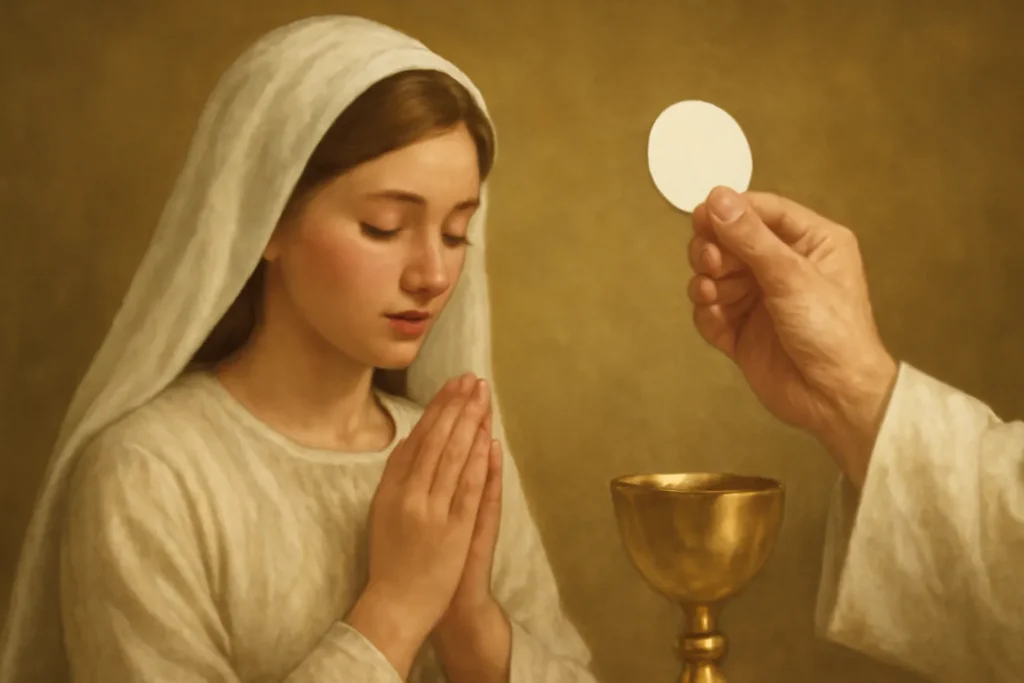
Receiving the Holy Eucharist is the central act of Catholic worship, and many faithful find that prayer before Communion helps them approach the sacrament with reverence, humility, and proper disposition. This article offers a practical guide to Catholic prayers before Communion, including classic texts, variations that are commonly used in parishes, and tips for personal devotion. Whether you are a long-time Catholic, a catechumen, or someone seeking to deepen your liturgical life, these prayers can help you prepare your heart for the real presence of Christ in the Blessed Sacrament.
Prayer before receiving the Eucharist has several interwoven purposes. First, it is an act of reverence for the sacred mystery about to be received. Second, it marks a moment of self-examination and reconciliation with God and neighbor, aligning one’s wants with God’s will. Third, it expresses faith in the Real Presence of Christ in the Eucharist and a desire for a deeper union with Him. Finally, these prayers model a habit of ongoing spiritual discipline that can enrich daily life, transform interior attitudes, and nourish ongoing conversion.
In a practical sense, prayers before Communion help the faithful enter a mindset that is conducive to receiving with grace—not out of routine, but with intention. They are not mere lip service; they are expressions of faith, humility, and desire for holiness. The prayers below are arranged to reflect a spectrum from formal, liturgical phrases to shorter, personal petitions that can be used in daily life or during Mass.
The Core Prayers You Will Encounter Before Communion
“Domine, non sum dignus” (Lord, I am not worthy) — This classic line is commonly recited in English as: “Lord, I am not worthy that you should enter under my roof, but only say the word and my soul shall be healed.” In Latin, it is typically rendered as: “Domine, non sum dignus ut intres sub tectum meum; sed tantum dic verbum, et sanabitur anima mea.” The exact usage can vary: in many parishes, this is proclaimed by the priest during Communion, while the faithful respond with their own inward note of humility; in others, the faithful may recite a similar invocation aloud or silently as they approach. The essential spirit is humility before the mystery of the Eucharist and a recognition that grace comes from Christ alone.
Act of Spiritual Communion — A deeply cherished practice for those who cannot receive the sacrament at a given moment or who wish to deepen their desire for union with Christ. There are several well-known variants, each designed to express longing for Jesus’ real presence in the soul. A widely used version by St. Alphonsus Liguori is: “My Jesus, I believe that You are present in the Most Holy Sacrament. I love You above all things, and I desire to receive You into my soul. Since I cannot at this moment receive You sacramentally, come at least spiritually into my heart. As though You were already there, I embrace You and unite myself wholly to You. Never permit me to be separated from You. Amen.”
The modern, shorter paraphrase commonly spoken or prayed in contemporary churches can be rendered as: “Jesus, I believe in Your real presence in the Blessed Sacrament. I love You above all things, and I desire to receive You into my soul. Since I cannot receive You sacramentally now, come at least spiritually into my heart. I unite myself to You completely; never permit me to be separated from You.”
A concise form, often suitable for personal devotion, is: “Jesus, I believe in You. I love You. I desire to receive You into my soul.”
Each variation centers on the same truth: a spiritual longing for Christ and a trust that grace can come even if the sacramental reception is not possible at that moment.
“O Sacrament Most Holy” — A short, venerable invocational prayer of adoration that is often recited just before or during preparation for Communion. The well-known text is: “O Sacrament most holy, O Sacrament divine, all praise and all thanksgiving be every moment Thine.” This prayer calls us to constant praise, acknowledging the sacredness of the Eucharist and placing our petitions within the broader frame of gratitude and worship.
Anima Christi (Soul of Christ) — This traditional prayer focuses on sanctification, protection, and interior unity with Christ. A standard English version is: “Soul of Christ, sanctify me; Body of Christ, save me; Blood of Christ, inebriate me; Water from the side of Christ, wash me; Passion of Christ, strengthen me; O good Jesus, hear me. Within Thy wounds hide me; Suffer me not to be separated from Thee. From the evil foe defend me; In the hour of my death call me and bid me come to Thee. That I may praise Thee with Thy saints forever and ever. Amen.”
This prayer has a powerful place in the devotional life of many Catholics, both before and after receiving the Eucharist, because it invites a sustained interior contact with Christ’s saving work.
Simple Pre-Communion Prayers for daily use — Many people keep a small, habitual prayer ready for the moment when they approach the Eucharist. A common example for daily use is: “Jesus, present in the Most Holy Sacrament, I adore You. I believe in Your real presence. I love You above all things. Come into my heart; purify me and grant me the grace to receive You with faith, hope, and love.”
This kind of short prayer frames the moment with a clear statement of faith and a request for sanctifying grace.
Variations of the Act of Spiritual Communion
The same basic idea can be expressed in several forms, each carrying a slightly different emphasis. Here are three common variants you may encounter or choose to use in your personal devotion:
St. Alphonsus Liguori version — The classic and most widely cited form, as quoted above.
Modern paraphrase — A version that preserves the core meaning but uses contemporary language. Example: “My Jesus, I believe You are present in the Blessed Sacrament. I love You and with great longing I desire to receive You into my heart. Since I cannot receive You at this moment in sacramental form, come at least spiritually into my soul. I unite myself wholly to You and embrace You as if You were already there. Do not permit me to be separated from You. Amen.”
Short personal form — A compact declaration suited for quick personal prayer, often used in a busy day or in a public setting. Example: “Jesus, I believe in You. I love You. I desire to receive You into my soul. Come into my heart and make me more like You.”
Preparing to Receive: A Practical Mindset
Preparation for Communion is not only about specific words; it involves a state of grace, contrition for sins, and a genuine desire for union with Christ. Here are practical considerations to accompany the prayers above:
Examine your conscience before Mass or during the approach to Communion. A quick internal inventory helps you identify areas needing repentance, forgiveness, or change of heart.
Receive in a state of grace by seeking sacramental reconciliation when necessary. A clear conscience enhances the fruits of Communion and aligns with the Church’s call to holiness.
Approach with humility—even in a parish where many have approached the same line, each soul stands before Christ individually. The humility expressed in “Domine, non sum dignus” is a timeless reminder of our dependence on grace.
Posture and gesture—kneeling or standing, hands open or placed over the heart, and an attitude of silence or Gregorian chant can deepen the sense of sacredness. Choose a posture that helps you be attentive to the miracle you are about to receive.
Mind the fast—traditional fasting rules (e.g., one hour before Communion) support reverence and discernment in approaching the Eucharist. If you are unable to fast due to health reasons, participate with the intention and still offer your prayers with faith.
For those who are unable to receive the Eucharist physically, the practice of Spiritual Communion remains a powerful way to participate in the grace of the sacrament. It communicates a living faith in Christ’s real presence and expresses a longing to be united with Him in every moment of life.
Practical Guidance for Different Settings
In the Parish Church
When you are in a church for Mass, the presiding priest or deacon will lead the moment of Communion. You may hear or recite Domine, non sum dignus privately or as part of the communal liturgy—depending on the parish’s custom. The Act of Spiritual Communion is commonly offered in pauses between the Lamb of God and the reception, or it can be whispered or prayed silently as the Eucharistic liturgy continues. Either way, make the moment a personal encounter with Christ and a pledge of ongoing conversion.
At Home or College/School Chapels
For those who participate in Mass virtually or at home, you can still structure a meaningful moment before Communion. Begin with a brief review of conscience, then offer a short prayer from the options above, and end with a quiet moment of adoration or a Spiritual Communion prayer. The O Sacrament Most Holy and Anima Christi can be particularly comforting in private devotion, since they are compact and deeply focused on the passible presence of Christ in the Eucharist.
With Children and Catechesis
Teaching children how to pray before Communion can be done through simple, memorable phrases and age-appropriate activities. Use visuals and gentle explanations of the meaning behind humility, reverence, and faith in Jesus’ real presence. Practice short versions of the prayers, then gradually introduce the more formal texts as their understanding grows. Encourage them to remember their own words of gratitude and love for Jesus.
Prayers before Communion are not merely formulaic recitations; they express core Catholic beliefs about the Eucharist and the Church’s sacramental life. A few key theological ideas to keep in mind as you reflect on these prayers include:
Real presence — The belief that Christ is truly present, body, blood, soul, and divinity, under the appearances of bread and wine. Prayers before Communion affirm this profound truth and orient the heart toward reverence and gratitude.
Humility — Recognizing one’s unworthiness to receive such a gift helps cultivate a posture of grace. The phrase “Lord, I am not worthy” is not a resignation but a petition for Christ’s mercy and power to heal.
Spiritual hunger — The Act of Spiritual Communion emphasizes a longing to be united with Jesus even when sacramental reception is not possible, a hunger that mirrors the Church’s call to holiness in daily life.
Union with the Church — Prayers before Communion are not private rituals alone; they are part of the larger communion of saints who share in the one sacrifice of Christ and in the body of believers who gather at the Eucharistic feast.
Grace in daily life — The prayers cultivate dispositions that can shape how one lives after Mass: in service, contrition, and fidelity to love of God and neighbor.
Frequently Asked Questions about Prayers Before Communion
Is it mandatory to say these prayers aloud?
In the Latin Rite, there is a strong emphasis on interior disposition, reverence, and genuine faith. Liturgical norms may dictate spoken responses during the Mass, but private prayers before Communion are a longstanding spiritual practice that many find helps cultivate devotion. You can recite the prayers silently or aloud, depending on your surroundings and the parish’s customs. The key is earnestness and truthfulness of heart.
Can I use these prayers if I am not Catholic?
These prayers are rooted in Catholic teaching about the Eucharist. If you are not Catholic, you may still find value in their themes of reverence, humility, and longing for Christ. Some of the language may be more specific to Catholic belief in the Real Presence, but the spiritual attitudes—adoration, contrition, and desire for intimacy with Christ—are universal in Christian prayer life.
What if I cannot receive the sacrament physically for a long time?
In such cases, the Act of Spiritual Communion is especially important. It provides a robust and trusted means of remaining in communion with Christ while not receiving sacramentally. Regular practice of Spiritual Communion can sustain a deep relationship with Jesus and keep your heart oriented toward the grace offered in the Eucharist.
To make these prayers more than a routine, consider adopting a simple, repeatable rhythm that fits your schedule. For example, you might:
Begin with a brief examination of conscience (2–3 minutes) before Mass or at the start of your prayer time.
Choose one core prayer for the week (for instance, the Act of Spiritual Communion or Anima Christi) and meditate on it deeply, letting the imagery shape your thoughts and feelings.
End with a personal moment of gratitude and a request for the Holy Spirit to guide your day or week in light of your encounter with Christ in the Eucharist.
Remember, the deeper aim of these prayers is to assist you in genuine discipleship—to become more like Christ, to grow in love for God and neighbor, and to live out the call to holiness in everyday life. In the sacrament, Christ offers himself as the source of grace; in prayer before Communion, we respond with faith, humility, and hope for the transformation He desires to work within us.
Catholic prayers before Communion have a long, venerable history, yet they remain profoundly relevant for today’s faithful. They bridge the static beauty of liturgical language with the dynamic, living relationship with Christ that the Eucharist makes possible. Whether you lean toward the traditional forms like Domine, non sum dignus or prefer the intimate simplicity of a Spiritual Communion prayer, these words can help you enter the sacred moment with clear faith, contrite heart, and hopeful love.
As you continue to explore and practice these prayers, you may discover that they do more than prepare you for Communion; they can help shape your entire approach to prayer, worship, and daily life. The sacramental life of the Church invites you to a continual conversion, and the prayers before Communion are a reliable and meaningful way to respond to that invitation with reverence, faith, and love.





Leave a Reply