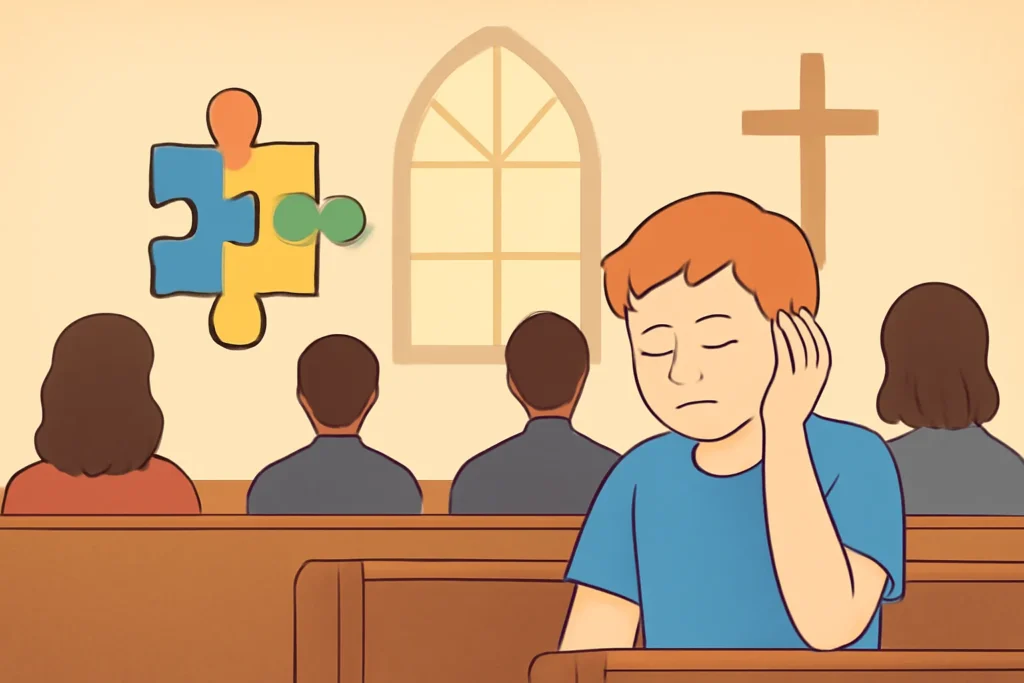
The phrase autism in church today often signals a growing commitment to forming communities that honor all members, including those on the autism spectrum. In this context, we speak not only of autism spectrum disorders as medical labels, but also of lived experience, culture, and belonging within faith communities. When churches name and address the distinct needs of autistic individuals—without stigmatizing them—what emerges is a more robust expression of inclusion, compassion, and shared worship.
This article offers practical guidance for pastors, lay leaders, families, and volunteers seeking to nurture neurodiversity in church life. The goal is not to create a single “one-size-fits-all” model, but to provide flexible strategies that can be adapted to local cultures, traditions, and architectural realities. Throughout, you will find variations on the idea of autism in church—from autistic worshippers and families to autistic volunteers, from sensory-friendly services to inclusive governance—so that readers can connect with concrete examples and adaptable best practices.
Defining key terms and why they matter in a faith community
What does autism mean in a church context?
In everyday language, autism describes a developmental profile characterized by differences in social communication, sensory processing, and patterns of behavior. In a church setting, these differences may influence how someone participates in worship, engages in fellowship, or receives pastoral care. Rather than centering disability as a problem, many faith communities reframe autism as a unique way of sensing the world, a different rhythm of life, and a potential gift for the community.
Key related concepts
Autism spectrum and the diversity of presentations, from highly verbal to nonverbal, from highly social to more reserved
Neurodiversity as a framework that views neurological differences as a natural variation of humanity
Accessibility and accommodation as ongoing practices rather than one-time fixes
Safety considerations that balance inclusion with individual needs
Liturgy and worship that invites participation without pressure or confusion
Why inclusive practice matters for the whole church
When churches intentionally design for inclusion, they often experience broader benefits: clearer communication for everyone, fewer miscommunications, greater hospitality, and a deeper sense of belonging for families with neurodivergent members. The goal is to honor every person’s dignity while preserving the integrity of worship, education, and service.
Principles of inclusive practice in worship and community life
Centering dignity, participation, and shared belonging
An inclusive church practices what we might call participatory hospitality: it invites autistic individuals and their families to join in meaningful ways, while recognizing that participation may take many forms. Some participants may sing, some may listen, others may contribute through art, prayer, service, or quiet presence.
Designing environments that support everyone
Accessibility in a faith community is multi-dimensional. It includes physical space, communication methods, and the rhythms of life—service times, programs, and events—that determine how easily people can participate. The autism-friendly church concept emphasizes predictable routines, clear expectations, and spaces that reduce overwhelm without minimizing opportunity.
Intentional leadership and policy formation
Inclusive practice is sustained by leaders who model listening, learning, and adaptation. Good policies emerge from ongoing assessment, collaboration with autistic people and families, and a willingness to revise as needs evolve.
Communication transparency and predictable sequence
Clear communication—what will happen, when, and why—helps reduce anxiety for autistic participants and for their caregivers. When possible, provide advance notices and visual or written agendas for events and services.
Practical accommodations for autistic individuals in church
Sensory environments can greatly influence a person’s ability to participate in autism-friendly church experiences. Consider:
Lighting: Use natural light where possible; avoid harsh fluorescents or strobe effects.
Sound: Provide seating in quieter zones, offer amplified or non-amplified music options, and consider quiet rooms with dimmed volume during gatherings.
Smells and textures: Be mindful of strong scents from candles, cleaning products, and flowers; choose low-scent options when possible.
Spacing: Create calm corners and clear pathways; reduce clutter that can become visually overwhelming.
Seating options: Offer flexible seating—chairs with armrests, soft seating, and spaces for movement if needed.
Quiet room and safe space: Provide a designated place where someone can step away without stigma or judgment.
Accessibility policies covering physical space, communications, and programming
Emergency planning that accounts for autistic participants and caregivers
Clear disclosure and consent practices that protect privacy
Regular review cycles to revise practices based on feedback and data
Community life beyond Sunday: ongoing inclusion and belonging
Pastoral care and one-to-one relationships
Inclusive care is relational work. Pastoral teams can:
Offer flexible visit options and know how to respond to sensory needs
Provide communication support, such asscribe-friendly notes or visual messages
Coordinate with families to plan supportive visits during special events or holidays
Respect quiet companionship or observational presence as legitimate forms of engagement
Education programs and youth ministry
Children and youth programs benefit from structured, predictable routines and individualized supports. Strategies include:
Visual schedules for Sunday school, midweek programs, and youth events
Social stories and simple explanations of expectations for activities
Quiet zones and sensory-friendly activities that align with spiritual learning
Volunteers trained to use nonverbal communication aids and patient pacing
Volunteer engagement and family involvement
Families often carry the most insight about how to support a loved one with autism in church life. Invite collaboration that respects expertise, not only needs. Ways to involve families:
Invite parents and autistic adults to co-design programs and services
Provide family-friendly volunteering roles that align with individual strengths
Offer resource fairs with information about local support networks and therapies
Case studies and practical examples
Case example: a sensory-friendly service
Imagine a church that shifts one service per month to be intentionally sensory-friendly. Practices might include reduced volume, softer lighting, a quieter corridor for breaks, and a welcome table with visuals explaining the service flow. The church gathers feedback from autistic attendees and uses it to refine the experience. Over time, families report greater consistency in attendance, and volunteers gain confidence in providing accommodations without drawing attention to differences.
Case example: welcoming autistic families
In another example, a congregation creates a family-friendly welcome packet that includes a visual agenda, a map of the building with quiet rooms labeled, and a glossary of terms used during worship. The leadership team also designates a “welcome buddy” for new families—someone trained to explain the flow of the service, answer questions, and check in after the service. These practices reduce anxiety, increase belonging, and foster long-term engagement.
Myth: Autism means someone cannot participate in church
Reality: Autistic people often participate deeply, though in ways that may differ from conventional expectations. The goal is not to force a single mode of worship, but to offer multiple avenues for meaningful engagement.
Myth: Accommodations are a burden or exception
Reality: Accessibility improvements often benefit many people—parents with young children, visitors with temporary injuries, or individuals with other conditions. A culture of inclusion tends to improve the overall church experience for all.
Myth: We already do enough for autistic individuals
Reality: Inclusion is a living practice that requires ongoing assessment, listening, and adaptation. Regularly inviting feedback from autistic parishioners and families helps keep practices relevant and effective.
Building an inclusion-minded church is a journey that honors the value of every person, including those living with autism in church contexts. It is about creating spaces where differences are acknowledged, where participation is made possible through thoughtful design, and where all gifts can contribute to the common mission. The steps described here are practical leverages for change: listening well, planning with clarity, equipping volunteers, and sustaining a culture of hospitality. By anchoring practice in the core spiritual convictions of dignity, love, and community, churches can become truly welcoming homes for autistic individuals, their families, and the wider body of believers.
If your congregation is just beginning this journey, consider forming a small inclusion working group that includes autistic voices, caregivers, clergy, educators, and lay leaders. Start with a simple audit: where are the obvious barriers? what are three actionable accommodations we can implement in the next quarter? how can we communicate changes clearly to the whole community? Remember that progress is incremental; each step, when done with care, strengthens the life of the church and the wellbeing of its members.
In sum, the practice of autism inclusion in church life is a missional and pastoral calling. It invites all members to embody the gospel in concrete acts of welcome—through listening, through shared worship that respects diverse expressions of faith, and through a sustained commitment to care for one another in all seasons of life.








Leave a Reply