Candles in Christianity: History, Symbolism, and Worship Practices
Across the long arc of Christian history, candles have been more than mere sources of light. They have served as tangible signs of faith, prayer, and communal identity. From the hush of a midnight vigil to the bright pageantry of a liturgical procession, the use of candles in Christian worship, home devotion, and ceremony reflects a layered theology of light, life, and ascent. This article surveys the journey of Christian candles through time, explores their rich symbolism, and surveys how different traditions incorporate candles into worship today.
History of Christian Candle Use
Early Roots: Lamps, Lamps and Light in the Primitive Church
In the earliest centuries, the Christian community inherited a liturgical vocabulary of light from Jewish practice and Greco-Roman ritual. Lamps and oil lights lit up catechetical spaces, tombs, and public assemblies. In catacombs and subterranean worship spaces, lamps provided practical illumination for early Christians gathered for prayer, teachable moments, and hymns. But beyond utility, light carried a profound symbol: God is light, and Christians were called to live in that divine radiance. Even when communities used oil lamps rather than elaborate church candles, the idea persisted: light as a sign of transcendence, revelation, and hope in the midst of darkness.
As Christian communities grew more organized and public, the use of dedicated wax candles began to appear in more formal liturgical settings. The move from simple lamps to more standardized candles reflected a desire for ceremony, permanence, and shared symbolism that could be recognized across languages and cultures. The early church also drew from contemporary Roman candle-making practices, gradually shaping a vocabulary that would endure for centuries.
Medieval to Early Modern Developments: Ritualization and Theological Depth
During the medieval period, candles in worship became a central feature of both public liturgy and private devotion. Monastic communities, cathedrals, and parish churches increasingly deployed a range of candle types, sizes, and colors to mark liturgical seasons, feasts, and sacraments. The altar candles—tall, steady flames placed in ornate holders—emerged as a standard in many Western churches, signaling reverence and the sacredness of the holy mysteries celebrated there.
Concurrently, the Paschal candle—a large, uniquely prepared candle lit at Easter Vigil—took on particular significance in Western Christianity. This candle, inscribed with symbols like the cross, the year, and the Greek letters Alpha and Omega, embodies Christ as the beginning and the end. The Paschal candle stands at the center of Easter celebrations and is used in baptismal rites for new believers, reminding the community of the resurrection and the triumph of light over darkness.
Eastern Traditions: Liturgy, Icons, and the Quiet Glow
In the Eastern Orthodox and Eastern Catholic churches, candles—often small beeswax tapers or tall processional candles—hold a central place in the liturgy. The sanctuary is bright with sanctuary lamps, processional tapers, and numerous votive lights. In Orthodox churches, the ritual lighting of candles accompanies most prayers, feasts, and processions, creating a luminous environment that mirrors the divine light described in patristic writings. While the aesthetics may differ—more use of metal candlesticks, more subdued colors, and a strong emphasis on icons—the underlying symbolism remains consistent: light as knowledge of God and as a medium of veneration and intercession.
Symbolism of Candles in Christian Faith
Light as a Cardinal Symbol: Christ, God, and Revelation
Across liturgical Christian life, candles are a visible sign of Christ as the Light of the World. They symbolize the revelation of God in Jesus and the illumination of human hearts by the Holy Spirit. In baptism, the lighting of a candle often accompanies the new believer’s reception of the light of Christ, signifying the entrusted duty to live as children of the light. In the Eucharist, candles on the altar signal the sanctity of the sacrament and the presence of the risen Lord among the gathered community.
Spiritual Dimensions: Prayer, Vigil, and Purity
Candles also symbolize the persistence of prayer. A burning candle in a devotional space is a quiet invitation to continuous, hopeful petition—“a prayer that does not go out.” The flame embodies both purity (wax refined by heat) and transformation (solid wax turning into flame and light). The practice of lighting candles before prayer intentions, during vigils, or at memorial rites expresses faith that human longing is carried upward to God, just as wax gives way to light and warmth.
Color, Form, and Seasonal Meaning
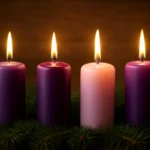
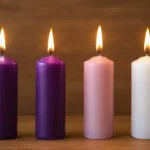
Candles come in various colors and forms, each carrying seasonal or thematic significance. In many traditions, white candles symbolize purity and joy during Christmas and Easter; purple or violet candles mark the penitential seasons of Advent and Lent; pink candles (or rose) appear on certain Sundays in Advent and Lent to signal a lighter note within a season of preparation; red candles often honor martyrs or Christ’s passion, and gold or green candles can accompany other feast days. In home devotion or lay ministry, colored candles may be used to reflect the mood of prayer or the character of a feast, reinforcing the pedagogy of light as a language for the faithful.
Truths of Sacramental Light: Permanence and Ephemerality
The paradox of candlelight is instructive: wax lasts longer than the flame, yet the flame is transient. This speaks to Christian understandings of life, mortality, and divine grace. Churches maintain sanctuary lamps and perpetual flames in some traditions to symbolize the ongoing presence of God in the world and the continuity of worship, while individual candles in processions or prayers remind the faithful that the divine work goes on in the daily lives of believers, not just within church walls.
Common Types of Candles and Associated Practices
Altar Candles, Sanctuary Lamps, and Holy Light
An essential category in many Christian churches is the altar candle (or altar candles): a pair or a group of tall, carefully tended wax candles placed on or near the altar to signify the sacred mysteries celebrated there. A sanctuary lamp, sometimes kept burning continuously, signals the real presence of Christ in the tabernacle (in Catholic and some Anglican and Orthodox contexts) or marks a dedicated space for prayer within the church. These candle arrangements are both functional and symbolic, directing attention to what is happening at the altar and inviting the broader congregation to participate in a shared sense of reverence.
Votive Candles and Prayer Offerings
Votive candles are lit by individuals or groups as offerings of prayer for a particular intention. These are typically placed in votive stands or around shrines and icons. The votive candle practice embodies a petitionary form of worship: the faithful lift up concrete desires—health, peace, reconciliation—knowing that the flame is a visible, tangible expression of longing offered to God.
Paschal Candle: A Sign of Easter Hope
The Paschal candle is a centerpiece of Easter worship in many Western churches. It is prepared with special rites, blessed, and lit at the Easter Vigil. Its symbolism is profound: it represents the risen Christ who conquers death. The candle is used at baptisms and funerals throughout the Easter season and often remains near the Easter section of the church for weeks, marking the continuity between baptism, life in Christ, and eternal life.
Advent Candles and the Advent Wreath
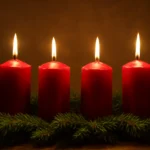
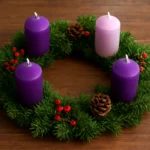
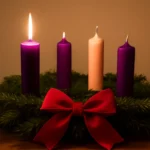
During the season of Advent, many Christian communities light a series of candles—usually four, one for each Sunday leading to Christmas, sometimes with a fifth “Christ Candle” lit on Christmas Eve or Christmas Day. The candles in the Advent wreath (often arranged as an evergreen circle) symbolize anticipation, preparation, and the gradual coming of Christ. The colors and order can vary by tradition, but the underlying emphasis is consistent: waiting in hopeful expectation for the Light that dawned in Bethlehem.
Processional Candles and Torches
In processions, large processional candles or torches accompany clergy and choirs. These candles signal sacred movement, reverence for the liturgy, and the sense that the community is on a journey with Christ. In some traditions, processional candles are carried in candle-giving rituals during major feasts or at the start and end of services, tying physical movement to spiritual ascent.
Special Candles for Feast Days and Sacraments
Beyond the Paschal candle, many churches have specialized candles for feasts—candles in honor of saints, or candles dedicated to the saints whose feast days are celebrated. There are also symbolic candles used in the celebration of Baptism (often a candle given to the newly baptized as a sign of their new life in Christ) and Confirmation (candles that symbolize the gift of the Spirit and the responsibility to witness faith).
Worship Practices Across Denominations
Catholic and Old Catholic Traditions
In the Catholic tradition, candles are a central aesthetic and symbolic element of worship. The Mass features multiple candles on the altar, including the priests’ candles and the pallid but beautiful array of votive and sanctuary lights. The Paschal candle stands at the center of Easter celebrations. During certain liturgical seasons, the altar is dressed with specific colors and additional candles to reflect the season’s character. In Catholic worship, the use of candles communicates both the beauty of the liturgy and the reality of Christ’s light entering the world.
In Orthodoxy and Eastern Catholic churches, the ambience of candles is especially prominent. Hundreds of votive candles may burn around icons in domestic chapels and churches, and the clergy carry tall processional candles during liturgies and processions. The epiphany and iconography often feature luminous displays; the overall effect is to invite contemplation and to remind believers of the divine light that shines through creation and history.
Anglican and Episcopal Uses
The Anglican Communion and its descendant, the Episcopal Church, preserve a rich candlelit liturgy in many cathedrals and parish churches. The Eucharist often features candles on the altar, and worshippers may encounter vigils or night prayer that uses candles as a focal point for meditative prayer. Advent and Lent are observed with candles, wreaths, and seasonal lighting that parallel Catholic and Orthodox practices, but with distinctive liturgical colors and rubrics that reflect the Anglican tradition.
Lutheran and Reformed Traditions
In Lutheran churches and many Reformed communities, candles appear in Christmas services, baptism, confirmation, and weddings. The symbolism remains centered on Christ as Light and the believer’s calling to reflect that light in the world. Some Protestant communities emphasize simplicity and may use fewer candles or opt for LED or electric alternatives during services while preserving the symbolic meaning of light in worship and prayer.
Protestant Variations and Contemporary Practices
Across the broader Protestant landscape, candle usage varies widely. Some congregations emphasize candlelight vigils as acts of solidarity, memory, or protest—emphasizing the social dimension of light as a sign of hope and justice. In many contemporary worship communities, LED candles or battery-operated candles provide safe, accessible alternatives for children, pregnancy or memory events, or outdoor services where real flames are impractical. Even when material candles are less common, the language of light remains a powerful tool for teaching and worship.
Veneration Practices, Prayers, and Intercession
In many traditions, candles accompany prayers before icons or shrines, and a practice of lighting a candle is often paired with a moment of personal intercession. The candle thus becomes a conduit for prayer—an outward sign of inward devotion. The liturgy and devotional life of the church thus integrate the use of light with the domestic and communal pursuit of holiness.
Practical Considerations: Materials, Safety, and Accessibility
Materials: Beeswax, Paraffin, Soy, and Sustainability
The material composition of candles carries theological and ethical implications. Beeswax candles have long been favored in many traditional churches because of their natural purity and pleasant fragrance, which expands the sense of the sacred. Paraffin candles are common, affordable, and widely available, but they are derived from petroleum. Soy candles and other plant-based options offer a more sustainable alternative. In some communities, the choice of material reflects stewardship values connected to creation and the care of resources, while preserving the beauty and symbolism of light in worship.
Safety: Handling, Holders, and Accessibility
Practical safety considerations are essential in any candle-centered setting. Use appropriate holders and avoid drips on furniture or floors. Keep candles away from flammable materials and supervise burn times, especially around children. In many churches and homes, electric or LED candles provide a safe, accessible option that preserves the visual spirit of candlelight for people with mobility or fire-safety concerns. These alternatives enable broader participation in liturgical and devotional life without compromising the sense of sacred radiance.
The use of candles in Christian worship is not only about utility; it is about ambiance and mood. The glow of candles shapes acoustics, temperature perception (in warm rooms), and the social dynamic of a service. In collegiate chapels, medieval churches, or suburban sanctuaries, candles contribute to a sense of continuity with generations past while enabling contemporary worshippers to encounter the sacred in a tangible, sensorial way. Innovation—such as light projections, candle-safe glass enclosures, and liturgical art—can merge age-old symbolism with modern expressive forms.
Contemporary Expressions: Devotion, Community, and World Context
In today’s Christian life, candles remain central to personal devotion and communal witness. Home prayer spaces often include a small altar candle or a set of candles for morning or evening prayers. During times of crisis or remembrance, churches may host candlelight vigils—narratives of darkness and hope enacted through quiet reflection and shared solidarity. The symbolism of light extends outward into social action: candlelight vigils for peace, humanitarian aid, or awareness campaigns use the universal language of light to communicate compassion and solidarity beyond the church doors.
Contemporary theologians sometimes emphasize the ecological and ethical dimensions of candle use, encouraging congregations to choose sustainable materials, re-use glass enclosures, and minimize waste. The ongoing conversation about liturgical beauty and ecological stewardship invites worshipers to consider how candles in Christianity can be both spiritually rich and environmentally responsible.
Glossary: Key Terms for Candles in Christian Worship
Altar candles: candles placed on the altar indicating the sacred center of the liturgy.
Paschal candle: a large candle used at Easter to symbolize Christ’s resurrection.
Sanctuary lamp: a continuously burning light that signifies the presence of the holy in a sanctuary or tabernacle.
Votive candle: a candle offered in prayer for a specific intention.
Processional candles: tall candles carried in processions as part of the liturgy.
Advent wreath: a circular arrangement of candles used to mark the weeks of Advent.
Vigil: an extended period of prayer and reflection often centered on light.
Beeswax vs paraffin vs soy: materials used to manufacture candles, with different ecological and aesthetic properties.
Further Reflections: Theological Implications of Candles in Christian Life
In reflecting on the role of candles in Christianity, several themes emerge that connect theology, worship, and lived faith. Light denotes revelation: God has chosen to reveal himself as light, guiding believers toward truth. Light also communicates consolation: in times of grief or fear, candles offer a serene symbol of presence and prayer. The communal dimension of candlelight—shared space, liturgy, and ritual—reinforces the Christian call to live in fellowship, to bear one another’s burdens, and to witness to hope through visible signs. Finally, the embodied nature of candlelight—flame, smoke, warmth—reminds congregations that faith is not only intellectual assent but a lived experience that engages the senses, memory, and imagination.
Whether described as a symbol, a sacramental sign, or a devotional tool, candles in Christian worship connect worshipers to a long tradition of sacred beauty. They invite contemplation, gather communities, and point toward the ultimate Source of light: the Risen Christ, the source of life and the author of hope for all creation.
Conclusion: Embracing Light in Christian Practice
From the catacombs to the cathedral, from private prayer corners to global vigils, candles have illuminated the Christian journey. Their enduring presence in Christian worship—in all its branches and variations—speaks to a shared conviction: light makes present the reality of faith, truth, and divine love. As churches continue to nurture reverence for the sacred, and as communities explore new ways to celebrate, remember, and mourn together, the simple act of lighting a candle remains a powerful, universal gesture. It is a reminder that even in darkness, there is a gentle, enduring glow—an invitation to come closer to the light that never fades.
In sum, the story of candles in Christianity—history, symbolism, and practice—is a story of a faithful people who seek to translate the wonder of God’s light into everyday acts of worship, devotion, and service. Whether you encounter a solitary flame in a personal prayer corner or a grand procession in a grand church, may the light touch your heart and kindle a deeper awareness of the love and grace that light the way for all who follow Christ.





Leave a Reply