Caste System in Hindus: History, Social Structure, and Modern Implications
Caste System in Hindus: History, Social Structure, and Modern Implications
The topic of caste in Hindu society is a long-standing and complex facet of South Asian history. It encompasses ancient ideas about social order, religious ritual, and occupation, as well as dynamic processes of reform, resistance, and change. This article surveys the history of the caste framework, explains the social structure it has produced, and examines the modern implications—including law, politics, education, economics, and identity—in contemporary India and in Hindu communities around the world. The aim is to provide a nuanced, historically grounded, and accessible overview that highlights both the enduring persistence of caste and the ongoing pressures for reform and inclusion.
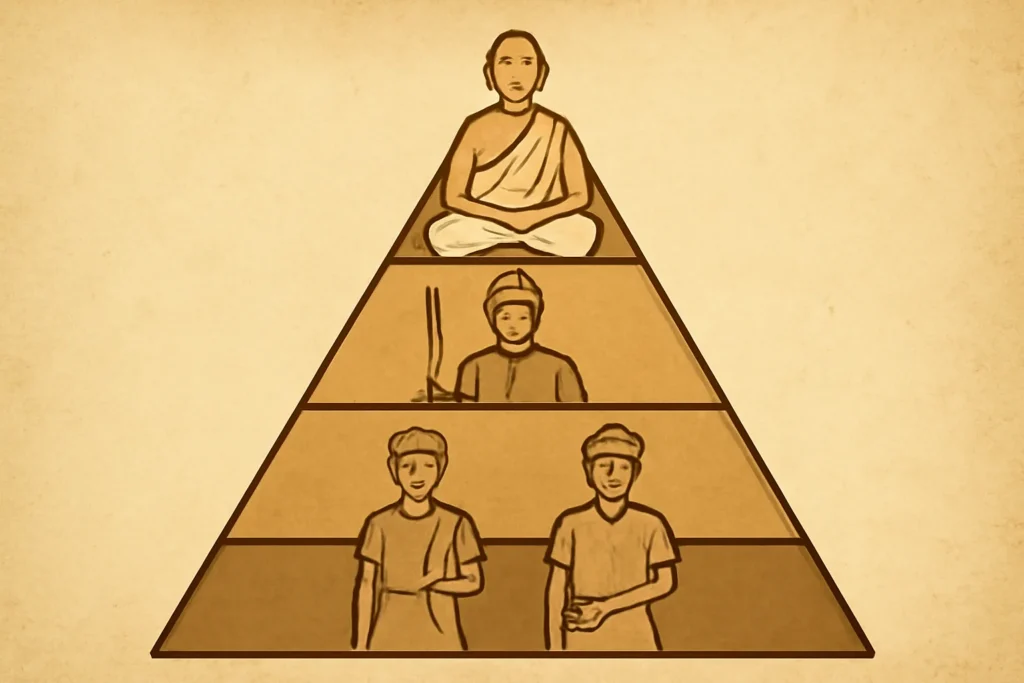
The earliest textual articulation often cited in discussions of caste is the notion of varna, a fourfold division described in some parts of the Vedic literature. The traditional schema lists four broad groups: Brahmins (priests and scholars), Kshatriyas (warriors and rulers), Vaishyas (farmers, merchants, artisans), and Shudras (laborers and service providers). In its most idealized form, the varna system speaks to a division of labor, ritual status, and moral duties. However, many scholars emphasize that the late Vedic and post-Vedic periods show a more fluid set of social distinctions than a rigid, universally applicable ladder. The text of the day often reflects idealized categories that could broaden, narrow, or shift in response to historical circumstances.
Over centuries, the school of thought surrounding varna interacted with local social practices, regional political formations, and evolving religious movements. As a result, the social landscape became more intricate than a single four-tier model. Instead of a single, centrally codified system, what emerged across large parts of the Indian subcontinent was a layered tapestry of birth-based groups, often linked to occupations and communities, each carrying its own set of rules, customs, and expectations.
From Varna to Jati: The Social Fabric Expands
In practice, the social structure known to many scholars as the jati system operated alongside, and sometimes within, the broad varna framework. Jati refers to birth-based communities with specific genealogies, endogamous marriage rules, and particular occupations. Across different regions, thousands of jatis developed, each with distinctive ceremonies, dietary practices, and social networks. The relationship between varna and jati was not always harmonious or linear; rather, caste identity often mapped onto the ground realities of village life, trade networks, guilds, and local power structures.
The emergence of the jati-centric world helped explain why occupational specialization persisted across generations even when political authority shifted. Some jatis maintained hereditary crafts—metalwork, weaving, agriculture, temple service, and trade—while others migrated or adapted to new opportunities. The endogamy principle—marriage within a defined social circle—helped reinforce group cohesion but also contributed to social insulation. This combination of birth, occupation, ritual purity, and social policing produced a complex hierarchy that could vary substantially from one region to another.
Medieval and Early Modern Transformations
Religious Movements and Reformers
While caste is often linked to ancient texts, its social relevance remained highly dynamic through the medieval period and into the early modern era. The Bhakti movement, which emphasized devotion and direct relationship with the divine, frequently challenged rigid caste boundaries by stressing personal faith over ritual status. In some regions, devotional poets and saints celebrated the universality of spiritual experience, while still operating within Hindu communities that maintained caste distinctions. Other reform movements, such as strands of Vedantic revival, Vaishnavism, or Shakta traditions, offered alternative moral imaginaries that could bypass, reinterpret, or resist caste hierarchies in practice.
Concurrently, some reform networks rejected ritual purity codes and caste exclusivity as impediments to spiritual and social flourishing. In several locales, rulers and merchants patronized temple complexes, agricultural improvement, and charitable institutions that served multiple caste groups, thereby enabling cross-cutting social ties. Yet, at the same time, the social fabric often retained a pattern of hierarchy in which veneration, access to sacred spaces, and certain occupations were linked to specific caste identities.
Empire, Urbanization, and Occupational Diversity
The medieval and early modern horizon saw significant urban growth, new forms of commerce, and the expansion of territorial polities. The rise of merchant guilds and urban craftspeople created spaces where client networks, patronage, and guild loyalties could intersect with caste identities. In many regions, a city’s social life was organized around caste-based networks that controlled access to grain markets, landholding, temple resources, and educational opportunities. The result was a pattern of occupational stratification that could coexist with flexible mobility in other domains.
It is important to recognize that the caste system’s reach did not imply total rigidity. Inter-caste marriages, ritualized hospitality, and occasional social mobility occurred, though these shifts were often bounded by local norms and community pressure. The historical record in various regions shows both accommodation and resistance: some communities opened doors through education, while others fought to preserve exclusive rites and economic control. The interplay between tradition and change created a dynamic social order in which caste remained a central, though contested, axis of identity.
Colonial Encounters, Legal Codification, and Reform
Census, Law, and the Reconfiguration of Social Order
The encounter with British colonial rule in the 18th and 19th centuries introduced new administrative technologies and legal concepts that reshaped caste dynamics. The census efforts and legal codifications categorized people according to caste and tribe, sometimes consolidating and solidifying identities that had previously been more fluid at the village level. Colonial authorities often used caste distinctions to organize labor, taxation, and governance, but they also inspired reform movements focused on social justice and human dignity.
The period saw debates about untouchability, ritual pollution, and the rights of lower-caste communities. Social reformers began to document the lived realities of caste oppression and to advocate for changes in education, property rights, and access to public institutions. Some reformers argued for a reformed Hindu social order whose ethical core could be reinterpreted to promote inclusion, while others encouraged conversions to other faiths as a pathway to emancipation from caste-based stigma.
Critiques and Reform Movements
The 19th and early 20th centuries produced a constellation of reform movements that challenged caste hierarchies from various angles. Intellectuals, reformers, poets, and political activists argued that caste should not determine a person's dignity or legal rights. Institutions such as Brahmo Samaj, Arya Samaj, and other reform societies promoted ethics of equality, education, and social responsibility. Dalit writers and activists began to articulate a critique of caste oppression and to demand legal protections and social opportunities.
The reform trajectory also intersected with the rise of nationalist politics. Indian independence leaders debated the role of caste in nation-building. Some saw caste as a social liability that could hinder unity, while others argued for preserving cultural diversity within a pluralistic polity. In any case, the era witnessed the emergence of constitutional and legal instruments that would eventually shape modern India’s approach to caste.
Structure, Daily Life, and Social Practices
Occupational Stratification and Endogamy
The persistence of occupational stratification was central to how the caste system functioned as a social order. Many communities maintained hereditary crafts and professions, from agricultural labor to metalwork, weaving, and temple service. The expectation of endogamy—marrying within a defined caste or jati—helped sustain lines of labor specialization and social memory across generations. At the same time, regional variations meant that some groups altered occupations or integrated with other communities for economic gain, especially in urban settings or under changing political economies.
The caste system also organized access to education, temple rites, ritual authority, and political influence. In some places, caste councils or customary courts administered community norms, resolving disputes about marriage, inheritance, and ritual status. In others, formal courts or colonial-era legal institutions took on dispute resolution, sometimes reconfiguring who could access land, capital, or state resources.
Ritual Purity, Dietary Rules, and Social Boundaries
A distinctive dimension of this social fabric is the language of ritual purity and impurity. Practices around purity have historically determined who could participate in certain ceremonies, who could touch sacred objects, and who could share meals with whom. These rules could reinforce social boundaries but were not identical across regions or eras. Dietary restrictions, temple participation, and codes of behavior varied by caste, sometimes enabling exclusive social circles while at other times offering pathways to cross-caste exchange through devotional movements or patronage networks.
Across centuries, villagers, guild members, and religious communities negotiated boundaries in ways that reflected local economies and political realities. Fertile ground existed for both cooperation and conflict, with caste identity sometimes acting as a resource for solidarity and sometimes as a burden that limited mobility. The complexity of daily life under a caste system is best understood by examining case studies from different states and communities, rather than assuming a single national pattern.
Modern Implications: Law, Politics, and Equality
Constitutional Protections and Reservations
After India gained independence, the new Constitution enshrined the principle of equality before the law and prohibited discrimination on the basis of caste. Articles 14, 15, and 17 articulate the legal framework against caste-based inequality and untouchability. A landmark feature of modern policy has been the system of reservation or affirmative action designed to address historical disadvantage. In practice, the policy recognizes Scheduled Castes (SC), Scheduled Tribes (ST), and Other Backward Classes (OBC), with the aim of expanding access to education, employment, and political representation.
In addition to these categories, a newer EWS (Economically Weaker Sections) provision has been introduced to extend opportunities to individuals outside the traditional caste categories who face economic hardship. The policy landscape is intended to balance redress with universal rights, though it remains a subject of intense political debate and legal scrutiny in contemporary governance.
Affirmative Action and Social Mobility
The reservation system has yielded tangible gains in enrollment, graduation rates, and public sector employment for historically marginalized groups. It has also stimulated ongoing debates about merit, eligibility, and the scope of social inclusion. Critics contend that reservations can entrench identities in fixed categories or create tensions among different communities, while supporters emphasize the necessity of restorative justice and the practical benefits of education and representation for marginalized groups.
Over time, the idea of social mobility within the caste system has become more nuanced. Urbanization, higher education, and professional diversification have enabled many individuals to move beyond traditional occupational boundaries. Yet, caste identity can still influence social networks, marriage choices, and everyday life, even in modern cities. Human development indicators, economic status, and regional context interact with caste to shape outcomes in health, wealth, and access to opportunities.
In contemporary discourse, the caste question intersects with issues of gender, religion, ethnicity, and class. Some reformers advocate for a radical rethinking of caste, arguing that identities rooted in birth become barriers to equal citizenship in a modern, plural society. Others defend caste as a cultural heritage that should be harmonized with equality under law rather than erased. In practice, many individuals navigate a mixed landscape: they may celebrate caste identity in family and community spheres while embracing universalist values in education, public life, and global exchanges.
The movement of people who identify with Hindu communities has led to the global dispersion of caste ideas. In many diasporic settings, caste remains a salient marker of social belonging in ways that reflect both home-country traditions and host-country realities. Some immigrant communities maintain caste-based endogamy and ritual practices, while others experience fluidity as intermarriage, work, and education foster cross-cultural exchange. Transnational networks often preserve lines of solidarity and cultural memory, even when economic and political marginalization shifts the social balance.
Intersections with Religion, Caste, and Identity
Across different countries, the relationship between caste and Hindu identity takes varied forms. In some contexts, caste is primarily a social category within Hindu communities; in others, it becomes a political marker used in civic life, education, and public discourse. The global conversation about caste also engages with other religious and secular traditions, encouraging comparative insights into how social hierarchies are structured, contested, and reimagined.
Challenges, Reforms, and the Path Forward
Dalit Rights, Feminist Perspectives, and Intersectionality
A sustained and evolving part of the caste conversation centers on the rights and voices of Dalit communities and women within caste frameworks. Intersectional analyses highlight how caste intersects with gender, class, disability, and regional identity, shaping unique forms of discrimination and resistance. Grassroots organizing, literary and artistic expression, and legal advocacy continue to push for both social dignity and concrete equity.
Education, Economic Opportunity, and Social Inclusion
Education is widely regarded as a critical engine for change. Expanding access to quality schooling, higher education, and productive employment can alter the long-term trajectory of families and communities affected by caste-based disadvantage. In parallel, broader social initiatives—ranging from anti-discrimination programs to inclusive curricula and public awareness campaigns—seek to reduce stigma and promote a shared sense of citizenship. The aim is not only to grant formal equality but to foster inclusive norms in everyday life.
Key Concepts and Glossary
Varna: The broad fourfold categories traditionally described in Hindu philosophy and social theory.
Jati: Birth-based communities or sub-castes within the varna framework; often linked to occupation and endogamy.
Untouchability: A historically stigmatized practice restricting social interaction with certain groups; legally prohibited in modern India.
Scheduled Castes (SC): Communities identified in the Indian Constitution as historically disadvantaged, eligible for affirmative action.
Scheduled Tribes (ST): Indigenous or tribal communities recognized for targeted support under policy programs.
Other Backward Classes (OBC): A broad category of non-scheduled castes identified for social and educational measures.
Reservation: Quotas in education and government jobs designed to promote access for disadvantaged groups.
EWS: Economically Weaker Sections, a category added to broaden inclusion beyond caste lines in some contexts.
Envisioning a Complex Social Future
The caste system in Hindu society remains a deeply debated topic, one that touches on history, ethics, politics, and human rights. The tension between preserving cultural diversity and ensuring universal equality is not easily resolved, but it is a live issue in classrooms, courts, parliaments, and communities around the world. The history of caste provides a reminder of how social categories emerge, endure, and transform under pressure from reform, economic change, and globalization. The social structure of caste continues to shape life in surprising ways—especially in rural economies, urban neighborhoods, and diaspora networks—where tradition and modernity mingle in everyday choices about work, marriage, education, and civic engagement.
As scholars, activists, and policymakers analyze these trends, it is crucial to preserve a nuanced view that recognizes both the enduring significance of caste in many lives and the ongoing possibilities for advancement, inclusion, and shared citizenship. This means engaging with historical evidence, listening to diverse voices within Hindu communities, and supporting policies and programs that promote dignity, equality, and opportunity for all.
In sum, the caste system in Hindus—encompassing varna, jati, and contemporary social practice—has shaped and continues to shape social life across centuries. Its study helps illuminate how culture, religion, economy, law, and politics intersect, sometimes reinforcing division, sometimes furnishing tools for solidarity and reform. By examining both the past and the present, we can better understand how individuals and communities navigate a world where identity and opportunity are inseparable from history.







Leave a Reply