What Are the Main Religions in the World? A Comprehensive Guide
Across the globe, people follow a wide array of belief systems that shape cultures, ethics, and daily life. This guide explores the major religions, their core beliefs, practices, historical roots, and how they influence societies today. We will look at the largest faiths by adherents, but we will also consider traditional, indigenous, and newer religious movements that collectively shape the global spiritual landscape. By examining different traditions, we gain a broader view of what are the main religions in the world and how they relate to one another in an increasingly connected era.
In discussing the question what are the world’s leading faiths, it is important to recognize that estimates vary. Differences in counting rituals, membership categories, and regional affiliations can shift numbers by tens or even hundreds of millions. Nevertheless, a few traditions stand out as having the broadest reach and the deepest historical influence. This article uses widely cited ranges to offer a coherent picture of the global religious landscape.
Global Landscape of Faiths
Religious affiliation is often connected to geography, history, language, and culture. The following overview highlights the broad categories of belief, their distinctive features, and how they manifest in everyday life across continents. Readers should note that many people participate in multiple traditions or blend beliefs in personal ways, producing diverse expressions of faith within a single region.
Major World Religions by Adherents
Christianity
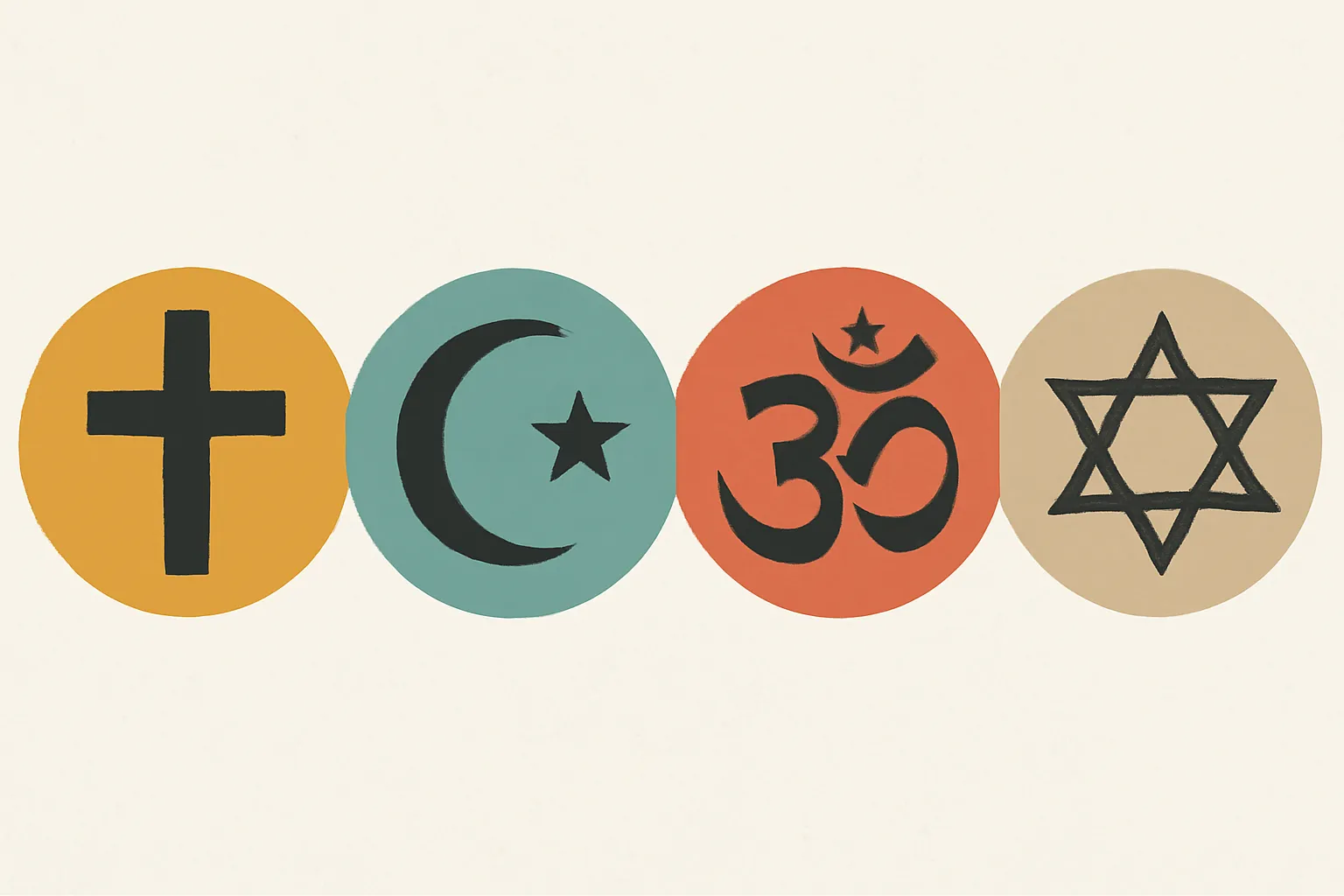
Christianity is one of the oldest and most widely practiced monotheistic religions in the world. It centers on the life, teachings, death, and alleged resurrection of Jesus of Nazareth. The Bible is the primary sacred text for most Christians, though different traditions interpret scripture in distinct ways.
Branches: The three broad families are Catholicism, Orthodoxy, and Protestantism, with numerous sub-denominations and communities around the world.
Core beliefs: belief in the Trinity (Father, Son, Holy Spirit), the of Jesus, salvation by grace, and the authority of scripture.
Practices: regular worship services, baptism, communion or the Eucharist, prayer, and service to others.
Global footprint: Christianity spans the Americas, Europe, Africa, and parts of Asia, with regional cultures shaping ritual life and liturgy.
Within the Christian family, there are a wide range of liturgical styles, theological emphases, and church structures. Some communities emphasize sacraments and tradition, while others prioritize evangelism, social justice, or contemplative practice. Across cultures, Christians observe a calendar of feasts and seasons—such as Christmas and Easter—that bind communities with shared memory and meaning.
Islam
Islam is a monotheistic faith based on the revelations received by the Prophet Muhammad, which Muslims believe are compiled in the Qur’an. The tradition also draws on the sayings and actions of the Prophet in the Hadith literature. The central practice is to live according to the will of God (Allah) and to submit to a life oriented toward righteousness.
Branches: The two largest groups are Sunni and Shia, with other movements such as Ibadi and reformist currents.
Five Pillars: Shahada (profession of faith), Salat (prayer), Zakat (almsgiving), Sawm (fasting during Ramadan), Hajj (pilgrimage to Mecca).
Practices: daily prayers facing Mecca, fasting during Ramadan, charitable giving, modest conduct, and pilgrimage when possible.
Global footprint: Islam is deeply rooted in the Middle East, North Africa, South Asia, and parts of Southeast Asia; growing communities are found in Europe and the Americas due to migration and conversion.
Islamic culture often emphasizes community (the ummah), social justice, and ethical behavior in personal life, business, and governance. The diversity within Islam reflects regional history, local languages, and cultural practices, making the faith vibrant and multifaceted.
Hinduism
Hinduism is a vast and pluralistic religious tradition that encompasses a wide spectrum of beliefs, rituals, and philosophical schools. It is not centered on a single founder or book but is transmitted through sacred texts, temple worship, and diverse devotional practices.
Core ideas: karma (the law of action and consequence), dharma (cosmic and social order), and the aim of moksha (liberation from the cycle of rebirth).
Texts: the Vedas, Upanishads, Bhagavad Gita, and epic narratives such as the Ramayana and Mahabharata, along with regional scriptures.
Branches: wide-ranging traditions including Vaishnavism, Shaivism, Shaktism, and Smartism, among others.
Practice: puja (worship), temple rituals, pilgrimage to sacred sites, yoga and meditation, and a rich calendar of festivals such as Diwali and Navaratri.
Because Hinduism embraces many paths, adherents may focus on different deities, philosophies, or practices. The result is a tapestry of regional expressions—each contributing to a global understanding of how people seek spiritual truth, ethical living, and harmony with the cosmos.
Buddhism
Buddhism arose in the Indian subcontinent and spread across Asia, evolving into multiple schools and practices. It is often described as a non‑theistic or non‑dual path that centers on the alleviation of suffering through insight and practice.
Core teachings: the Four Noble Truths and the Eightfold Path, together with concepts such as anatta (no-self) and anicca (impermanence).
Schools: prominent streams include Theravada (the way of the elders), Mahayana (which includes Zen and Pure Land), and Vajrayana (Tibetan Buddhism).
Practices: meditation, ethical precepts, monastic life (in many traditions), and a rich liturgical life tied to holidays like Vesak (Buddha’s birthday).
Across its many forms, Buddhism invites practitioners to cultivate wisdom, ethical conduct, and compassionate action. Its historical reach—through East Asia, South Asia, Southeast Asia, and beyond—has given rise to a wide array of temple architectures, meditation techniques, and scholarly traditions.
Folk and Traditional Religions
Indigenous and Local Beliefs
Folk religions and indigenous belief systems illuminate how communities interpret nature, ancestry, and social responsibility. These traditions often live alongside major world faiths, creating intricate blends that are deeply rooted in local soils and histories.
Geographic reach: large in sub-Saharan Africa, parts of East and Southeast Asia, the Pacific, and the Americas, where communities maintain customary religious practices and rituals.
Key features: ancestor reverence, animism, reverence for nature, sacred calendars, divination, and rites of passage.
Interactions with other faiths: many adherents engage in syncretic practices, weaving elements of Christianity, Islam, Buddhism, or Hinduism into traditional frameworks.
These traditions contribute a vital dimension to religious life by anchoring communities to a sense of place, memory, and responsibility for communal well‑being. They also demonstrate how belief systems adapt over time while preserving distinctive identities.
Jainism
Jainism is a distinct indian religion focused on non-violence and strict ethics. It emphasizes the sanctity of all living beings and the path to liberation through disciplined conduct and spiritual discipline.
Practices: rigorous dietary and behavioral practices for many adherents; strict purification rituals; respect for ascetic monks for some communities.
Community: two major orders—Digambara and Svetambara—reflect differences in clothing, scripture interpretation, and monastic rules.
Sikhism
Sikhism emerged in the 15th century in the Punjab region and is rooted in the teachings of ten Gurus. The Guru Granth Sahib is the eternal scripture and central spiritual guide for Sikhs.
Beliefs: belief in one formless God, the equality of all humans before the divine, and the importance of living a truthful, service-oriented life.
Practices: the five Ks (distinctive articles of faith), community meals in the langar, daily prayer, and honest work.
Ethical emphasis: social justice, defense of the vulnerable, and community service as spiritual obligations.
Shinto represents the indigenous religious tradition of Japan. It centers on reverence for kami (spirits associated with natural forces and ancestors) and a culture of ritual purity and seasonal celebration.
Practices: shrine visits, purification rites, seasonal festivals, and offerings to kami at sacred sites.
Culture: Shinto has shaped Japanese aesthetics, ceremonies, and social life, often coexisting with Buddhism in a syncretic fashion.
Texts: unlike some other world religions, Shinto relies more on practice, ritual, and mythic narratives preserved in temple traditions and local lore rather than a single universal scripture.
Taoism (Daoism) and Confucian Influences
Taoism (also Daoism) is a major tradition in China and beyond, often complemented by Confucian ethics and Chinese folk religion. It emphasizes living in harmony with the Dao (the Way) and cultivating vitality through practices like meditation, inner alchemy, and ritual
Foundational ideas: harmony with nature, humility, and the cultivation of balance through routines that align with seasonal cycles and cosmic order.
Practices: rituals at temples and homes, qigong, tai chi, and the worship of various deities and ancestral figures.
Influence: Daoist ideas have deeply influenced East Asian art, medicine, philosophy, and martial traditions; many people incorporate Daoist or Confucian practices into daily life without declaring affiliation to a single organized church.
Regional Patterns and Cultural Context
The distribution of faiths often mirrors historical forces, migration, and cultural exchange. The following notes illustrate how major traditions interact within specific regions and how local practices shape religious life.
Africa: Christianity and Islam are strong across many countries, with vibrant traditional beliefs persisting in villages and rural towns. Interfaith collaboration, youth programs, and social services are common forms of engagement.
South Asia and Southeast Asia: Hinduism, Islam, Buddhism, and various folk traditions intersect in complex ways. Pilgrimage sites, temple complexes, mosques, and monasteries anchor local life and regional identity.
Europe: Historically Christian, Europe now hosts growing secular and pluralistic communities, along with immigration-driven religious diversity that includes Islam, Hinduism, and Sikhism in many urban centers.
Americas: The Americas feature a mix of Christian traditions, Indigenous spiritualities, Afro-descendant religious practices, and a growing array of secular and interfaith initiatives.
Oceania: Christianity remains widespread, but Indigenous beliefs and new spiritual movements contribute to a plural landscape, especially in Australia and parts of the Pacific Islands.
Historical Roots and Interfaith Encounters
Religions did not emerge in isolation. They arose within ancient civilizations and developed over centuries through contact, trade, conquest, and migration. These encounters often produced new forms of spirituality, philosophical cross-pollination, and shared symbols that transcended borders.
Exchange and syncretism: across continents, people blended elements of different faiths, sometimes integrating rituals, ethical norms, and sacred narratives into hybrid practices that remain meaningful today.
Texts and languages: translations, commentaries, and debates about sacred texts helped spread ideas while shaping local interpretations and schools of thought.
Law and politics: the relationship between religion and the state has changed dramatically across eras, from theocratic systems to secular democracies that protect freedom of belief for all citizens.
Religions in the Modern Era: Diversity, Dialogue, and Change
The contemporary world presents both opportunities and challenges for religious life. Pluralism and interfaith dialogue allow people to engage with others’ beliefs in constructive ways, while debates about secularism, religious freedom, and moral questions continue in many societies.
Nonreligious and secular worldviews: atheism, agnosticism, humanism, and secular ethics are prominent in urban centers and universities, shaping debates about science, education, and public policy.
Interfaith engagement: many communities pursue mutual learning, joint service projects, and shared ritual spaces to promote peace and understanding.
New religious movements: since the 19th century, dozens of new streams have emerged—ranging from New Thought and Neo-Pagan paths to universalist or ecumenical movements—each contributing to spiritual experimentation and social discourse.
Across the world, sacred texts and oral traditions shape beliefs and rituals. While each tradition has its own vocabulary, many share a commitment to ethical living, human dignity, and the search for meaning in life.
Christian Scriptures: the Bible (Old and New Testaments) with diverse canons depending on the tradition.
Islamic Sources: the Qur’an as the central revelation; the Hadith literature providing context and guidance.
Hindu Texts: the Vedas, Upanishads, Bhagavad Gita, the epic narratives, and devotional literature across schools and languages.
Buddhist Canon: diverse canons, including the Pali Canon in Theravada and numerous sutras in Mahayana and Vajrayana traditions.
Judaism: the Torah, the Talmud, and later rabbinic writings that illuminate law, ritual, and ethics.
Other traditions: the Guru Granth Sahib in Sikhism, Jain Agamas, Bahá’í writings, Daoist scriptures, and more, each offering a pathway for contemplation and action.
Ethical Frameworks and Daily Practice Across Faiths
While doctrines vary, many religions share a commitment to ethical living, care for others, and reflection on one’s actions. The daily practice of faith often includes rituals, dietary rules, charitable acts, and community life that nurture personal growth and social responsibility.
Ritual calendars: years are punctuated by festivals, fasts, pilgrimages, and seasonal ceremonies that anchor communities in shared time and memory.
Rites of passage: birth, coming-of-age, marriage, and death rites mark transitions and transmit cultural and spiritual values to younger generations.
Ethical codes: across traditions, people seek to balance personal desire with the common good, tending toward compassion, honesty, and restraint in various contexts.
Religion, Culture, and Social Life
Religions influence family life, education, art, music, and national holidays. They inform ideas about justice, mercy, and responsibility toward the vulnerable. In many communities, religious and cultural identities are deeply intertwined, shaping how people view authority, law, and civic life.
Family life: marriage norms, child-rearing practices, and the transmission of language and custom are often guided by religious expectations.
Education and scholarship: religious schools, seminaries, and monastic institutions have historically been centers of learning and inquiry.
Arts and festivals: architecture, music, literature, theater, and visual arts frequently reflect sacred themes and historical memory.
Religious Diversity and Dialogue Today
In an era of rapid communication and migration, the world’s most influential religions engage with each other through dialogue, study, and cooperative action. Interfaith initiatives aim to build mutual understanding, while debates about faith and modern life continue in classrooms, courts, and community centers.
Interfaith dialogue: organized forums, educational programs, and shared service projects help reduce conflict and foster respect for religious difference.
Religious freedom: many societies strive to protect the rights of individuals to choose or change their beliefs without coercion, while balancing other rights and public interests.
Future trends: ongoing globalization, digital media, and changing demographics are likely to shape how the world’s main religions adapt while maintaining core identities.
In sum, the question what are the main religions in the world can be framed as a study of a few large, historically influential traditions—the major world religions—alongside a rich array of local, indigenous, and newer spiritual paths. Together, they form a complex spectrum of belief, practice, and meaning that continues to evolve as people seek answers to timeless questions about existence, ethics, and community.

 Por Laura Jara