What Does the Torah Mean? A Clear Guide to Its Meaning and Significance
The word Torah sits at the center of Jewish life and learning, and its meaning is both simple in its etymology and rich in its implications. In Hebrew, Torah is often glossed as instruction or teaching, with a sense of guiding a person or a community toward a particular way of living. But to say merely that the Torah is a set of rules would miss much of its depth. For many people, what does the Torah mean extends beyond a strict legal code to include a covenantal relationship, a story of origins, a framework for ethics, and a living tradition that continues to shape interpretation and practice today. In Jewish thought, the term acquires a layered meaning: it can refer to the written text, the oral explanations that accompany it, and the entire stream of Jewish teaching that flows from revelation, interpretation, and communal memory. This article provides a clear guide to the many facets of the Torah’s meaning, its sources, and its enduring significance.
The core idea: Torah as instruction, revelation, and guide
At its core, the Torah is understood as divine instruction that invites obedience, reflection, and moral growth. In classical Jewish thought, the Torah is not merely a historical artifact but a living document that speaks across time. When people ask what does the Torah mean for daily life, they are often seeking a bridge from ancient text to contemporary conduct. The answer is not a single prescriptive rule; it is a pattern of guidance that touches belonging, justice, family life, ritual practice, and ethical responsibility. In this sense, the Torah is both a repository of divine revelation and a dynamic framework that invites conversation, interpretation, and ongoing application in new circumstances.
Origins and linguistic meaning
To understand the Torah’s meaning, it helps to start with its language. The noun Torah derives from a root meaning to guide or to teach, suggesting that the text’s purpose is to point a person toward a path of truth and virtue. In Jewish tradition, the term often carries two related senses: the written teachings found in the five books and the broader body of interpretations that explain how those teachings apply across generations. The distinction between Torah she-be'ktav (the written Torah) and Torah she-be'al peh (the oral Torah) is central to how many communities read and study these ideas. The written Torah comprises five books, traditionally known as the Pentateuch, while the oral Torah includes rabbinic interpretations, discussions, and legal codes that arose as communities wrestled with applying the written text to new situations.
In this sense, the question what does the Torah mean can be answered at several levels. For some readers, the Torah is primarily a historical record of divine revelation and human response. For others, it is a living guide whose interpretive layers are essential to ethical life and communal identity. The layered meaning of Torah interpretation—from peshat (plain sense) to derash (interpretive midrash) and to the modern critical and ethical readings—shows how flexible and enduring the text remains.
Written Torah versus oral Torah: two streams of meaning
Many discussions about what the Torah means hinge on the distinction between the twofold stream that Jewish tradition recognizes: the written Torah and the oral Torah. Each stream contributes to a comprehensive understanding of the divine will and human obligation.
Five Books of Moses (Genesis, Exodus, Leviticus, Numbers, Deuteronomy) form the core corpus that Jews call the Chumash in Hebrew and the Pentateuch in Greek.
The written text is the basis for a vast array of laws, narratives, genealogies, and commandments that shape Jewish life.
Many passages are read in worship, study, and public instruction, making the written Torah a living document within communities.
Oral Torah
The oral Torah comprises discussions, interpretations, and legal rulings handed down alongside the written text, initially through memory and later through formal compilation.
Classical rabbinic literature—such as the Mishnah, the Talmud, and later codes of law—develops the how-to of living according to Torah principles in changing circumstances.
The oral tradition supplies the details, clarifications, and methods by which the broad commandments of the written Torah become practical obligations.
Together, these streams provide a comprehensive answer to the question what does the Torah mean by showing how instruction appears in both text and dialogue. The unity of source material—divine revelation coupled with human interpretation—forms the bedrock of Jewish law and ethics.
The Five Books of Moses: the Torah in Jewish tradition
In Jewish life and liturgy, the term the Torah is most often used to refer to the Five Books of Moses, which begin the Jewish Bible and establish the narrative and legal framework that runs through later writings. These five books are frequently studied as a complete unit, but each book also has its own themes, voices, and questions that contribute to the overall sense of Torah meaning.
Genesis (Bereishit) introduces creation, the patriarchs and matriarchs, and the earliest stories of covenantal relationship with God.
Exodus (Shemot) follows the liberation from Egypt, the revelation at Sinai, and the giving of the Ten Commandments.
Leviticus (Vayikra) emphasizes priestly service, ritual purity, and the codes of holiness that govern worship and moral behavior.
Numbers (Bamidbar) records the wandering in the wilderness, census data, and the challenges of maintaining faith amidst uncertainty.
Deuteronomy (Devarim) consists of sermons and restatements of the law as the community prepares to enter a new life in the land, reaffirming covenant obligations.
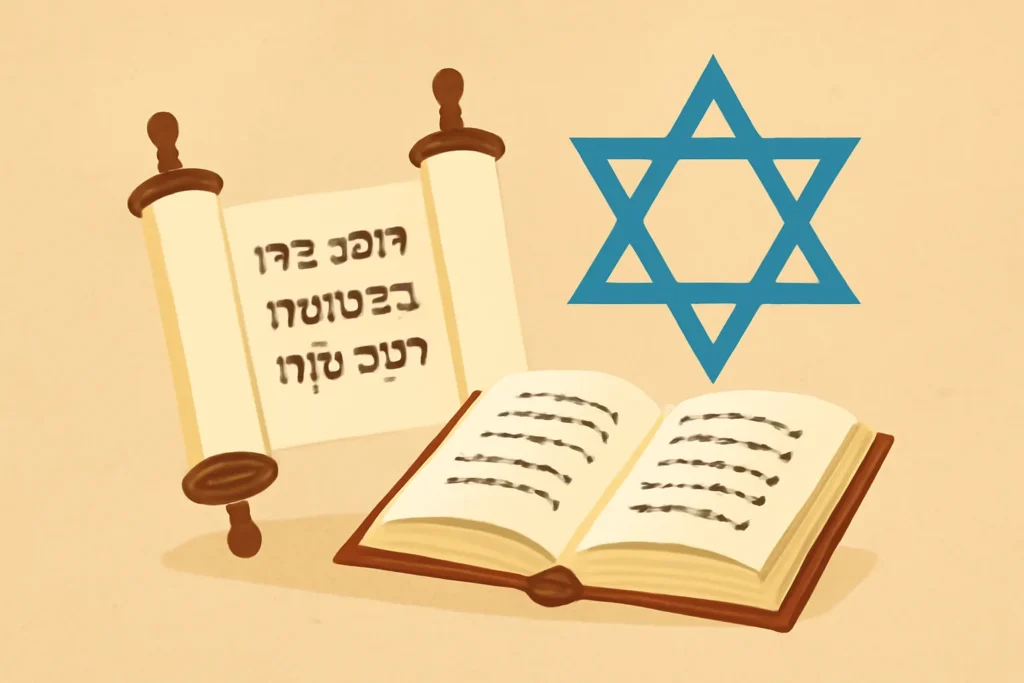
In synagogue life, the Torah scroll—a hand-written copy divided into the five books—travels between the bimah (reading platform) and the people during services. Its public reading, often through weekly portions known as parashot, makes the text a centerpiece of communal worship and study. Understanding the Torah meaning in this context means recognizing its role as both a source of commandments and a narrative of identity that has sustained Jewish communities for millennia.
Interpretative approaches: how the Torah is read and understood
Across history, interpreters have approached the Torah meaning from multiple angles. While the text itself provides the foundations, later readers have asked how its words apply today, how to resolve tensions between literal and ethical readings, and how to harmonize ancient instructions with modern life. Broadly, these approaches can be categorized as follows:
Peshat, derash, and midrash: a spectrum of interpretation
Peshat aims for the plain, contextual sense of a passage—what the text seems to be saying in its immediate language and situation.
Derash (often translated as "interpretive homily") seeks deeper or allegorical meaning, exploring how a verse might illuminate broader ethical or spiritual themes.
Midrash is a broader tradition of narrative expansion and commentary that fills in gaps, reconciles contradictions, and creates cohesive stories around biblical episodes.
Over centuries, famous commentators have helped shape the Torah meaning for generations. Rashi (Rabbi Shlomo Yitzchaki) is known for his concise, accessible explanations; Ramban (Moses ben Nachman) emphasizes philosophical and mystical dimensions; the medieval authorities laid groundwork for legal codes that govern daily life. In modern times, scholars bring historical-critical perspectives, ethical readings, and critical theology that engage with questions of authorship, redaction, and historical context, all while seeking to preserve the text’s integrity and relevance.
Ethical and legal readings
Many scholars and traditions treat the commandments as a moral architecture—guiding behavior toward justice, mercy, and communal responsibility.
Other readers highlight the text’s insistence on righteousness, care for the vulnerable, and the obligation to pursue peace in society.
Both approaches illustrate how the Torah meaning can be lived in everyday decisions, civil life, and interpersonal relations.
Ultimately, reading the Torah involves balancing respect for tradition with thoughtful inquiry. The question what does the Torah mean in a contemporary setting invites readers to weigh duration and change, revelation and interpretation, and responsibility to others in the present moment.
Torah and Halakhah: law as a living framework
In Jewish practice, the relationship between the Torah as revelation and Halakhah (the body of Jewish law) is central. The commandments found in the written Torah provide the script, while the oral Torah and later legal codes supply the performance of those commands in real life. The result is a legal-ethical system that aims to harmonize belief, worship, and behavior.
Categories of mitzvot (commandments)
Positive commandments (de'oraita) require action—such as honoring parents, keeping the Sabbath, or giving charity.
Negative commandments (lo ta'aseh) prohibit certain actions—such as theft, false testimony, or murder.
Many mitzvot span ritual, ethical, civil, and communal dimensions; some apply universally, while others are contingent on time, place, or status.
The practice of Torah-true living—that is, translating the ancient text into modern behavior—depends on interpretation, communal norms, and individual conscience. This is a dynamic process, not a static checklist. For many communities, the Torah meaning includes a commitment to justice, care for the vulnerable, and a responsibility to create a world that reflects shared values.
The meaning of the Torah also extends beyond a single tradition. In Christian circles, portions of the Pentateuch are part of the Old Testament and are read within the broader narrative of salvation history. In Islamic tradition, narratives about prophets and patriarchs appear across the Qur'an, with some stories echoing biblical accounts while presenting distinct theological emphases. These cross-cultural conversations illuminate what the Torah means in a wider religious landscape: a foundational text that shapes memory, ethics, and spiritual aspiration across communities.
In scholarly study, the Torah is also examined within its historical milieu: the ancient Near East, the emergence of monotheism, and the development of Israelite religion. Historians and theologians ask what does the Torah mean when considered alongside other ancient law codes, mythologies, and ritual texts. The result is a nuanced comprehension of Torah meaning that respects both continuity and change over time.
Historical context and manuscript tradition
Understanding the Torah meaning requires some awareness of how the text has been transmitted and preserved. The Masoretic text, finalized by Jewish scholars in the early medieval period, became the standard Hebrew text for most Jewish communities. The discovery of the Dead Sea Scrolls in the 20th century provided valuable manuscripts that shed light on the textual variation and interpretive practices that existed in late Second Temple Judaism. These findings deepen our appreciation for the Torah’s authority and its adaptability as readers encountered diverse circumstances.
Canon formation and reception
The process of recognizing a canonical set of scriptures involved debates, translations, and communal affirmation across centuries.
Reception history shows how readers in different eras adapt the text to new questions—ethical, political, ecological, and spiritual.
Different communities emphasize various parts of the Torah, shaping distinctive religious identities while remaining connected to a common core.
Thus, the question what does the Torah mean is not a single answer but a conversation across generations about authority, interpretation, and relevance.
Modern relevance: ethical teachings and everyday guidance
Many readers find that the Torah’s message remains deeply relevant to 21st-century life. Its emphasis on covenant, responsibility, justice, and compassion invites reflection on how one acts in family life, business, public policy, and environmental stewardship. The Torah’s ethic often centers on care for the vulnerable—the stranger, the orphan, the poor—which expands into social justice concerns such as equity, human rights, and the dignity of every person. When people ask how can the Torah inform contemporary ethics, they frequently point to passages and themes that emphasize mercy, honesty, generosity, and humility as guiding principles. In this sense, the Torah meaning is not only about ancient rituals but about creating a humane and just society.
Applications in daily life
Family and ritual life: honoring parents, caring for children, marking lifecycle events with meaningful rituals.
Social justice: fairness in economic life, care for the poor, and protection of the vulnerable.
Environmental and ethical conduct: responsibility toward the earth and other beings, reflected in laws about stewardship and restraint.
Learning and debate: a culture of study, questioning, and continuous growth that values intellectual humility and communal dialogue.
These practices illustrate how the Torah remains a living guide for personal development and societal arrangement. The idea that what does the Torah mean for us today is answered by translating ancient wisdom into compassionate action and responsible governance.
Common misunderstandings about the Torah
Several misconceptions circulate about the Torah meaning that can obscure its true nature. Addressing these misunderstandings helps readers encounter the text more clearly and with greater nuance.
It’s just a rulebook: While the Torah contains many commandments, it also offers stories, poetry, and moral reflection that shape meaning beyond legalism.
It is a static document: The written text is ancient, but interpretive traditions continuously engage it to address new questions and circumstances.
It is identical for all communities: Different Jewish denominations and communities emphasize different readings, liturgical practices, and legal philosophies, reflecting diverse expressions of the same core meaning.
Only men study the Torah: Across history, people of many backgrounds have studied and interpreted the text, contributing to a rich tradition of inclusive learning and debate.
Understanding these clarifications helps prevent reductions of the Torah meaning to a single genre or era, opening space for a more expansive engagement with the text.
Further study and resources
Readers who wish to explore the Torah meaning in greater depth will find a wealth of English translations, commentaries, and study guides that illuminate different aspects of the text. Here are some accessible entry points for serious study and thoughtful reflection.
Translations and textual study: A reliable English translation paired with notes helps readers grasp nuance in the text. Popular options include study editions that present the written Torah with commentaries.
Classical commentaries: Introductions to Rashi, Ramban, and other medieval authorities provide insight into how the Torah meaning has been interpreted across generations.
Modern scholarship: Works on the historical context, literary structure, and ethical themes offer a broad view of the Torah’s relevance today.
Liturgy and parashah study: Weekly Torah portions and associated readings help communities experience the text in communal cycles and personal study.
For readers seeking practical study options, local study groups, online courses, and synagogue libraries can be invaluable. In addition, reputable online repositories provide access to scholarly articles, translations, and primary sources that illuminate the many facets of the Torah meaning across traditions and eras.
Glossary: quick references to key terms
Torah: broadly, the divine instruction and the body of Jewish teaching, including both written and oral forms.
Torah she-be'al peh: the oral Torah, the interpretive and legal tradition that accompanies the written text.
Torah she-be'ktav: the written Torah, the five books of Moses comprising the core scriptures.
Chumash: the printed or scroll form of the five books, often with commentaries and translations.
Pentateuch: the Greek term for the first five books of the Hebrew Bible.
Parashah: the weekly Torah portion read in synagogue services.
Halakhah: the Jewish legal system that applies Torah commandments in daily life.
Mitzvot: commandments or good deeds described in the Torah and Rabbinic literature.
Peshat, Derash, Midrash: approaches to interpretation of biblical text (plain meaning, homiletic explanation, and narrative expansion).
Closing reflections: embracing a living tradition
The question what does the Torah mean invites ongoing inquiry rather than a single definitive answer. Its meaning emerges from a long conversation that engages text, tradition, history, and practice. For many, the Torah’s enduring appeal lies in its combination of revelation and interpretation, its emphasis on a covenantal relationship with the divine, and its call to live with integrity, mercy, and responsibility toward others. Whether approached as a narrative of origins, a legal code, or a universal ethical framework, the Torah remains a powerful source for reflection, debate, and action. In that sense, the Torah meaning is not confined to ancient pages but continues to inform and shape how people seek truth, justice, and dignity in the world today.








Leave a Reply