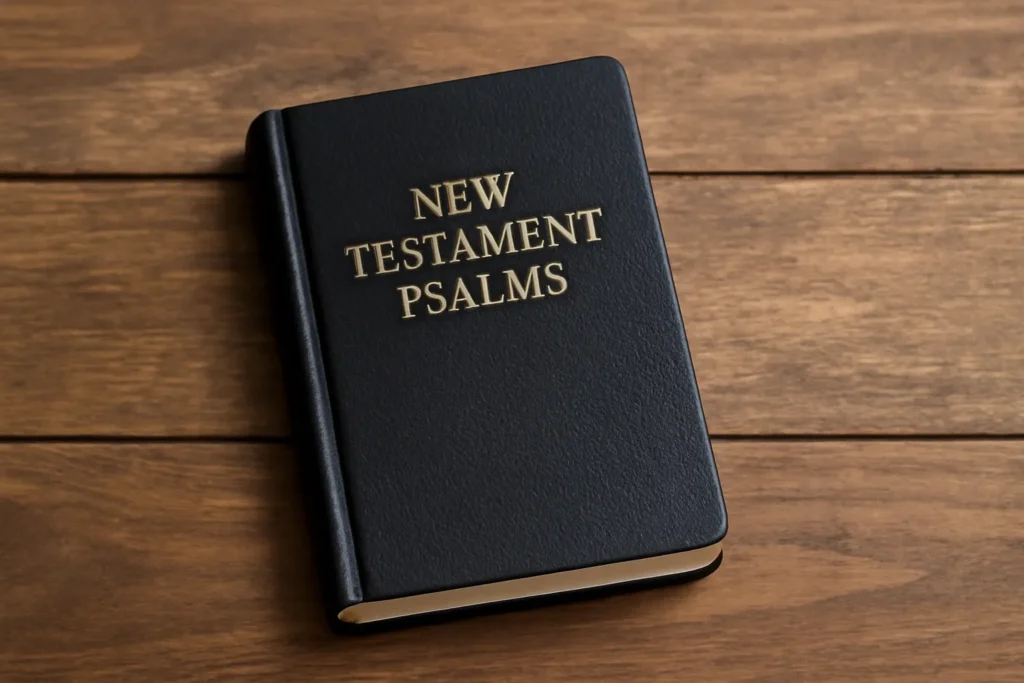
Welcome to a comprehensive guide that explores two foundational portions of the biblical library: the New Testament and the Psalms. While these two collections come from different genres and purposes—the New Testament as a compilation of early Christian writings about Jesus and the church, and the Psalms as a diverse book of prayers, hymns, and laments—their voices intersect in powerful ways. This article surveys their origins, structure, themes, and enduring influence, and it offers practical guidance for reading, teaching, and worship in contemporary contexts.
Overview: What are the New Testament and the Psalms?
The New Testament is the collection of writings that Christians regard as authoritative and transformative for faith and practice. It centers on the life, teachings, death, and resurrection of Jesus of Nazareth, and it expands outward to describe how early communities understood him as the Messiah and Son of God. The canonical corpus includes the four Gospels (narratives about Jesus’ life and ministry), the Acts of the Apostles, a broad set of epistles (letters), and the prophetic apocalypse of Revelation. The NT is not a single book but a diverse library written across several decades in the first century of the common era.
The Psalms, often called the Psalter, is a long collection of poems, prayers, and songs that expresses the range of human emotion before God: praise, thanksgiving, confession, lament, petition, and wisdom. Traditionally attributed to several authors—including King David as a central figure—the Psalms were composed over a broad time span in the ancient Israelite community. They functioned in worship, personal devotion, communal liturgy, and memory, offering language for faith in moments of celebration and times of suffering. The Psalter is typically organized into five major books within the book itself, and it plays a crucial role in both Jewish worship and Christian liturgical practice.
Origins and Formation
New Testament: Historical Context
The New Testament emerges from a vibrant, contested world in which Jewish expectations of God’s kingdom intersected with emerging beliefs about Jesus as the Messiah and the divine Son of God. The early Christian movement grew within the context of Second Temple Judaism, the Roman imperial milieu, and the Mediterranean world. The earliest layers include oral traditions about Jesus’ words and deeds, which were eventually written down by his followers. The needs of early believers—catechesis, community identity, instruction about ethics and leadership, and the expectation of Jesus’ return—helped shape the form and content of the writings that would become the NT canon.
Scholars often describe the process of formation as nonlinear and multi-layered. Some letters address specific congregational concerns, others aim to articulate a coherent Christology and ecclesiology, and the Gospels present distinct narrative angles on the same core events. The eventual canonical order—Gospels, Acts, Epistles, and Apocalypse—reflects both early Christian usage and the criteria that communities valued in determining which writings rightly spoke for the apostolic witness.
Psalms: Worship and Composition
The Psalms have their roots in the worship life of ancient Israel. They are a compilation of prayers and songs used in temple service, family devotion, and private piety. While many Psalms may have been composed by known authors, others are anonymous or linked to liturgical communities. The collection reflects a wide emotional arc—from jubilant hymns praising God to heartfelt laments that question God’s apparent absence or delay. The genre diversity includes royal psalms, wisdom psalms, penitential prayers, and didactic or enthronement motifs. Over time, the Psalter was remembered and reused, growing into a canonical book that endured across generations and survived multiple cultural shifts.
The Psalms function as a shared memory bank: they enable communities to speak to God with the language of their own experience, while also offering a prophetic voice that points toward a future hope. In Christian circles, many psalms have been interpreted through Jesus-centered or Christological lenses, especially those that seem to foreshadow or echo events in the life of Jesus.
The NT is typically divided into four major sections, each with its characteristic genres and purposes. Understanding these parts helps readers grasp how early Christians read and applied the message of Jesus in different situations.
The Gospels
Matthew emphasizes Jesus as the fulfillment of Hebrew prophecy and the Messiah who brings the kingdom through teaching and action. It contains strong teaching blocks and a focus on mission to Israel and the nations.
Mark presents a concise, action-packed narrative that highlights Jesus’ authority, suffering, and the mystery of the kingdom. It often uses a rapid pace and vivid scenes.
Luke offers a detailed, historically mindful account with special attention to marginalized groups, prayer, and the Spirit’s activity. It also continues into the Acts of the Apostles for a seamless narrative arc.
John presents a more reflective, theological portrayal of Jesus, emphasizing identity, eternal life, and the divine logos personified in Jesus.
The Gospels form the core narrative about Jesus and are frequently used as the basis for proclamation, teaching, and devotional reading in the church.
The Acts of the Apostles
The book of Acts recounts the early spread of the gospel after Jesus’ resurrection, focusing on key events, such as the Pentecost, the growth of churches in Judea, Samaria, and the Gentile mission conducted through leaders like Peter and Paul. It provides a bridge between the gospel narratives and the epistles, illustrating how the early church understood the implications of Jesus’ life and teaching for mission, community life, and ethics.
The Epistles
The epistles (letters) cover a broad range of issues: theology, pastoral guidance, church order, moral exhortation, and eschatology. Paul’s letters (e.g., Romans, 1 & 2 Corinthians, Galatians, Ephesians, Philippians, Colossians, 1 & 2 Thessalonians, and others) form a substantial block, but there are other letters attributed to or associated with leaders such as James, Peter, John, and Jude. The epistles address concrete communities in particular contexts, yet their theological claims and ethical exhortations have resonated across generations.
The General Epistles and Revelation
The General Epistles (Hebrews, James, 1-2 Peter, 1-3 John, Jude) are varied in style and emphasis, often addressing worship, perseverance, faith, and wisdom in the face of trials.
Revelation (Apocalypse) offers symbolic visions about cosmic conflict, ultimate triumph of God, and the final consummation of God’s kingdom. Its imagery has shaped Christian thinking about eschatology, worship, and the call to fidelity amid persecution.
The Psalms: Poetry and Prayer Across Time
The Psalms occupy a central place in the spiritual life of both Jewish and Christian communities. Their literary forms include songs, laments, thanksgiving, and royal praise. Studying the Psalter reveals patterns of human speech to God, and also demonstrates how biblical authors interpreted history and divine action through liturgical memory.
Lament Psalms: Crying out to God in distress, often with a plea for deliverance and a confident assertion of God’s faithfulness.
Praise and Thanksgiving Psalms: Expressions of joy and gratitude for God’s acts, creation, and faithfulness.
Royal Psalms: Portrayals of kingship, divine authority, and the Messiah’s reign in promise or realization.
Wisdom Psalms: Reflections on life, God’s law, and righteous living in the world’s order.
Imprecatory Psalms: Prayers for judgment or justice upon adversaries, often debated in interpretation for their ethical implications.
Penitential Psalms: Confession of sin and petition for mercy.
Messianic and Prophetic Psalms
Many psalms are read in Christian tradition as having messianic significance. Psalm 2, 22, 45, 110, and others are often cited in relation to Jesus’ life, death, and resurrection. The NT writers frequently quote or allude to these psalms to interpret Jesus’ ministry and to demonstrate the continuity between Israel’s Scripture and the events surrounding Jesus. In Jewish interpretation, these psalms hold a different but equally meaningful literary and devotional role, focusing on divine kingship, communal worship, and the covenantal relationship with God.
Liturgy and Worship
In ancient worship, the Psalter provided a lyrical language for communal prayer. In later Christian worship, psalms were integrated into liturgical cycles, chant, and congregational singing. The Psalms also inform modern devotional practices, such as reading a Psalm daily, using the Psalter for guided prayer, and incorporating psalms into personal meditations and music.
While the New Testament and the Psalms come from different moments and genres, they share deep theological themes that illuminate the character of God and the nature of human response. Some of the major threads include:
Covenant and Promise: The NT presents Jesus as the fulfillment of God’s promises to Israel, while the Psalms frame God’s steadfast love and faithfulness within the covenantal relationship with God’s people.
Messiah and King: The expectation of a Servant-King appears in prophetic and psalmic streams and is interpreted in the NT through Jesus’ life and mission, especially in terms of suffering, exaltation, and the kingdom of God.
Worship and Lament: The Psalms model a wide range of emotional expressions before God, from jubilant praise to painful lament, which the NT community adopted as a template for prayer and devotion in light of the life, death, and resurrection of Christ.
Righteousness and Justice: The Psalms frequently exalt God’s righteous ways, while the NT emphasizes living in light of the gospel, embodying justice, mercy, and love in the community of believers.
Hope and Eschatology: The Psalms contain confident declarations about God’s ultimate faithfulness, and the NT expands this into a robust eschatology—anticipating the fullness of God’s kingdom and the renewal of creation.
Canon, Textual Transmission, and Translation
A careful look at how these two collections became authoritative helps readers appreciate their enduring influence and the diversity of readings across time and cultures.
Formation of the Canon
The formation of the New Testament canon was a process shaped by usage, apostolic authority, and criteria of consistency with apostolic teaching. Early communities preserved, circulated, and eventually recognized a core set of writings as normative for faith and practice. The canon was more or less crystallized by the end of the 4th century, though discussions and variations persisted in different Christian traditions.
The Psalms were accepted into the Hebrew Bible (the Old Testament) well before the NT era. By the time Christian communities began circulating the NT writings widely, the Psalter was already a foundational part of Scripture for Jews and Christians alike, though its placement and use continued to be shaped by liturgical and doctrinal developments.
Manuscripts and Textual Criticism
Ancient copies of the New Testament and the Psalms exist in many manuscript traditions and languages, including Greek, Hebrew, Latin, Syriac, Coptic, and more. Textual criticism is the scholarly discipline that studies variations among manuscripts to determine what most closely reflects the original wording. For the NT, this work helps translators and readers understand how early texts circulated and how translations may reflect different manuscript families. For the Psalms, textual variation can reflect the different Hebrew manuscripts and the later Septuagint (the Greek translation) readings used in early Christian circles.
Key Translations and Their Influence
Septuagint (Greek Old Testament): This translation of the Hebrew Bible shaped NT writers’ familiarity with certain psalms and prophetic passages, affecting how early Christians interpreted Christological fulfillment.
Latin Vulgate: The medieval church’s standard Latin translation deeply influenced Western Christian tradition and liturgy, including the widespread use of psalms in worship.
English translations (e.g., King James Version, New International Version, English Standard Version, New Revised Standard Version): These translations have guided modern readership, academic study, and public worship for centuries, each with its own translation philosophy and textual basis.
Intersections Between the New Testament and the Psalms
Two of the most fruitful areas of study are how the NT uses the Psalms and how the Psalms themselves have shaped Christian thought and worship.
New Testament quotes and allusions: The NT writers quote and allude to the Psalms frequently, using them to interpret Jesus’ life and the Christian experience. Psalm 22 is often cited in relation to Jesus’ crucifixion, while Psalm 110 is linked to Jesus’ authority and priestly role.
Typology and fulfillment: Early Christians often read psalms as types or foreshadowings of Christ. This typological approach sees Jesus’ suffering, kingship, and triumph as fulfillments of psalmic language and themes.
Liturgy and worship synthesis: The early Christian communities borrowed the language of psalms to worship the risen Christ, creating a hermeneutic that sees Jesus as the center of the biblical story and the psalter as the expression of sustained prayer in light of the gospel.
Use in Liturgy and Devotion
Both the NT and the Psalms have profoundly influenced Christian worship, teaching, and personal devotion across traditions. Here are some ways this influence manifests in modern practice:
Lectionaries and readings: Churches often schedule readings from the NT alongside the Psalms in a weekly cycle or in special seasons such as Advent and Lent. This helps believers see continuity between the life of Jesus and the worship life of the people of God.
Psalms in hymnody: Many hymns and spiritual songs trace their roots to Psalm language, reframing ancient prayers for contemporary worship.
Doctrinal preaching: Passages from the NT and Psalms frequently appear in sermons to illustrate themes such as mercy, faith, endurance, and the hope of divine justice.
Personal devotion: Individually, readers turn to the NT for doctrinal clarity about Jesus and the gospel, and to the Psalms for the raw language of emotion before God—praise, lament, and supplication alike.
How to Study These Texts Today
Studying the New Testament and the Psalms can be deeply rewarding but also challenging. Here are practical strategies to foster understanding, reflection, and application.
Study Approaches
Historical-critical method: Examine the historical context, authorial intent, audience, and literary conventions to understand what a passage meant in its original milieu.
Canonical approach: Read passages in light of the entire Bible to see how the NT writings and the Psalms together contribute to overarching themes like the kingdom of God, salvation, and the character of God.
Typological and Christocentric readings: Look for patterns that point to Jesus or the church, especially in the OT/PSS relationship and in NT citations of the Psalms.
Literary analysis: Pay attention to genre, structure, parallelism in the Psalms, and the rhetorical devices in the NT letters and narratives.
Practical Steps for Readers
Set a reading plan that alternates between the NT and the Psalms to promote balance between doctrinal content (NT) and prayerful language (Psalms).
Use a reliable translation and compare multiple translations to gain a fuller sense of nuance.
Cross-reference NT passages with psalmic allusions to see how early Christians interpreted the psalms in light of Jesus’ life and mission.
Journal observations: Note questions, themes, and personal applications as you read, and reflect on how the text speaks into your life, church, and world.
Recommended Resources
Commentaries on the NT and the Psalms from reputable scholars and diverse traditions.
Concordances and interlinear editions to explore word-level meanings and semantic ranges.
Academic articles and books that address the relationship between the NT and the Psalms, as well as the history of canonical formation and translation.
Variations in Translation and Interpretation
Translations of the New Testament and the Psalms vary in how they render classic Greek manuscripts and Hebrew texts, leading to differing emphases in interpretation. Some translations prioritize a formal equivalence approach, striving to preserve exact wording and sentence structure, while others emphasize dynamic equivalence to convey thought-for-thought meaning in contemporary English. In reading both books, it can be helpful to consult multiple translations to gain a fuller sense of nuance and to understand how phrasing shapes interpretation.
Historical and Theological Significance
The New Testament marks a turning point in biblical history: it presents a narrative and a set of teachings that Christians consider the culmination and fulfillment of God’s redemptive work in history. The Psalms provide enduring language for worship, lament, praise, and trust, shaping Christian spirituality across centuries. Together, these two parts of Scripture form a dynamic dialogue between revelation and response: the NT reveals what God has accomplished in Christ, and the Psalms model the varied human response—worship, confession, petition—through which the church continues to engage God in every season of life.
Frequently Encountered Topics and Common Questions
Readers may come to the NT and the Psalms with questions about authorship, dating, interpretation, and applicability. Here are some common topics and concise clarifications:
Authorship: The Gospels have traditional attributions, but many scholars note internal and external evidence that invites careful consideration of authorship. The Epistles often bear clear connections to specific communities and leaders, though some details are debated. The Psalms are attributed to multiple authors, with David being a central figure, though not exclusively.
Dating: The NT texts were written across several decades in the first century. The Psalms span a broad historical window in ancient Israel, culminating in a final form that the community recognized within the Hebrew Bible.
Interpretive approaches: Readers vary from literal to allegorical to typological in their approach to the Psalms and NT prophecies. A balanced method often involves acknowledging historical context while also attending to contemporary application.
Worship and ethics: The NT emphasizes love, justice, and faithfulness in community life, while the Psalms provide the language of worship through which believers express joy, sorrow, and gratitude in response to God’s acts.
Conclusion: The Living Texts for Community and Faith
The New Testament and the Psalms are more than ancient writings; they are living documents that have shaped, and continue to shape, the faith, worship, and imagination of countless communities. The NT offers a narrative and teaching about Jesus Christ that forms the core of Christian identity and mission. The Psalms offer a dictionary of human emotion and a vehicle for prayer that has sustained believers across cultures and generations. Read together, they invite readers into a broader conversation about God, the world, and the meaning of life in light of divine revelation.
As you engage with these texts, you may discover that they push you toward deeper questions and more faithful living. You may find in the NT a call to trust in the crucified and risen Christ and in the Psalms a reminder that honest prayer, lament, and praise are essential to spiritual formation. Whether you study them for academic purposes, for devotional growth, or for teaching and preaching, the New Testament and the Psalms offer a twofold invitation: to know more about God and to respond more fully in faith, worship, and service.








Leave a Reply