The Via Dolorosa is the traditional route in Jerusalem associated with Jesus’ final walk to his crucifixion. It crosses the Old City from the area near the Lions’ Gate to the Church of the Holy Sepulchre, where Christian tradition places the sites of the crucifixion and burial.
The route is marked by 14 Stations of the Cross. Some stations commemorate events described in Christian tradition rather than events recorded directly in the Bible, and the exact historical path is uncertain. For many visitors, the Via Dolorosa remains both a working city street and a place of prayer, pilgrimage, history, and reflection.
The Via Dolorosa begins in the northeastern part of Jerusalem’s Old City, near the Lions’ Gate, also known as St. Stephen’s Gate. The first stations are traditionally connected with the area where Roman authorities may have held or judged Jesus, although the precise location of that judgment is disputed.
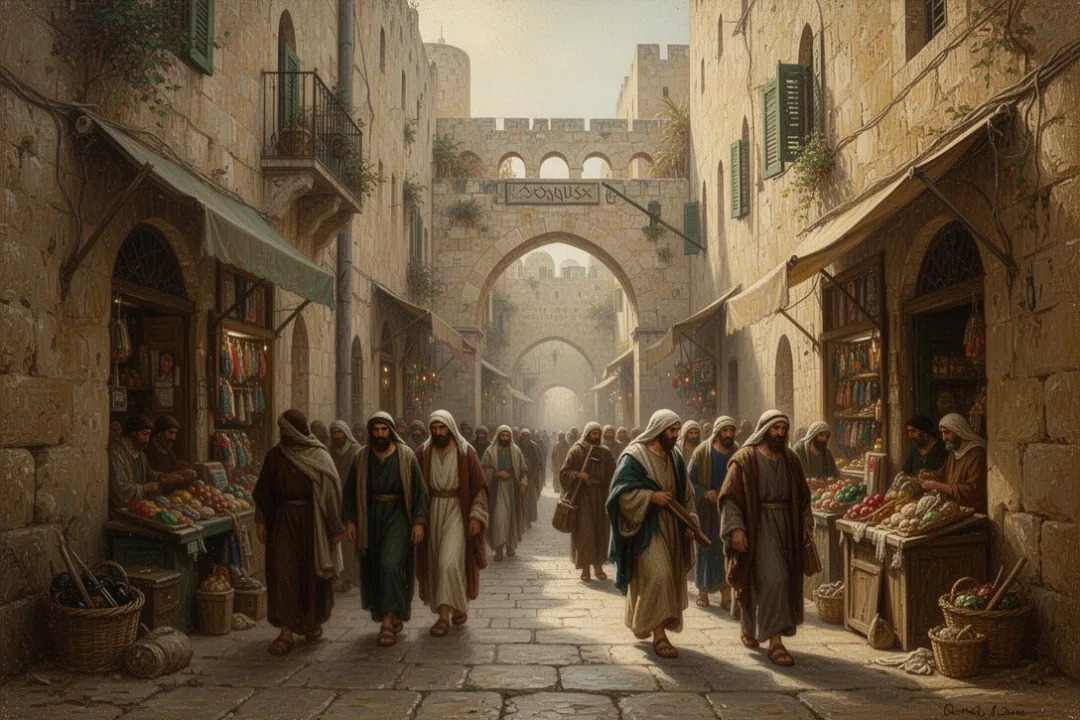
From there, the route runs westward through narrow streets in the Muslim Quarter. It passes shops, homes, schools, religious buildings, and busy market areas before reaching the Christian Quarter. The final stations are inside the Church of the Holy Sepulchre, the major destination of the route.
The full walk is commonly described as roughly 600 meters, although the distance depends on the starting point and the route taken between stations. The walk itself can be completed relatively quickly, but pilgrims often spend much longer stopping to pray, listen to a guide, or visit churches along the way.
Essential orientation: The Via Dolorosa is not a secluded trail. It is a living Old City route shared by worshipers, residents, merchants, schoolchildren, and visitors, so expect crowds and ordinary urban activity alongside places of devotion.
What the Via Dolorosa means to Christian pilgrims
The phrase Via Dolorosa is Latin for “Way of Sorrow” or “Way of Grief.” It refers to the suffering traditionally associated with Jesus’ journey from condemnation to crucifixion. Christians often walk the route as a form of prayerful remembrance, meditating on suffering, sacrifice, forgiveness, and hope.
The route is especially connected with the Catholic Stations of the Cross, a devotional practice that invites worshipers to pause at successive scenes from the Passion of Christ. Other Christian traditions may use different forms of prayer or place greater emphasis on the biblical accounts than on the established station sequence.
Walking the route does not require a particular religious identity. Some visitors come as practicing Christians, while others are interested in Jerusalem’s history, architecture, archaeology, or the way sacred traditions shape a city. A respectful visit can include observation, quiet reflection, or participation in a guided pilgrimage.
The Via Dolorosa also illustrates how religious memory works. A location can become sacred through centuries of worship and tradition even when historians cannot prove that every event happened at that exact spot. Understanding that distinction allows visitors to appreciate the route without confusing devotional tradition with established historical evidence.
How the 14 stations of the Via Dolorosa are arranged
The traditional stations are numbered from the beginning of the route toward the Church of the Holy Sepulchre. Their markers are not all alike: some are small plaques, some are chapels, and some are identified by churches or architectural features. The station numbers can be easy to miss, so a map or local guide is useful.
Station I: Jesus is condemned to death. The traditional location is associated with the site of the Roman judgment.
Station II: Jesus receives the cross. This station is near the beginning of the street and is often marked by a chapel.
Station III: Jesus falls for the first time. The station is traditionally connected with his physical weakness under the burden of the cross.
Station IV: Jesus meets his mother, Mary. This meeting belongs to Christian tradition and is not explicitly described in the Gospel accounts.
Station V: Simon of Cyrene is said to help carry the cross. Simon’s assistance is described in the New Testament.
Station VI: Veronica wipes the face of Jesus. Veronica is part of devotional tradition, but this episode is not directly recorded in the Bible.
Station VII: Jesus falls for the second time. The station is traditionally located near an old city street junction.
Station VIII: Jesus speaks to the women of Jerusalem. This station draws on a passage in Luke’s Gospel.
Station IX: Jesus falls for the third time. It is near the entrance to the Church of the Holy Sepulchre.
Station X: Jesus is stripped of his garments. This station is inside the church complex.
Station XI: Jesus is nailed to the cross. The station is located in the church’s area associated with Calvary.
Station XII: Jesus dies on the cross. A chapel marks the traditional site of the crucifixion.
Station XIII: Jesus is taken down from the cross. This station is associated with the anointing stone and the preparation of the body.
Station XIV: Jesus is laid in the tomb. The final station is associated with the Aedicule, the shrine traditionally marking the tomb.
The sequence combines Gospel scenes with elements of later Christian devotion. The first three Gospel accounts and the Gospel of John describe the Passion in different ways, and none presents the modern 14-station route as a complete itinerary. The stations developed through Christian practice over time.
Which stations come from the Bible and which come from tradition
Several parts of the Via Dolorosa have a direct or partial connection to the New Testament. The condemnation, the carrying of the cross, Simon of Cyrene’s assistance, Jesus’ words to the women of Jerusalem, the crucifixion, death, burial, and the empty tomb all relate to Gospel narratives, though the route and details differ among the accounts.
Other stations are best understood as devotional traditions. Jesus’ falls are not narrated as a numbered sequence in the Gospels. The meeting with Mary and the story of Veronica wiping Jesus’ face became part of later Christian meditation and artistic tradition rather than direct Gospel testimony.
That difference does not make the traditional stations meaningless. Religious practices often help communities contemplate a larger story through symbolic scenes. A thoughtful visitor can honor the devotional purpose while recognizing that historical certainty varies from station to station.
The Via Dolorosa is best understood as a traditional devotional route, not as a modern archaeological reconstruction with every step proven.
Why the exact historical route is debated
Jerusalem has changed dramatically since the first century. Streets were rebuilt, levels shifted, buildings were destroyed or repurposed, and the city’s political and religious centers moved over time. These changes make it difficult to trace a continuous path from the period of Jesus to the modern Via Dolorosa.
One major question concerns the location of the Praetorium, the place where the Roman governor Pontius Pilate is traditionally said to have judged Jesus. For centuries, Christian pilgrims associated the beginning of the route with the Antonia Fortress near the Temple Mount. Many historians and archaeologists have argued that the governor’s residence was more likely in the area of Herod’s palace or another administrative location in the western part of the city.
The current route also reflects the history of Christian pilgrimage. The position of the Church of the Holy Sepulchre has been central to the route for many centuries, while the path’s eastern sections developed through changing devotional customs. The route therefore carries historical layers: first-century Jerusalem, later Byzantine and medieval traditions, Ottoman-era streets, and the modern Old City.
Visitors do not need to choose between faith and historical inquiry. The route can be meaningful as a pilgrimage while also being examined critically. Guides, clergy, archaeologists, and historians may explain the same place from different perspectives, and those perspectives can complement one another.
What to see at the Church of the Holy Sepulchre
The last five stations are traditionally located within the Church of the Holy Sepulchre, which is also called the Church of the Resurrection by many Eastern Christians. The church contains several chapels and shrines administered by different Christian communities under a complex arrangement of shared responsibility.
The area identified as Calvary or Golgotha is reached by stairs inside the church. Visitors may see chapels associated with the crucifixion and the removal of Jesus from the cross. The Stone of Anointing, located near the church entrance, is connected by tradition with the preparation of Jesus’ body for burial.
The central shrine over the traditional tomb is known as the Aedicule. It has been repaired and restored at different times, and access may involve a line or waiting period. Conditions inside the church can change during worship services, religious festivals, maintenance, or periods of heavy visitation.
Allow time to observe the building itself. The church is not a single-style monument: its spaces reflect centuries of construction, repairs, competing custodial traditions, and pilgrimage. The dim chapels, worn stone, lamps, icons, and movement of worshipers all contribute to its character.
When to walk the Via Dolorosa
Early morning is often the most comfortable time for a full walk. The streets may be quieter, temperatures can be lower, and the church may feel less crowded than during the middle of the day. Friday can be particularly significant for Christian pilgrims because some communities hold a public Stations of the Cross procession along the route.
Procession schedules vary by season and church calendar. During Holy Week, the route may be exceptionally busy, with organized groups, services, security arrangements, and temporary changes to pedestrian movement. Check current information locally rather than relying on an old schedule.
Weather affects the experience. Jerusalem can be hot and sunny during warmer months, while winter brings cool temperatures and occasional rain. Much of the route is paved, but the Old City includes uneven stones, steps, slopes, and narrow passages. Comfortable shoes are more useful than formal footwear.
Some shops and attractions open later than visitors expect, and religious sites may close temporarily for prayer or community use. If you want a quiet devotional walk, plan around major worship times and remain flexible.
Practical tips and common mistakes on the Via Dolorosa
A little preparation makes the route more manageable. The Old City can feel confusing because the streets are narrow and signs are not always prominent. A local guide can explain both the station tradition and the surrounding neighborhoods, but independent visitors can also follow a map and numbered markers.
Wear supportive shoes: The stone paving, stairs, and uneven surfaces can be tiring.
Carry water: Bring a refillable bottle, especially in warm weather, while following site rules inside churches.
Dress respectfully: Cover shoulders and knees when entering churches or chapels, and carry a light layer if needed.
Start with extra time: Crowds, worship services, and narrow streets can slow the walk.
Use a current map: Station markers are not always obvious, and access points may change.
Ask before photographing: Do not photograph people in prayer or use flash inside sensitive spaces.
Expect interruptions: The route is used by residents and businesses, not reserved exclusively for pilgrims.
One common mistake is treating the Via Dolorosa like a conventional sightseeing attraction. Speaking loudly, blocking doorways, or insisting on photographs during prayer can disrupt worshipers. Another mistake is assuming that every marker identifies a confirmed first-century location; many represent long-standing devotional memory.
Visitors sometimes plan only enough time to walk the street and then feel rushed inside the Church of the Holy Sepulchre. Set aside additional time for the church, including possible lines and the chance that some areas will be temporarily unavailable.
Another practical error is beginning with an overly packed schedule. The route is short in distance but dense in history and religious significance. A slower visit, with time to listen and look carefully, is usually more rewarding than trying to cover every nearby site in one hurried morning.
How to visit respectfully as a non-Christian or independent traveler
You do not need to join a formal pilgrimage to visit the Via Dolorosa. Approach it as you would any active sacred place: observe local customs, speak quietly near worship, and follow directions from clergy, attendants, or security staff. In some spaces, visitors may be asked to wait, cover up, or avoid photography.
Independent travelers should remember that the street is part of a neighborhood. Residents may be carrying groceries, children may be walking to school, and merchants may be serving customers. Standing in the center of a narrow lane to read a guidebook or take pictures can obstruct people quickly.
If you are traveling with children, explain beforehand that the route includes religious services and places where quiet behavior matters. The walk can be educational when children are invited to notice the street’s layers of history, rather than being expected to understand every theological detail.
People with limited mobility may encounter difficulties. The route includes narrow passages, uneven paving, steps, and crowded areas, while some church spaces have restricted access. Contact a knowledgeable local tour provider or visitor service in advance for the most current accessibility information.
How guided walks and self-guided visits differ
A guided walk can be useful if you want historical context, help locating each station, or assistance understanding the different Christian communities connected with the church. Guides may also point out details that are easy to miss, such as inscriptions, chapels, traditional markers, and changes in street level.
The quality of interpretation varies, so ask whether a guide distinguishes between documented history and religious tradition. A responsible guide should be able to explain uncertainty without dismissing the importance of the route to pilgrims.
A self-guided visit offers more privacy and flexibility. You can pause for personal prayer, return to a station, or spend longer inside the Church of the Holy Sepulchre. The trade-off is that the route can be confusing, and a map may not explain why a particular place matters.
Some visitors combine both approaches by taking a guided walk first and returning independently later. This allows you to learn the route’s structure before experiencing it at your own pace.
How the Via Dolorosa fits into a Jerusalem pilgrimage
The Via Dolorosa is often visited with other Christian sites in and around Jerusalem. The Church of the Holy Sepulchre is the natural endpoint, but visitors may also explore churches, monasteries, archaeological areas, and places connected with the city’s many religious communities.
A broader pilgrimage may include the Mount of Olives, the Garden of Gethsemane, and sites associated with early Christian worship. These places are not all part of the Via Dolorosa itself, and travel time between them can be affected by traffic, crowds, closures, and security arrangements.
Jerusalem is sacred to Christians, Jews, and Muslims, and the Old City contains important sites for all three faiths. A visit becomes more informed when the Via Dolorosa is understood within that wider setting rather than treated as an isolated Christian attraction.
The route’s significance also extends beyond the stones beneath your feet. It connects personal devotion with the history of pilgrimage, the politics of Jerusalem, the development of Christian ritual, and the continuing life of the Old City. That combination explains why the Via Dolorosa remains meaningful even as historians debate its exact path.
Frequently asked questions
Is the Via Dolorosa the exact route Jesus walked?
Not with complete historical certainty. The modern route reflects centuries of Christian pilgrimage and devotional practice, while Jerusalem’s first-century streets and buildings have changed substantially. Some stations connect with Gospel accounts, but others come from later tradition. The route is therefore best understood as a traditional sacred itinerary associated with Jesus’ Passion rather than a fully verified reconstruction of every step.
How long does it take to walk the Via Dolorosa?
Walking from the first station to the Church of the Holy Sepulchre may take around 30 minutes without stops, depending on crowds and street conditions. A meaningful visit usually takes much longer because people pause at the stations, enter chapels, attend services, or wait inside the church. Plan at least several hours if you want time for the route and its major shrines.
Can visitors walk the Via Dolorosa without a guide?
Yes. Visitors can follow a map, locate the numbered stations, and enter accessible churches independently. A guide is helpful for explaining historical debates, identifying less obvious markers, and managing the Old City’s confusing lanes. If you visit alone, check opening arrangements, dress respectfully, allow extra time, and avoid blocking the route during worship or busy periods.
What should women and men wear on the Via Dolorosa?
The street itself has no single dress code, but churches and chapels generally expect modest clothing. Cover shoulders and knees, and carry a light layer that can be used when entering religious sites. Comfortable shoes are also essential because the route includes uneven paving, stairs, and crowded passages. Specific communities or chapels may apply additional requirements.







Leave a Reply