Wedding in Cana of Galilee: The Ultimate Guide to a Historic Ceremony
Wedding in Cana of Galilee: The Ultimate Guide to a Historic Ceremony
In the story of Christianity, Cana of Galilee stands as the setting of Jesus’ first public sign, a moment that blends daily life with the sacred. The account, often described as a wedding in Cana of Galilee, has shaped centuries of theology, art, and pilgrimage. This comprehensive guide gathers historical, literary, architectural, and practical perspectives to help readers understand the significance of this ancient ceremony and to plan respectful engagement with the site today.
A village in the heart of the Galilean hills, Cana of Galilee sits near the culturally rich region that includes Nazareth and the Sea of Galilee. The exact location of ancient Cana has been a matter of ongoing scholarly discussion, with several sites proposed over the centuries. The most widely discussed candidates include a hilltop site near modern Kafr Kanna and a nearby rural plateau often associated with first-century settlements. Regardless of the precise geography, the core understanding remains: Cana was a bustling, agrarian community embedded in a landscape of vineyards, springs, and byways that linked households, markets, and religious life.
In ancient sources, Cana is described as a small town within the broader tapestry of Galilean life. The economy likely revolved around agriculture, especially grapes, olives, and cereals, with artisanal crafts weaving into daily routines. A wedding in Cana of Galilee would typically bring together families from neighboring households, clans, and villages to celebrate a union that linked two lineages and their social networks. The wedding feast could extend for several days, reflecting the hospitality norms of the time and the communal nature of life in Galilee.
From an archaeological perspective, researchers emphasize the importance of regional material culture—stone houses, courtyards, cisterns, and ritual spaces—that would have shaped the ambiance of a first-century wedding. The presence of wedding-related customs, hospitality rituals, and symbolic meals finds echoes across the Levant, suggesting that the Cana wedding narrative resonates with broader biblical and Second Temple era practices. For travelers, historians, and theologians, this convergence of geography, economy, and ritual helps anchor the Cana story in a tangible, lived world.
Geography helps define the narrative: Cana’s hillside setting and spring-fed landscape create the sensory context for a wedding celebration.
Economy and daily life: An agrarian economy shapes the logistics of marriage, feasting, and guest hospitality.
Social networks: Marriages linked families, clans, and villages, reinforcing alliances and community ties.
The wedding narrative in the Bible: a turning point in a Galilean ceremony
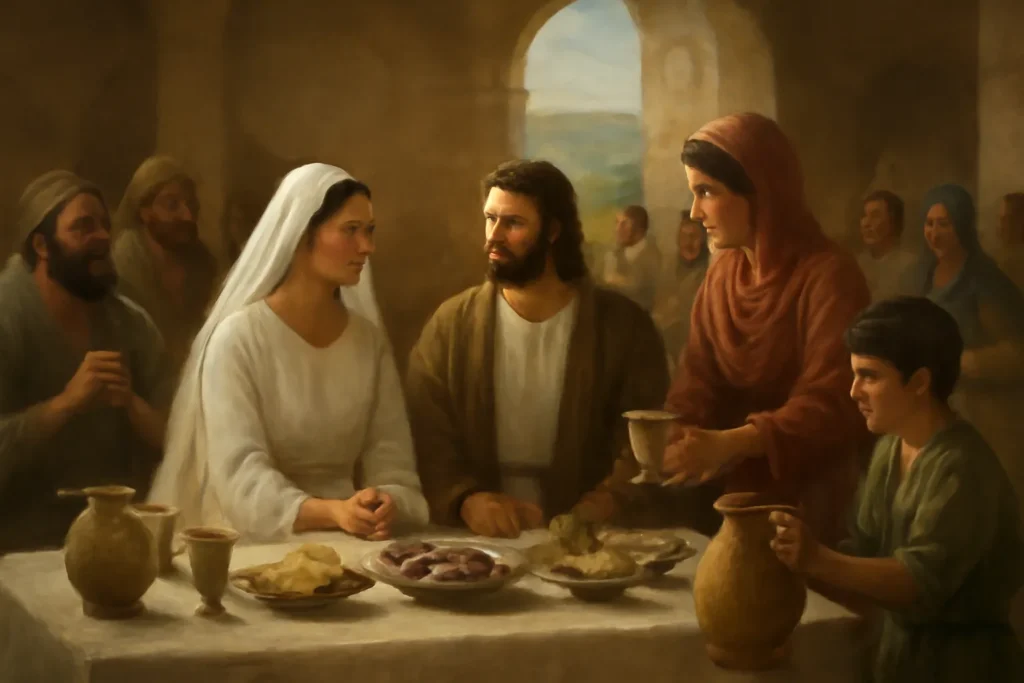
Within the Gospel of John, the miracle at the wedding in Cana of Galilee stands as the earliest sign that reveals Jesus’ divine authority and mission. The narrative centers on a wedding feast that runs short on wine, prompting Mary’s plea and Jesus’ response that culminates in the transformation of water into wine. The event unfolds quietly at a family gathering, yet its implications ripple outward, shaping Christian understandings of abundance, blessing, and the way God is present in communal life.
According to John 2:1-11, a wedding party in Cana hits a social and logistical snag when the hosts discover a shortage of wine. Mary speaks to Jesus, saying, “They have no wine,” and while Jesus initially resists, he ultimately commands the servants to fill jars with water and to draw some out for the steward. The water, miraculously, becomes wine of quality, and the steward praises the groom for preserving the best wine until much later in the feast.
Several elements of the narrative have sparked rich interpretation:
Revelation through a common celebration: A joyous wedding becomes the setting for a theological disclosure.
Sign of abundance: The miracle emphasizes divine generosity and hospitality—key themes in biblical storytelling.
Mary’s intercession: Mary’s role highlights the reverent appeal of community figures and the trust placed in maternal intercession.
New covenant associations: Water into wine is often read as a precursor to the transformative messianic work and to practices rooted in the Eucharistic tradition.
Across Christian traditions, the Cana wedding is read through multiple lenses. Some theologians emphasize the symbolism of water becoming wine as an allegory for transformation and renewal. Others focus on hospitality ethics—that a guest’s welcome is a sacred act requiring generosity—and the responsibility of hosts to ensure abundance. Clergy and scholars also discuss how the miracle bridges ordinary life and transcendent authority, a theme that resonates with wedding rituals, where vows, celebrations, and blessings mark a transition from single life to partnership.
The site and geography of Cana: where history and landscape meet
The physical setting of Cana, whether identified with Kafr Kanna or another nearby site, provides a tangible frame for the story. The Galilean countryside combines rolling hills, olive groves, vineyards, and narrow stone lanes that would have shaped a wedding procession, a gathering of relatives, and the arrival of guests. The climate in this region brings hot, dry summers and mild winters, influencing the timing of celebrations and agricultural cycles—elements that intertwine with ritual practice and social expectations.
Landscape and architecture that frame a Galilean wedding
In first-century Cana, houses were typically compact, centered around courtyards and cisterns to manage water—an essential resource in a semi-arid climate. A wedding celebration would unfold in a courtyard or a guest hall where family and friends gathered for a feast, songs, and shared food and drink. The civic and religious life of Cana was intertwined with the synagogue, the marketplace, and the wells that supplied daily needs. For pilgrims today, walking the terrain and imagining the steps of a wedding procession helps connect the narrative to real places and real people.
Religious significance and cultural impact: Cana in memory and devotion
The Cana wedding narrative reverberates beyond historical curiosity. It informs liturgical calendars, devotional practices, and ecumenical dialogues about signs and miracles. In Christian memory, this event is often cited as the moment when Jesus reveals something about his mission, identity, and the nature of transformative grace. For many, Cana becomes a symbol of hospitality, communal joy, and the presence of the divine in everyday life.
Interfaith perspectives and shared themes
While the Cana story is central to Christian Scripture, its accent on hospitality, community, and issue of abundance resonates in broader religious and cultural contexts. The idea that a wedding feast can become a place of revelation invites reflection on how sacred moments emerge from ordinary occasions. Interfaith readers may appreciate the emphasis on generosity to guests, the role of elders or mothers in guiding outcomes, and the communal responsibility to celebrate life’s milestones with dignity and kindness.
Planning a modern visit or ceremony: how to approach Cana with respect and curiosity
Today, pilgrims and travelers visit Cana to reflect on the biblical narrative, study its archaeology, and appreciate the landscape that frames the famous miracle. While formal weddings at the historical site are not widely advertised nor always possible due to local regulations and preservation priorities, there are meaningful ways to engage with the space and its memory.
Check local guidelines: Contact local tourism offices or archaeological authorities to learn about access, opening hours, and any restrictions related to sacred spaces or ongoing preservation work.
Engage with a knowledgeable guide: A guide with expertise in biblical geography and Galilean history can link the narrative to the physical space, offering site-specific details and readings from the text.
Plan a reflective itinerary: Combine a visit to Cana with stops at nearby Gali or Nazareth for a broader sense of the region’s religious and cultural landscape.
Respect sacred spaces: Treat the site with reverence, particularly if it features ongoing religious activity or local worship.
Document thoughtfully: If you are a photographer or writer, seek permission for any formal shoots and honor local customs and privacy concerns.
What to expect at the site today
Modern Cana often blends agricultural countryside with small villages and religious landmarks. Visitors may encounter chapel markers, interpretive signs, and local markets selling crafts and souvenirs. The visitor experience typically emphasizes the historical ambience, with panoramic views over vineyards and hills that evoke the setting of the ancient feast. For many travelers, a quiet moment by a spring or well, imagining the hours of hospitality, helps connect the narrative to daily life in antiquity.
Symbolic meanings, ritual life, and the hospitality ethos
The Cana wedding is rich in symbolism that has influenced Christian theology and devotional practice for centuries. The conversion of water into wine is frequently discussed in the context of abundance, blessing, and the inauguration of Jesus’ public ministry. In wedding culture, hospitality is a central virtue; the host’s obligation to provide for guests aligns with biblical ideas about community, care, and generosity. In this sense, the Cana ceremony functions on multiple levels: as a historical event, a theological sign, and a guide to ethical living within a community.
Key symbols associated with a Cana wedding
Water as a symbol of transformation: The water containers and their filling represent a shift from ordinary resources to extraordinary blessing.
Wine as celebration and covenant: The wine signals joy, abundance, and the fullness of life that the community shares.
Jesus as the agent of blessing: The miracle highlights divine initiative within human hospitality.
Mary as mediator in a communal moment: Her interruption of the narrative underscores the role of family and elders in guiding communal life.
Archaeology, memory, and preservation: understanding the site’s heritage
Scholars and archaeologists continue to study Cana to illuminate the historical setting, architectural features, and everyday life of first-century Galileans. Excavations aim to uncover the layout of household compounds, water storage systems, and public spaces that would have hosted weddings and feasts. Through material culture—stone walls, mosaic fragments, pottery—researchers piece together how a typical Galilean wedding might have unfolded, including processions, music, dancing, and the distribution of food and drink.
Preservation priorities and scholarly questions
Site identification: Determining the precise location of ancient Cana remains an ongoing scholarly task, influenced by surveys, inscriptions, and historical geography.
Public education: Visitors benefit from interpretive displays that translate archaeological findings into meaningful narratives about daily life and sacred memory.
Balancing access and conservation: Preservation work must balance public interest with protecting fragile ruins and landscape.
For scholars and storytellers: textual nuance and narrative craft
Beyond devotional reading, the Cana wedding story serves as a focal point for literary analysis, historical criticism, and theological debate. The Gospel of John presents a distinctive narrative style, in which signs, symbols, and dialog drive the development of faith. Students of theology and literature explore how John’s portrayal of the Cana event contrasts with the Synoptic Gospels' accounts of Jesus’ early ministry and how cultural memory shapes how communities imagine miracles in ordinary settings.
Textual variants, exegesis, and cross-cultural readings
Johannine symbolism: An emphasis on signs, signs that reveal Jesus’ identity and mission.
Hospitality ethics in ancient cultures: The social expectation to provide for guests informs the narrative’s stakes.
Intersections with ritual meals: The transition from water to wine resonates with later Christian liturgical practices centered on nourishment and blessing.
A practical guide to celebrating memory and learning from Cana
While a modern wedding ceremony may not take place at the exact ancient site, many couples, scholars, and faith communities draw inspiration from the Cana narrative to plan celebrations or vow renewals that honor hospitality, generosity, and shared blessing. If you are considering a wedding-inspired event with Galilean roots, here are thoughtful approaches that honor the story and the place:
Design a hospitality-forward program: Invite guests to participate in meaningful acts of welcome, sharing, and abundance—food drives, charity pledges, or community feasts.
Incorporate symbolic imagery: Use blue and white color motifs, grape and water imagery, and readings that reflect transformation and renewal.
Plan a modest, reverent celebration: Emphasize simplicity, generosity, and the joy of communal life rather than excess.
Augment with guided reflection: Include a moment of contemplation about how a wedding feast can mirror divine blessing and communal responsibility.
Nearby attractions and day trips: a broader Galilean itinerary
A visit to Cana of Galilee can be a meaningful stop on a broader itinerary through the Galilee region. Nearby sites offer complementary perspectives on history, sacred memory, and landscape:
Nazareth: The childhood home of Jesus, with sacred sites, markets, and ancient streets that reveal another layer of Galilean life.
Sea of Galilee: A setting of biblical rock-cut landscapes, fishing villages, and opportunities for reflective shoreline walks.
Khirbet Kana or other proposed Cana sites: Each candidate location can provide a distinct vantage on how scholars and pilgrims imagine the original setting.
Local churches and chapels: Small communities around Cana often host devotional spaces celebrating hospitality, marriage, and community life.
Travel logistics: practical considerations for a scholarly pilgrimage
Traveling to Cana and the Galilee involves thoughtful planning. Here are practical notes to help you prepare a respectful, informative journey:
Border and security considerations: Check current travel advisories and entry requirements if you plan to visit Israel or the Palestinian territories where relevant, and arrange appropriate documentation in advance.
Language and communication: Hebrew and Arabic are common in the region, with English widely used in tourist sites. A few basic phrases can enhance respectful interactions.
Climate-aware packing: Summers can be hot and dry; winters are mild but can be wet. Bring sun protection, water, and comfortable walking shoes.
Time management: Allocate time for both scholarly study and contemplative moments at sacred spaces, allowing for a pace that honors quiet reflection and discussion.
Interpretive close: Cana’s enduring message for visitors and communities
The story of a wedding in Cana of Galilee endures because it speaks to universal concerns: hospitality, celebration, scarcity, and transformation. For believers, it is a testament to the presence of the sacred in ordinary life and a reminder that generosity is a powerful catalyst for communal blessing. For scholars, it offers a rich field for exploring how memories of a single event become a lens through which entire communities are formed. For travelers, Cana invites a thoughtful encounter with landscape, history, and memory—a place where a simple gathering becomes a doorway into deeper questions about faith, life, and the ways we welcome one another into our homes and our histories.
Glossary: key terms tied to the Cana wedding story
Cana of Galilee: The ancient locale associated with the miracle event described in the Gospel of John.
Water into wine: The miracle that signals Jesus’ divine authority and introduces abundance at a communal feast.
Hospitality: A central cultural practice in ancient Near Eastern and Mediterranean contexts, underscoring the importance of guests and generosity.
New Testament sign: A type of miracle meant to reveal Jesus’ identity and mission rather than to perform merely a spectacular feat.
Final reflections for the curious reader
Whether approached as a historical puzzle, a literary parable, or a living memory in the faith world, the wedding in Cana of Galilee remains a potent tale about how communities gather, how leaders and elders guide hospitality, and how an ordinary moment can become a catalyst for lasting transformation. For anyone who studies ancient history, reads sacred scriptures, or simply travels with a sense of wonder, Cana offers a reminder that the past continues to illuminate the present—and that memory, when shared with generosity, can nourish generations to come.






Leave a Reply