40 Days and 40 Nights in the Bible: An Overview of Key Passages, Meaning, and Lessons
The phrase “40 days and 40 nights” appears repeatedly in the biblical narrative, signaling a distinct, purposeful period of testing, renewal, or divine action. While the exact length—forty days—recurs in several stories, the significance is less about a precise calendar and more about the symbolic weight carried by the number in ancient Near Eastern literature. In this article, we explore the most important passages often associated with the idea of a 40-day or 40-night window, examine what these periods meant in their original contexts, and draw lessons that remain relevant for readers today. We will use variations of the phrase—such as forty-day period, forty days, 40-day fast, and forty-night journey—to reflect how English translations and traditions talk about these moments.
Key Passages Involving 40 Days and 40 Nights
The biblical canon contains several prominent episodes where a duration of forty days and forty nights frames a major turn in the story. Each instance carries its own historical setting and theological emphasis, yet they are connected by shared themes of judgment, preparation, mercy, and divine presence.
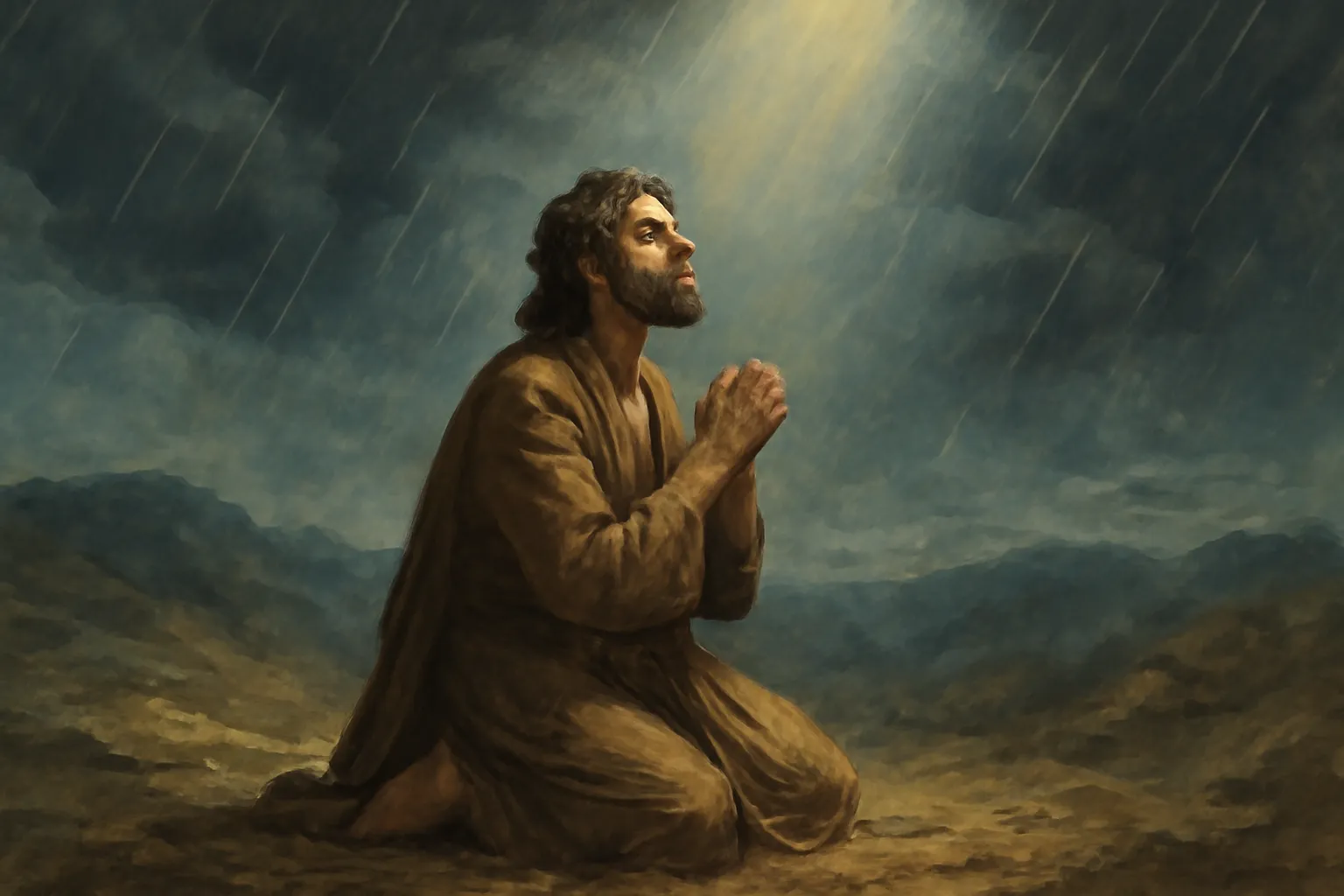
Genesis 7:12 — The Flood Begins: the rain falls for forty days and forty nights, saturating the earth and initiating the global judgment described in Genesis. This long, cataclysmic rainfall marks a decisive turning point: humanity’s corruption has reached a crisis point, yet God’s salvation plan begins to take shape through the ark and Noah. The imagery of an extended, all-encompassing rain emphasizes both the severity of judgment and the patient endurance required of those who trust in divine deliverance.
Context: Prior chapters recount human wickedness and God’s decision to reset creation while preserving a remnant in the ark.
What it teaches: endurance under divine discipline, the seriousness of sin, and the possibility of new beginnings after judgment.
Exodus 24:18 — Moses Enters the Divine Presence: Moses ascends Mount Sinai and stays there for forty days and forty nights, in the midst of an unusual encounter with God. The text emphasizes fasting, solitude, and intimate revelation as Moses receives instructions related to the covenant.
Context: The people await a revelation while Moses mediates between God and Israel.
What it teaches: preparation for covenant formation, the seriousness of receiving God’s law, and the transformative power of solitary devotion.
Exodus 34:28 — Moses Reaches the Mountain Again: in this account, Moses again spends forty days and forty nights on the mountain without food or drink, returning with new tablets and renewed obedience to the Law.
Context: A renewal after the sin of the golden calf, illustrating the patience and persistence of divine mercy toward a stubborn people.
What it teaches: perseverance in leadership, the renewal of spiritual vision, and the sustaining power of God in the heart of crisis.
Matthew 4:2 and Luke 4:2 — Jesus’ Wilderness Fast: Jesus fasts for forty days and forty nights in the wilderness before beginning his public ministry, during which he faces temptation. This episode foregrounds the humanity of Jesus and his perfect obedience to the Father as a model for believers.
Context: After his baptism, Jesus enters a period of testing that prepares him for his mission.
What it teaches: spiritual resilience, dependence on God’s Word, and the integrity of Jesus as the faithful Son who overcomes temptations that confront all disciples.
Jonah 3:4 — Nineveh’s Impending Judgment: Jonah proclaims that Forty days more and Nineveh will be overthrown. The narrative emphasizes prophecy, repentance, and God’s mercy in response to genuine contrition, even from a city outside the Israelite covenant.
Context: The prophet Jonah reluctantly delivers a warning, and the people repent, leading to God’s mercy.
What it teaches: God’s gracious patience, the power of repentance, and the possibility of transformation when people heed a divine warning.
1 Kings 19:8 — Elijah Journeys to Horeb: Elijah travels for forty days and forty nights on bread and water to the mount of God, Horeb. This episode occurs after a period of despair and fear, culminating in a theophany and renewed calling.
Context: A banner example of divine sustenance and direction during a desert season of retreat and renewal.
What it teaches: God’s provision in times of discouragement, the importance of rest and prayer, and the reaffirmation of vocation in the face of danger.
While these are the most frequently cited 40-day narratives, scholars and readers sometimes notice additional allusions to 40-day timeframes or forty-like periods in other biblical passages. The recurring motif across these stories is not just the number but the symbolic cadence—testing, dependence on God, revelation, and renewal.
The Meaning Behind the Number 40 in the Bible
The figure forty is one of the most pervasive symbolic numbers in Scripture. It appears in various contexts beyond the most famous episodes listed above, often signaling a complete or sufficient span of time for a particular purpose. In the biblical imagination, forty commonly conveys:
Testing and trial: Extended periods of challenge that prove faithfulness or reveal character (as in Jesus’ temptation or the Israelite wilderness wanderings).
Purification and preparation: A time set apart for spiritual formation, repentance, or receiving divine instruction (as Moses and Elijah demonstrate on the mountain or in the desert).
Judgment and mercy: The possibility that God’s judgment will be tempered or deferred in response to repentance and intercession (as seen in Jonah’s narrative).
Prophetic significance: A countdown that anticipates a pivotal moment in salvation history, often culminating in a new covenant, deliverance, or revelation.
The recurrence of a forty-day or forty-night window reinforces a pattern: moments of intense encounter with God, during which people are invited to depend on divine grace, reflect on their lives, and anticipate a renewed direction. In broader literary terms, the number serves as a memorable code for readers: a definite span that is long enough to be consequential, but not endless. This makes the episodes highly quotable and emotionally resonant for communities of faith.
Key Themes and Lessons Across the 40-Day Narratives
When we compare the major forty-day episodes, several enduring lessons emerge. These themes can guide personal reflection, sermon preparation, or Bible study groups as they explore what the 40-day motif contributes to biblical interpretation and spiritual practice.
Dependence on God: In every case, the people or the central figure rely on divine sustenance, whether through prayer, fasting, or faith. The wilderness and mountaintop become classrooms where human weakness is transformed by reliance on God’s provision and wisdom.
Transformation through trial: The trials are not merely punitive; they are vehicles for growth, obedience, and the maturation of character. Endurance under pressure often yields a deeper relationship with God.
Revelation and renewal: Forty days frequently culminate in a moment of revelation—receiving the Law, hearing a divine message, or experiencing a fresh sense of purpose for mission and witness.
Mercy tempered by justice: The narratives balance judgment with mercy. When people respond to divine calls—whether in repentance (Jonah) or faithful obedience (Moses, Jesus)—mercy enters the story again in new forms.
Leadership under pressure: Moses, Elijah, and Jesus all model leadership that endures isolation, temptation, fear, and fatigue, ultimately guiding others toward covenant faithfulness.
The motifs associated with the forty-day window also invite readers to reflect on their own seasons of testing or discernment. In Christian tradition, for example, the period of Lent is often understood as a spiritual forty-day season—modeled after Jesus’ wilderness fast—where believers anticipate renewal, repentance, and a closer imitation of Christ. This practical parallel helps readers apply ancient patterns to contemporary life.
Practical Lessons for Personal Spiritual Practice
Beyond academic study, the idea of 40 days and 40 nights offers concrete guidance for personal faith life. The following applications, drawn from the core narratives above, can help individuals and small groups engaging with the biblical material today.
Design a personal season of fasting or focused prayer: Consider a planned period—resembling a forty-day fast—to sacrifice distractions, renew devotion, and pursue specific spiritual goals.
Engage in guided reflection during times of trial: Use journaling, contemplative silence, or Scripture memorization to cultivate resilience when faced with hardship, mirroring the endurance patterns in the desert episodes.
Study for transformation, not merely information: When reading about Moses, Elijah, or Jesus in their forty-day contexts, ask questions like: What does God’s presence feel like in solitude? How does obedience shape outcomes? How might I respond with faith when confronted by fear or temptation?
Practice repentance and mercy: The Jonah episode invites a posture of repentance on a community scale; individuals can reflect on ways they have contributed to brokenness and seek repair or reconciliation with others.
Expect revelation as a goal, not a byproduct: The forty-day experiences often culminate in clear divine guidance. Create space in your routine for reading, meditation, and listening for God’s direction.
The lessons of a forty-day journey are not limited to the past. They invite readers to a disciplined rhythm of preparation, listening, and response—whether in solitary study, family devotion, or communal faith formation.
How to Read and Study the Forty-Day Narratives
Approaching these chapters with intention can deepen comprehension and spiritual impact. Here are practical steps and study prompts designed for personal study, family groups, or teaching contexts.
Compare the settings: Note the desert, the mountain, and the city as different environments where a forty-day period unfolds. Ask how geography shapes the experience of faith, obedience, and revelation.
Track the role of food and fasting: In several instances, the text emphasizes the absence of food (or extreme deprivation). Consider what sustenance means—physically and spiritually—in your own life.
Identify the deliverer and the recipient: Moses, Elijah, and Jesus all pivot the story toward leadership and the next phase of God’s plan. Reflect on your own call or vocation in light of these examples.
Explore mercy and judgment together: Especially in the Jonah narrative, the warning of judgment coexists with mercy when people repent. Think about times you have seen mercy redirected by repentance.
Utilize cross-references: Look across the four Gospels, the Pentateuch, and the prophetic literature for echoes of the same themes—testing, covenant, and divine faithfulness.
Study questions: What is at stake in each forty-day period? Who is protagonist and who is observer? How does the divine response hinge on human action?
Timeline visualization: Create a simple timeline for each passage to map events before, during, and after the forty-day interval.
Character profiles: Sketch brief profiles for Moses, Elijah, Jesus, Jonah, and others involved, noting how their forty-day experiences shaped their leadership and ministry.
Prayer prompts: Turn each passage into a prayer focus. For example, pray for resilience in times of testing, for courage to confront personal idols, or for a deeper hunger for God’s presence.
Frequently Asked Questions About the Forty-Day Timelines
Is forty days a literal time span or a symbolic period?
In biblical literature, forty is both literal and symbolic depending on the context. Some narratives state a precise number of days; others use the figure symbolically to communicate a complete period of testing, preparation, or judgment. The interpretive approach often depends on whether the text aims to emphasize historical memory, theological meaning, or literary rhythm.
Why do different stories use the same duration?
The recurrence of forty as a number of testing and renewal reflects a shared cultural and theological language. It helps readers recognize a pattern: a turning point is imminent after a defined, strenuous period in which God’s people must depend on Him.
What can modern readers learn from these episodes?
Modern readers can learn about endurance under pressure, the importance of seeking God in quiet or solitude, the centrality of obedience to divine instruction, and the hope that God remains present, even in challenging seasons.
Conclusion: The Enduring Value of the Forty-Day Narrative
Across 40 days and 40 nights episodes, the Bible presents a powerful pattern: seasons of withdrawal or testing lead to deeper knowledge of God, renewal of mission, and renewed commitments to live in accordance with God’s will. The forty-day motif is not a single story but a recurring template that invites believers to pause, ask hard questions, lean on divine strength, and emerge with a clearer sense of purpose. Whether we encounter the Flood narrative in Genesis, the intimate encounter on Sinai, the testing in the wilderness, or the mercy shown toward Nineveh, the arc is consistently about transformation. If you are seeking to grow in faith, consider inviting a forty-day rhythm into your own life—an intentional season for prayer, study, fasting, and contemplative listening. In doing so, you join a long tradition of readers who have found meaning in the timeless cadence of “forty days and forty nights.”
Variant phrases you might encounter during study or discussion:forty-day period, 40-day fast, forty nights, forty-day journey, and forty-day season.
Whether you approach these passages as historical records, devotional reflections, or literary masterpieces, the core message remains: faithfulness in the midst of testing—grounded in God’s presence and equipped by His Word—leads to renewal, strength, and hope for a future shaped by divine guidance.

 Por Laura Jara