Dark Verse: A Deep Dive into Haunting Poetry and Its Themes
What is dark verse?
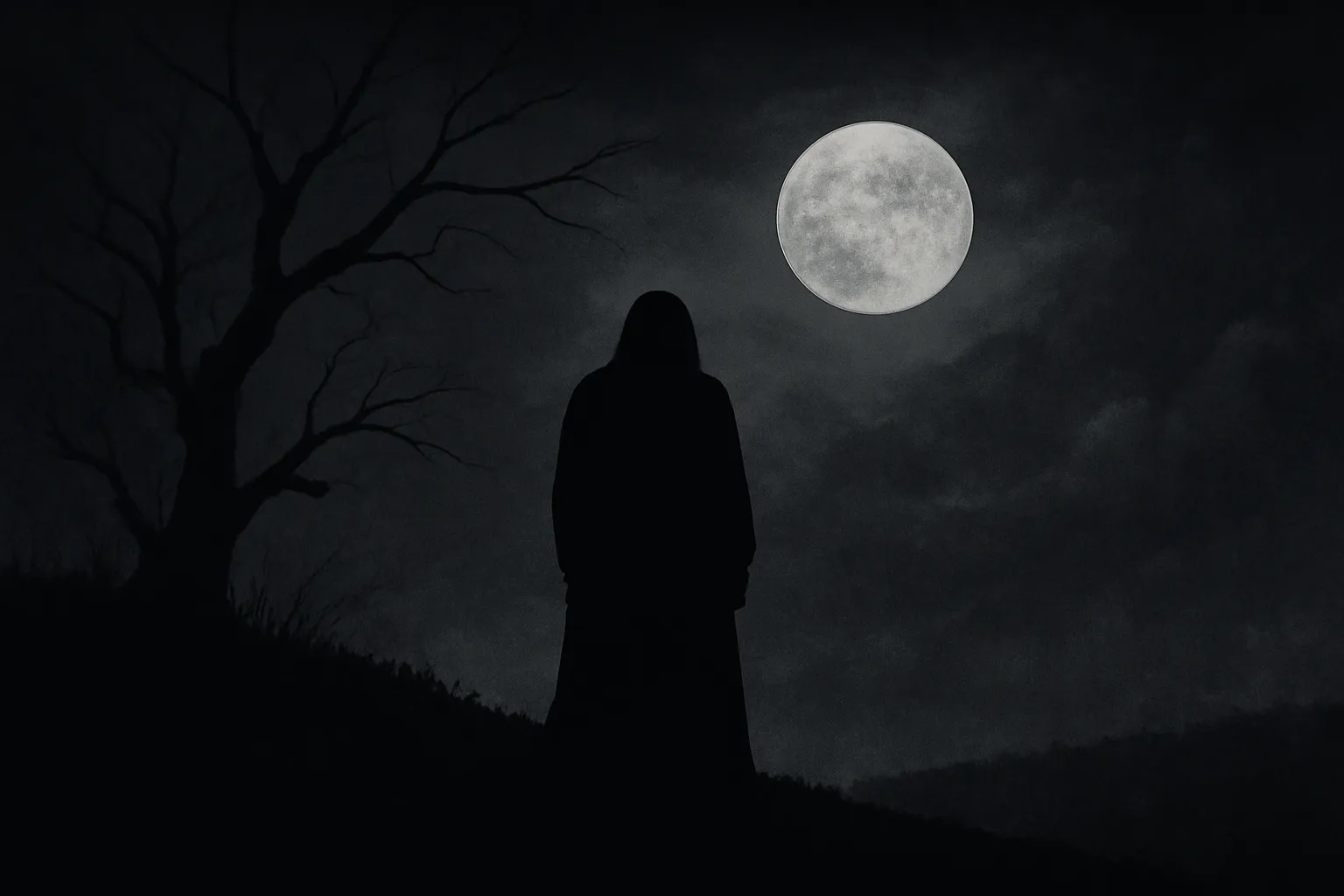
Dark verse is a broad umbrella for poetry that deliberately leans into the somber, the uncanny, and the unsettling. It does not merely dwell on gloom for gloom’s sake; it uses mood as a vehicle for exploring existential fear, moral ambiguity, and the shadows that fray the edges of everyday life. In many contexts, writers refer to this lineage with a range of labels—macabre poetry, Gothic verse, morbid verse, eerie poetry, and doom-lit verse—each pointing to a slightly different emphasis within the same broad terrain. What unifies these labels is a shared interest in the liminal space between safety and threat: mortality, the supernatural, and the ways memory and guilt color perception.
More precisely, dark verse often foregrounds a tense, aware consciousness that confronts mortality, the uncanny, or social decay. It might revel in the sensory texture of night—sound, smell, cold light, and shadow—while asking stubborn questions about meaning, fate, and human frailty. As a reader, you may encounter a formal grace—meter, rhyme, and stanzaic design—that lends the poem a hypnotic cadence even as its content unsettles you. The interplay of form and theme is a hallmark of dark verse, and poets have used a vast palette of styles to achieve that tension.
In this article, we will explore the core motifs of dark verse, how it has evolved across literary periods, and the craft practices that breathe life into its haunting atmosphere. We will also look at a handful of canonical pieces and contemporary voices that continue to broaden the field, showing how the dark verse project remains vital, dynamic, and deeply human.
The impulse that will later crystallize as dark verse has deep roots. Ancient laments, elegies, and ritual poems often lammed through the veil between life and death. Across medieval Europe, the mortal coil and the fear of judgment became recurrent themes in courtly and devotional poetry. In that earlier register, darkness tends to be moralized: it exposes sin, warns against vice, or yields to divine consolation. Still, the seedbed was set for later explorations of the uncanny and the grotesque—a formal and thematic vocabulary that would later flourish in the Gothic imagination.
Gothic emergence and Romantic intensification
The terms Gothic verse and Gothic poetry name a distinctly late eighteenth- to nineteenth-century development that foregrounds dramatic landscapes, decaying abbeys, haunted corridors, and morally ambiguous protagonists. Think of the economy of atmosphere, the tension between civilization and wilderness, and a fascination with the inexpressible. The Romantic period, in particular, amplified these concerns, turning inward to the psyche and outward to sublime moments of terror within the natural world. Poets like William Wordsworth and Samuel Taylor Coleridge opened the door to a language in which wonder and dread walk hand in hand, sometimes within the same stanza.
Victorian intensification and the franchise of the grotesque
In the nineteenth century, Victorian gloom—a blend of moral seriousness, social anxiety, and fascination with death—became a crucible for more deliberate forms of dark verse. The period’s poets and prose writers layered symbolic meaning, architectural imagery, and urban dread to reflect bustling modernity’s underside. The grotesque—a term that describes the distortion of familiar forms into startling, sometimes repellent shapes—entered the poetic repertoire as a tool for exploring alienation, class tension, and the weight of memory. You can hear this in the way urban life is depicted as a site of both achievement and fear, a double-edged stage upon which human longing collides with the (often unspoken) truth of decay.
Symbolist and modernist expansions
The late nineteenth and early twentieth centuries expanded dark verse’s horizons beyond gothic architecture into Symbolist technique and modernist fragmentation. Symbolist poetry emphasizes mood, suggestion, and the power of emblematic imagery to evoke what cannot be named directly. Poets like Charles Baudelaire (in the French tradition) and later English-language voices translated decadence and disquiet into lush, music-like textures. The modernist turn further unsettled interpretive certainty, experimenting with stream of consciousness, voice fracture, and mythic allusion to reveal a world that resists tidy interpretation. The result is a form that can be intensely intimate—an interior vigil in verse—while remaining aware of broader historical anxieties and the fragility of social order.
Twentieth and twenty-first centuries: plural forms of darkness
In more contemporary poetry, dark verse is not a single pedagogy but a family of strategies. Some poets cling to explicit horror images and Gothic motifs; others pursue a quiet, pervasive melancholy that lingers like damp in a forgotten room. Still others mix political critique, trauma, and environmental fear to map the shafts of despair that modern life can reveal. Across this spectrum, the essential aim remains similar: to make the reader feel the weight of the dark while inviting some form of understanding, catharsis, or renewed moral awareness. The range—from the ritual and mythic to the intimate and experiential—demonstrates that dark verse is a living project, continually adapting to new contexts and new fears.
One of the most enduring anchors of dark verse is an attentive exploration of death and what might lie beyond. Poets wrestle with the terror of nonexistence, the memory of the departed, and the moral implications of mortality. The language often leans toward the ceremonial, the ritual, or the elegiac, even when the poem refuses consolation. Many lines become little prayers or questions that do not require an answer, but demand a form of witness from the reader.
Grief and memory as architecture of mood
Grief is rarely a flat emotion in dark verse; it becomes a structural feature of the poem. Memory can feel like a haunting, present as much through absence as through presence. The emotional architecture—what is remembered, what is forgotten, what remains—creates a sense of temporal dislocation that mirrors the way grief disrupts ordinary perception. In some poems, a single memory becomes a portal to a broader meditation on time, loss, and the irreversibility of what has passed.
The supernatural, the uncanny, and the otherworldly
A significant strand in dark verse is the exploration of beings and presences that exceed ordinary explanation. Ghosts, spirits, demons, and dream-figures populate many poems, serving as mirrors for human fear and as catalysts for existential reflection. The supernatural in this tradition often operates as a metaphor for internal states—guilt, shame, desire, or fear of extinction—rather than as a literal catalog of monsters. This usage invites readers to weigh what feels most true about their own interior life against what can be proven to exist beyond the mind.
Nature as a stage for dread and awe
Nature in dark verse is rarely simply beautiful; it is often sublime, dangerous, or indifferent. The landscape can function as a mirror of the speaker’s psyche, amplifying isolation or catalyzing a revelation about human vulnerability. Storms, forests, seas, and desolate horizons become metaphors for the mind’s weather—tempestuous thoughts, shifting moods, and the sense that something essential is not well within the self or the world. The natural world thus becomes both witness and antagonist, a companion that can heal or harm depending on the poem’s design.
Urban decay, modern fears, and social gloom
In the modern and postmodern periods, dark verse frequently engages with urban life, industrial landscapes, and political anxiety. The city can appear as a labyrinth of danger and irony, where human connections fray and power asymmetries reveal themselves in sharp, brutal terms. The gloom may be intimate—a relationship soured by despair—or systemic, pointing to social structures that produce harm or invisibilize suffering. In this register, the political becomes personal, and personal pain becomes a social indictment.
Guilt, conscience, and moral ambiguity
Dark verse often probes what it means to choose rightly when temptation, fear, or need presses in. Darkness becomes a moral test, not merely a stylistic mood. The speaker may grapple with complicity, harm done to others, or the suspicion that moral certainty is a luxury in times of strife. This exploration invites readers to consider not only what is terrifying about the world but what it reveals about our own character when faced with distressing truths.
Form and sound as emotional scaffolding
Form—the rhythm, the rhyme, the lineation—plays a critical role in how mood is conveyed. A regular, musical cadence can paradoxically heighten dread by producing expectations that are then broken. A fragmentary or irregular line pattern can mirror a fractured psyche or a disrupted sense of time. Sound devices like alliteration, assonance, consonance, and internal rhyme intensify the sensorial impact of the poem, making fear felt not only by sense but by ear.
Symbolism and emblematic imagery
Dark verse frequently relies on potent symbols—crowns and coronets, seas and shores, keys and doors, mirrors and graves—that accumulate layer upon layer of meaning. The symbols may be recurrent across works or unique to a single poem, but their effect is cumulative: a reader learns to read the surface image and the hidden suggestion at once, savoring the density of implication that darkness affords.
Unreliable perspective and narrative complexity
Many dark-verse texts experiment with unreliable narrators or shifting viewpoints, inviting readers to question the veracity of what is being presented. This technique can intensify suspense, complicate moral judgments, and encourage a more active, interpretive engagement. The reader must decide what to trust—the speaker’s account, the surrounding physical or social context, or the space between what is seen and what is felt.
Notable works and key poets in the dark verse tradition
Poe and the master of atmospheric dread
Edgar Allan Poe is often cast as an emblematic figure for dark verse in the English-speaking world. His work demonstrates how sound orchestration and imagery of decay can coexist with precise formal control. In The Raven, the refrain of “Nevermore” becomes a chilling litany that echoes the speaker’s inexorable descent into despair. The poem’s rhythm—driven by a trochaic beat and repeated motifs—imparts a ritual cadence that makes fear feel almost ceremonial. Poe’s poems frequently blend the exterior theatricality of Gothic imagery with the interior turbulence of the psyche, presenting fear as a condition that can be both beautiful and deadly.
Coleridge, Romantic depth, and the sublime edge
Samuel Taylor Coleridge explored the liminal zones where wonder and terror intersect. His ballad-like and lyric forms give voice to an inward drama that resembles a journey through a haunted landscape. The interplay of supernatural suggestion with moral inquiry in Coleridge’s works invites readers to consider how fear can illuminate ethical and existential puzzles rather than merely terrify. The Romantic sensibility—the belief in the power of imagination to transmute pain into insight—gives dark verse its capacity for transcendence even within darkness.
Keats, the beauty of decay and the ache of longing
John Keats helps to frame dark verse as an art that can harmonize beauty with melancholy. In poems such as La Belle Dame sans Merci, the pall of enchantment and the lure of an otherworldly figure become a vehicle for examining the costs of passion, desire, and the impermanence of life. The poem’s lush imagery and somber undertow illustrate how the exquisite and the tragic can inhabit the same breath, producing poetry that lingers with the reader long after the last line.
Rossetti and the delicacy of gloom
Christina Rossetti often navigated the space between tender lyricism and stoic gloom. Her poems frequently imply moral and spiritual tension, presenting mortality and longing with a measured restraint that invites quiet reflection. The obsessive precision of her diction and imagery—flowers as symbols of both beauty and fragility, dusk as moral testing ground—embodies a refined approach to dark verse that is as aesthetically captivating as it is emotionally exacting.
Baudelaire and the urban grotesque
Across the Channel in the French tradition, Charles Baudelaire circulated a vision of modern life that blends beauty, decay, and a relentless urban pulse. While not a native English-language poet, his influence on the dark verse project—and on the broader Gothic and Symbolist currents—was profound. His poems embrace mal du siècle (the sickness of the century), a mood that would resonate through later English-language work as poets confronted industrialization, urban alienation, and the moral ambiguities of modernity.
Twentieth-century voices and the modern gloom
In the twentieth century, poets such as T. S. Eliot and W. B. Yeats navigated despair through allusive, densely layered language that required attentive reading. Eliot’s The Waste Land and Yeats’s later, more haunted lyrics exemplify how dark verse can engage with historical crisis, cultural dislocation, and the struggle to find meaning in a fractured world. Their works demonstrate how gloom can be braided with intellectual rigor, cultural memory, and a restless search for spiritual or ethical anchors.
Contemporary voices and the persistence of unease
Today, many poets carry the torch for dark verse by embracing a spectrum of forms—from tight sonnets to free verse, from intimate lyric monologues to sprawling, multivoice sequences. Contemporary gloom often intersects with trauma, environmental anxiety, and social critique, showing how modern life can generate new shapes of fear without sacrificing the aesthetic sensibility that defines this tradition. The span of modern poets—from emerging voices to established figures—demonstrates the enduring appetite for poetry that refuses to soften the edges of reality, even as it invites empathy and understanding.
How to read dark verse: practice and approaches
Attend to sound and rhythm: Listen for the cadence, line length, and repetition. The music of a poem often mirrors its emotional terrain, with slower lines signaling resignation or mourning and sharper, staccato beats suggesting alarm or anger.
Track imagery and symbolism: Identify recurring images (dark skies, water, mirrors, doors, graves) and ask what emotional or ethical weight they carry within the poem.
Notice mood before meaning: Allow the atmosphere to guide your initial sense of the poem. Only after you’ve absorbed mood should you test your interpretation against the text’s images and language.
Look for structural tension: Observe how form governs emotion. Does a strict form mask a feral fear, or does free verse leak dread in unmetered bursts?
Consider perspective: Is the speaker reliable, or are you looking through a filtered, possibly unreliable lens? How does the point of view shape what counts as “truth” in the poem?
Beyond these practical steps, readers can engage darker verse with a patient, curious mindset. The poems often reward a second reading, where connections between images, sounds, and themes become clearer. Writing practice—whether through imitation or original composition—can also deepen understanding: try crafting a brief lyric that captures a single focal fear, or compose a short villanelle that uses refrain to explore an unresolved tension. The discipline of writing helps reveal how dark verse achieves its haunting effect.
Choose a core fear or ethical question: What keeps you up at night? What moral uncertainty do you want to explore?
Ground fear in sensory detail: Use concrete images—sound, light, texture—to make abstract dread tangible.
Employ a careful balance of beauty and horror: Let aesthetic finesse complicate the fear, not simply overwhelm it.
Experiment with form: If your subject is claustrophobic, try tight lineation; if it is sprawling dread, use longer lines and caesuras to pace the reading.
Use symbol without overloading: A single emblem can carry multiple layers, but be wary of overusing one image to avoid cliché.
Engage mood through contrast: Moments of tenderness or clarity can heighten the impact of dread when juxtaposed with darkness.
Reflect on consequences: Dark verse often implies consequences for human action; consider what your poem says about responsibility, guilt, or resilience.
Sample writing exercise: write a four-stanza poem about a place that should be safe—your childhood room, a familiar park—where a small but unsettling sign reveals a larger truth about time, memory, or loss. Focus on how the setting remains constant while your perception shifts, turning a sanctuary into a site of revelation.
Why dark verse continues to matter
Dark verse is not merely a repository of fright; it is a method for grappling with the most difficult aspects of human experience. In the darkest corners of poetry, you can often find a stubborn insistence on empathy, an ethical inquiry, and a refusal to turn away from pain. The genre offers readers a way to acknowledge fear without becoming overwhelmed by it, and to confront moral complexity without reducing life to a single moral verdict. By wrestling with mortality, memory, and meaning, dark verse can become a tool for resilience, a way to map the distance between what terrifies us and what sustains us.
The artistic value of dark verse lies in its capacity to transform felt despair into craft that can be examined, discussed, and shared. When you study a dark-verse poem, you are tracing choices about diction, cadence, metaphor, and imagery that together enact the author’s emotional logic. That process—of reading as careful, ethical attention—not only deepens literary appreciation but also equips readers to engage thoughtfully with the difficult topics that haunt real life: grief, fear, illness, violence, and the fragility of human connection.
Moreover, the enduring appeal of dark verse lies partly in its universality. Everyone encounters nights when their sense of safety is unsettled, when questions outpace easy answers. Dark verse resonates because it acknowledges that discomfort and fear are part of the human condition, while offering a way to articulate and examine them with precision and care. The best examples are not nihilistic; they invite readers to witness, reflect, and perhaps move toward clarity or compassion—an act of literary courage as necessary as any scientific or philosophical endeavor.
Closing thoughts: keeping the flame of dark verse alive
As a living tradition, dark verse persists because it adapts to new realities. Theaters of fear have shifted—from candlelit Gothic corridors to neon-lit urban corridors, from fog-shrouded moors to cyberspace and ecological crises. Yet the basic energies remain recognizable: a willingness to confront what haunts us, a devotion to language that can carry heavy emotional weight, and a belief that poetry can illuminate fears without letting them define us. Whether you read Poe or Coleridge, Keats or Rossetti, or contemporary voices that borrow from these legacies while pushing into new territory, the essential act is the same: to look into the dark and ask what it reveals about life, memory, and possibility.
Ultimately, to engage with dark verse is to practice a form of courage: to listen closely, to hold paradox, and to allow poetry to be a lantern—albeit a flickering one—that steadies us as we navigate the inescapable shadows. If you are drawn to the strange beauty of gloom, you will find that the best of this tradition offers not escape from reality but a more nuanced, humane way of facing it. In that sense, dark verse is not merely a reaction against light; it is a disciplined turning toward truth through the language of night.
In your reading journey, consider the breadth of terms and forms that belong to this family—dark verse, macabre poetry, Gothic verse, morbid poetry, and eerie verse—and how each label captures a particular orientation toward fear, wonder, and reflection. As you explore, you may discover personal thresholds—the lines where fear yields to understanding, or where sorrow opens a path to renewed compassion. That is the enduring gift of dark verse: a challenge to confront fear while inviting a deeper, more resilient human response.

 Por Laura Jara