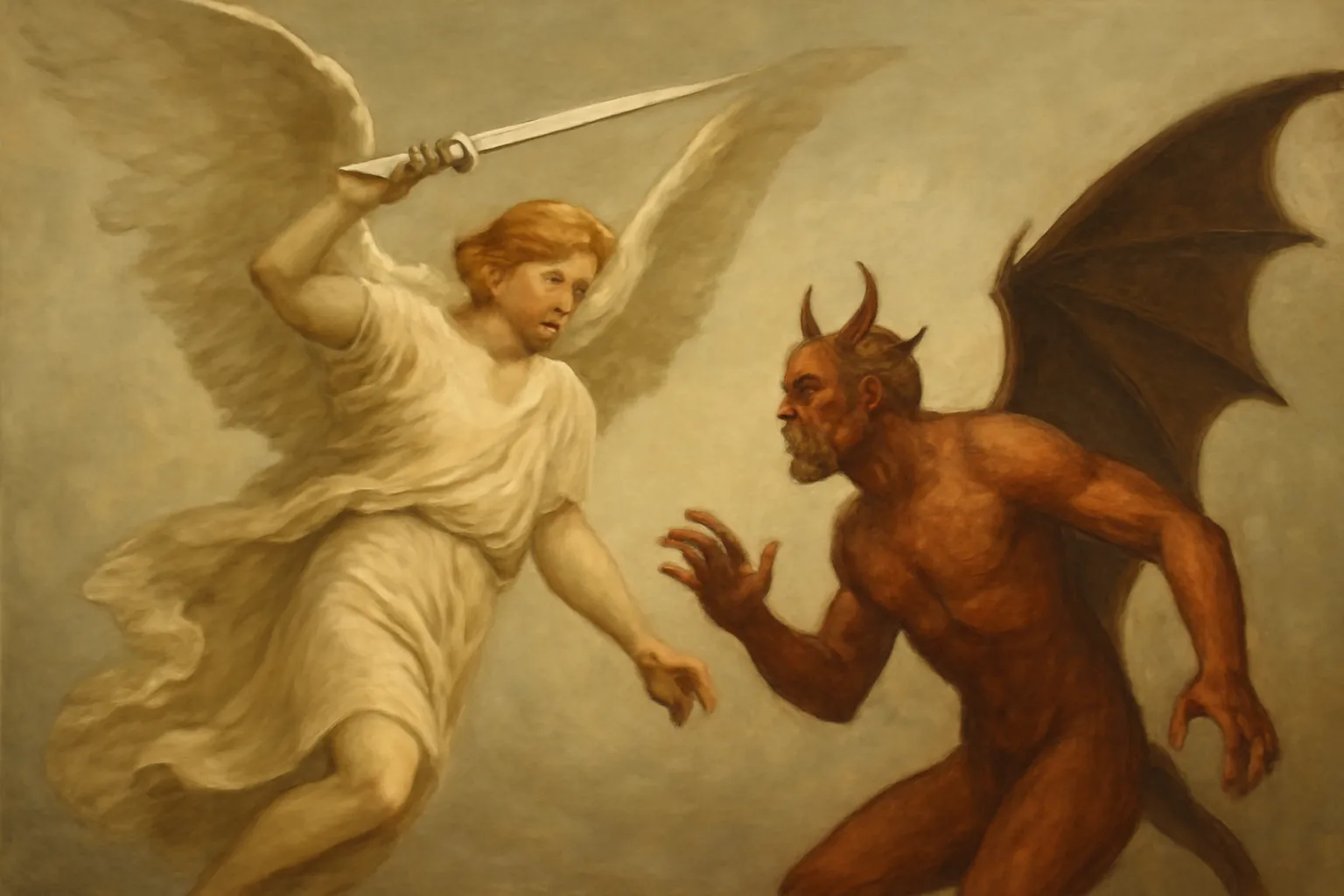
Whether you are revisiting the Angels & Demons book as a long-time fan or approaching the Angels & Demons novel for the first time, this guide aims to provide a thorough, educational look at the work. The Angels & Demons narrative by Dan Brown blends thriller pacing with a deep dive into symbols, science, and religious history. This article explores the complete guide to the text, offering a comprehensive summary, along with in-depth analysis of themes, characters, setting, and cultural impact. For readers who seek both entertainment and a platform for critical thought, the Angels & Demons book stands as a pivotal piece in Brown’s oeuvre and in the broader conversation about science and faith.
Setting: CERN in Switzerland, Rome and Vatican City, and other European locales
Format: Fast-paced, short chapters designed to propel a chase narrative with frequent twists
Relation to other works: This Angels & Demons book is often treated as a prequel to The Da Vinci Code in terms of Langdon’s adventures, though the internal chronology is separate and self-contained
In the larger arc of Brown’s fictional universe, the Angels & Demons book engages readers with the timeless tension between science and religion, while weaving a clever, symbol-laden mystery that invites readers to interpret codes, ambigrams, and historical allusions. It’s useful to approach this work not only as a suspenseful page-turner but also as a study in how popular fiction can engage with complex ideas about knowledge, power, and meaning.
Plot summary: a detailed walkthrough
Act I: The discovery and the conspiracy begins
The Angels & Demons narrative opens with a provocative premise: a renowned physicist is found dead at CERN, the European Organization for Nuclear Research. The act establishes the central MacGuffin of the story—the stolen antimatter canister—and introduces the looming threat to the Vatican during a critical moment in the Catholic Church’s life: a papal conclave used to select a new pope. The Angels & Demons tale pivots on a clockwork-like structure, where the discovery at CERN triggers a chase that spans continents and cultural worlds, from cutting-edge physics labs to the sacred spaces of Rome.
Langdon, the book’s main character, is a professor of symbology whose expertise in signs, symbols, and codes becomes essential to deciphering a path through a web of clues. The Angels & Demons chronicle follows his inadvertent pull into a high-stakes plot when Vittoria Vetri, a brilliant physicist who is tied to the CERN investigation, crosses his path. Their partnership—formed under pressure—drives the story forward as they realize that the conspirators intend to manipulate both science and faith to achieve a dramatic aim.
Act II: The chase across Rome and the Vatican
As the Angels & Demons novel unfolds, the action migrates from the lab’s white walls into the ancient streets and Baroque architecture of Rome and the Vatican. The villainous organization at the heart of the plot is the modern revival of the Illuminati, a name steeped in historical legend but reimagined here as a contemporary force with a modern, high-tech plan. Their objective is to “illuminate” the world by striking at the heart of the Catholic Church during the papal conclave, thereby upending a centuries-old institution and forcing a reconfiguration of power dynamics between science and religion.
In practical terms, the Angels & Demons story centers on the abduction of four leading cardinals—collectively referred to as the “Preferiti”—and the strategic use of the ancient confinement spaces of Rome to misdirect Langdon and Vittoria. A crucial thread of the narrative concerns the stolen antimatter canister, whose destruction or uncontrolled release would produce a cataclysmic explosion with consequences for the Vatican and the wider world. The tension hinges on the timing of the conclave, as the church’s governance is upended while the conspirators attempt to force a change in leadership aligned with their vision of progress and reason.
In the climactic passages of the Angels & Demons fiction, the protagonists uncover how clues, architecture, and symbols intersect to reveal the plan’s architecture. Brown’s technique—alternating between the investigative vs. the architectural—helps the reader feel the pulse of discovery in a way that mirrors Langdon’s scholarly method. The tension rises toward a resolution in which the intellectual puzzle yields to a moral conclusion: the struggle is not merely about who controls the levers of power but about what kind of knowledge society chooses to value and how such knowledge is shared or weaponized.
Readers of the Angels & Demons book will encounter a denouement that ties together the leitmotifs of illuminated signs, the ethics of scientific discovery, and the responsibilities of those who hold influence within religious and scientific communities. The ending invites readers to reflect on questions of faith, science, secrecy, and accountability—key themes that define the Angels & Demons narrative as more than a simple treasure hunt for codes and images.
Characters: who drives the angels and the demons?
Robert Langdon: The calm, intellectually curious professor of symbology who embodies the book’s core question—how do signs and symbols shape belief, and how can deciphering them affect real-world events?
Vittoria Vetri: A physicist whose connection to CERN provides the bridge between science and the central conspiracy; her expertise is critical to navigating the antimatter crisis and understanding the scientific stakes at play.
The Illuminati: A revived, secretive modern faction that seeks to challenge the authority of the Catholic Church and to use the threat of a catastrophic event to force a reordering of power—an idea the Angels & Demons novel foregrounds as a warning about the dangers of ideological extremism and the weaponization of knowledge.
The cardinals: The four leading candidates for papal leadership who figure into the plot as moral and political tokens within the conspiracy; their fate is intertwined with the Church’s response to the crisis and the public’s perception of its leadership.
The Vatican and its guardians: The setting’s institutional actors—cardinals, guards, and church officials—who interpret the signs Langdon reads and who face a moment of crisis that tests faith, duty, and public trust.
The Angels & Demons characters are crafted to illustrate the tension between intellect and belief, skepticism and devotion. Langdon’s personality—measured, methodical, and patient—provides a lens through which readers can explore the book’s exploration of symbols and meaning. Vittoria Vetri’s role adds a counterpoint of empirical rationality and technical expertise, enriching the dynamic of problem-solving as a joint enterprise between disciplines. The Illuminati as a concept—both as a historical label and a modern construct—functions as a narrative device that invites readers to consider how myths persist and how they can be weaponized in the modern era.
Themes and analysis: core ideas at the heart of the Angels & Demons narrative
The Angels & Demons analysis reveals several recurring themes that enrich the reading experience beyond the surface thriller. Below are some of the most enduring topics the Angels & Demons book engages with:
Science vs. religion: At its core, the novel pits a rational, empirical worldview against a theological, faith-based framework. The Antimatter crisis serves as a literal and metaphorical battleground where science and faith contend for legitimacy and moral authority. The text invites readers to weigh the responsibilities that come with scientific discovery and the ethical limits that keep knowledge from becoming a tool of destruction.
Symbolism and interpretation: The Angels & Demons story hinges on how signs are decoded. Langdon’s expertise reveals how symbols—ambigrams, icons, and architectural motifs—carry cultural memory and political weight. The book suggests that interpretation is never neutral; it shapes actions and, sometimes, destinies.
Secret histories and hidden knowledge: The Illuminati as a concept embodies the allure of hidden, “forbidden” knowledge and the danger of power wielded behind closed doors. The author’s portrayal invites readers to consider how access to information can redefine social order and influence historical trajectories.
Power, authority, and legitimacy: By featuring a papal conclave in the middle of a crisis, the novel probes how legitimacy is constructed in institutions with long-standing traditions. The tension between the Church, science institutions like CERN, and political actors in Rome poses the perennial question of who gets to decide what counts as “truth” and who bears responsibility for its consequences.
Ethics of discovery: The antimatter plot raises questions about the ethical use of potentially world-changing discoveries. The narrative invites readers to reflect on how scientific breakthroughs should be governed and who bears accountability for their use or misuse.
Symbolism and motifs: language of light, knowledge, and secrecy
The Angels & Demons symbolism center around the idea of illumination—both literal and figurative. Key motifs include:
Ambigrams: A central visual and verbal motif, ambigrams are words or phrases designed to read identically (or with intentional symmetry) from different perspectives. In the Angels & Demons book, ambigrams underscore themes of duality—truth vs. deception, science vs. faith, and surface appearance vs. hidden meaning.
Light and darkness: The tension between illumination (knowledge, clarity) and darkness (ignorance, fear) recurs throughout the narrative, structuring scenes in laboratories and religious spaces alike.
Architecture as message: The settings—CERN’s modern laboratories and Rome’s ancient churches—are not just backdrops but active agents that communicate symbolic content. The arrangement of spaces becomes part of the puzzle Langdon deciphers.
Secrecy and exposure: The plot’s secrecy gradually yields to exposure as clues accumulate, mirroring the broader theme of how truth seeks light and how concealment can be a protective tactic or a weapon.
Structure, pace, and style: how the book works as entertainment and as analysis
The Angels & Demons structure is designed for momentum. Brown uses short chapters and alternating viewpoints to create a brisk pace that sustains suspense while inviting readers to engage in puzzle-solving. The Angels & Demons narrative style blends technical information with accessible prose, making complex ideas—such as antimatter physics and papal governance—readable for a broad audience. This balance is a hallmark of the Angels & Demons book that has helped it reach a wide readership.
From a literary perspective, the text employs a classic thriller arc: an inciting incident, escalating complications, a race against time, and a climactic convergence of forces. The pacing often hinges on a ticking clock—whether literal (time-sensitive threats) or metaphorical (the approaching conclave)—which keeps readers engaged even as the protagonist deciphers clues that cross disciplines and geographies. For readers studying narrative technique, the novel offers an accessible study in how to maintain momentum without sacrificing coherence.
Setting and research: how place shapes meaning
The Angels & Demons setting grounds the story in real institutions and landmarks, occasional fictional interventions aside. CERN provides a scientifically plausible beginning, grounding the conspiracy in genuine questions about particle physics and energy generation. The Vatican and Rome, with their centuries of architectural and religious symbolism, offer a canvas where symbolism, history, and current events intersect. The combination of a modern research laboratory and an ancient religious center makes the Angels & Demons setting a deliberate juxtaposition: a fight over the future of human knowledge situated within the timeless walls of tradition.
Because the book leans on real-world references—by design—readers gain exposure to some genuine scientific concepts and historical contexts. The author’s research into antimatter, particle physics, and Catholic ceremonial life lends credibility to the fictional plot, even as the narrative embellishes details to support suspense. The Angels & Demons world invites readers to consider how settings can act as characters in their own right, shaping mood, conveying themes, and guiding readers toward conclusions that emerge from interaction with place.
Historical and scientific references: a bridge between fact and fiction
The Angels & Demons novel draws on well-known historical motifs—the history of religious reformations, the idea of secret societies, and the tension between science and faith. While the Illuminati in Brown’s fiction is a contemporary revival rather than a literal history, the book leverages the cultural resonance of the Illuminati myth to explore ideas about hidden power structures and information control. On the scientific side, antimatter is a real concept with legitimate significance in physics. The novel uses antimatter’s dramatic potential to create a high-stakes scenario that requires both speculative imagination and plausible scientific explanation for the reader to suspend disbelief.
For readers seeking a deeper dive, this section of the Angels & Demons guide encourages them to explore real-world sources about the history of the Illuminati, the papacy, the Vatican’s governance, and CERN’s scientific pursuits. The goal is not to replace Brown’s fiction with academic treatises but to enhance understanding of what the book is engaging with—how myth and fact intersect, and how popular fiction can spark curiosity about history and science.
Reception, critique, and cultural impact
The Angels & Demons reception upon release was largely positive among readers who enjoyed fast-paced thrillers with a strong speculative twist. Critics often noted the book’s brisk tempo, intricate plotting, and ability to blend popular science with religious mythology. As with many of Brown’s works, the Angels & Demons book was praised for its page-turning energy and its willingness to tackle controversial topics. Some critics, however, argued that the novel overreaches in its simplifications of religious and scientific debates, or that the reliance on a secret society as a plot engine can feel contrived to readers seeking more grounded realism.
Over time, the influence of the book—along with its more famous successor The Da Vinci Code—contributed to a broader cultural phenomenon: popular fiction that invites readers to consider the interplay of science, religion, power, and symbols. The Angels & Demons narrative is frequently studied for its approach to how thriller fiction can embed philosophical questions within a fast-moving chase plot. For readers and scholars, it offers a case study in how contemporary popular literature uses emblematic imagery and historical allusion to provoke thought about enduring human questions.
The Angels & Demons film adaptation released in 2006 brought the book to a broader audience. Starring Tom Hanks as Langdon, the movie translates many of the novel’s high-energy sequences into visual action, with set pieces in CERN and Rome designed for cinematic impact. While the film preserves the core premise—the murder at CERN, the antimatter threat, and the danger to the Vatican—the adaptation makes some changes to characters, pacing, and the sequence of events. In some cases, the adaptation emphasizes thriller spectacle and streamlined plotting, which can leave certain nuances from the book’s symbolism and some of the philosophical debates less developed on screen.
For readers who enjoy comparing media versions, the contrast between the Angels & Demons book and its film adaptation offers a fruitful exercise in adaptation theory: what is gained and what is lost when a literary work is translated to film? The novel’s internal puzzles and literary devices may be less prominent in the movie, but the visceral energy of the chase and the moral questions at stake still come through in a way that can spark renewed interest in reading the Angels & Demons book or revisiting its pages after watching the film.
Reading order and relation to The Da Vinci Code
For readers who are exploring Dan Brown’s major works, it’s helpful to situate the Angels & Demons book within the larger arc. Although marketed and remembered as a standalone thriller, this Angels & Demons novel also serves as a prequel in terms of Langdon’s broader chronology and the thematic universe Brown builds across his books. In terms of narrative sequence, some fans enjoy reading The Da Vinci Code after Angels & Demons to see how Brown expands on Langdon’s experiences with symbols, codes, and the tension between rational inquiry and religious tradition. However, it is not essential to read them in a particular order to understand either work; each stands on its own while contributing to a shared fiction universe.
Who should read this book: recommendations and reader guidance
The Angels & Demons book is well-suited to readers who enjoy:
Thriller narratives with puzzles and codes
Material that engages with science and religion as competing, compelling forces
Stories that weave history, architecture, and symbolism into a fast-paced plot
Compelling protagonists who combine intellect, skepticism, and curiosity
Readers who prefer strictly fictional, purely fictional science without real-world references might find some aspects of the Angels & Demons book less precise. Yet even skeptics can appreciate the way the text uses real-world settings and ideas as a scaffold for an imaginative, thought-provoking thriller. The Angels & Demons narrative invites readers to question assumptions, seek evidence, and consider the moral dimensions of discovery—a contemporary question that resonates beyond the page.
Key takeaways and quick study guide
Central conflict: The struggle between access to knowledge and the potential misuse of that knowledge, played out against a backdrop of faith-based authority.
Symbolic literacy: Langdon’s expertise demonstrates how decoding symbols can reveal hidden connections and motivate action within a narrative framework.
Ethical reflection: The antimatter crisis becomes a lens for contemplating the responsibilities that come with powerful scientific capabilities.
Historical imagination: The Illuminati as a narrative construct allows readers to interrogate how myths shape present-day fears and ambitions.
Setting as meaning: The interplay between CERN’s modern laboratory culture and the Vatican’s ancient rituals illustrates how space and structure influence perception and decision-making.
Conclusion: why Angels & Demons endures as a guide to mystery and meaning
In sum, the Angels & Demons book offers more than a pulse-pounding thriller. It presents a complex meditation on knowledge, power, and responsibility, wrapped in a narrative that moves quickly from one symbolic clue to the next. The complete guide to the Angels & Demons narrative reveals how Dan Brown constructs a world where science and faith are in constant dialogue, sometimes in conflict and sometimes in collaboration. The work’s enduring appeal lies in its capacity to entertain while inviting readers to reflect on enduring questions about how humans seek truth and how that search shapes cultures, institutions, and moral judgments. For students of literature, philosophy, and cultural studies, the Angels & Demons book remains a fertile text for analysis—an accessible entry point into discussions of symbolism, ethics, and the public life of science and religion.
Whether you call it the Angels & Demons novel, the Angels & Demons story, or the Angels & Demons book here explored in depth, this work continues to stimulate debate about knowledge’s double-edged power. Its pages remain a compelling invitation to think critically about how symbols shape reality, how communities defend their beliefs, and how a single conspiracy can illuminate broader truths about human curiosity, ambition, and responsibility.

 Por Laura Jara