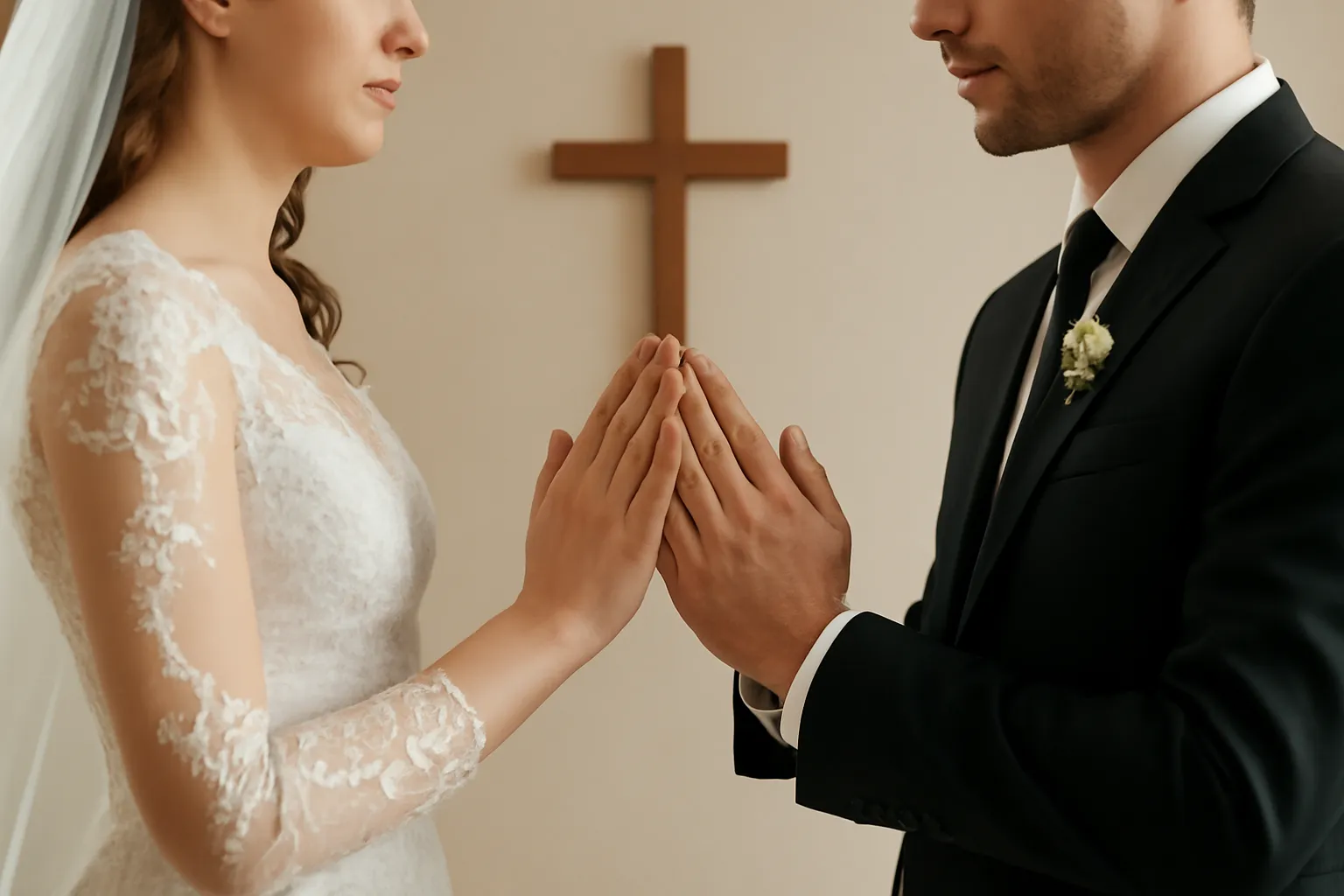
Understanding Christian Marital Vows: Meaning and Purpose
Christian marital vows are more than poetic promises spoken at the altar. They are a sacred covenant before God, family, and community that binds two people together in a lifelong partnership. In many Christian traditions, vows express not only affection and commitment but also a spiritual and ethical calling: to imitate Christ’s love, to honor one another, and to build a home rooted in faith.
At their core, Christian vows are statements of intent that shape behavior, guide decision-making, and provide a framework for mutual responsibility. They are rooted in Scripture, informed by church teaching, and shaped by personal experience. The act of making vows publicly is meant to remind both spouses—and witnesses—that marriage is a daily, covenantal choice grounded in love, loyalty, and trust in God.
Across traditions, vows may take different forms—formal liturgical language, contemporary expressions, or a blend of both. Regardless of wording, the underlying aims are consistently present: to commit to a life together in ways that honor God, safeguard the health and flourishing of the couple, and nurture the well-being of any family that may grow from the union.
The Meaning Behind Christian Vows: Core Concepts
When couples craft or select their vows, several core concepts often appear. These concepts help define what it means to live out a Christian marriage day by day:
Lifelong fidelity: A promise to remain faithful, physically and emotionally, through seasons of joy and hardship alike.
Unconditional love: A commitment to love that seeks the good of the other person, even when it is challenging or costly.
Mutual service and humility: A recognition that marriage is a partnership where each person serves the other, sometimes sacrificially, as an expression of love for God.
Shared faith and spiritual growth: A vow to grow together in faith, to pursue a Christ-centered life, and to raise children (if desired) within a Christian framework.
Protection and care: A pledge to safeguard one another’s dignity, health, and well-being, and to address conflict with grace and repentance when needed.
Covenantal language: Framing the relationship as a divine covenant rather than a merely human contract, with God as a witness and guide.
The language of vows often echoes biblical imagery. Passages such as Genesis 2:24 (“Therefore a man shall leave his father and his mother and hold fast to his wife, and they shall become one flesh.”) and Ephesians 5:25-33 (which speaks to love, sacrifice, and mutual care) inform the content of vows and help couples articulate a vision for their marriage as part of God’s plan.
Variations of Christian Vows Across Traditions
Christian vows vary in form and emphasis depending on tradition, culture, and the couple’s preferences. Below are common patterns you might encounter, along with example lines that illustrate the flavor of each tradition.
Traditional Catholic Vows
In a Catholic wedding, vows are typically spoken by the couple to one another in the presence of God and the church, often within a defined liturgical framework. The language emphasizes sacramental reality and the lifelong character of the promise.
Sample Catholic-style vow (paraphrased): «I, [Name], take you, [Name], to be my husband/wife, to have and to hold from this day forward, for better, for worse, for richer, for poorer, in sickness and in health, to love and to cherish, until death parts us, according to God’s holy will. In the presence of God I make this vow.»
Variation: Some couples add a phrase acknowledging their Christian community and the grace of God that sustains them.
Many Anglican, Methodist, Lutheran, and other Protestant traditions use vows focused on mutual fidelity, love, and partnership, with a strong emphasis on Scripture, prayer, and the church community.
Sample Protestant-style vow: «I, [Name], take you, [Name], to be my partner in life and my love from this day forward. I promise to be faithful in affection and in action, to encourage you in your God-given gifts, to walk with you through joy and sorrow, and to seek God’s help in building a life together in Christ.»
Variation: Some couples include a line about leadership, service, or shared mission, depending on their church’s teaching.
Orthodox Christian Vows
In Orthodox weddings, the vows are often intertwined with the ritual of crowning and a liturgical sequence. The couple participates in a sacred moment that emphasizes unity, sanctification, and the presence of the Holy Spirit.
Sample Orthodox-inspired language: «I take you, [Name], as my spouse and my steadfast partner, and I pledge to love you, honor you, and cultivate unity in Christ. May the crowns we wear symbolize the glory of God that crowns our union as we walk together in faith.»
Non-denominational and Contemporary Christian Vows
For many couples, contemporary Christian vows prioritize personal language, honesty, and clarity while still focusing on faith, commitment, and shared life in Christ.
Sample contemporary vow: «I promise to love you as your best friend, to honor you in every season, and to serve you with joy as we grow in our faith. I will be present to you, listen to you, and strive to reflect Christ’s love in all I do, today and every day of our lives.»
Interfaith and Multicultural Contexts
When one or both partners come from different faith backgrounds, vow language can honor both traditions while keeping the ceremony centered on Christian faith. Some couples write vows that affirm Christ, invite blessing, and acknowledge the journey of faith they share.
Sample interfaith-conscious vow: «I vow to love you as we seek God’s guidance together, to honor your spiritual path, and to invite Christ’s light into our home. May our lives be a witness to hope, grace, and the transforming power of God’s love.»
Across all variations, the structure often centers on three movements: a declaration of intent to the spouse, a commitment to live out that intent through daily actions, and a reference to God’s grace or presence guiding the marriage.
How to Write Sacred Wedding Vows: A Practical Guide
If you want to write your own sacred vows, you are engaging in a meaningful spiritual exercise. The following steps can help you craft vows that are authentic, theologically sound, and deeply personal.
Reflect on Scripture and theology: Spend time with biblical texts about love, marriage, and covenant. Passages such as Genesis 2:24 and Ephesians 5:25-33 can inform the tone and content. Note phrases that resonate with you, such as love, sacrifice, unity, and mutual submission.
Outline the commitments you want to make: Consider categories like fidelity, nurturing faith, mutual respect, care in illness and health, financial honesty, and support during life’s transitions.
Consult your partner: Share ideas with your fiancé(e) and discuss what each of you wants to express in the vows. This helps ensure the vows reflect a united vision rather than two separate promises.
Consult your spiritual advisor or officiant: A pastor, priest, or spiritual leader can offer guidance on liturgical language, tradition, and the ceremony’s tone.
Decide on form and tone: Will your vows be formal, poetic, conversational, or a blend? Consider the setting, the congregation, and the tradition you’re honoring.
Draft in the present tense and positive language: Present tense (I vow) emphasizes ongoing action. Positive phrasing (I will, I commit) keeps the promises forward-looking and actionable.
Be concise but meaningful: A well-crafted vow is typically a few short paragraphs or a series of tight sentences. Aim for clarity and impact without being overly lengthy.
Include a personal phrase or story: A brief memory, a shared value, or a moment you both treasure can anchor the vows in real life.
Practice aloud: Read the vows aloud several times, maybe with the officiant or a trusted friend, to ensure rhythm, pronunciation, and emotional resonance.
Align with the ceremony’s theological framing: Ensure your vows harmonize with the faith tradition, the sermon, the liturgy, and any sacramental elements if applicable.
The following templates offer starting points you can tailor to your relationship and faith tradition. You can use them as-is or adapt them into more personal wording.
First-person Vow Template
I, [Name], take you, [Name], to be my husband/wife. I promise to love you completely, to honor you, and to stand by you in good times and bad. I will be faithful to you, protect your dignity, and seek your good above my own. I will encourage your faith and walk with you as we seek to follow Christ together, today and every day of our lives.
We Vow Template (Mutual Commitments)
We vow to love one another with the love Christ gives us, to cherish one another’s joys and to carry one another’s burdens. We promise to grow in grace, forgive quickly, listen deeply, and speak truth with love. We will build a home oriented toward service, generosity, and hospitality, and we will raise any children (if God blesses us with them) in the nurture and admonition of the Lord.
Blessing-focused Template
I vow to be a blessing to you, to celebrate your gifts, and to support your hopes. I pledge to seek peace, to practice humility, and to submit to God’s leading in our marriage. May our union be a visible witness to grace, mercy, and the transforming power of Christ’s love.
Short-form Contemporary Vows
Today I promise to be your friend, your partner, and your teammate. I promise to listen, to learn, and to grow with you in faith. I will love you for who you are, I will walk with you through every season, and I will seek to reflect God’s love in all I do.
Sample Vows by Theme: Variations You Might Adopt
Here are specialized lines you can mix and match to suit your personality and spiritual emphasis.
Service and Sacrifice: I choose you for the long haul, to serve you with joy as I serve Christ, even when it costs me something I value.
Love and Fidelity: I promise to remain faithful in every season, to love you deeply, and to keep you at the center of my life.
Faith and Prayer: We will seek God together in prayer, trust His guidance, and invite His peace into our home.
Grace and Forgiveness: When we fail each other, I will seek forgiveness quickly and extend grace generously.
Hope and Vision: We will dream a shared vision for our family, our ministry, and our witness in the world.
Words to Consider Avoiding or Modifying
While there is no universal rule, some phrases can be reworked to fit a Christian, theologically grounded ethic. Consider:
Replacing gender-specific language that might feel exclusive with inclusive, respectful language (e.g., “I will love you and honor you” rather than “I will obey you”).
Avoiding vows that express coercion or rigid control; instead, emphasize mutual consent, respect, and freedom in Christ.
Framing all commitments in terms of mutual service and shared vocation, rather than mere sentiment.
The Role of the Officiant, the Community, and the Sacrament
In many Christian contexts, vows are part of a broader sacred rite. The officiant helps articulate the theology of marriage, prays for the couple, and anchors the ceremony in the Church’s life. The witnesses—family, friends, and the broader faith community—serve as a moral and spiritual support system, reminding the couple that their union is embedded in a larger mission: to reflect Christ’s love to the world.
For couples in sacramental traditions, vows are interwoven with the belief that marriage is a grace-filled gift. This belief shapes the wording of vows, the structure of the ceremony, and the sense in which the couple receives divine aid to live out their promises.
Common Pitfalls and How to Avoid Them
Even well-intentioned couples can run into challenges when writing or delivering vows. Consider these practical cautions and tips:
Overlong vows: Keep vows concise enough to be memorable and emotionally sustainable during the ceremony.
Vowing beyond one’s understanding: Reflect on what you can responsibly promise, given your own spiritual maturity and the couple’s shared life.
Ambiguity: Be specific about commitments (e.g., “I will pray for us,” “I will listen before speaking”).
Misalignment with tradition: Ensure the vows align with the liturgy and expectations of your faith community to avoid tension during the ceremony.
Public vs. private promises: Some vows belong primarily to God and the spouse and may benefit from a quiet moment of personal reflection after the ceremony as a backstage commitment.
Relating Vows to Covenant Theology and Spiritual Formation
Christian vows can be read as a form of covenant theology, where marriage is a sign of God’s covenantal love for humanity. This perspective invites couples to view their marriage not only as a personal relationship but as a spiritual practice that forms character, deepens faith, and equips them to participate in God’s work in the world.
In practice, this means vows can include commitments to spiritual disciplines together—prayer, worship, Bible study, service, and mission—so that the marriage becomes a training ground for love that bears witness to Christ.
Scriptural Anchors and How They Inform Vows
Many couples intentionally reference Scripture in their vows. Some anchor lines directly in verses, while others draw inspiration from biblical themes. Here are a few anchors and ideas for weaving them into vows:
Genesis 2:24 as a vow to unity: “We will become one flesh in partnership with God.”
1 Corinthians 13 (the love chapter) as a template for character: “We will endure, hope, and persevere in love.”
Colossians 3:14 on love binding all virtues: “And over all these virtues put on love, which ties them all together.”
Romans 12:9-10 regarding genuine love and honor: “Let love be sincere; honor one another above yourselves.”
Prayerful Preparation: How to Begin Writing Your Sacred Vows
If you want to embark on vow-writing with spiritual discipline, consider this step-by-step approach:
Choose a quiet time for reflection and prayer, inviting God to shape your words.
Write freely about what your partner means to you and what Christ is asking of you in this marriage.
Ask for feedback from a trusted spiritual mentor or pastor, ensuring theological alignment.
Refine your language to be clear, heartfelt, and pastorally appropriate for the ceremony’s audience.
Practice delivering the vows aloud, focusing on presence, tone, and pacing.
Resources for Deeper Understanding
To deepen your understanding of Christian marital vows, consider exploring:
Pastoral guides on wedding ceremonies in your denomination.
Scriptural study plans focused on love, marriage, and covenant.
Wedding ceremony scripts that model traditional and contemporary vow forms.
Counseling resources for couples preparing for marriage, often offered by churches or Christian counselors.
Conclusion: Embracing Vows as a Sacred Path
Christian marital vows are an invitation to a shared journey rooted in faith, hope, and love. They are not merely ceremonial words but commitments that shape daily life, influence family culture, and reflect the grace of God at work in two people. Whether you adopt traditional liturgical language, craft a modern personal expression, or blend elements from multiple traditions, the most meaningful vows arise from honest reflection, prayerful discernment, and a shared commitment to walk with Christ at the center.
As you prepare, remember that the ultimate purpose of your vows is to cultivate a partnership that honors God, serves one another, and bears witness to the transformative power of love. May your words be a living sign of that covenant—one you can echo with confidence, humility, and joy for the rest of your days together.

 Por Laura Jara