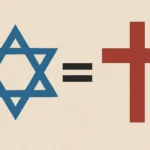
The story of Messianic Judaism in Israel unfolds across several generations and reflects a distinctive blend of Jewish heritage and Messianic faith. From the late twentieth century onward, small Hebrew-speaking congregations and informal house groups began to coalesce, driven by diaspora missionaries and Israeli followers who sought a religious synthesis rooted in both the Tanach (Hebrew Bible) and the Brit Chadasha (New Testament). This convergence produced a unique religious landscape in which people identified themselves as Jewish in ethnicity and culture while embracing belief in Jesus as the Messiah.
In the early era, Messianic Jewish activity arrived in Israel through a combination of international mission networks and local curiosity. Small gatherings formed in major urban centers such as Jerusalem and Tel Aviv, with practitioners using Hebrew liturgy, singing traditional Jewish melodies, and reading sacred texts in both Hebrew and English. Against a backdrop of a long-standing Rabbinic framework, these early groups navigated questions about authority, belonging, and authenticity. Were they Jewish believers in Jesus, Christians who used Jewish forms, or something else entirely? The ambiguity itself became a defining feature of the movement for years to come.
From the 1990s into the 2000s, the Israeli landscape saw a gradual expansion of congregations and educational programs. This era featured more structured leadership, formal study centers, and outreach initiatives aimed at both Israeli-born Jewish communities and immigrant populations. Advocates often stressed that Messianic Judaism in Israel should be understood not simply as a Western import but as an indigenous expression in which Hebrew-language worship, a strong sense of covenantal identity, and a commitment to evangelistic mission intersected in everyday life. Meanwhile, debates about acknowledgement by the Rabbinic establishment and by Israeli civil society persisted, shaping the ways in which these communities could operate, own property, or participate in public life.
Trying to map this history requires acknowledging several strands that have shaped it. One line comes from international Messianic networks that offered theological education, literature, and traveling teachers. A second line comes from Israelis who had personal encounters with what they described as biblical faith and who chose to build local communities centered on adherence to Jewish forms while maintaining belief in Jesus as the Messiah. A third line concerns the evolving legal and social context of Israel itself, where the state guarantees freedom of religion but political and religious authorities often draw sharp boundaries around what counts as Judaism versus Christianity.
Origins and early development
In the earliest phase, Messianic Judaism in Israel tended to emerge as a movement of religious seekers who found in the Hebrew Bible a framework that could accommodate a personal faith in Jesus. Many of these early believers emphasized continuity with Jewish ritual life—observing Shabbat, celebrating the festivals, keeping kashrut in practical ways—and they spoke of Jesus (often rendered as Yeshua) as the awaited Messiah foretold in Jewish scripture. The use of Hebrew language in worship and teaching helped position these groups as part of the Jewish cultural landscape even as they drew outsiders through evangelistic outreach.
As time passed, some communities sought formal organization, establishing congregational life with leadership structures, outreach programs, and educational tracks. The trajectory included the creation of study resources and the formation of discipleship networks designed to train new adherents and to cultivate a sense of shared mission. This period also witnessed a pattern familiar in other parts of the world: a dynamic tension between maintaining Jewish ritual idioms and affirming Christian confession, a tension that would continue to influence both theology and public perception.
Growth, demographics, and geography
Today, Messianic Judaism in Israel encompasses a spectrum of communities scattered across urban centers and regional towns. While precise counts are difficult due to varying criteria for affiliation and the sociopolitical sensitivities surrounding religious identity, most observers agree that the movement comprises dozens of local congregations and a larger network of families and individuals who participate in periodic gatherings, online ministries, and Bible-based schools. The geographically diverse presence—particularly in areas with strong immigrant or evangelical Christian networks—has contributed to a mosaic of worship styles, ranging from intimate house meetings to larger fellowship halls with multilingual services.
Another facet of growth has been the multilingual character of many Israeli Messianic communities. Hebrew remains central in liturgy and teaching, reflecting the desire to root faith in the language of Israel. English-language material—sermons, study guides, and youth curricula—also plays a significant role, facilitating connections with global networks. In addition, some groups include Russian-language or Arabic-language elements to reach linguistic subgroups within Israel’s diverse society. This linguistic hybridity has helped the movement extend its reach beyond a narrow community and into broader social circles, including student groups, professionals, and families seeking a faith that integrates Jewish identity with personal belief in Jesus as the Messiah.
Legal and social context
The legal and social horizon for Messianic Jews in Israel is complex. The Israeli state recognizes freedom of religion, yet the Rabbinical Authority does not recognize Messianic Judaism as a form of Judaism in the sense used by the Rabbinate. This distinction has practical implications: it can affect whether individuals are deemed Jewish for purposes of the Law of Return (aliyah) or for certain civil recognitions. Many Messianic believers in Israel identify as Jewish by culture or descent while holding a set of beliefs that situate them in a separate religious category in official terms. The interplay between civil recognition and religious self-definition continues to influence the movement’s public visibility and its ability to participate in certain social programs, educational initiatives, or community services.
Beyond legal questions, the movement has faced social questions about evangelism in a country where conversion experiences, though protected by law, can be controversial. Some Israelis view attempts to persuade others toward belief in Jesus with skepticism, while others recognize the legitimate religious tradition represented by these communities. In some contexts, Messianic groups have faced pushback from sectors of mainstream Judaism and from secular circles alike. Yet, they have also found spaces of welcome within certain Christian networks and among Israelis who are attracted to a faith that emphasizes continuity with Jewish practice while affirming a personal commitment to Jesus as the Messiah.
Beliefs and Theology within Israeli Messianic Communities
The beliefs and theological positions held by adherents of Messianic Judaism in Israel are not monolithic. While many congregations share common ground in affirming Jesus as the Messiah and in honoring the authority of the Hebrew Bible, there is a spectrum of perspectives about how to interpret the relationship between the Old and New Covenants, how to observe Torah, and how to relate to the broader Jewish and Christian worlds. This range is also shaped by global Messianic movements, local interpretation, and personal spiritual experiences.
Core tenets and scriptural authority
Monotheism remains foundational: belief in one God who manifests as Father, Son, and Holy Spirit in many teachings while remaining a mystery that is ultimately beyond full human comprehension. For many Messianic Jews in Israel, the Trinity is acknowledged within a broadly monotheistic frame.
Yeshua the Messiah is recognized as the promised deliverer announced in Jewish scripture. Adherents affirm that Jesus fulfills Messianic prophecies and brings a new covenant attested in the Brit Chadasha.
Scriptural authority spans both the Tanakh (the Hebrew Bible) and the Apostolic writings. The dual emphasis on the Old and New Testaments shapes preaching, study, and worship. Some communities emphasize a cohesive reading plan in which the life of Jesus is interpreted through the lens of Torah and prophecy.
Salvation by faith through grace, with a personal response to the gospel considered essential for salvation. Views on the role of works, obedience, and the place of Jewish law in daily life vary by congregation, yet many emphasize a lifestyle of ethical living shaped by biblical commands.
Torah observance, law, and Jewish practice
Within Messianic Judaism in Israel, there is variability in how strictly congregants pursue Torah observance. Some groups emphasize a robust adherence to commandments—keeping kosher, honoring the Sabbath, and observing Jewish festivals with a Christ-centered interpretation. Others emphasize faith in Jesus while retaining a historically Jewish liturgical calendar but with less emphasis on ritual strictness. In practice, you may find weekly Shabbat services that begin with Hebrew prayers, song, and scripture readings, followed by teaching that centers on Jesus as the fulfillment of scriptural promises. Holiday observances often blend traditional Jewish customs with New Covenant reinterpretations, resulting in Seder-style Passover celebrations that highlight the person and work of Yeshua.
Despite these differences, most Israeli Messianic communities maintain a spiritual rhythm rooted in communal worship, study, and service. The practicing believer may participate in a weekly synagogue-like gathering, a home fellowship, or a service center that features preaching, prayer, and communal meals. Education for children and youth frequently combines biblical literacy with Christian catechesis, all while preserving elements of Jewish culture and language. The balance between honoring Jewish roots and professing faith in Jesus remains a defining feature of theological discourse within the movement in the land of Israel.
Identity and theology of the people of God
Another important thread concerns how the community understands the identity of the people of God. Many adherents describe themselves as part of a spiritual Israel that transcends ethnic boundaries. They see the church as the broader community of believers united in Christ across nations, while also affirming a special sense of belonging to the house of God within a Jewish framework. This dual identity often fuels discussions about evangelism, mission strategies, and how to engage with both Jewish and Christian audiences in Israel and abroad. It also shapes questions about biblical interpretation, eschatology, and the role of Israel in redemptive history as viewed through a Messianic lens.
Community Life and Social Fabric in Israel
The Messianic Jewish communities in Israel that have formed over the decades have created a distinctive social fabric. These communities are not isolated islands; they interact with secular society, with other Christian groups, and with segments of the Orthodox and Conservative Jewish ecosystems. The mix of translations, languages, and cultural cues gives rise to a rich but sometimes contested public presence.
Congregational life and worship
Worship formats range from evangelical-style praise bands and contemporary songs to more traditional liturgical approaches that borrow from Jewish musical modes and liturgy.
Services often begin in Hebrew, with portions of Scripture read aloud, followed by expository teaching that frames Jesus as the Messiah in light of Tanakh prophecy.
Many congregations maintain community meals, bible study sessions, and youth and children’s programs that aim to foster belonging and continuity across generations.
Education, training, and leadership
Training is a central concern for Messianic Judaism in Israel. Some communities run Bible institutes or partner with overseas institutions to offer theological education. Training often emphasizes a balanced approach to scripture, pastoral care, and missional activity. Leadership frequently emerges from local laypeople who have demonstrated commitment, theological curiosity, and pastoral gifting. While some congregations rely on international partners for material support and teaching staff, others prioritize homegrown leadership development to ensure continuity and local relevance.
Youth, families, and social life
For many Israeli Messianic families, faith is woven into daily family life and education. Children’s clubs, Sabbath meals, holiday gatherings, and service projects cultivate a sense of family solidarity and shared values. Outreach often targets peer networks and university campuses, seeking to provide a supportive community for young people navigating questions of faith in a secular society. Because Hebrew is central to cultural identity in Israel, youth programs frequently emphasize biblical literacy in Hebrew, accompanied by English-language resources and international connections that offer exposure to a larger Messianic community beyond national borders.
Challenges and Controversies: Navigating Identity and Public Life
The movement’s trajectory in Israel has encountered a range of challenges—legal, social, and theological—that shape how communities operate and how they are perceived. Understanding these pressures helps explain why Messianic Judaism in Israel remains a controversial but evolving facet of the country’s religious landscape.
Legal recognition and status
One of the most persistent issues concerns recognition as Judaism or as a distinct religious category. Because the Rabbinate does not classify Messianic Judaism as a strand of Judaism, individuals who identify as Jewish but who hold belief in Jesus may not be considered Jewish under rabbinic law for certain ceremonial or civil purposes. This distinction can affect personal status, eligibility for certain conversions, and participation in some religious life events. In practice, many adherents accept that their self-identity blends Jewish cultural roots with a faith in Jesus, while seeking to contribute to Israeli society through education, charity, and interfaith dialogue. The legal question remains contested, and policy shifts could alter how the movement is treated in the future.
Proximity to anti-missionary activism
Given debates about proselytizing and religious freedom, some Messianic groups encounter skepticism or opposition from individuals who view evangelism in sensitive contexts as an intrusion into Jewish life. This has led to a cautious approach in public outreach in certain municipalities and to careful engagement with local authorities to avoid friction. Yet, in other settings, Messianic congregations collaborate with Christian organizations to support humanitarian projects, educational programs, and community services that align with shared humanitarian values. The balance between evangelistic aims and respect for communal norms remains a central tension for many leaders in Israel.
Interfaith relationships and public perception
Interfaith dynamics are nuanced. Some Jewish neighbors express concern about the potential impact on identity formation, while other Israelis view the movement—when presented as a form of messianic Judaism that preserves Jewish ritual life—as a valid expression of religious freedom. Within the Christian world, Messianic Judaism in Israel often receives support from global evangelical networks that emphasize solidarity with Israel and shared biblical heritage. The complexity of these relationships means that community life is often marked by strategic collaboration, careful boundaries, and ongoing dialogue with both Jewish and Christian partners.
Social visibility and research
Academics, journalists, and policymakers have studied Messianic Judaism in Israel as part of broader inquiries into religious pluralism and minority religious movements. Researchers examine issues such as how congregations define themselves, how they integrate Jewish ritual life with New Covenant belief, and how they navigate legal frameworks. Public discourse sometimes frames the movement in sensational terms; however, thoughtful scholarship tends to highlight the everyday practices, institutional development, and spiritual motivations of people who participate in these communities. The goal of such work is to illuminate the diversity of Israel’s religious landscape rather than to adjudicate theological truth claims.
Global Context and Local Expressions
Although this article focuses on Messianic Judaism in Israel, it is useful to situate the Israeli experience within a broader international context. The Messianic movement has a global footprint that includes North America, Europe, Africa, and parts of Asia. In many places, Israeli believers maintain ties with international networks that offer theological education, missionary resources, and cross-cultural exchange. These global connections influence how Israeli congregations articulate their identity, conduct worship, and envision their mission within the land of the Bible. The interplay between local identity and global affiliation shapes the rhetoric of Belonging and the practical choices about programming, outreach, and partnerships.
Relationships with Jewish and Christian communities abroad
International partnerships can bring mutual enrichment. Israeli Messianic communities often welcome visitors, hosts for short-term missions, and long-term collaborators who help with teaching, translations, and social service projects. At the same time, these connections can raise questions about authenticity, cultural adaptation, and leadership legitimacy. The balance between staying rooted in Israeli culture and maintaining meaningful ties to broader Messianic networks is a recurring theme in strategic planning and spiritual discernment for leaders in Israel.
Mutual enrichment: Israeli culture and biblical imagination
One of the most distinctive features of Messianic Judaism in Israel is how biblical imagination intersects with everyday life. The stones of Jerusalem, the rhythms of Shabbat, and the language of biblical prophecy become a living backdrop for faith in Jesus as the Messiah. For adherents, this combination creates a unique spiritual grammar—one that honors Jewish memory while welcoming the claims of the gospel. The result is a religious experience that speaks to both Scriptural fidelity and mission-minded evangelism, all within a context that is deeply charged with history and hope.
Practical Implications for Individuals and Communities
For someone exploring or joining Messianic Judaism in Israel, several practical considerations arise. Understanding the history, beliefs, and community life described above can help in navigating questions of identity, belonging, and faith formation.
Discerning identity and belonging
Individuals may ask themselves: How do I understand my Jewish heritage alongside a belief in Jesus as the Messiah? What does it mean to participate in Hebrew-language worship while belonging to a global faith community? The answers are deeply personal and often negotiated in conversation with pastors, mentors, and fellow believers. For many, the path involves a sustained engagement with scripture, participation in a local congregation, and involvement in social service or outreach that embodies the values of faith, hope, and love.
Education and spiritual formation
Education is central to spiritual growth. Families and individuals frequently pursue Bible study, doctrinal instruction, and practical theology through local classes, online courses, and cross-border exchanges. In Israel, where language and cultural scripts differ, systems of study often emphasize bilingual materials and contextual interpretation of biblical passages. This approach helps adherents apply ancient texts to modern life—within the framework of Israeli society and the realities of the land described in biblical narrative.
Community engagement and public witness
Many Israeli Messianic communities engage in charity and social services, such as helping the needy, supporting vulnerable families, and participating in community-building activities that benefit wider society. These acts of service are seen as a practical outworking of faith and as a bridge for dialogue with neighbors who may hold different beliefs. While public evangelism can be sensitive in certain contexts, these communities often prioritize acts of compassion, education, and cultural exchange as channels for positive witness.
Conclusion: A Faithful Presence within a Diverse Israeli Landscape
In sum, Messianic Judaism in Israel represents a distinctive synthesis of Jewish tradition and Messianic belief that has developed through decades of history, shaped by theological diversity, and lived out in the daily life of congregations scattered across the country. Its history is a story of emergence, growth, and ongoing negotiation with the Rabbinic establishment and civil society. Its beliefs reflect a spectrum—from strong Torah-oriented practice to grace-centered frameworks—yet all share a common commitment to Jesus as the Messiah and to the enduring relevance of the Hebrew Scriptures. Its community life reveals a network of worship, education, youth work, charity, and interfaith encounter that seeks to be both faithful to biblical calling and responsive to the realities of modern Israel.
For readers who want to understand this movement more deeply, it is helpful to approach it with openness to its complexity: the ways in which people in Messianic Judaism in Israel articulate belonging, how they interpret scripture, and how they contribute to the social and religious fabric of a nation where identity—and faith—are often negotiated in public life. By recognizing the diversity within Messianic Judaism in Israel, observers can gain a more nuanced appreciation of a faith community that remains both a minority movement and a vibrant spiritual current within the broader Israeli tapestry.

 Por Laura Jara