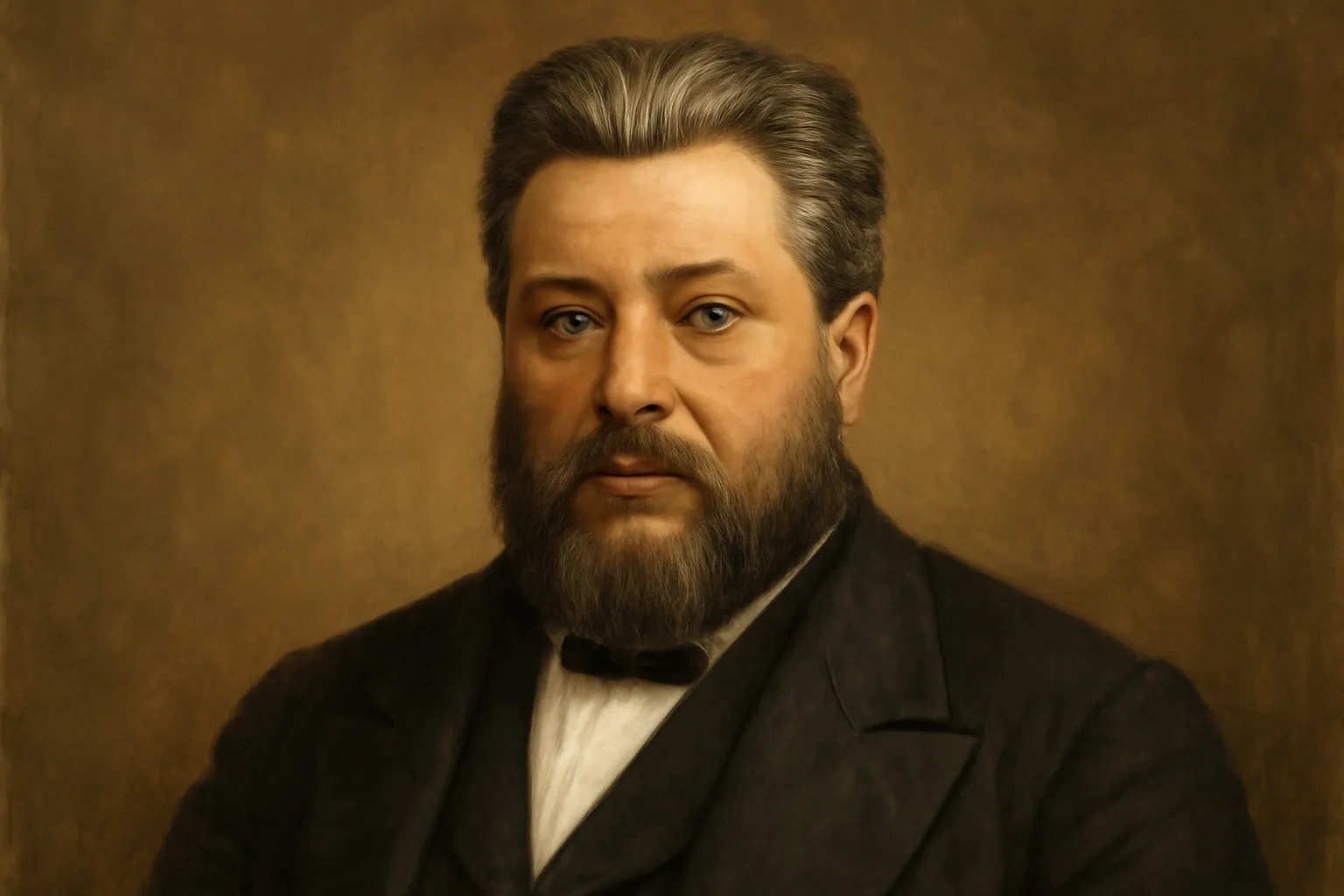
Charles Haddon Spurgeon (1834–1892) stands as one of the most influential figures in Baptist and evangelical history. Often called the Prince of Preachers, he cultivated a distinctive voice that blended accessible, forceful preaching with deep conviction about the authority of Scripture, the sufficiency of Christ, and the urgency of the gospel. This article surveys the life, work, and enduring legacy of Charles Spurgeon, presenting a portrait that spans his quirky humor, pastoral tenderness, and unyielding commitment to sound doctrine.
Born on January 19, 1834, in Kelvedon, a rural village in Essex, England, Spurgeon entered a world where faith and daily life intertwined closely. He was the son of a devout family; his mother, Susannah Spurgeon, would become a constant source of spiritual nurture and intellectual curiosity. The home atmosphere fostered a lifelong habit of reading, prayer, and careful study of the Bible—habits that later shaped his keystone practice of expository preaching.
Childhood and Formative Years
As a boy, Spurgeon exhibited a lively mind and a growing appetite for books. He participated in local schools and in the countryside milieu around Kelvedon, where he learned to articulate spiritual truths in plain terms. Even before leaving the village for greater opportunities, his early experiences with Scripture, prayer, and personal conviction laid the groundwork for a public ministry that would touch millions.
Path to Ministry
Conversion and Call
In his teens, Spurgeon experienced a pivotal moment of personal conversion and a sense of calling to preach. Contemporary accounts emphasize a dramatic encounter with the gospel that awakened a lifelong passion to proclaim the message of grace. He would later describe this turning point as the moment when the Bible’s authority and the necessity of faith in Christ crystallized in his own heart. From that point onward, a public preaching vocation became not merely a pursuit but a divine summons.
Early Public Preaching
Spurgeon began to preach in revival settings and small churches, where his plain language, earnest tone, and confident reliance on Scripture drew attention. His approach blended practical instruction with a robust theological core, appealing to lay listeners and scholars alike. His reputation grew rapidly as crowds gathered to hear him, sometimes numbering in the thousands, drawn by a preacher who could articulate the gospel with both warmth and precision.
Pastoral Leadership and Major Venues
New Park Street Chapel and the Metropolitan Tabernacle
In 1854, at about the age of twenty, Spurgeon accepted the pastorate of the New Park Street Chapel in central London. The chapel quickly became a focal point for revivalist preaching and biblical exposition. As attendance swelled, structural renovations and relocations followed. In 1861, the congregation moved into the grand Metropolitan Tabernacle in Southwark, a building famous for its 5,000-seat capacity and impressive acoustics. From that point, Spurgeon’s ministry became inseparably linked with this pulpit. He served there as pastor for more than three decades, shaping not only a local church but an entire movement within evangelical Protestantism.
Spurgeon’s preaching style combined exegetical clarity with practical application. He favored a direct, narrative-driven approach that opened up biblical texts to lay readers while still inviting serious study. His sermons often wove dense theology into accessible language, inviting listeners to understand the text in its own context while applying it to everyday life. The rhythm of his sermons—passionate exhortation balanced by careful exposition—became a model for many later preachers across denominations and continents.
Sermons, Writings, and Publishing Legacy
The Metropolitan Tabernacle Pulpit and Beyond
One of Spurgeon’s greatest legacies is his prolific output. He preached thousands of sermons and published numerous books, tracts, and articles. The multi-volume series commonly associated with his name, The Metropolitan Tabernacle Pulpit, collected his sermons from the pulpit into a format that could be studied and shared widely. These volumes helped democratize access to rigorous biblical interpretation and pastoral exhortation, making durable theological content available to readers who could not attend a weekly service.
Other Notable Continent of Writings
Beyond the Pulpit, Spurgeon produced a broad array of writings that covered theology, pastoral care, Christian living, and practical instruction for churches. His works included devotional guides, doctrinal treatises, and policies of church administration. Alongside his books, he also edited periodicals such as The Sword and the Trowel, a magazine that circulated his insights on preaching, missions, and church life.
Teaching, Training, and Educational Initiatives
Pastors’ College
A centerpiece of Spurgeon’s concern for the next generation of church leaders was the Pastors’ College. Established in the mid- to late-1850s, this institution was designed to train ministers who would carry a biblically faithful, pastorally sensitive gospel to crowded cities and distant communities alike. The college emphasized expository preaching, doctrinal fidelity, and practical ministerial skills—combining rigorous study with hands-on ministry experience. The college’s enduring mission reflects Spurgeon’s conviction that preaching is a trained craft as well as a spiritual calling.
Social and Charitable Enterprises
Spurgeon believed that a church’s health extended beyond Sunday services. He championed social enterprises and outreach programs designed to meet the needs of the poor and marginalized. His ministry was marked by a sustained interest in education, care for orphans, and the development of networks that linked church life with practical support for families, travelers, and workers in the city. These efforts reflected a broader evangelical impulse to translate gospel faith into tangible acts of mercy and justice.
Pastors’ College — a training ground for aspiring preachers and church leaders, rooted in the method and spirit of Spurgeon’s preaching.
Orphan care and benevolence — initiatives aimed at providing homes, education, and spiritual nurture for vulnerable children.
Support for global missions and evangelistic networks, helping to spread evangelical proclamation beyond Britain.
Legacy and Influence
Spurgeon’s influence extended far beyond the immediate confines of Victorian London. He helped crystallize a model of expository preaching that remains a standard in many evangelical and Reformed churches. His emphasis on the authority of Scripture, the centrality of Christ, and the urgent call to respond in faith has reappeared in countless sermons, studies, and curricula around the world. The idea of training preachers within a robust theological framework—an integrated vision of doctrine, pastoral care, and mission—became a lasting hallmark of Spurgeon’s approach to ministry.
Scholars and church leaders alike have described him as a global influence who helped shape the modern evangelical movement. His sermons were translated and circulated, and his published works reached audiences who could not attend the London services. In this sense, his impact transcended national boundaries, feeding into reform movements, Bible colleges, and local churches across continents.
Historical Significance and Theological Draft
As a theologian within the Calvinist Baptist tradition, Spurgeon held to the sovereignty of God, the necessity of personal conversion, and the sufficiency of grace for salvation. He argued for the urgency of evangelism, the need for pastoral shepherding, and the importance of congregational discipline within a church polity that respected the local church’s autonomy. He navigated a period of rapid urban growth, industrial change, and social upheaval, offering a theological framework that spoke to these challenges with clarity and hope.
Critiques, Challenges, and Debates
Like any major figure in church history, Spurgeon’s life invites critical reflection. Some observers have debated aspects of his approach to reforming church life, his critiques of particular contemporaries, and his positions on certain doctrinal questions. Nevertheless, his enduring value lies not in perfect agreement on every point but in the vitality and practicality of his pastoral ministry: to preach the gospel faithfully, to train leaders diligently, and to care for those in need with consistent compassion. For readers today, the question remains: what can be learned from a ministry that combined rigorous doctrine with a fierce passion for outreach?
Where the Legacy Is Seen Today
The influence of Charles Spurgeon persists in multiple forms. Sermons and writings are accessible through modern platforms, enabling a broad audience to study his method of biblical exposition and his pastoral counsel. Institutions bearing his name or inspired by his example continue to train preachers and pastors, carrying forward the tradition of disciplined, gospel-centered ministry. His Metropolitan Tabernacle and related programs remain touchstones for communities seeking historical continuity with a vigorous, Scripture-centered faith. In many regional churches, his example informs how preaching, pastoral care, and church governance are understood and practiced today.
For those who want to dive deeper into the life and work of Charles Spurgeon, a number of biographies, collected sermons, and scholarly studies offer valuable perspectives. Consider exploring:
Biographies that situate Spurgeon in Victorian religious culture and urban ministry.
Collections of his sermons, especially volumes drawn from the The Metropolitan Tabernacle Pulpit.
Scholarly works on evangelicalism and the development of sermon-centered ministry in the 19th century.
Selected Milestones in a Compact Timeline
1834 Birth in Kelvedon, Essex; early family and spiritual formation begin to shape his worldview.
1854 Becomes pastor of the New Park Street Chapel in London, marking his formal entrance into a sustained pastoral ministry.
1861 Moves with the congregation to the Metropolitan Tabernacle, a landmark moment in public evangelical life.
Late 1850s–1890s Prolific publishing era, producing sermons, books, and periodicals that would outlive him and influence future generations.
1892 Death in London, leaving a legacy of preaching, training, and social ministry that continued to shape churches well into the next century.
Who Is Charles Spurgeon in One Line?
In sum, Charles Spurgeon is best understood as a Baptist preacher whose life bridged the sincerity of the gospel with the elegance of disciplined, public faith. He is the archetype of a preacher who did not merely speak to a crowd but sought to form a community grounded in biblical truth, pastoral care, and compassion in action.
Final Considerations
To study the life of Charles Spurgeon is to encounter a portrait of a religious leader who believed deeply in the power of the sermon to transform lives, the necessity of training new ministers, and the obligation to care for the vulnerable. His work invites contemporary readers to ask how a church can be both doctrinally robust and pastorally attentive, how a ministry can be deeply rooted in Scripture while engaging with the modern world, and how the legacy of one life can ripple through generations of faith. Whether approached as a historical figure, a theological teacher, or a model of urban ministry, Spurgeon’s influence remains a touchstone for many who seek to understand the relationship between preaching, doctrine, and mission in the Christian church.

 Por Laura Jara