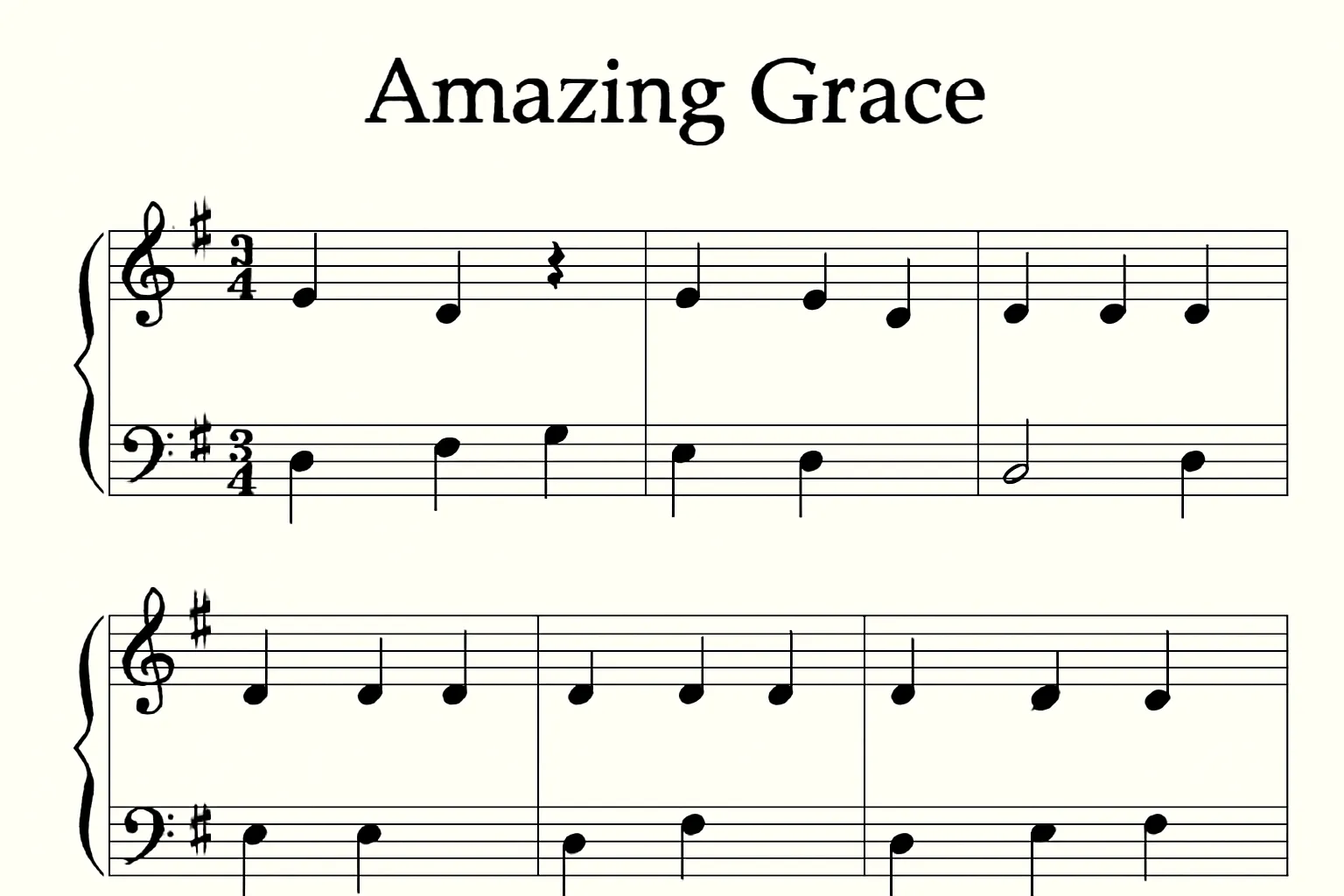
Introduction to Amazing Grace and Its Public-Domain Status
Amazing Grace is one of the most beloved hymns in the world, celebrated for its simple, memorable melody and its message of redemption and hope. For pianists who are just starting a new instrument, a beginner-friendly approach to the tune can be incredibly rewarding. The good news for aspiring players is that many versions of Amazing Grace piano sheet music easy are freely available, thanks to the hymn’s public-domain status. This means you can download, print, and practice a variety of arrangements without paying royalties or dealing with restrictive licenses.
In this article, you’ll discover why an easy piano score for Amazing Grace is an excellent choice for beginners, learn how to read simplified notation, explore practical practice strategies, and find reliable free beginner-friendly piano sheets that you can use today. Whether you prefer a straightforward melody line with basic left-hand support or a slightly more elaborate accompaniment, there are accessible options for every learner level.
Why Choose Easy Piano Arrangements for Amazing Grace
When a new pianist approaches a timeless tune like Amazing Grace, starting with an easy piano arrangement offers several advantages:
Low technical barrier: Simple finger patterns, diatonic scales, and limited hand movement reduce frustration and build confidence quickly.
Rhythmic clarity: A predictable 3/4 time (or a gently swung version) helps learners internalize tempo and phrasing without getting lost in complex rhythms.
Musical expression early on: A simple version still allows students to experiment with dynamics, touch, and phrasing to convey emotion.
Portable repertoire: Easy arrangements often fit into short practice sessions, making it easier to maintain a consistent routine.
Public-domain accessibility: Free scores enable frequent practice cycles without legal concerns, encouraging frequent repetition and exploration.
Beyond the beginner-friendly benefits, you’ll also encounter varied arrangements that reveal how versatile this hymn can be. A basic version emphasizes the melody in the right hand, while a step-up easy arrangement might introduce simple left-hand chords or broken-chord patterns to build coordination.
Key Signatures and Why They Matter for Beginners
Most easy versions of Amazing Grace for piano are written in keys that are comfortable for beginners. The two most common keys are C major and G major. Here’s why these keys work well for beginner-friendly scores:
C major uses only white keys, eliminating the need to manage sharps or flats initially. This makes fingering straightforward and reduces the cognitive load when learning the melody.
G major introduces a single sharp (F#), which is a natural step up for players who have already mastered C major. It expands the range of available notes while keeping the pattern simple.
In both keys, the left-hand accompaniment can employ familiar chords (C, F, G, Am in C major) or simple arpeggios that align with the right-hand melody.
If you’re working from a free beginner score, you’ll often find instructions or a key signature at the top of the page. Practice in a steady, comfortable tempo, and consider transposing to a key that suits your vocal range or hand size if you plan to sing along while playing.
Understanding the Easy Piano Score: What Makes It Easy
There are several features that typically distinguish an easy piano sheet for Amazing Grace from more advanced arrangements. Being aware of these features helps you identify what to focus on during practice:
Simplified rhythmic values: The piece often uses straightforward quarter and half notes in the right hand, with minimal syncopation.
Sparse left-hand patterns: Instead of dense accompaniment, you may see simple root-position chords or basic broken-chord patterns that align with the melody.
Limited range: The notes stay within a comfortable octave range, reducing the need for wide hand stretches.
Direct melody line: The right hand usually carries the recognizable tune, making it easier to internalize and memorize.
Clear articulation: Fewer embellishments (no extensive trills or mordents) keep the melody intelligible for beginners.
In addition to the structural simplicity, you’ll often find practice tips included in beginner sheets, such as counting aloud in 3/4 time, tapping the tempo with a foot, or playing hands separately before combining them.
Step-by-Step Approach to Learning the Easy Version
Learning Amazing Grace in an easy piano arrangement can be broken down into approachable steps. The following guide outlines a practical route from first sight to a polished performance:
Preview the score: Look over the melody notes, the right-hand rhythm, and the left-hand pattern. Note any repeats or repeats with variations.
Hands separate: Practice the right-hand melody alone first, ensuring correct fingering and smooth phrasing. Then work on the left-hand accompaniment separately.
Combine slowly: Bring both hands together at a very slow tempo. Use a metronome and maintain even pulse.
Establish a comfortable tempo: Gradually increase the tempo in small increments (e.g., 5-10 BPM) as you secure accuracy.
Dynamic and touch exploration: Add gentle dynamics to the phrases—soft beginings, a fuller middle, and a clear cadence—without rushing.
Practice in sections: Work 4–8 bar sections, then link sections once each part is reliable.
Memorize gradually: While you may rely on the sheet initially, aim to memorize the melody in small phrases to improve musicality.
Play along with a recording: A simple track can help you stay in tempo and give you a sense of phrasing and articulation.
With consistent practice following this approach, you’ll build a dependable routine that translates well to other easy hymnal pieces too.
Left Hand Patterns and Right Hand Melodies: Practical Tips
In an easy arrangement, the right hand usually carries the tune while the left hand provides harmonic support. Here are practical tips to coordinate the hands effectively:
Right hand focus: Keep the melody even and legato. Use wrist flexibility and relaxed fingers to avoid tension.
Left-hand basics: Start with a root-position C major chord (C-E-G) or its close-position variations. For G major, use G-B-D. You can practice playing the rhythm of the bass line separately to internalize the pulse.
Thumb positioning: In a C major arrangement, the right-hand melody often sits near the middle C region. Use the thumb on C, D, and E as needed and keep a consistent hand shape.
Coordinate slowly: When you bring both hands together, begin with a slower tempo, ensuring that the left-hand notes align with the spoken text of the phrase endings (cadences).
Use simple pedaling: A light, occasional damper pedal can help connect notes, but avoid creating a muddy mix. Use it sparingly at cadence points for emphasis.
As you progress, you can experiment with slightly more intricate left-hand patterns, such as broken chords or simple arpeggios, while the right-hand melody remains intact. This is a gentle way to build independence between hands without overwhelming a beginner.
Tempo, Rhythm, and Expression for Beginner Performances
Expression elevates even the simplest tune. For Amazing Grace, a few thoughtful choices can bring your performance to life without complicating technique:
Tempo: Start around 70–90 BPM in 3/4 time. If you’re comfortable, you can explore a slightly faster tempo for a brighter, more jubilant feel, but maintain clarity of the melody.
Phrasing: Break the melody into musical sentences. Pause slightly at the end of each phrase to create natural breaths in the music, mirroring how a singer would phrase the text.
Dynamics: Use a gentle swell for the first phrase, a fuller tone in the middle, and a diminuendo toward cadences. Avoid making the whole piece loud or evenly loud; dynamic contrast adds shape.
Articulation: A light legato for the melody with clean, clear notes helps the tune sing. Reserve staccato for special interpretations if you want a lighter touch in selected measures.
Remember: expression in an easy arrangement should enhance musicality without increasing technical difficulty. The goal is musical clarity, not fireworks.
Common Variations of Amazing Grace Easy Piano Sheet Music
Because Amazing Grace is so well-loved, publishers and arrangers offer a spectrum of easy variations. Here are typical forms you might encounter on a beginner-friendly score sheet:
Simple melody version: The right hand plays the tune with minimal—often no—ornamentation, while the left hand provides straightforward chords or single-note bass lines.
Left-hand accompaniment with arpeggios: A slightly more engaging arrangement where the left hand plays broken chords (arpeggios) to support the melody while staying within comfortable hand positions.
Duet-ready arrangements: Some sheets are designed to be played as a two-hand duet, where one person handles the melody and the other supplies harmony. These are excellent for practice with a friend or teacher.
Keyboard-only hymn versions: Some scores present the hymn in a shape-note or traditional hymn style that emphasizes the melody and chorale-like structure rather than elaborate accompaniment.
Rhythmically varied versions: A few easy scores introduce a gentle swing feel or a slight triplet feel to make the piece feel fresh while staying approachable.
When choosing an easy variation, consider your goals: if you want to sing while playing, a melody-focused version is ideal; if you’d like to practice hand independence, a left-hand arpeggio version offers a gentle challenge.
Tips for Beginners: Common Pitfalls and How to Avoid Them
Beginner piano practice comes with typical hurdles. Here are practical tips to keep your progress steady and enjoyable:
Avoid rushing: In a hymn with a steady 3/4 feel, rushing through measures makes the cadence feel off. Use a metronome and practice at a comfortable tempo first.
Hands separate practice: Always start with hands apart to solidify correct fingering, then slowly combine them. This reduces confusion and errors when you integrate the parts.
Finger independence: If you notice the left hand struggling, isolate those patterns and practice them with a slow, consistent rhythm before speeding up.
Consistency over speed: Regular, shorter practice sessions beat sporadic long sessions. Even a 15-minute daily routine yields better retention than a single hour once a week.
Use a simple metronome: A metronome helps you maintain even tempo and strengthens counting skills. Set a comfortable beat and gradually increase it as accuracy improves.
Record yourself: A quick audio or video recording can reveal timing issues, uneven dynamics, or inconsistent pedal use that you might not notice while playing.
With these strategies, you’ll develop a reliable practice workflow that can be applied to other beginner scores as well.
Resources: Where to Find Free Beginner-Friendly Scores for Amazing Grace
Because Amazing Grace is public domain, you can find many free sources offering beginner-friendly piano sheets. Here are reputable places to start, along with what to expect from each:
IMSLP (International Music Score Library Project): A vast repository of public-domain scores, including playable arrangements of Amazing Grace. Look for simplified piano scores and tune-and-verse formats suitable for beginners.
MuseScore: A user-driven platform where piano teachers and hobbyists share easy versions, including beginner-friendly melodies and simple left-hand patterns. You can filter by difficulty level and download MIDI or PDF files.
8notes: Offers sections of easy hymn arrangements with clear notation and practical fingering guidance. Great for quick downloads without sifting through complex scores.
Free-Scores: A catalog of public-domain arrangements, including simplified versions for piano. You can browse by difficulty and instrument.
Public-domain hymn collections: Some sites host complete hymnals with accessible keyboard arrangements. These often include Amazing Grace in multiple keys and styles.
Tips for evaluating a free score: look for clear fingering numbers, a comfortable range, simple left-hand patterns, and explicit tempo or dynamics markings. If a score feels too dense, search for another easy variation that aligns with your current skill level.
Practice Plan: A Two-Week Schedule to Master the Easy Version
Structured practice helps novices progress methodically. Here is a practical two-week plan focused on an easy version of Amazing Grace:
Days 1–3: Introduce the melody in the right hand. Practice hands apart, using a metronome at about 70 BPM. Aim for clean note accuracy and even rhythm. Keep left hand quiet and simple—perhaps a single note or basic root chords.
Days 4–6: Add the left-hand accompaniment. Practice hands together slowly, with emphasis on aligning cadences. Record yourself and listen for evenness in the melody.
Days 7–9: Introduce light dynamics and phrasing. Focus on long, singing notes in the melody and gentle crescendos/decrescendos at phrase endings. Maintain a steady tempo.
Days 10–12: Increase tempo slightly if accuracy is stable. Introduce a minimal pedal, used only to connect phrases. Keep left-hand patterns consistent and predictable.
Days 13–14: Perform the piece from memory (melody first, then with accompaniment). Play along with a recording or metronome to test consistency. Finish with a confident cadence and smooth release.
Throughout these two weeks, keep a practice log noting tempo, new fingerings, and any tricky measures. A simple log helps you track progress and celebrate milestones as you reach beginner-friendly mastery.
Performance Tips: How to Present Your Easy Amazing Grace
When you’re ready to perform, consider these tips to present a polished rendition of the easy arrangement:
Be mindful of tempo: A steady, unhurried tempo creates a calm, reflective mood appropriate for the hymn.
Make musical phrases audible: Slightly exaggerate the ends of phrases with a small breath of air in phrasing, or a gentle lift in the hand, to mimic singing.
Maintain legato in the right hand: Aim for connected melody notes to avoid disjointed phrases, while keeping left-hand chords clear and supportive.
Keep dynamics tasteful: Build warmth gradually—avoid extremes in dynamic shifts unless the arrangement specifies them.
Prepare for repeats: If your score includes repeat signs or alternative endings, practice both paths so you can perform confidently.
Frequently Asked Questions about Amazing Grace Easy Piano Sheets
Here are answers to common questions learners have when starting with an easy version of Amazing Grace:
Is there a version of Amazing Grace for beginners in C major?
Yes. The C major key is a staple for beginner scores because it uses white keys only. It’s common to see a simple arrangement in C major that centers the melody on the right hand with easy left-hand support.
Can I sing along while playing the easy sheet?
Absolutely. In fact, singing along can help with rhythm, phrasing, and tempo. If you choose to sing, try keeping the voice steady while the hands follow the melody and chords.
What if I’m a complete beginner and the score still feels challenging?
Take a step back and practice the melody hands-alone for a few days, then reintroduce the left hand. It’s common to feel growth in small increments; consistency pays off.
Are there online resources with free practice tracks for this piece?
Yes. Many free resources provide MIDI or audio tracks that you can slow down or loop to practice. Look for versions labeled as beginner-friendly or simplified.
Putting It All Together: Why This Piece Is an Ideal Starting Point
Choosing Amazing Grace as a first project on the piano is an excellent decision for many reasons. It’s a familiar tune that many listeners instantly recognize, which makes it inherently satisfying to learn. The typical easy sheet music approach emphasizes accessible fingering, predictable rhythms, and modest hand movement—precisely what a beginner needs to build confidence. Because the hymn is in the public domain, you have abundant free beginner-friendly piano scores to sample, compare, and enjoy.
As you grow more comfortable, you can explore more advanced treatments of the same melody, such as arranging the tune in different keys, adding richer left-hand textures, or experimenting with more nuanced articulation. The core idea—mastering a simple, expressive rendition—remains a reliable foundation for expanding your repertoire.

 Por Laura Jara