Meaning, Names, and the Spiritual Identity of Archangel Raphael
The figure often referred to as the Archangel Raphael occupies a distinctive place in
multiple spiritual traditions. Across cultures and centuries, this celestial being has been remembered
as a guide, healer, and protector—an intercessor who walks with people through pain, illness, loss, and
the labyrinth of life’s journeys. The name itself carries a precise divine message: «God heals.»
In Hebrew, Rapha means to heal or to restore health, and El is the word for God.
When these elements are combined, the identity known as the Archangel Raphael becomes
a living symbol of compassionate restoration and spiritual wholeness.
Because of linguistic variations and cultural reception, this archangel appears under several forms. In
Hebrew, you may encounter Rafael or Rapha’el, while in Latin and Western Europe
the name often appears as Raphael or Rafaël. In Italian traditions you will see Raffaele, and in French, Raphaël is common. Despite the different spellings, the core
meaning remains the same: healing and divine support that flows from the Creator through a conduit who
offers care to humanity.
It is important to note that the identity of the archangel is not tied to one single scriptural chapter alone.
The reverence for this healing messenger is consolidated by biblical narratives, apocryphal writings, and
later patristic commentary. In popular spirituality, Archangel Raphael is frequently invoked for guidance
on health, safe travel, and the soothing of emotional wounds. This expansive empathy—rooted in the
message of divine healing—has helped the archangel become a universal symbol of restoration across
diverse belief systems.
Origins, Roles, and Traditional Domains
The most enduring narrative about Raphael appears in the deuterocanonical Book of Tobit, where he appears
as a compassionate guide who leads Tobias on a journey, aids in the curing of Tobit’s blindness, and
delivers healing through practical acts and spiritual insight. This tale anchors the archangel’s
association with healing, protection, and careful, purposeful travel.
Beyond Tobit, Raphael is recognized in various Christian and Jewish traditions as one of the
principal archangels. While different denominations place emphasis on different celestial powers, the
archetype of this archangel commonly includes:
Healing of physical, emotional, and spiritual afflictions
Guidance for journeys and safe passage through life’s highways
Protection for travelers, the sick, and those in vulnerable situations
Compassion and the awakening of mercy in difficult circumstances
Wisdom to discern healing paths and avoid spiritual harm
In many traditions, Archangel Raphael is associated with a green hue—often described as a green light
surrounding healing work. Green is the color of renewal, growth, and vitality in several spiritual systems,
and it is commonly used in practices meant to invite Raphael’s presence. The archangel’s work is not merely
about erasing symptoms; it aims at restoring harmony between body, mind, and spirit.
Raphael Across Art, Literature, and Popular Culture
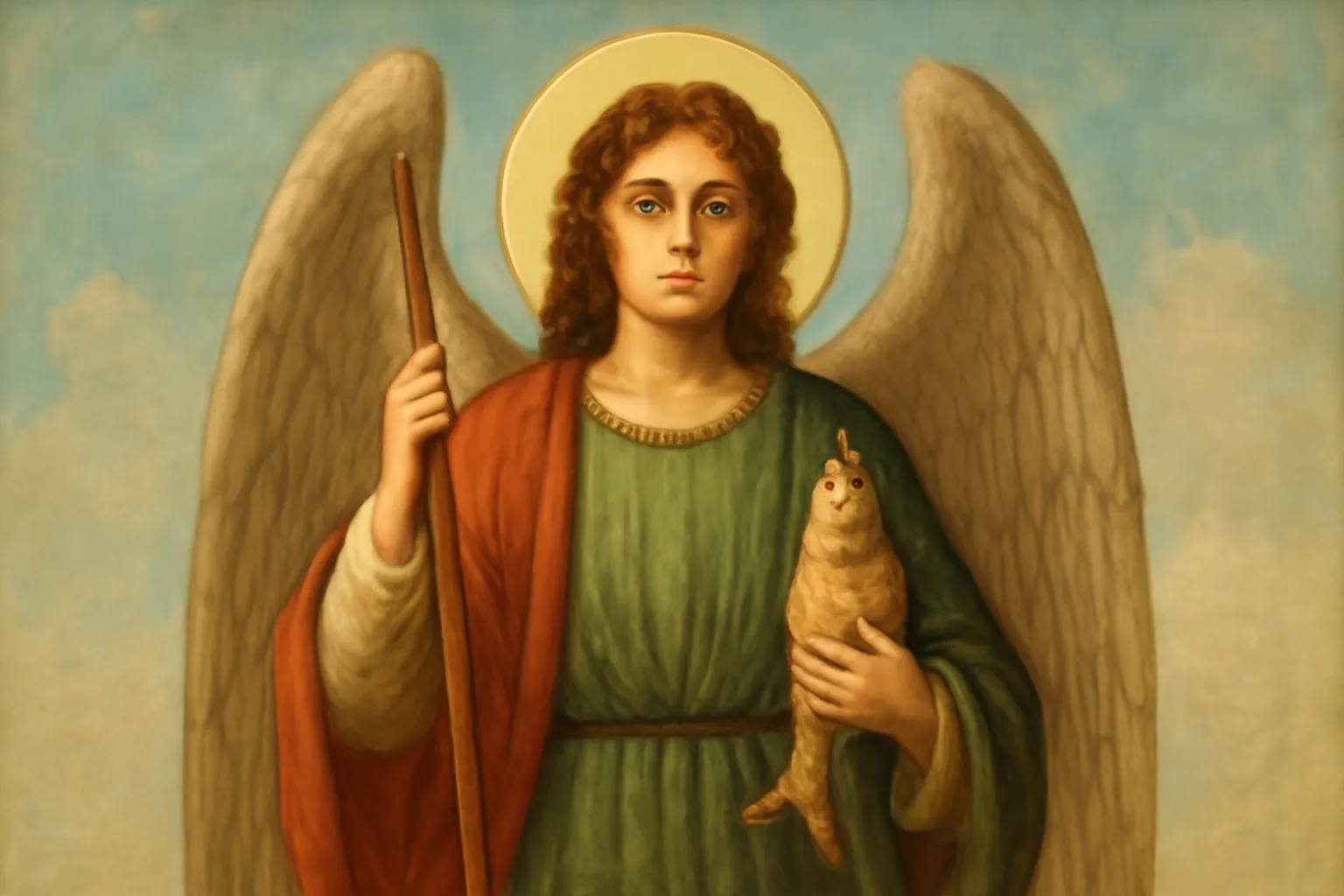
The reach of this healing messenger extends into the realm of art, music, and literature. In visual art, the
archangel is often depicted as a gentle, radiant figure who appears alongside travelers or sick individuals,
sometimes holding a staff, a jar of healing salve, or the fish that is associated with the Tobias narrative.
In music and poetry, Raphael’s archetype serves as a metaphor for inner restoration and the emotional
processes involved in recovery.
Another interesting dimension is the connection between a historical figure named Raphael—
the famed Italian painter known as Raphael—and the archangel’s archetype. Though the painter’s work
is not a biographical depiction of the celestial being, the artist’s reputation for harmony, clarity, and
healing of the human psyche echoes the spiritual aims attributed to Archangel Raphael in religious
tradition. This overlap between art and sacred healing invites readers to consider how beauty and mercy
can work together to soothe the wounded heart.
How Archangel Raphael Helps: Powers, Gifts, and Limitations
The gifts attributed to the archangel are broad, and many people report profound experiences when they invite
Raphael into their lives. Some examples of these powers include:
Physical healing and restoration of vitality after illness or injury
Emotional healing—relief from grief, anxiety, and trauma through compassionate presence
Spiritual healing—opening channels for forgiveness, renewal of faith, and a sense of divine mercy
Healing through knowledge—offering insight into health, nutrition, self-care, and safe medicines
Guidance for travelers—protecting the wayfarer and providing direction on difficult journeys
Discernment—helping distinguish healing paths that are truly life-affirming
It is helpful to acknowledge that in spiritual practice, the experience of healing usually involves
active participation from the person seeking healing. The archangel’s assistance is often framed as a
cooperative process, where inner courage, practical steps, and divine grace intersect.
The healing journey is rarely instantaneous, but with patience, commitment, and clear intention
many people report meaningful improvements—whether in body, mind, or soul.
Source Texts and Theological Context
The core narrative that popularizes Archangel Raphael comes from the Book of Tobit, a narrative
included in the Catholic and Orthodox canons and treated as apocryphal in certain Protestant circles.
In Tobit, Raphael appears in disguise as a companion to Tobias, guiding him on a path that leads
to healing for Tobit’s sight and protection for Tobias against danger. This story has inspired
countless devotional practices, especially those centered on healing, safe travel, and compassionate care
for the vulnerable.
In addition to Tobit, other ancient and medieval writings discuss the presence of archangels and their
distinct duties. While the exact ranking and names of archangels can differ among traditions, Raphael
consistently appears as a figure who embodies mercy and practical care. In modern interfaith and New
Age circles, Archangel Raphael is often invoked as a universal healer whose methods transcend doctrinal
boundaries.
Connecting with Archangel Raphael: Practical Pathways
If you are drawn to Raphael’s healing energy, you can cultivate a personal practice that invites the
archangel’s presence. The approach is accessible, flexible, and customizable to your life context.
Below are practical pathways to explore.
Grounding and Intention
Any meaningful connection begins with a clear intention. Before attempting to connect with Archangel Raphael,
take a few minutes to center your breath, ground yourself in the present moment, and articulate
what healing means for you. You might ask: What needs healing right now? What kind of support would feel most
aligned with love and truth? By setting a sincere intention, you invite a cooperative dynamic with the sacred
presence that Raphael embodies.
Prayers and Invocations
You can use brief prayers or invocations to invite healing energy. Here are a few examples you can adapt:
Prayer of Healing Light: Archangel Raphael, bearer of healing light, surround me with your green flame. Restore my body, calm my mind, and soften my heart with your mercy. Guide me to the healing path that is for my highest good. Amen.
Traveler’s Blessing: Raphael, companion on the road, protect my steps, illuminate my way, and heal any fear that arises as I move forward. May every mile bring me closer to wholeness. Amen.
Healing Request: Archangel Raphael, healer of all that is wounded, I offer my pain to you with trust. Help me to receive what is needed—whether rest, medicine, guidance, or support from others. Amen.
Visualization can be a powerful bridge to spiritual experience. A simple Raphael meditation could proceed as follows:
Find a quiet space and assume a comfortable position. Close your eyes and take several deep, slow breaths.
See a circle of emerald-green light forming around you, growing softer and brighter with each breath.
Imagine Archangel Raphael arriving as a radiant figure whose presence brings calm, healing energy. You might visualize a green lantern in your chest or a healing current flowing through your limbs.
Quietly repeat a short affirmation such as: “Justice. Mercy. Healing. Guidance.” Let the words settle into a sense of safety and renewal.
When you feel ready, gently return your attention to the room, carrying a sense of renewed vitality and clarity.
Journaling, Dreams, and Inner Guidance
Keeping a journal can help you track the impact of Raphael’s presence on your daily life. After a period of
prayer or meditation, write about any sensations, imagery, or insights that arise. You may notice a
recurring symbol (for example, a fish, a staff, or a green light) that suggests Raphael’s proximity.
Additionally, dreams sometimes serve as channels for healing messages. Keep a dream log and reflect on
whether any nocturnal visions point toward healing steps, choices that reduce stress, or new
directions for care.
Rituals for Healing and Guidance
If you enjoy ritual, simple practices can be meaningful without becoming burdensome. Consider:
Lighting a green candle during a dedicated time for healing or travel planning
Wearing or carrying a small green stone (such as emerald or malachite) to symbolize renewal
Creating a small altar with a representation of the archangel Raphael (an icon, painting, or a printed image) and a jar of water as a symbol of healing liquidity and life
Using frankincense or myrrh incense during prayer or meditation to heighten reverence and calm
Daily Life and Practical Ways to Invite Raphael’s Presence
The spiritual practices described above can be woven into everyday routines. Integration is a key
component of meaningful connection. Here are practical ideas to invite Archangel Raphael into daily life
without turning healing into a separate project.
Hydration and nourishment: since physical healing begins with good self-care, prioritize rest, water, nutritious food, and gentle movement.
Kind acts toward others, especially those who are sick or in distress, echo Raphael’s mercy in action.
Reflection on travel and safety: when commuting or traveling, pause briefly to invite protection and a sense of secure passage.
Gratitude practice: acknowledge improvements, however small, and give thanks for healing energies at work in your life.
For those who work in healthcare, caregiving, or counseling, Raphael’s energy can be integrated into professional
routines as well. Ethical practice involves honoring patient autonomy, ensuring that healing efforts align with the
person’s own healing timeline, and recognizing that true restoration often requires both natural and spiritual
dimensions to cooperate.
Raphael in Modern Spirituality and Interfaith Contexts
In contemporary spirituality, Archangel Raphael is frequently invoked in a broad, inclusive manner. People from
diverse backgrounds may resonate with the idea of a healing angel who accompanies them through illness,
injury, grief, or fear. Because healing is a universal concern—transcending dogma—Raphael’s energy is often viewed
as a unhindered source of compassion that can assist anyone seeking relief and renewal.
Interfaith audiences may highlight Raphael’s role as a bridge figure: a divine helper whose care does not depend
on a single creed. This framing can be empowering for those who approach healing from secular perspectives or
from different religious paths. The archangel’s emphasis on virtue—compassion, mercy, discernment, and courage—
speaks to universal human needs and can be a shared point of contact across spiritual boundaries.
As with many celestial beings, myths about Archangel Raphael abound. Some common misconceptions include:
Raphael only heals physical ailments: In truth, Raphael is widely associated with holistic healing,
including emotional and spiritual restoration.
Raphael appears only in the Book of Tobit: While Tobit is the primary and most well-known source,
the archangel’s healing mission appears in tradition, iconography, and devotional literature beyond that text.
Raphael is distant or purely symbolic: Many people report a felt, intimate presence—an encounter
that can feel like a personal mentor or guardian—when they invite Raphael’s energy into their life.
It is natural to wonder about the limits of any spiritual practice. In the case of Archangel Raphael, the most
honest answer is that the healing journey is unique for each person. The archangel’s generosity does not
replace medical treatment or professional care when these are necessary, but it can provide moral support,
resilience, and a sense of being held by a larger, benevolent order of creation.
Variations in Practice: A See-Through Guide to Personalizing Your Connection
Because spiritual practice thrives on personalization, here is a flexible framework you can adapt.
Use it to tailor practices to your beliefs, culture, and life circumstances.
Choose a day for connection: Wednesday is commonly associated with Archangel Raphael in many traditions; consider setting a weekly time for healing-focused practice.
Decide your preferred modality: prayer, meditation, journaling, creative expression (art, music, poetry), or a combination that feels natural.
Develop a physical cue: a color, object, or scent that reminds you of healing energy when you see it or inhale it.
Track progress: note improvements in sleep, mood, energy, or pain levels over time—this helps you notice the subtle but real effects of your practice.
Conclusion: Integrating Archangel Raphael into Life
The legacy of the Archangel Raphael endures because it speaks to a fundamental human longing: to be cared for,
to be guided through hardship, and to emerge from struggle with renewed health and purpose. Healing is not only
about erasing symptoms; it is about reestablishing harmony between body, mind, and spirit, and about aligning
one’s choices with a hopeful, compassionate horizon. The archangel’s presence—whether imagined, felt, or
experienced through ritual—offers a custom-made invitation to participate in healing that is both tangible
and transcendent.
If you are curious about healing, personal growth, or spiritual connection, you may find that the figure of Archangel Raphael
offers not only a name for healing energy, but a doorway through which you can walk with greater trust,
clarity, and courage. By embracing a practice that combines intention, mindful presence, and compassionate action,
you invite the healing power of the archangel into daily life in a way that respects your own path while
honoring the universal desire to be well.
In the end, Raphael—in all its spellings and forms—remains a luminous reminder that healing is a
gift that can be welcomed, cultivated, and shared. Whether you are seeking relief from illness, guidance on a
difficult journey, or the quiet renewal that comes from living with greater mercy, the Archangel Raphael stands
as a steadfast companion on the road to wholeness.

 Por Laura Jara