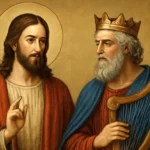
Davidic Covenant — Biblical Promise of Dynasty and Messiah Fulfillment
alianza Davidic Covenant
The Davidic Covenant is a divine promise made by God to King David, recorded in 2 Samuel 7, in which God pledges to establish an everlasting dynasty through his descendants. This covenant affirms that David’s throne will be secure forever and that his lineage will produce a Messianic king. It signifies God's commitment to uphold the royal line and ultimately fulfill His plan of salvation through Messiah. This covenant underscores the importance of royal lineage and God's faithfulness to His promises throughout biblical history.
The term 'Davidic' derives from the Hebrew word 'Dawid,' meaning 'beloved' or 'friend.' The root relates to David’s name and title as Israel's beloved king. The word 'Covenant' comes from the Hebrew 'berith,' meaning a sacred agreement or pact. Over time, it evolved to signify a divine promise or commitment, emphasizing the binding and eternal nature of God's vow to David’s descendants, especially concerning the Messianic hope.
Key Bible Verses
2 Samuel 7:16
God promises that David's throne will be established forever, signifying an eternal kingship through his lineage.
This verse is fundamental as it explicitly states the everlasting nature of the Davidic dynasty, forming the basis for Messianic expectations.
Psalm 89:3-4
The psalm affirms God's covenant with David, declaring that his throne will be stable for eternity.
This passage highlights the enduring nature of God's promise and its significance for Jewish and Christian hope in a perpetual monarchy.
Jeremiah 33:17
God declares that David's line will never lack a man to sit on the throne of Israel, reinforcing the perpetual promise.
This verse emphasizes the unbreakable aspect of God's covenant, underpinning future Messianic prophecy.
Theological Significance
Theologically, the Davidic Covenant signifies God's faithfulness to His promises and His plan for redemption. In the Old Testament, it provides the foundational hope of a Messiah descended from David, fulfilling God's eternal promises. In the New Testament, Jesus Christ is presented as the ultimate fulfillment of this covenant, establishing an eternal kingdom. The covenant links God's promises to the Messianic line, showing His sovereignty over history and His commitment to establish an everlasting reign through Christ. It underscores the continuity between the Old and New Testaments regarding God's covenantal faithfulness and salvation plan.
Across Christian Traditions
Catholic, Protestant, Orthodox, and Evangelical traditions all affirm the significance of the Davidic Covenant but interpret its fulfillment differently. Catholics and Orthodox see Jesus as the divine fulfillment of the promise, emphasizing his royal and theological significance. Protestants generally view the covenant as a prophecy fulfilled fully in Christ, focusing on spiritual kingship. Evangelicals highlight the Messianic prophecy and its role in Salvation history, emphasizing Jesus as the true King from David’s lineage. Some traditions also emphasize the future literal fulfillment of the promise with a restored earthly throne for Israel.
Application in Christian Life
Christians are encouraged to trust in God's faithfulness, just as He fulfilled His promises through Jesus Christ. Believers can find hope and assurance in God's eternal covenant, inspiring faithfulness and obedience. The covenant reminds Christians of their spiritual kingship through Christ and motivates them to live with a kingdom perspective. It encourages prayer for the fulfillment of God's promises and active participation in His kingdom work today.
The term 'Messiah' originally meant 'Anointed One' in Hebrew, referencing the anointing of kings like David. Archaeological discoveries, such as the Tel Dan Stele, confirm the historical existence of David and strengthen biblical credibility regarding the Davidic Dynasty.
Frequently Asked Questions
Does the Davidic Covenant mean Jesus is literally from David's lineage?
Yes, the Gospels of Matthew and Luke trace Jesus' genealogy to David, affirming He is the lawful heir and fulfillment of the covenant (Matthew 1:1-17; Luke 3:23-38).
Is the everlasting kingship of David's throne literal or symbolic?
While some interpret it as a future physical return of Christ to reign on Earth, most understand it as ultimately fulfilled spiritually or eschatologically in Christ's eternal kingdom (2 Samuel 7:16; Revelation 22:16).
What is the relevance of the Davidic Covenant today?
It affirms God's faithfulness and His plan for salvation through Christ, inspiring Christians to trust in God's promises and His eternal rule (Romans 1:3-4).

 Por Laura Jara