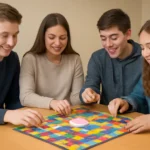
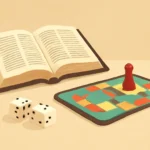
Bible book memorization games are playful, structured activities designed to help learners of all ages commit the order and names of the books of the Bible to memory. These games blend fun engagement with memory techniques, turning study time into an interactive experience rather than a tedious drill. Whether you are a parent guiding children, a teacher in a Sunday school setting, or a small group leader seeking meaningful, productive activity, these games offer scalable approaches. They reinforce not just what the books are called, but also where they appear in canonical order, which is a foundational step for deeper Bible study and devotional practice.
In this article, you will find a broad range of variations of bible book memorization games, from simple flashcard drills to collaborative team challenges, from quiet solo exercises to energetic classroom-wide activities. Each game includes practical tips for adaptation, suggested materials, and a brief explanation of how it supports memory formation—especially the spatial-temporal, semantic, and procedural aspects of memory. By using multiple games, you can build a robust repertoire that keeps learners engaged and steadily improves recall.
Memorizing the order of the Bible books is more than a rote exercise. It builds a mental framework that enhances comprehension during reading, preaching, and study. Games provide a low-stakes environment where errors become learning opportunities rather than failures. They also offer community-building benefits—teams collaborate, encourage one another, and celebrate progress. Some key benefits include:
Active retrieval practice that strengthens memory consolidation.
Distributed practice through short, repeated sessions that fit busy schedules.
Multi-sensory engagement, which supports learners with different styles.
Goal-oriented motivation and a sense of accomplishment as books are recalled correctly.
Scalable difficulty to accommodate young learners, middle-school students, and adult learners.
Foundational Principles for Effective Bible Memorization Games
Before diving into individual games, consider these principles to maximize retention:
Chunking—break the list of books into manageable groups (e.g., Pentateuch, Historical Books, Wisdom/Poetry, Major Prophets, Minor Prophets, Gospels, Epistles, General).
Sequential practice—practice the order from Genesis to Revelation or in the canonical sequence most relevant to your curriculum.
Spaced repetition— revisit the sequence over increasing intervals to combat forgetting.
Contextual hooks— connect each book with a brief, memorable cue (a keyword, a symbol, a theme).
Participation— involve learners in creation of cues, prompts, or mini-shows to increase ownership.
The following games are designed to respect these principles while remaining adaptable and enjoyable for diverse groups. You can mix and match approaches to create a full memorization menu that covers a semester or a summer program.
Game Library: A Range of Bible Book Memorization Games
Flashcard Frenzy
Flashcards are a timeless way to drill recall. This version emphasizes active retrieval and immediate feedback.
Prepare a deck of cards, each card listing a single book name on the front and its order number on the back.
Option A: One-player pace — flip a card, say the book name aloud, and then reveal the order on the back. If correct, keep the card; if not, place it at the bottom and try again later.
Option B: Two-player speed round — players take turns flipping cards and racing to correctly name the next book in sequence. A point is awarded for correct answers; a missed answer earns the player a chance to earn mercy points by giving a hint to a teammate.
Variation: use image cues (icons or color-coded labels) to represent groups of books (e.g., a cross for the Gospels, a lamp for Wisdom literature) to strengthen category recognition.
Book Chain Challenge
The Book Chain game builds sequential recall by linking each book to the next with a chain-like rule. It can be played solo or with teams.
Begin with Genesis as the anchor. Each player must name the next book in the canonical order and justify the link with a short cue (e.g., “Genesis begins the story of creation; Exodus continues with deliverance”).
Rules variants:
Timed chain — each player has 15 seconds to name the next book and give a one-sentence cue.
Backward chain — start from Revelation and move backward to Genesis for added challenge.
Incorporate reward tokens for consistent accuracy across a full round, and offer a bonus pace round to test speed without sacrificing accuracy.
Memory Match: Books Edition
This version borrows the classic memory game format but tailors it to Bible books.
Prepare pairs of cards: one card shows the book name; the matching card shows its order number or a category label (e.g., “History,” “Wisdom”).
Shuffle and lay cards face down. Players flip two at a time, seeking a correct pairing. If a match is found, the player keeps the pair and takes another turn.
To increase difficulty, add a rule that a correct pair must also be placed in the correct canonical quadrant (Pentateuch, Prophets, Gospels, etc.).
Bible Book Bingo
Bingo stimulates active listening and rapid recall. This version emphasizes recognition of the book names and their positions in the lineup.
Prepare a 5×5 bingo grid with 24 book names and one free space. The center square could be a theme such as “Genesis to Malachi” or “Gospel books.”
Call out book names in canonical order, or mix up the order for a challenge. Players mark the corresponding squares.
First player to complete a line shouts “BIBLE!” and recites the full order as a verification step. Consider recognizing multiple winners for partial lines.
Timeline Tile Tour
The Timeline Tile Tour blends geography of the Bible with memory for sequence.
Lay out large cards or tiles on a wall or floor, arranged roughly in order from Genesis to Revelation. Create zones or clusters such as “Pentateuch,” “Historical Books,” and “Prophets.”
Provide players with cue cards containing a keyword for each book. Players must place the cue card beside the correct tile as a team.
For solo work, set a timer and challenge yourself to place a full sequence on the timeline before it runs out, then self-check with a reference.
Memory Palace: Virtual or Real Spaces
The Memory Palace technique is a powerful mnemonic method that uses spatial memory to anchor information.
Choose a familiar space (your home, a classroom, or a virtual map). Assign each book a distinct location along a mental journey through that space.
As you “walk through” the space in your mind, recall each book by visiting its assigned spot and saying the book’s name aloud. For added depth, attach a vivid, memorable image to each book (e.g., a camel for Genesis, a lion for Daniel).
Team version: each member contributes a location and cue, building a collective memory palace. This encourages collaboration and shared accountability.
Song and Rap Renditions
Music has a unique power to aid recall. Turning the order of the Bible books into a short song or rap provides rhythm and cadence for memory.
Choose or compose a tune with a familiar beat. Align each line with a set of two to four books to keep the sequence intact.
There are many safe, age-appropriate options, from simple melodic recitations to more elaborate rhymes. Record the performance to share feedback and track progress.
Variation: perform with movement or gestures for a kinesthetic cue that aligns with each book’s theme.
Scavenger Hunt of the Books
The Scavenger Hunt brings physical activity into memorization, reinforcing memory through movement and exploration.
Hide cards with book names around a room or outdoor space. Create clues that guide players from one book to the next in canonical order.
Each correct find reveals a new clue to the next book, culminating in a final “revelation” moment where the entire sequence is recited.
Adaptation for younger players: provide bigger print, vibrant colors, and simpler clues.
Jeopardy-Style Review
A quiz-style format keeps participants mentally alert while they recall the sequence.
Prepare a set of categories, such as Book Names, Order in the Canon, and Key Themes.
Questions can be phrased as “This book comes immediately after Joshua” or “Name the book that follows Esther.”
Use point values to add a competitive edge or adapt for cooperative team play with a shared score.
Two-Minute Drills are quick, focused sessions that encourage rapid retrieval without fatigue.
Set a timer for two minutes. Challenge learners to name as many books in order as possible. Use a whiteboard to mark progress and celebrate accuracy.
After the drill, provide feedback highlighting successful sequences and offer a brief review of any missed items.
Repeat on different days to measure improvement over the course of a few weeks.
Category-Centric Drill: Grouping by Type
This game emphasizes categorization and structure in addition to order, helping learners create mental anchors for each group of books.
Divide the Bible into categories: Law (Pentateuch), Historical Books, Poetry and Wisdom, Major Prophets, Minor Prophets, Gospels, Pauline Epistles, and General Epistles.
Provide a set of cards with book names or hooks for each category. Learners must place each book card into the correct category and then recite its position in the sequence within that segment.
Digital Drill: Apps and Online Tools
In the modern classroom or home, digital tools offer scalable support for memorization.
Quizlet decks for Bible books can be created, shared, and studied with flashcards, matching, and tests. You can organize decks by testament or by canonical order.
Anki is a spaced repetition system that can host an entire hierarchy of Bible books, with customizable intervals to optimize retention.
Kahoot! quizzes can be used in a live setting to foster friendly competition and real-time recall checks.
For accessibility, ensure captions, alt text for images, and screen-reader-friendly interfaces are available.
Designing a Successful Bible Memorization Session
A well-designed session balances structure, flexibility, and fun. Here is a practical framework to adapt:
Set a clear objective for the session (e.g., recall the canonical order of the 39 books in the Old Testament, or recall all four Gospels in order).
Choose 1–3 games based on group size, age, and energy level. For a long session, rotate through 2–3 activities to maintain engagement.
Prepare materials in advance: flashcards, tiles, or digital devices. Include color-coding and large-print fonts for visibility.
Warm-up with a quick, low-pressure activity (e.g., a two-minute drill) to activate memory.
Active practice during core activities, with structured turns and explicit feedback after each attempt.
Reflection at the end: invite learners to share what helped them remember; capture insights for future sessions.
Session Template: 60-Minute Plan
5 minutes: Warm-up activity (Two-Minute Drill or flashcard quick-fire).
15 minutes: Main game block (choose one from the library, e.g., Timeline Tile Tour or Memory Palace with a short set of books).
10 minutes: Break and quick review; discuss cues and mnemonic devices used.
15 minutes: Second game block (e.g., Jeopardy-Style Review or Scavenger Hunt).
10 minutes: Wrap-up and individual goal setting for the next session.
Differentiation: Adapting for Diverse Learners
Every learner is different, and the most effective programs offer multiple access points to memorization. Consider these adaptations:
Young children benefit from large, colorful cards, musical elements, and physical movement. Use shorter sequences (e.g., 12–15 books at a time) and focus on recognition plus basic recall.
Older students may appreciate deeper connections to themes, authors, and canonical order. Incorporate category-based challenges and timed drills that demand precise recall.
Auditory learners respond well to songs, rhymes, and spoken cues; integrate chant-style recitations and call-and-response formats.
Visual learners benefit from color coding, diagrams, and visually rich memory palaces.
Learners with limited mobility can engage with digital or tabletop adaptations, ensuring accessibility through adjustable chair-height tables, large-print materials, and screen-reader-friendly formats.
Tools, Materials, and Practical Resources
To implement Bible book memorization games effectively, gather a few essential tools. The following list is a starting point you can customize.
Printable flashcards with book names and order numbers; consider both portrait and landscape layouts for variety.
Card sets or tiles for Memory Match, Book Chain, and Scavenger Hunt formats.
Poster charts of the canonical order, grouped by category.
Index cards for cue notes, mnemonics, or quick hints during games.
Timers or smartphone apps to regulate rounds, ensuring pace while keeping the experience positive.
Color codes and visual aids to indicate sections (e.g., red for Pentateuch, blue for Gospels).
Sound equipment for songs or raps, if you plan to use musical elements in your sessions.
Digital platforms (Quizlet, Anki, Kahoot) for extended practice outside in-person sessions.
If you’re facilitating a program at church, school, or a home learning environment, you can provide families with take-home activities. These extensions reinforce what was learned during in-person sessions and allow for family participation.
Printable wall charts showing the canonical order that families can hang in kitchens or study corners.
Family challenge sheets with a daily or weekly goal to recite a section or complete a quick memory game.
Home memory palaces — simple, guided templates parents can use with children to create a personal memory journey.
Auditory practice kits with downloadable songs or chants aligned to the order of the books.
If you are preparing for a special event—camp, VBS, or a church program—these variant modes can be used to add flavor and keep participants energized.
Icebreaker version—a quick 10-minute round of Memory Match or Flashcard Frenzy to warm up participants.
Tiered challenges—begin with a basic recall of the canonical order, then add categories, then add mnemonic cues for more advanced recall.
Parent-child relay—pairs of adults and children race to complete a sequence together, combining memory with teamwork.
Night-time recap—a quieter session using Memory Palace or Song Renditions to wind down after a busy day.
Common Mistakes and How to Avoid Them
While Bible book memorization games are enjoyable, avoid common pitfalls that can undermine learning.
Overloading memory with too many books at once — segment the sequence into smaller chunks and gradually increase.
Focusing on speed at the cost of accuracy — emphasize accurate recall first; speed improves with practice.
Letting competition overshadow learning — foster supportive, collaborative competition rather than harsh rivalry.
Lack of differentiation — ensure there are accessible options for all ages and abilities.
Closing Thoughts: The Long-Term Value of Memorization Games
The goal of bible book memorization games extends beyond a memorized list. These activities cultivate a habit of regular study, strengthen memory pathways, and create a memorable framework that supports future Bible study, sermon preparation, or personal devotion. When learners can recall the books in order, they often feel more confident tackling chapter-by-chapter study, cross-referencing themes, and understanding the overarching narrative of Scripture.
Moreover, the social dimension of these games—working together, cheering one another on, and learning as a community—mirrors the collaborative spirit of many faith-based settings. By integrating playful learning with spiritual discipline, you can nurture a positive, lifelong habit of engaging with the Bible in a meaningful, joyful way.

 Por Laura Jara