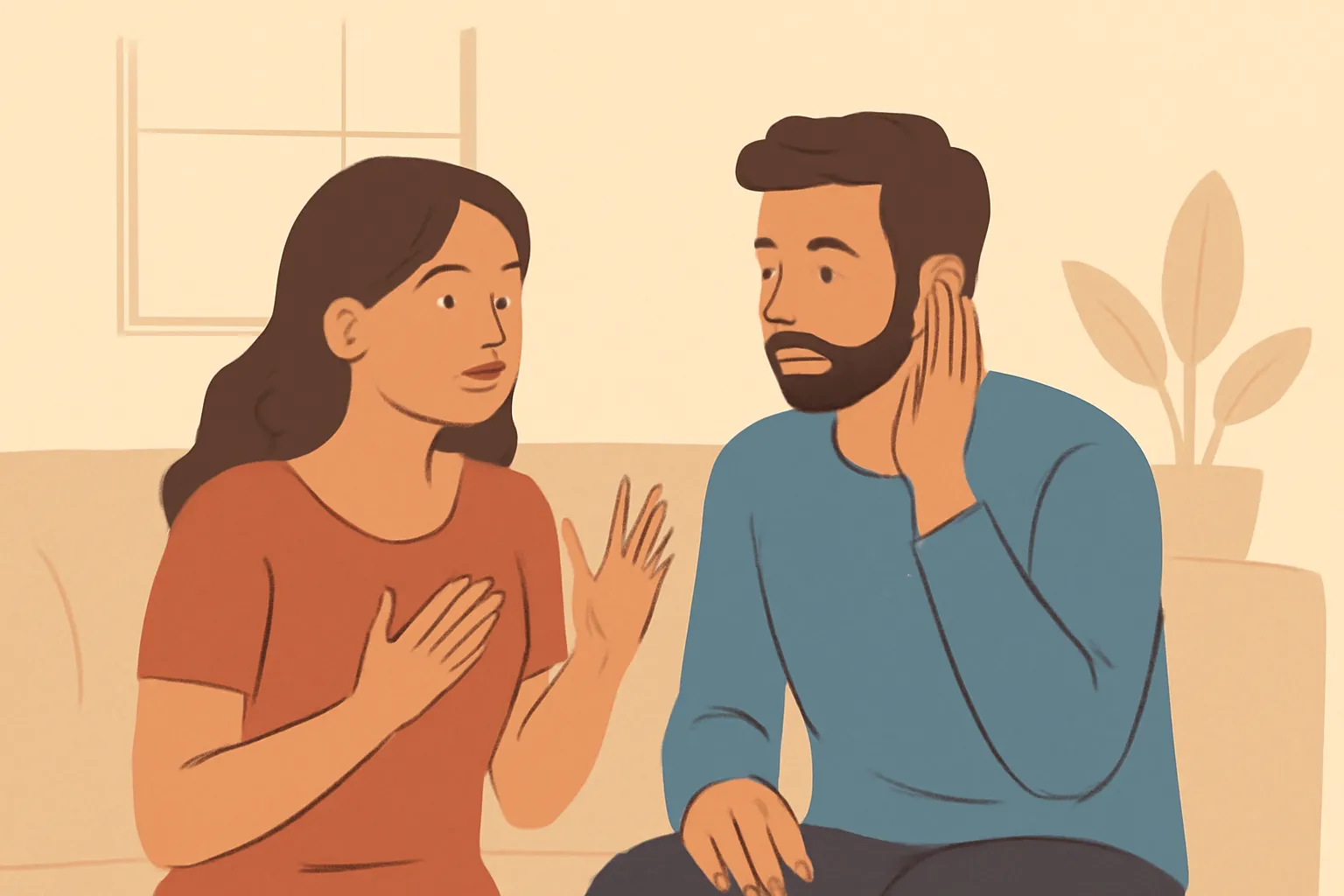
Active Listening in Marriage: Better Communication, Stronger Bond
In healthy long-term partnerships, communication is not just talking; it is listening with intention, curiosity, and care. Active listening in marriage goes beyond hearing words aloud. It involves tuning in to the other person’s feelings, needs, and perspectives, and responding in ways that foster safety, trust, and mutual understanding. When couples practice this skill consistently, the relationship tends to become more resilient, more responsive, and more satisfying. This article explores the practice of active listening in marriage, its core components, practical techniques, common barriers, and a set of actionable exercises that couples can start using today to build a stronger, more connected bond.
What is active listening in marriage?
At its core, active listening is a deliberate listening approach that combines attention, interpretation, and empathetic response. In the context of marriage, this means:
Giving full attention to your partner when they speak, without multitasking or planning your reply in advance.
Seeking to understand the other person’s thoughts, feelings, and motivations before offering judgment or solutions.
Responding thoughtfully in a way that validates the speaker’s experience and moves the conversation forward constructively.
Building safety so both partners feel heard, respected, and free to share even difficult emotions.
Think of active listening in marriage as a collaborative process, not a competition. It is less about “being right” and more about understanding, connection, and problem-solving as a couple. Variations of this practice may include reflective listening, paraphrasing, validation, and open-ended questioning, all tailored to the needs of the moment.
Why active listening matters in marriage
Numerous studies and clinical experience show that active listening in intimate partnerships yields tangible benefits. Here are some of the most important outcomes:
Increased trust and psychological safety, because each partner feels truly heard.
Reduced conflict escalation when disagreements are met with curiosity rather than defensiveness.
Better problem-solving as couples gather accurate information about each other’s needs and perspectives.
Greater emotional intimacy as vulnerability is met with empathy and steady presence.
Mutual respect reinforced by consistent, attentive listening, which strengthens the overall bond.
Modeling for children or other family members by demonstrating constructive communication and conflict resolution.
When both partners commit to active listening in marriage, the relationship evolves from reactive communication to intentional dialogue. This shift makes it easier to navigate life transitions, parenting, work stress, health challenges, and the inevitable disagreements that come with long-term partnership.
Core skills of active listening
Effective listening in marriage relies on a cluster of interdependent skills. Here are the core competencies that underpin successful marital active listening:
Focused attention: Eliminate distractions, maintain eye contact (as culturally appropriate), and give the speaker your undivided presence.
Nonverbal attunement: Use body language, facial expressions, and tone to signal that you are attuned and engaged.
Nonjudgmental stance: Withhold quick conclusions, avoid blaming language, and listen as if you are gathering data rather than judging the other person’s motives.
Paraphrasing and reflection: Restate the gist in your own words to confirm understanding, and name emotions you hear.
Empathy and validation: Acknowledge feelings even when you disagree with the rationale behind them.
Adequate processing time: Pause before replying to allow the speaker to finish and to craft a thoughtful response.
Boundary awareness: Recognize when it is a good time for a conversation and when it would be better to postpone a discussion to a calmer moment.
Healthy response styles: Use questions that invite elaboration, and offer solutions only if asked or appropriate to the situation.
Different couples may emphasize certain skills more than others, and that is okay. The goal is to develop a working toolkit of techniques that feel authentic and effective for your unique relationship.
Below are practical techniques you can adopt to strengthen active listening in marriage. Each technique includes steps you can follow in real conversation.
Reflective listening
Reflective listening is the practice of repeating back or restating what your partner has said, but with attention to meaning and feeling. It reinforces that you are listening and helps prevent misinterpretations.
Hear the message and the emotion behind it.
Begin with a short paraphrase that captures the essence of what was said.
Include an emotion tag, such as «It sounds like you’re feeling overwhelmed.» or «It seems you’re excited about this change.»
Pause and invite a correction if needed: «Did I get that right?»
Paraphrasing and summarizing
Paraphrasing conveys comprehension by restating the content in your own words, while summarizing can capture the main points at a higher level, useful for long conversations.
Paraphrase a specific idea: «So you’re worried that the budget will be tighter next month.»
Summarize a broader topic at the end: «So the main issues are time, finances, and feeling heard.»
Validation and empathy
Validation acknowledges the other person’s perspective as real and meaningful, even if you disagree. This does not mean you approve of everything; it means you recognize their experience as legitimate.
Statement examples: «I can see why you’d feel that way.» «That sounds really frustrating.»
Link feelings to behavior: «When you’re stressed about money, it makes sense that you’d react this way.»
Asking open-ended questions
Open-ended questions invite your partner to share more deeply rather than yes/no answers. They demonstrate curiosity and sustain the conversation.
Examples: «What would help you feel more supported right now?» «What needs are not being met in this situation?»
Avoid leading questions: keep the focus on understanding, not steering them toward a predetermined conclusion.
Managing nonverbal communication
Nonverbal cues often communicate more than words. Be mindful of your posture, facial expressions, and tone. Mirrors, soft eye contact, and an open stance can signal safety and interest.
Interruptions derail understanding. Practice waiting for a natural pause before responding. Be mindful of patterns where one partner consistently speaks over the other, and take steps to rebalance the conversation so both voices can be heard.
Common barriers and how to overcome them
Even highly motivated couples encounter obstacles to active listening in marriage. Recognizing these barriers is the first step toward overcoming them:
Defensiveness: When our self-worth feels attacked, we may shut down or retaliate. Counter this by pausing, taking a breath, and choosing curiosity over judgment.
Distractions: Phones, screens, or loud environments pull attention away. Create dedicated listening moments in quiet spaces.
Mind-reading: Assuming you know what the other person wants or means without asking. Always verify with thoughtful questions.
Interruption culture: One partner habitually interrupts. Agree on a speaking order or use a timer to ensure equal airtime.
Emotional flooding: When feelings surge, it becomes hard to think clearly. Propose a break or a pause-and-check-in protocol to regain composure.
Power imbalances: If one partner feels consistently unheard, work to redistribute conversational power through structured turn-taking or joint decision-making.
Escalation cycles: Repeating blame or blaming language creates a loop. Break the cycle with a reset phrase like, «Let’s pause and listen to each other.»
Overcoming barriers is not about perfect execution every time; it is about consistency and a shared commitment to improvement. Start with small, manageable changes and gradually increase the depth and duration of your listening conversations.
Practical exercises and routines
Building active listening in marriage is most effective when turned into habit. The following routines can be integrated into daily life or used as weekly practice sessions.
Daily listening routine
Choose a predictable time each day for a brief listening session, such as after dinner or before bed.
Set a time limit (e.g., 10–15 minutes) to keep the practice focused.
Take turns speaking and listening. The speaker shares a recent experience or feeling, and the listener practices reflective listening and validation.
End with a summary of what was heard and a check-in on any follow-up actions needed.
Listening pause protocol
Use a pause protocol to prevent reactive responses during tense moments:
Recognize rising emotion and say, «I’m feeling overwhelmed right now; can we pause and resume in 15 minutes?»
Use the break to practice deep breathing or a quick walk, then return with a focus on understanding rather than winning.
When addressing difficult issues, begin with a gentle opener to reduce defensiveness:
Examples: «I’d like to talk about something that’s been on my mind. Is now a good time?»
Then express intent: «I want us to understand each other better, not to blame.»
Using a listening toolkit
Keep a mental or physical checklist of techniques you can call on during conversations:
Reflective listening
Paraphrasing
Open-ended questions
Empathy and validation
Nonverbal attunement
Weekly reflection exercise
End each week with a joint reflection on listening quality:
What listening strategies worked well?
Where did you fall short, and why?
What would you like to try next week to improve?
Sample conversations: how active listening looks in practice
Below are illustrative dialogues that demonstrate how active listening in marriage can unfold in real life. The conversations emphasize reflective listening, validation, and constructive next steps. Names and details are generalized to protect privacy.
Scenario 1: Finances and budget concerns
Partner A: “I’m worried about our spending this month. It feels like we’re bleeding money on small things, and I’m stressed.”
Partner B (listener): Reflective listening and validation: “You’re worried about our spending and feeling stressed because it seems like small expenses add up. It makes sense you’d feel anxious.”
Partner A: “Exactly. I’m afraid we’ll fall behind on our savings goal.”
Partner B: “So the core concern is the possibility of not meeting your savings goal, and you’re feeling fear about that outcome. What would help you feel more secure right now?”
Partner A: “Maybe outlining a stricter weekly budget and having a plan for unexpected costs.”
Partner B: “Let’s create a simple budget together and identify two placeholder amounts for entertainment and meals. We’ll review it at the same time next week.”
Scenario 2: Differences in parenting approaches
Partner A: “I feel like I’m not being heard when I suggest quieter evenings; you want to keep everyone busy, but it exhausts me.”
Partner B: Paraphrase and empathy: “So you’re feeling unheard when I push for activities, and it leaves you exhausted. That makes sense because you need some downtime.”
Partner A: “Yes. I’d like at least two evenings a week with low-key activities or rest.”
Partner B: “Two low-key evenings. I can adjust the schedule to protect your downtime. How about we try that for a month and reassess?”
Scenario 3: Work stress impacting emotional availability
Partner A: “I had a tough day at work, and I’m emotionally drained. I don’t want to talk about anything heavy right now.”
Partner B: Open-ended question: “What would feel supportive to you in the next hour—quiet company, a plan to tackle the most urgent task, or a vent session to get it off your chest later?”
Partner A: “A vent session would help, but not right now; perhaps after dinner.”
Partner B: “Great. Let’s set aside time after dinner for a vent session, and in the meantime I’ll be here if you want company without advice.”
Turning the practice of active listening in marriage into a lifestyle rather than a one-off skill requires intentionality and ongoing feedback. Here are practical suggestions to weave this practice into everyday life:
Schedule regular check-ins to discuss emotional weather, not just logistics or problems.
Rotate listening partners if you have multiple topics; let one partner lead with the issue while the other practices listening without offering unsolicited advice.
Respect silences as part of the process; sometimes the speaker needs space to gather thoughts or identify emotions.
Tao-into-action rule: after listening, offer a specific, agreed-upon action if the partner requests it—no blanket or false promises.
Celebrate listening wins: acknowledge when a conversation went well and both partners felt understood.
Incorporating marital active listening into daily life fosters ongoing connection and reduces the likelihood that small annoyances become major conflicts. Small, consistent efforts create a reservoir of trust and understanding that pays dividends during tougher times.
The science and psychology behind listening in marriage
While personal anecdotes drive much of the value of active listening, there is also a solid grounding in psychology and communication science. Key ideas include:
Attachment theory suggests that predictable, empathic listening helps maintain secure attachment for both partners, especially during stress.
Emotional regulation is more effective when someone feels understood; listening helps dampen the amygdala’s reactivity and fosters a productive conversation.
Validation and safety reduce defensiveness, enabling more honest disclosure and collaborative problem-solving.
Co-regulation occurs when two people regulate each other’s emotions through responsive listening, leading to calmer and more connected interactions.
These mechanisms explain why active listening in marriage yields lasting benefits beyond the immediate moment: it builds a reliable pattern of support and understanding.
Tailoring active listening to your relationship
Every couple has a unique communication rhythm. The following considerations can help tailor active listening in marriage to your context without compromising core principles:
Cultural and personal differences: Be mindful of different norms around expressing emotions, eye contact, or directness. Adapt techniques with respect and care.
Personality styles: Some people prefer brief, concrete feedback; others crave depth and reflection. Find a middle ground that honors both needs.
Stress levels: In high-stress periods (e.g., illness, job loss, parenting challenges), prioritize listening with patience and short, concrete steps rather than long, highly analytical conversations.
Power dynamics: If one partner tends to dominate discussions, create explicit rules for turn-taking and encourage the quieter partner to share their thoughts in writing first if needed.
Adaptation does not mean abandoning core practices; it means maintaining the commitment to understanding, empathy, and constructive action in ways that fit your lives.
Measuring progress in active listening for couples
Like any skill, active listening in marriage improves with practice and feedback. Consider the following ways to gauge progress:
Self-reflection: After conversations, ask yourself whether you truly understood your partner’s perspective and felt their emotions were validated.
Partner feedback: Invite honest feedback about how your listening comes across and what could be improved.
Conflict frequency: Monitor whether conflicts become less frequent or less intense after implementing listening techniques.
Emotional closeness: Track perceived levels of closeness and safety over time, noting improvements after long, difficult conversations.
It’s important to frame progress in terms of relationship quality, not only the correctness of your interpretations. Acknowledge improvements, however small, and keep the practice moving forward.
Common myths about listening in marriage
Several myths can sabotage attempts to strengthen active listening in marriage. Here are some to watch out for and the realities behind them:
Myth: Listening means agreeing with everything. Reality: Listening means understanding the other person’s perspective and feelings, even when you disagree.
Myth: If we love each other, we should know what the other thinks. Reality: Assumptions can be misleading; explicit listening clarifies needs and concerns.
Myth: Good listening is passive. Reality: Active listening is an active, skillful process that requires practice and feedback.
Myth: Listening is only for problems. Reality: Listening strengthens everyday connection, not just crisis moments.
Resources and next steps
Building a consistent practice of active listening in marriage benefits from additional resources and ongoing learning. Consider the following options as you deepen your skills:
Couples therapy or marriage coaching to receive guided practice and feedback tailored to your relationship.
Books and articles on communication, empathy, and conflict resolution.
Relationship workshops or online courses that emphasize listening skills and dialogue techniques.
Apps and journaling tools that help couples track conversations, practice reflective listening, or set listening goals.
Remember, progress is a journey. Even small, deliberate steps toward deeper listening can accumulate into meaningful transformation over time.
Conclusion: building a lasting bond through listening
In the arc of a marriage, active listening in marriage serves as a powerful foundation for better communication and a stronger bond. By cultivating focused attention, empathy, and skillful responses, couples create a loop of understanding that sustains trust through disagreements, stress, and life changes. The goal is not perfection but consistency—showing up with presence, curiosity, and care, day after day. As you practice listening with intent, you will likely find that conversations become richer, conflicts become more manageable, and intimacy deepens in ways you may not have anticipated. Start small, be patient with yourself and your partner, and commit to a practice that honors both your needs and your shared life.

 Por Laura Jara